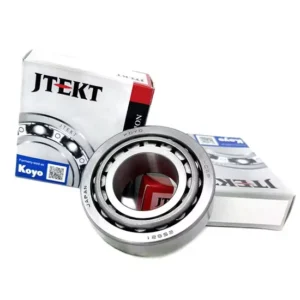
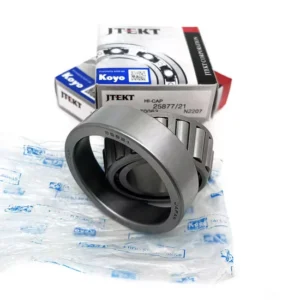
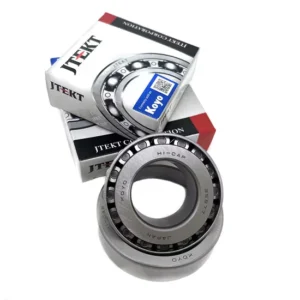
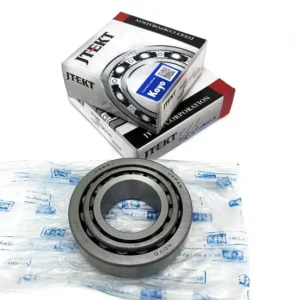
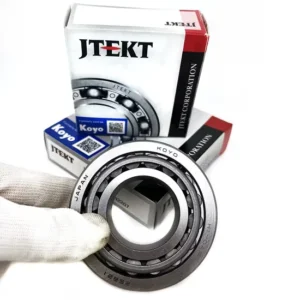
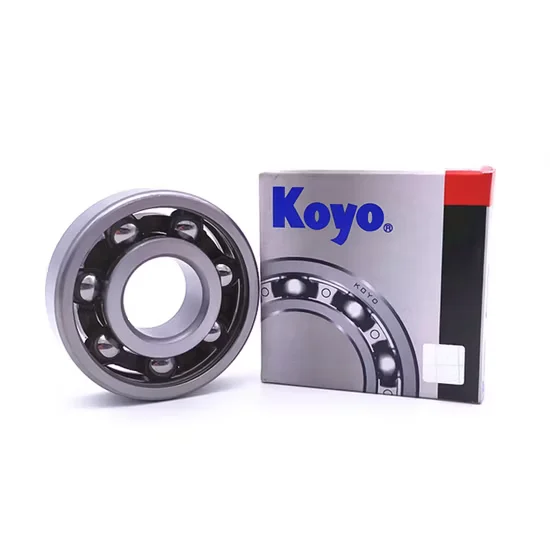
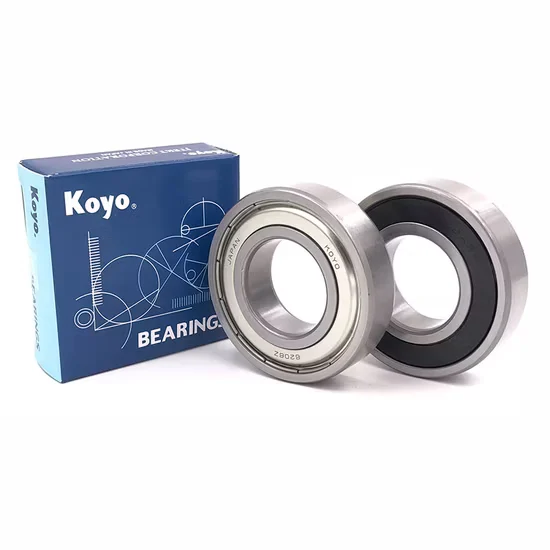
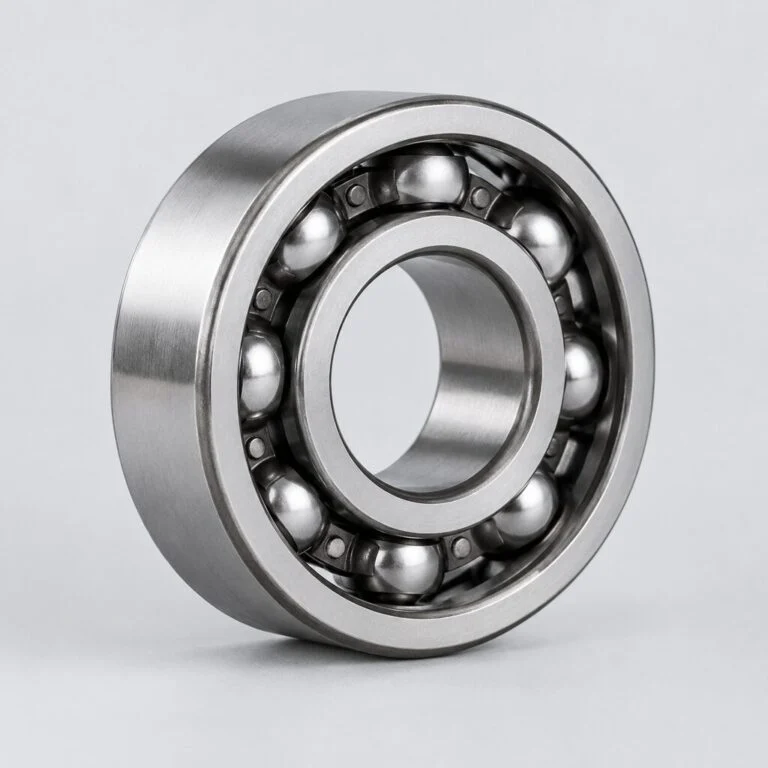
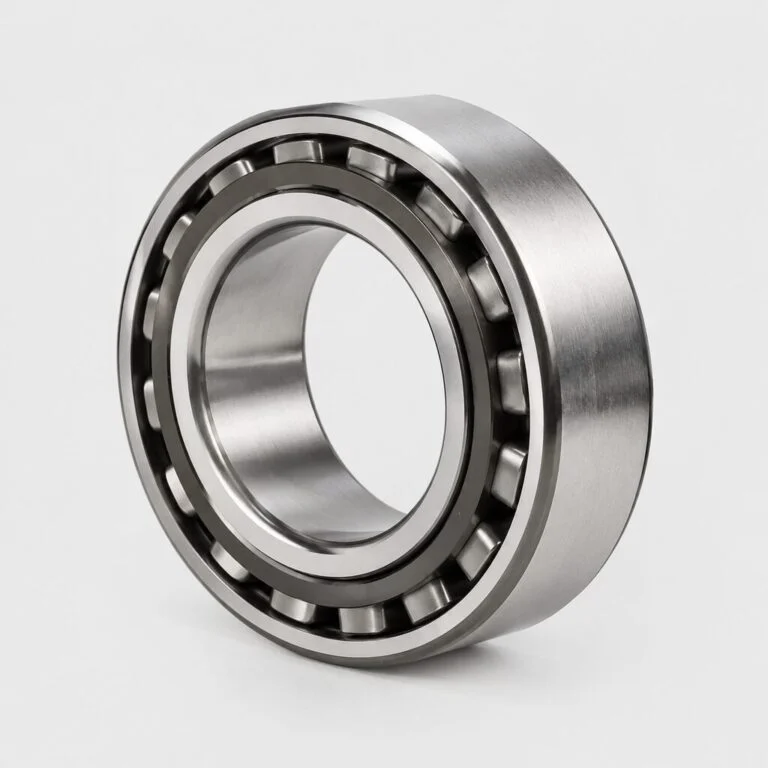
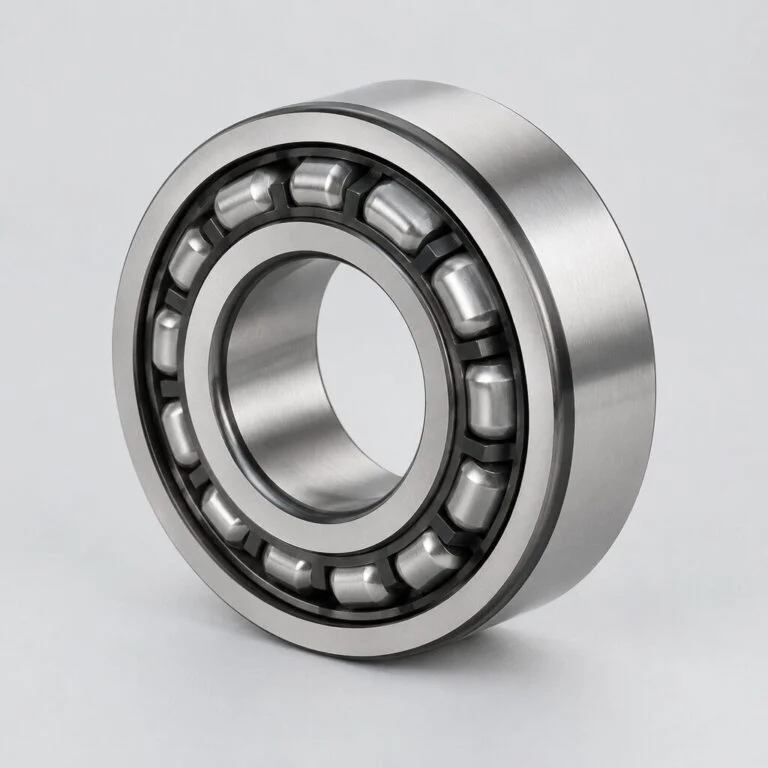
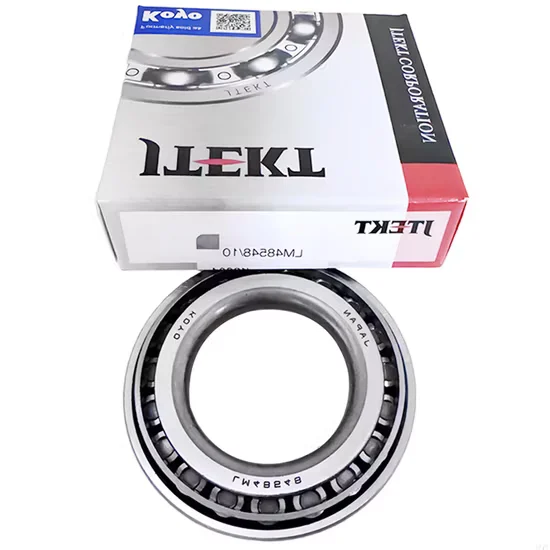
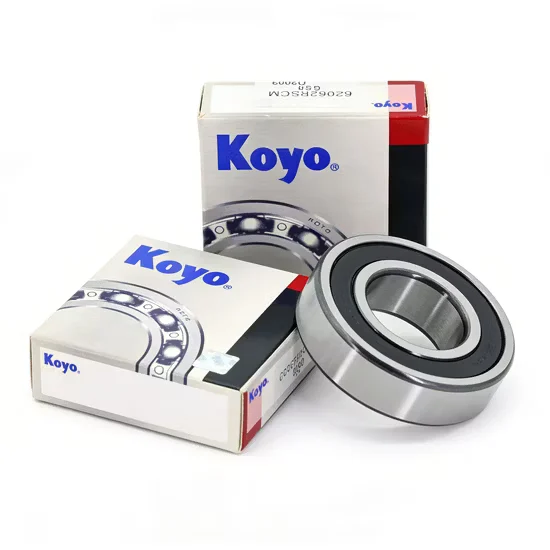
Scan-to-Verify Authenticity — Every X&S 33114 32918 32311 tapered roller bearing package includes a scannable QR code linking directly to the manufacturer's origin database.
Technical Specifications
| Parameter | Value |
| Designation | 33114 32918 33212 33115 33213 32311 31312 32216 33 |
| Product Type | Tapered Roller Bearing |
| Clearance Class | C0/C2/C3/C4 |
| Feature | Stable Performance; Low Noise |
| Rolling Body | Roller Bearings |
| Certification | ISO9001; CE |
| Origin | Shandong, China |
| Specification | Standard size |
Note: 33 is an incomplete designation requiring manufacturer catalog confirmation for suffix verification.
Application Suitability
| Industry | Typical Applications |
| Manufacturing Plant | General production line gearboxes and power transmission units |
| Machinery Repair Shops | MRO replacement for industrial equipment drivetrains |
| Automotive & Shock Absorber Machinery | Wheel hub assemblies and vibration damping mechanisms |
| Heavy Equipment | Truck axles and marine drive propulsion shafts |
Suffix Blind Spots That Wreck X&S 33114 32918 32311 tapered roller bearing Installations
Matching the basic bore and outer diameter is never enough when internal geometry dictates the operational lifespan.
Early in my career handling aftermarket support in Ningbo, I matched a basic tapered roller model for a shock absorber test rig but overlooked the internal clearance and cage suffix. The resulting vibration and acoustic emissions failed the client's acceptance tests immediately, forcing a complete batch return and severe project delays. That single oversight reshaped my entire approach to cross-referencing and procurement verification. I learned that assuming interchangeability based solely on bore and outer diameter is a critical error. Now, every specification is scrutinized against the actual operating envelope before any order is confirmed.

Aligning Standard Tapered Geometries with Drivetrain Demands
Selecting the correct X&S 33114 32918 32311 tapered roller bearing requires more than just matching outer dimensions; it demands a precise alignment of contact angles and load distribution paths with the specific machinery envelope. Our engineering team provides detailed cross-brand equivalent model consultation to ensure the selected standard size integrates flawlessly into existing OEM housings without requiring structural modifications. This technical selection support bridges the gap between catalog theory and actual field performance. By analyzing the specific load zones within your gearboxes or wheel hubs, we can confirm whether the standard roller profiling will sustain the required dynamic rating over the intended service interval.
Managing Combined Loads and Thermal Expansion in Gearboxes
Tapered roller arrangements in industrial gearboxes constantly endure combined radial and axial forces, generating significant internal friction and heat. If the initial clearance class does not account for this thermal expansion, the rolling elements can become preloaded beyond their design limits, leading to premature skidding and severe cage wear. Proper lubrication intervals and selecting the appropriate C0 to C4 clearance range are critical to maintaining the hydrodynamic film under fluctuating operating temperatures. Furthermore, open-type designs demand rigorous contamination control within the housing to prevent abrasive wear on the raceways. Neglecting the external sealing integrity inevitably allows particulate ingress, which acts as a lapping compound and rapidly degrades the precision-machined contact surfaces.
Decoding the Standard Size and Clearance Matrix
The C0/C2/C3/C4 clearance options dictate how the inner ring, outer ring, and rollers interact once the assembly reaches its steady-state operating temperature. A standard C0 clearance suits general-purpose applications with moderate thermal shifts, while C3 or C4 accommodates the expansion seen in high-speed or high-temperature gearbox environments. The low noise and stable performance characteristics are achieved through precise roller profiling and optimized surface finishes, which minimize vibration at the contact points. Because these are standard size specifications, they offer direct dimensional interchangeability for maintenance teams managing diverse MRO inventories. The absence of specialized sealing suffixes means these open bearings rely entirely on the host equipment's sealing arrangements to retain grease and exclude debris. Understanding this boundary between the bearing component and the housing system is essential for achieving the predicted L10 life.
The Cascading Financial Impact of Misaligned Tolerances
Installing a bearing with an incompatible clearance class or ignoring suffix variations rarely causes an immediate catastrophic failure; instead, it initiates a slow degradation cycle. According to ISO 15243 frameworks, this subtle mismatch often manifests as accelerated surface fatigue or localized smearing on the roller ends and raceway shoulders. The resulting unplanned downtime and secondary damage to adjacent shafts, gears, and housings far exceed the initial component cost. Warranty voidance is almost guaranteed when failure analysis reveals that the specified internal geometry was ignored during the procurement phase. Ultimately, the true cost of a mismatched bearing is measured in lost production hours and compromised equipment reliability.
Sourcing Precision Without the Guesswork
Procuring standard open-type tapered rollers often leads to receiving units with undocumented internal modifications if the supply chain lacks strict traceability. We provide genuine original bearings with complete traceability documentation, ensuring the exact C0 to C4 clearance you ordered is what arrives on the dock. Our massive spot inventory covers these specific part numbers, allowing us to fulfill everything from single-unit emergency MRO orders to full container consolidations without delay. When replacing legacy equipment, our cross-brand equivalent model consultation prevents the costly mistake of swapping a low-noise variant for a standard industrial grade. Finally, our long-term after-sales technical support includes failure analysis to help your maintenance team diagnose root causes rather than just replacing parts blindly. This comprehensive approach converts a simple transaction into a reliable engineering partnership.
Documentation & Authenticity
- Certificate of Conformity verifying ISO9001 and CE compliance for the specific production batch.
- Original factory batch traceability codes linking each unit to its machining and heat treatment records.
- Dimensional and running accuracy inspection reports confirming standard size tolerances before dispatch.
- Material test reports validating the metallurgical composition of the rollers and raceways.
- Official origin documentation confirming Shandong manufacturing provenance for customs clearance.
Storage, Handling & Mounting
- Keep the open-type bearings in their original anti-corrosion packaging until the exact moment of installation to prevent humidity ingress.
- Use clean, lint-free gloves when handling the precision-machined rollers to avoid transferring acidic skin oils to the raceways.
- Employ induction heating for the inner rings rather than open flames to preserve the engineered C0/C2/C3/C4 clearance during mounting.
- Verify the shaft and housing shoulder diameters against the standard size specifications to ensure proper axial locating surfaces.
- Apply the recommended grease fill quantity immediately after unpacking, as these unsealed units lack factory pre-lubrication.
Engineering Data Required for Technical Validation
To facilitate accurate technical review and L10 life recalculation, please share your specific radial and axial load profiles, operating speeds, and steady-state temperature ranges. Providing the exact OEM equipment model numbers or housing drawings allows our engineering team to perform precise cross-reference validation. Detailing the environmental exposure, such as dust ingress or moisture levels, helps us recommend the optimal external sealing solutions for these open-type configurations.
Frequently Asked Questions
Q: How do I differentiate between standard and low-noise variants when ordering the X&S 33114 32918 32311 tapered roller bearing?
A: The basic designation alone does not reveal internal geometry modifications. You must verify the complete suffix string on the original equipment nameplate or request the manufacturer's dimensional and acoustic inspection reports. We cross-check every suffix to ensure you receive the exact low-noise or standard clearance variant required for your specific vibration limits.
Q: What clearance class should I specify for a high-temperature gearbox application?
A: High-temperature environments cause the inner ring and shaft to expand more than the outer housing, reducing internal clearance. For such applications, specifying a C3 or C4 clearance class compensates for this thermal gradient, preventing the rollers from binding under load. Always consult the thermal expansion coefficients of your specific shaft and housing materials before finalizing the selection.
Q: Can these open-type bearings be used in heavily contaminated marine drive environments?
A: Open-type tapered rollers lack integrated seals, making them highly vulnerable to abrasive particle ingress in marine environments. They can only be used if the host equipment features heavy-duty external sealing labyrinth systems. If your housing cannot guarantee contamination exclusion, we recommend exploring alternative sealed bearing configurations to prevent premature raceway wear.
Q: How do you handle cross-referencing when replacing a legacy bearing with an incomplete designation?
A: An incomplete designation leaves critical internal specifications unverified, risking a complete mismatch in load capacity or clearance. Our technical team requires the physical dimensions, contact angle, and application parameters to accurately map the legacy unit to a fully specified modern equivalent. We never guess the missing suffix; we validate it through engineering calculation and catalog confirmation.