
OE to Koyo Bearing Cross Reference Table for Wholesale Bulk Supply
Matching the base number is not enough.
Accurate OE to Koyo cross-referencing requires verifying suffixes, clearances, and seals beyond base numbers to prevent premature failure. A direct match on the numeric code often ignores critical modifications for specific applications, leading to immediate operational risks in automotive and industrial settings.
I still remember the humidity clinging to the air in a Bangkok warehouse during the rainy season. The smell of rust was distinct, sharp, and expensive. I had just overseen the arrival of a full container of bearings for an agricultural machinery distributor. On paper, everything looked perfect. The purchase order listed an original equipment manufacturer (OE) number for a gearbox bearing, and the cross-reference table pointed directly to a standard Koyo deep-groove ball bearing. The base numbers matched. The dimensions were identical. We shipped it with confidence.
Three months later, the phone rang. It wasn’t a complaint; it was a crisis. Every single unit installed in the gearboxes had failed. Water had ingressed through the seals, washing away the grease and causing rapid corrosion. The issue wasn’t the bearing quality. It was the suffix. The OE part specified a specialized contact seal designed for wet, muddy environments, but the standard Koyo equivalent we supplied had a basic shield. I learned that day that a cross-reference is not just a number swap. It is a technical verification process.
This experience reshaped how I approach every inquiry. Now, when clients ask for an OE to Koyo cross reference table, I do not just send a spreadsheet. I dig into the application. For auto aftermarket suppliers and MRO buyers, understanding these nuances is the difference between a reliable supply chain and a warehouse full of returns.
Why Base OE Numbers Fail in Koyo Cross-Referencing?
The base number only tells half the story.
In the bearing world, the numeric code defines the geometry: bore diameter, outer diameter, and width. If an OE number reads 6205, the Koyo equivalent is indeed a 6205. But this geometric match is deceptive. It ignores the internal architecture that dictates performance under load, speed, and environmental stress.
Consider the internal clearance. An OE specification might require a C3 clearance for high-temperature operations or heavy loads. A standard Koyo 6205 comes with normal clearance (CN). If you install a CN bearing in an application designed for C3, the internal expansion from heat will eliminate the running clearance. The result is thermal seizure. I have seen truck wheel hubs fail catastrophically because the internal clearance suffix was ignored during the substitution process. The base number was correct, but the bearing locked up under heavy load.
Then there are the seals. An OE part might use a non-contact rubber seal to minimize friction in a high-speed electric motor. Another might use a heavy-duty contact seal for a slow-moving, dirty conveyor belt. Swapping these based solely on the base number leads to either excessive heat generation or immediate contamination.
When you consult an OE to Koyo cross reference table, you must look beyond the primary digits. The suffixes are not optional extras; they are integral to the bearing’s identity. A Koyo bearing with a “LLU” suffix indicates a specific type of low-torque seal, while “CM” denotes a particular internal clearance. Missing these details turns a precise engineering component into a generic guess.
For wholesalers stocking multi-brand inventories, this means your cross-reference data must be granular. It is not enough to know that Brand A’s part X equals Koyo’s part Y. You must know that Brand A’s part X-2RS-C3 equals Koyo’s part Y-LLU-CM. This level of detail prevents the kind of costly errors that damage reputations in the aftermarket sector.
Step-by-Step Guide to Decoding Koyo Suffixes
Systematic decoding prevents mismatched replacements.
To build a reliable OE to Koyo cross reference table, you need a method to decode the suffixes accurately. Koyo uses a standardized system, but it can be complex. Here is how I verify equivalents for my clients, ensuring that every technical base is covered.
First, identify the seal or shield type. This is often the most visible difference. Open bearings have no suffix or a specific open code. Shielded bearings typically use “Z” or “ZZ” for metal shields on one or both sides. Rubber sealed bearings use “RS” or “2RS” for contact seals, or “LLU” for low-torque variants. If the OE part has a rubber seal, substituting it with a metal shield will allow dust and moisture to enter. Conversely, using a contact seal where a shield is specified can cause overheating due to friction.
Second, check the internal clearance. Standard clearance is often unmarked or marked as “CN.” For applications with significant thermal expansion or heavy loads, look for “C3,” “C4,” or “C2.” A mismatch here is silent until it is too late. I always verify the operating temperature range of the application. If the machinery runs hot, a C3 clearance is usually mandatory. Ignoring this suffix is a common pitfall in automotive repairs, where engine bay temperatures fluctuate wildly.
Third, examine the cage material and design. While less common in standard automotive parts, industrial applications often specify brass cages (“Y”) or polyamide cages (“TN9”). These affect speed limits and chemical resistance. A steel cage might be fine for general use, but in a high-vibration environment, a brass cage offers better durability.
Finally, confirm any special treatments. Some OE parts specify coated bearings for corrosion resistance, or specific grease fills for food-grade applications. These are often denoted by additional suffixes or separate part numbers.
| Feature | OE Specification Example | Koyo Equivalent Suffix | Risk of Mismatch |
|---|---|---|---|
| Seal Type | Rubber Contact Seal | 2RS or LLU | Contamination ingress or overheating |
| Internal Clearance | Expanded for Heat | C3 | Thermal seizure under load |
| Cage Material | Polyamide | TN9 | Reduced durability in high vibration |
| Grease Type | High-Temp Lithium | Specific Grease Code | Lubrication breakdown |
By following this step-by-step decoding, you transform a simple number lookup into a technical validation. This process ensures that the OE to Koyo cross reference table you rely on is not just a list of numbers, but a map of functional equivalence.
Verifying Dimensional Tolerances for Heavy-Duty Applications
Base dimensions must align with ISO standards for high-load machinery.
Even when the suffixes match, dimensional tolerances can vary. In heavy-duty applications like mining crushers or steel mill conveyors, the fit between the bearing and the shaft or housing is critical. An OE part might specify a P5 precision class, while a standard commercial Koyo bearing is P0.
I once worked with a client in the Middle East who was consolidating suppliers for a large mining operation. They wanted to switch several brands to Koyo for consistency. The base numbers matched, and the suffixes seemed correct. However, the original OE bearings had tighter dimensional tolerances to handle extreme radial loads. When we switched to standard tolerance Koyo units, the bearings began to spin on the shafts within weeks. The fit was too loose.
To avoid this, always verify the precision class. For general automotive and industrial use, normal class (P0) is sufficient. But for high-speed spindles, heavy machinery, or applications requiring minimal runout, you must specify P6, P5, or even P4.
Additionally, check the boundary dimensions. While ISO standards govern these, some OE manufacturers modify the chamfer angles or corner radii to fit specific housings. A Koyo bearing with standard chamfers might not seat correctly in a housing designed for a modified OE part. This is particularly true in automotive wheel hubs, where space is tight and every millimeter counts.
When building your OE to Koyo cross reference table, include a column for precision class and any known dimensional modifications. This extra layer of verification protects against subtle fitment issues that can cause catastrophic downtime. It is not just about whether the bearing fits; it is about whether it fits correctly under load.
Common Pitfalls in Aftermarket Bearing Substitution
Overlooking application-specific modifications leads to catastrophic downtime.
The aftermarket is full of shortcuts. Many distributors rely on automated cross-reference tools that only match base numbers. This is dangerous. I have seen countless cases where a “direct equivalent” failed because it lacked a specific modification required by the OEM.
One common pitfall is ignoring the grease type. Some OE bearings come pre-lubricated with specialized greases for extreme temperatures or specific chemical environments. A standard Koyo bearing might come with general-purpose lithium grease. If the application involves high heat or exposure to solvents, the standard grease will break down, leading to early failure. Always check if the OE part specifies a particular lubricant.
Another mistake is assuming interchangeability across brands without verifying the suffix logic. Different manufacturers use different codes for similar features. A seal that is “2RS” in one brand might be “DDU” in another. If you blindly trust a cross-reference table that does not account for these coding differences, you will end up with the wrong component.
I advise my clients to maintain a verified OE to Koyo cross reference table that includes notes on these pitfalls. Do not just list the part number. List the seal type, clearance, grease, and precision class. This turns your catalog into a technical resource rather than just a sales tool.
Also, be wary of “universal” replacements. There is no such thing as a universal bearing for critical applications. Each OE part is designed for a specific set of conditions. Substituting it with a generic equivalent ignores these conditions. Whether you are supplying a repair shop in Southeast Asia or a factory in Latin America, the cost of a failed bearing is far higher than the cost of getting the right one.
Conclusion
Suffixes dictate survival, not just the base number.
Accurate substitution requires a deep dive into seals, clearances, and tolerances. By verifying these details, you ensure that every replacement performs as intended. A robust OE to Koyo cross reference table is your best defense against premature failure and costly returns.
Mentioned in this article
Koyo / JTEKT bearings from this guide
These are the Koyo / JTEKT bearing types discussed above. Open any product to check its details, or quote it together with the rest of your repair.
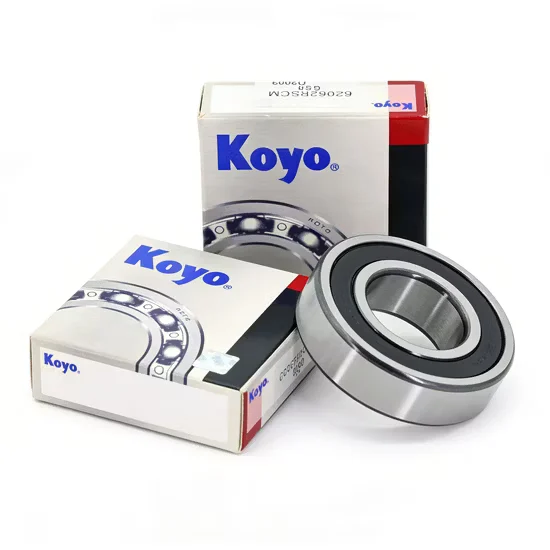
Deep Groove Ball Bearings
Koyo 6003 6205 6301 6004 Sealed Deep Groove Ball Bearing for Automotive Aftermarket
View Product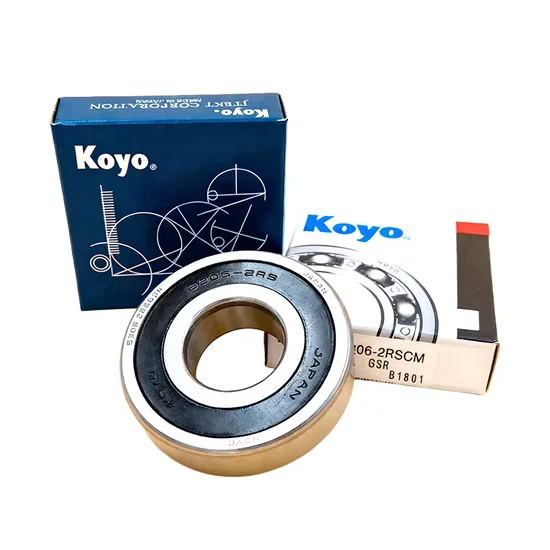
Deep Groove Ball Bearings
6203/6204/6205 Deep Groove Ball Bearing for Generator Equipment
View Product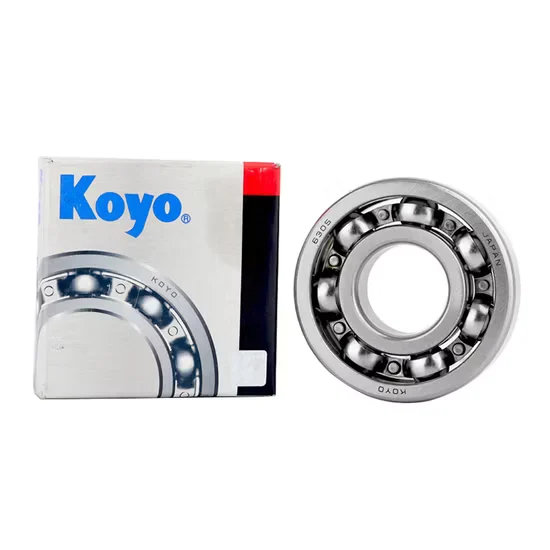
Deep Groove Ball Bearings
KOYO Deep Groove Ball Bearings 6201 6202 6203 6204 6205 Zz 2RS C3
View Product
Tapered Roller Bearings
OEM 30204 30205 30206 30207 30208 32008X 32010X Tapered Roller Bearing
View ProductKeep reading
More bearing selection guides for repair shops
Practical guides from KOYO Bearing Supplier on identifying Koyo / JTEKT bearings for farm machinery, construction equipment and power transmission repairs.
Technical Resources · 7 min read
Auto Bearing Glossary: Wholesale Supplier for Bulk & MRO Parts
Master the auto bearing glossary to decode suffix codes and prevent costly MRO replacement failures. Identical dimensions do not guarantee interchangeability, as internal clearance…
Read the Guide Technical Resources
· 8 min read
Needle Bearing Fit & Tolerance Table: Wholesale Supplier for Bulk Orders
Master the needle bearing fit and tolerance table to prevent seizure caused by overly tight fits. Match ISO shaft and housing classes while verifying…
Read the Guide Technical Resources
· 7 min read
Auto Bearing Torque Reference Table Wholesale Supplier
Prevent premature bearing failures by strictly following the Auto Bearing Torque Reference Table instead of relying on subjective manual tightening. Learn to distinguish initial…
Read the Guide
Bearing enquiry
Send your machine details. Get a written Koyo / JTEKT quote.
KOYO Bearing Supplier quotes a single bearing position or every bearing in an assembly on one enquiry, matched to your machine model and application, with model, quantity, price, lead time and quote validity in writing.
- WhatsApp+1 (702) 981-5880
- Emailinfo@koyoome.com
- Address8 Research Drive, Greenville, SC 20627, USA
"When a Koyo bearing failed on a harvest machine during the season, we needed a replacement urgently. The supplier identified the correct Koyo reference, shipped same-day, and the machine was back in the field within the day."

Request a Bearing Quote
Tell us the machine and the bearing position. Photos of the markings can follow on WhatsApp.