
Small Engine Crankshaft Bearings Wholesale Supplier
Tighter clearance does not mean better precision in small engines.
Selecting the correct crankshaft bearings for small engines requires strict clearance matching and material verification based on specific operating temperatures and loads, rather than simply matching the part number. Standard off-the-shelf units often fail because they lack the thermal expansion allowance needed for continuous high-load operation in agricultural or industrial settings.
I still remember the smell of burnt oil and scorched metal that filled the warehouse when a container of micro-tiller engines arrived back from a tropical distribution hub. The local dealer had ordered what he thought were standard replacements for 168F gasoline engines, focusing solely on the dimensional fit. He did not account for the ambient temperature exceeding forty degrees Celsius combined with hours of continuous tillage work. The result was catastrophic. The bearing cages softened, the clearance vanished due to unchecked thermal expansion, and the crankshafts seized. This was not a manufacturing defect in the traditional sense; it was a selection error. I learned then that field performance does not care about catalog numbers. It cares about whether the internal geometry can survive the heat generated by friction and environment.
This experience shifted my entire approach to sourcing. When distributors ask for a quote, I no longer just look up the code. I ask about the climate, the duty cycle, and the load profile. For those managing inventory for regional markets, understanding these nuances is the difference between a reliable supply chain and a warranty nightmare. As a Small Engine Crankshaft Bearings Wholesale Supplier, the goal is to provide components that match the reality of the machine’s operation, not just its blueprint.
Why Do Standard Bearings Fail in Small Engines?
Catastrophic seizures in small engines are rarely caused by poor manufacturing quality, but rather by incorrect clearance classes that ignore thermal dynamics.
Small engines, particularly those used in agriculture and portable power generation, operate under conditions that differ significantly from automotive applications. They often run at higher relative loads, with less sophisticated cooling systems, and in environments filled with dust and debris. A standard bearing designed for intermittent use in a controlled environment will fail quickly when subjected to the continuous reciprocating loads of a tiller or a generator.
The primary failure mode is related to internal clearance. Bearings are manufactured with specific radial internal clearances, often designated by codes such as C2, C3, or C4. A standard clearance might be perfect for a cold-start scenario in a temperate climate. However, in a small engine running at high RPMs in a hot environment, the inner race expands faster than the outer race due to direct contact with the heated crankshaft. If the initial clearance is too tight, this expansion eliminates the running gap entirely. The rolling elements bind, friction spikes, and temperature rises exponentially until the lubricant breaks down and the metal welds together.
| Failure Factor | Standard Clearance Application | High-Temperature/Load Application |
|---|---|---|
| Internal Clearance | Standard (CN) | Expanded (C3 or C4) |
| Cage Material | Standard Steel | Brass or High-Temp Polymer |
| Thermal Expansion Allowance | Minimal | Significant |
| Risk in Continuous Duty | High Seizure Risk | Robust Performance |
Consider a case involving a batch of generators deployed in a dusty, arid region. The operators reported premature wear after only a few hundred hours. Upon inspection, the issue was not just the clearance, but the cage material. Standard steel cages, while strong, can suffer from increased friction and heat generation if lubrication is compromised by dust ingress. In contrast, brass cages offer better sliding properties and thermal conductivity, helping to dissipate heat away from the rolling elements. For a Small Engine Crankshaft Bearings Wholesale Supplier, verifying these material specifications is as critical as checking the dimensions.
How to Match Bearing Clearances for Extreme Climates?
Selecting the appropriate clearance class is the most effective method to prevent thermal seizure in extreme environmental conditions.
Climate plays a decisive role in bearing longevity. In tropical regions, the ambient heat adds to the operational heat generated by the engine. Conversely, in cold regions, the challenge is ensuring sufficient lubrication flow and avoiding excessive preload due to contraction of materials. The misconception that “tighter is better” leads many buyers to select standard or even pre-loaded bearings for applications that actually require loose clearances.
For tropical agriculture, such as rice farming in Southeast Asia or cotton harvesting in West Africa, engines often operate near their thermal limits. Here, selecting bearings with C3 or even C4 clearance is essential. These classes provide additional internal space to accommodate the thermal expansion of the shaft and housing without causing binding. The extra clearance ensures that a thin film of oil can maintain separation between the rolling elements and races, even when the metal components expand.
In contrast, small engines used in cold regions, such as chainsaws for logging in northern latitudes, face different challenges. Sub-zero temperatures cause materials to contract. If the clearance is too large, the rolling elements may skid rather than roll, leading to flat-spotting and premature fatigue. However, if the clearance is too tight, the thickened cold oil cannot penetrate the contact zones, leading to starved lubrication. In these cases, standard clearance is often sufficient, provided the lubricant viscosity is matched to the temperature.
A buyer once sourced a large volume of bearings for a fleet of micro-tillers destined for a equatorial island nation. They initially selected standard clearance units to save cost. Within months, the failure rate climbed dramatically. By switching to C3 clearance bearings specifically rated for high-temperature operation, the failure rate dropped noticeably. This adjustment required no change in the engine design, only a more precise selection of the component.
Which Cage Materials Survive High-Temperature Operations?
The choice of cage material determines whether a bearing can withstand continuous high-temperature duty without softening or deforming.
The cage, or retainer, holds the rolling elements in place and guides them through the load zone. In small engines, the cage is subjected to significant centrifugal forces and frictional heat. Standard stamped steel cages are common and cost-effective, but they have limitations. Under continuous high-speed operation, especially if lubrication is marginal, steel cages can generate excessive heat. In extreme cases, the heat can cause the steel to lose temper or the lubricant to carbonize on the surface, increasing friction further.
Brass cages are a superior alternative for high-temperature applications. Brass has excellent thermal conductivity, which helps draw heat away from the rolling contacts. It also has good sliding properties against steel, reducing the risk of adhesive wear if the oil film breaks down. For small engine crankshafts that experience variable loads and potential lubrication starvation, brass cages offer a safety margin that steel cannot match.
Polymer cages, made from high-performance materials like polyamide, are another option. They are lightweight, reducing centrifugal force, and have inherent lubricity. However, their thermal limit is lower than that of brass. If the engine overheats beyond the polymer’s glass transition temperature, the cage can deform or melt, leading to immediate failure. Therefore, polymer cages are suitable for moderate temperatures but risky for continuous heavy-duty agricultural work where cooling airflow may be blocked by chaff or dust.
When sourcing from a Small Engine Crankshaft Bearings Wholesale Supplier, it is vital to specify the cage material requirement. Do not assume that all bearings of a certain type come with the same cage. Verification of the material specification ensures that the component matches the thermal demands of the application.
What Documentation Proves Bearing Authenticity?
Traceability documentation and material certificates are the only reliable defenses against counterfeit components that cause field failures.
The market for small engine parts is flooded with counterfeits. These copies may look identical to genuine products, with correct markings and packaging, but they often use inferior steel, improper heat treatment, or incorrect internal geometries. A counterfeit bearing might pass a visual inspection but fail under load due to poor metallurgy. For distributors and OEMs, the cost of a single field failure can far exceed the savings from buying cheaper, unverified stock.
Authenticity is proven through documentation. Genuine bearings from reputable manufacturers come with traceability codes that link the specific batch to its production records. This includes material certificates confirming the steel grade and heat treatment process. When procuring from a Small Engine Crankshaft Bearings Wholesale Supplier, request these documents. A reliable supplier will provide full traceability, allowing you to verify the origin of the goods.
Counterfeit products rarely come with verifiable documentation. If a supplier cannot provide batch-specific certificates or if the paperwork looks generic and unverified, it is a major red flag. Investing in genuine products with complete documentation protects your brand reputation and reduces warranty claims. It ensures that every bearing in your inventory meets the specified performance criteria, providing peace of mind for both you and your end customers.
Conclusion
Precision in small engine bearings is defined by context, not just dimensions.
Selecting the right components involves understanding the interplay between clearance, temperature, and material. By prioritizing technical verification over simple part number matching, distributors can significantly reduce field failures. Reliable sourcing partners provide not just products, but the technical assurance needed to keep machinery running in the toughest conditions.
Mentioned in this article
Koyo / JTEKT bearings from this guide
These are the Koyo / JTEKT bearing types discussed above. Open any product to check its details, or quote it together with the rest of your repair.
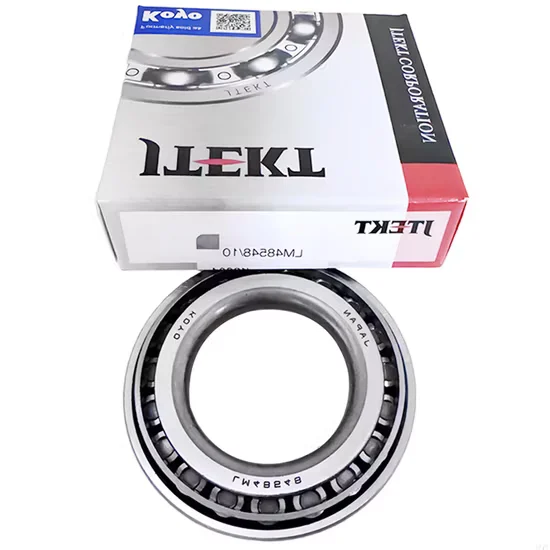
Tapered Roller Bearings
Genuine KOYO 32007 Tapered Roller Bearing Wholesale Supplier
View Product
Tapered Roller Bearings
Genuine KOYO 32006 Taper Roller Bearing Wholesale Supplier
View Product
Cylindrical Roller Bearings
Koyo NSK N408e Cylindrical Roller Bearing Genuine Wholesale Supplier
View Product
Cylindrical Roller Bearings
Koyo N2305e Cylindrical Roller Bearing Genuine Wholesale Supplier
View ProductKeep reading
More bearing selection guides for repair shops
Practical guides from KOYO Bearing Supplier on identifying Koyo / JTEKT bearings for farm machinery, construction equipment and power transmission repairs.
Applications & Industries · 7 min read
Forklift Mast Bearings Wholesale Supplier | Genuine SKF FAG NSK Bulk
Selecting forklift mast bearings requires matching groove profiles and clearances to harsh environments to prevent premature seizure. Sourcing only genuine SKF, FAG, and NSK…
Read the Guide Applications & Industries · 6 min read
Outboard Lower Unit Bearings Wholesale Supplier
Prevent catastrophic gearcase failures by selecting Bearings in Outboard Lower Units that balance high-speed load capacity with strict corrosion resistance. Learn why standard tapered…
Read the Guide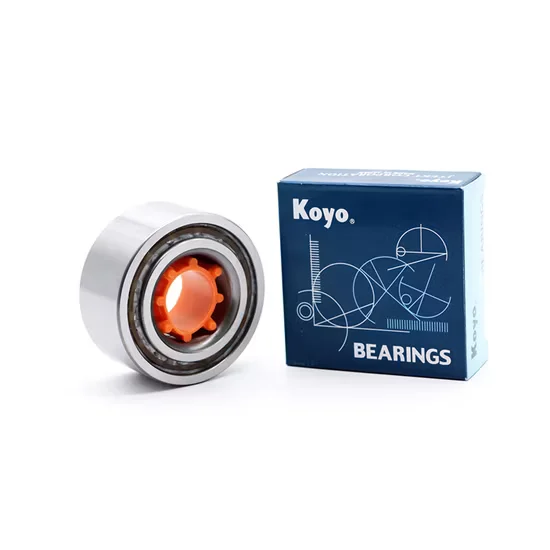 Applications & Industries
· 8 min read
Camshaft Drive Bearings: Genuine SKF, FAG, INA Wholesale Supplier
Prevent catastrophic engine seizures by sourcing genuine camshaft drive bearings with full traceability. Learn to identify counterfeit risks through customs declarations and verify authenticity…
Read the Guide
Bearing enquiry
Send your machine details. Get a written Koyo / JTEKT quote.
KOYO Bearing Supplier quotes a single bearing position or every bearing in an assembly on one enquiry, matched to your machine model and application, with model, quantity, price, lead time and quote validity in writing.
- WhatsApp+1 (702) 981-5880
- Emailinfo@koyoome.com
- Address8 Research Drive, Greenville, SC 20627, USA
"When a Koyo bearing failed on a harvest machine during the season, we needed a replacement urgently. The supplier identified the correct Koyo reference, shipped same-day, and the machine was back in the field within the day."

Request a Bearing Quote
Tell us the machine and the bearing position. Photos of the markings can follow on WhatsApp.