
Koyo vs FAG Auto Bearings: Genuine Wholesale Supplier for Bulk Orders
Same model number does not guarantee identical performance.
Koyo and FAG auto bearings excel in distinct operational scenarios; selecting based solely on part numbers without evaluating load capacity, internal clearance tolerances, and cage material specifications leads to premature field failures. FAG offers superior precision for high-speed stability, while Koyo provides robust cost-performance and shock-load resistance for heavy-duty commercial applications.
I still remember the humidity in the workshop in Jakarta when a fleet manager slammed a seized axle housing onto my desk. He had switched from FAG to Koyo to cut costs, assuming the identical ISO model number meant a drop-in replacement. The bearings had failed in less than half a year under continuous heavy loads and high ambient temperatures. The issue was not brand quality but mismatched internal clearance and cage design for that specific mining truck application. This incident reshaped my approach to sourcing. I no longer look at just the part number. I examine the operating conditions first.
Understanding these nuances is critical for distributors and MRO operators who need to balance inventory costs with reliability. Let us break down the engineering differences that matter in the real world.
What are the core engineering differences between Koyo and FAG?
FAG leads in extreme precision and high-speed stability, whereas Koyo offers superior cost-performance and robust load capacity for standard commercial applications.
The fundamental difference lies in their manufacturing heritage and target optimization. FAG, part of the Schaeffler group, has deep roots in German automotive OEM supply chains. Their production facilities prioritize micron-level precision and consistency, making them the go-to choice for high-speed passenger car hubs and precision driveline components where noise and vibration must be minimized.
Koyo, now part of JTEKT Corporation, brings Japanese engineering focused on durability and efficiency in mass-market and commercial sectors. Their strength is in optimizing material fatigue limits and providing reliable performance under variable load conditions typical of Asian and emerging market fleets. While both brands meet global ISO standards, their default internal clearances and cage materials often differ even for the same boundary dimensions.
| Feature | FAG Auto Bearings | Koyo Auto Bearings |
|---|---|---|
| Primary Strength | High-speed stability, low friction | Shock load resistance, cost-efficiency |
| Typical Clearance | Standard (C0) or tight (C2) for precision | Often optimized for thermal expansion (C3) |
| Cage Material | High-grade polyamide or brass | Robust steel or reinforced polymer |
| Best Fit | Passenger cars, high-speed transit | Heavy trucks, off-road machinery, buses |
A European bus operator once tried to standardize on FAG for their entire city fleet to reduce SKU complexity. While the ride quality improved, the maintenance costs rose due to the premium price point, which was unnecessary for the low-speed, stop-start nature of urban transit. Switching specific axle positions to Koyo reduced their annual bearing spend noticeably while maintaining reliability.
For wholesalers, this means you cannot simply swap one for the other without checking the application. A Koyo vs FAG bearing comparison must start with the vehicle type and operating environment.
How do Koyo and FAG perform in heavy-duty truck axles?
FAG’s tighter tolerances suit high-speed transit, whereas Koyo’s optimized clearances handle shock loads better in off-road or heavy-load mining trucks.
Heavy-duty truck axles represent the most demanding environment for auto bearings. Here, the choice between Koyo and FAG is not about which is “better” globally, but which is better for the specific route and payload.
In my experience sourcing for African mining logistics firms, we found that FAG bearings performed exceptionally well on paved highways with consistent speeds. However, when those same trucks moved into rough quarry roads, the tighter internal clearances of some FAG series led to heat buildup and premature wear if not meticulously maintained. Conversely, Koyo bearings with C3 or C4 internal clearances allowed for greater thermal expansion and misalignment accommodation, surviving the harsh shock loads of unpaved mine sites.
Consider a case from a Southeast Asian cement plant. Their mixer trucks operated in dusty, high-vibration environments. Initially, they used premium FAG units. While durable, the lead time for replacements was long, and the cost was high. We introduced Koyo tapered roller bearings for the non-drive axles. The result was a significant reduction in downtime because the parts were readily available, and the bearing design handled the dust ingress and shock loads effectively. The key was verifying the cage material could withstand the vibration without fracturing.
| Operating Condition | Recommended Brand Focus | Reason |
|---|---|---|
| Highway Long-Haul | FAG | Superior high-speed stability and low heat generation |
| Off-Road/Mining | Koyo | Better shock load absorption and thermal clearance |
| Mixed Fleet | Both | Match brand to specific axle position and duty cycle |
| High Ambient Temp | Koyo (C3/C4) | Designed for greater thermal expansion tolerance |
This is why a FAG alternative Koyo bearing strategy must be application-specific. You cannot blindly replace a high-precision FAG unit with a standard Koyo in a high-speed coach hub, nor should you overpay for FAG precision in a slow-moving dump truck axle where shock resistance is paramount.
How to verify genuine parts and avoid mixed-batch failures?
Implement strict batch traceability and physical dimension checks to prevent counterfeit-induced driveline seizures.
The aftermarket is flooded with counterfeits that mimic the packaging of both Koyo and FAG. A mixed-batch failure often occurs when a distributor unknowingly sources fake parts alongside genuine ones, leading to inconsistent performance across a fleet.
I recall a client in the Middle East who received a container of what he believed was genuine Koyo bearings. Upon installation, several units showed unusual noise within weeks. A physical inspection revealed slight deviations in the raceway finish and cage weight compared to authentic samples. These were high-quality fakes, but they lacked the precise heat treatment and material purity of the original.
To avoid this, rigorous verification is essential. First, check the laser etching on the bearing ring. Genuine FAG and Koyo parts have crisp, deep, and evenly spaced markings. Counterfeits often have shallow or uneven etching. Second, verify the packaging holograms and batch codes with the manufacturer’s database if possible. Third, perform a simple dimensional check using micrometers. Even a few microns of deviation in the outer diameter can cause improper fitment and premature failure.
| Verification Step | Action | Indicator of Genuine Part |
|---|---|---|
| Visual Inspection | Check laser etching | Crisp, deep, uniform characters |
| Packaging | Verify holograms and batch codes | Matches manufacturer database records |
| Dimensional Check | Measure OD and ID with micrometer | Within ISO tolerance limits |
| Material Check | Inspect cage and rolling elements | Consistent finish, no burrs or discoloration |
For distributors, offering genuine traceability documentation is not just a compliance issue; it is a risk mitigation tool for your customers. When you supply Koyo vs FAG auto bearings, providing proof of origin builds long-term trust and reduces the likelihood of warranty claims due to counterfeit parts.
Which brand offers the best ROI for your specific fleet?
Match the bearing brand to the exact operating conditions rather than defaulting to the most expensive option.
Return on investment in bearing selection is not about the lowest upfront cost. It is about minimizing total cost of ownership, which includes purchase price, installation labor, downtime, and replacement frequency.
For a regional distributor, stocking both brands allows you to offer tailored solutions. Use FAG for high-value, high-speed applications where precision is critical and downtime costs are astronomical. Use Koyo for standard commercial vehicles, off-road machinery, and applications where robustness and cost-effectiveness are prioritized. This mixed-brand strategy can reduce inventory costs by allowing you to cover a wider range of applications without overstocking premium-priced items for every scenario.
A Latin American transport company reduced their bearing inventory SKUs by consolidating their purchases. Instead of stocking multiple premium brands for all trucks, they standardized on Koyo for the majority of their rigid trucks and reserved FAG for their high-speed express coaches. This approach simplified their procurement process and reduced capital tied up in stock, while still ensuring reliability where it mattered most.
When evaluating a Koyo and FAG bearing comparison, consider the following:
- Load Profile: Is the load constant or shock-heavy?
- Speed: Is the application high-speed or low-speed?
- Environment: Is it clean, dusty, or wet?
- Budget: What is the acceptable balance between upfront cost and lifespan?
By answering these questions, you can select the right brand for each application, ensuring optimal performance and cost efficiency. Our technical cross-reference support helps distributors make these decisions accurately, ensuring that every Koyo vs FAG auto bearings selection is backed by engineering logic rather than guesswork.
Conclusion
Choose the bearing that fits the job, not just the catalog.
Koyo and FAG are both excellent brands, but they serve different masters. FAG dominates in precision and speed, while Koyo excels in durability and value for heavy-duty and commercial use. By understanding these differences and verifying authenticity, you can optimize your fleet’s performance and your inventory’s profitability.
Mentioned in this article
Koyo / JTEKT bearings from this guide
These are the Koyo / JTEKT bearing types discussed above. Open any product to check its details, or quote it together with the rest of your repair.

Tapered Roller Bearings
P5 Koyo 33010 30211 33110 32307 33208 Tapered Roller Bearing for Motor Auto Pump
View Product
Tapered Roller Bearings
Jtekt Koyo Tapered Roller Bearing 32010 30302 30303 30304 30305 30306 for Auto Parts
View Product
Railway Bearings
X&S 30304 30306 30307 Tapered Roller Bearings for Railway Axle Auto Parts
View Product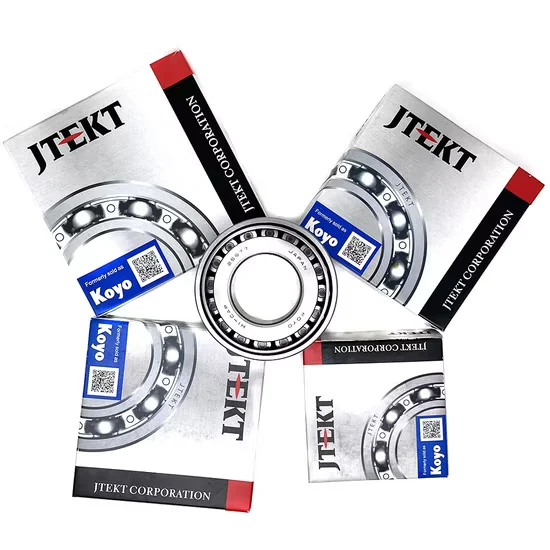
Tapered Roller Bearings
Koyo Tapered Roller Bearing 30203 30204 30205 30206 30207 for Auto Parts Wholesale
View ProductKeep reading
More bearing selection guides for repair shops
Practical guides from KOYO Bearing Supplier on identifying Koyo / JTEKT bearings for farm machinery, construction equipment and power transmission repairs.
 Brands & Alternatives
· 7 min read
Koyo Automotive Bearings Wholesale Supplier for Global Bulk Orders
Master global sourcing of Koyo automotive bearings by solving mixed-brand customs risks and verifying authenticity beyond packaging. Learn to validate technical specs, select reliable…
Read the Guide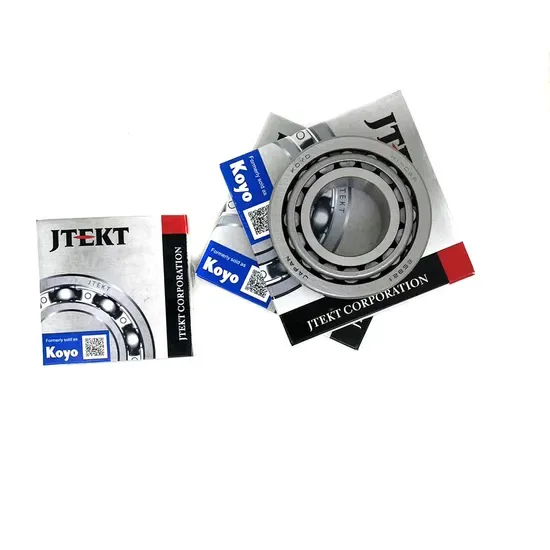 Brands & Alternatives
· 6 min read
Premium vs Economy Motorcycle Bearings: Wholesale Supplier for Bulk Orders
Choosing between premium vs economy motorcycle bearings requires analyzing total cost of ownership rather than just upfront price. Economy options often fail under heavy…
Read the Guide Brands & Alternatives
· 8 min read
OE Koyo vs Aftermarket Box: Differences for Wholesale Buyers
Understand the critical OE Koyo vs Aftermarket Box differences to avoid severe customs delays and terminal rejections in strict markets. Original packaging features holographic…
Read the Guide
Bearing enquiry
Send your machine details. Get a written Koyo / JTEKT quote.
KOYO Bearing Supplier quotes a single bearing position or every bearing in an assembly on one enquiry, matched to your machine model and application, with model, quantity, price, lead time and quote validity in writing.
- WhatsApp+1 (702) 981-5880
- Emailinfo@koyoome.com
- Address8 Research Drive, Greenville, SC 20627, USA
"When a Koyo bearing failed on a harvest machine during the season, we needed a replacement urgently. The supplier identified the correct Koyo reference, shipped same-day, and the machine was back in the field within the day."

Request a Bearing Quote
Tell us the machine and the bearing position. Photos of the markings can follow on WhatsApp.