OE Koyo vs Aftermarket Box: Differences for Wholesale Buyers
Most think aftermarket boxes just save packaging costs; actually, they trigger severe customs and compliance risks in the Middle East and Africa.
The primary difference between OE Koyo vs Aftermarket Box lies in the strict anti-counterfeit and traceability elements embedded in original packaging. OE boxes feature specific holographic seals, standardized barcode formats, and batch-linked mill certificates that are crucial for customs clearance and end-user trust. In contrast, aftermarket boxes lack these verification layers, posing severe rejection risks in strict markets where regulatory compliance is tied directly to physical packaging integrity. For regional distributors, ignoring this distinction does not merely risk a return; it risks entire container delays at ports like Jebel Ali or Durban, where inspectors increasingly demand visual proof of authenticity before allowing goods into the bonded warehouse.
Understanding these nuances is not about aesthetic preference but about supply chain security. When you source OE Koyo vs Aftermarket Box options, you are choosing between a verified trail of custody and an unverified commodity. This choice dictates whether your client’s maintenance team accepts the delivery or sends it back due to missing certification data.
What Are the Visual and Structural Differences Between OE and Aftermarket Koyo Boxes?
OE boxes use specific holograms, color codes, and barcode formats that aftermarket boxes fail to replicate accurately.
To the untrained eye, a bearing box is just cardboard. To a seasoned procurement officer in a heavy-industry hub, the box is the first line of defense against counterfeit parts. The visual disparity between OE Koyo vs Aftermarket Box units is stark when examined under proper lighting and scrutiny. Original Equipment Manufacturer (OE) packaging adheres to rigid global branding guidelines. These include high-resolution offset printing with specific Pantone color matches, precise die-cut structures that fit the bearing snugly without internal movement, and most critically, tamper-evident holographic seals placed over the opening flaps.
Aftermarket packaging, often referred to as “white box” or generic branding, typically utilizes lower-grade digital printing. The colors may appear washed out, and the cardboard stock is often thinner, leading to deformation during long-haul sea freight. More importantly, aftermarket boxes rarely carry the unique 2D Data Matrix codes or QR codes that link to the manufacturer’s central database.
| Feature | OE Koyo Packaging | Aftermarket/Generic Packaging |
|---|---|---|
| Printing Quality | High-resolution offset, consistent color density | Variable digital print, often faded or misaligned |
| Holographic Seal | Present, tamper-evident, unique serial number | Absent or generic sticker, easily replicated |
| Barcode Format | Standardized 2D Data Matrix/QR linked to batch | Basic 1D barcode or none, no database link |
| Cardboard Stock | Heavy-duty, moisture-resistant, precise fit | Lighter grade, prone to crushing, loose fit |
| Traceability Code | Unique batch ID printed on box and label | Generic part number only, no batch specificity |
I recall inspecting a shipment destined for a mining project in West Africa. The supplier had substituted half the order with aftermarket boxes to reduce weight and cost. Upon arrival, the local quality control team rejected the entire lot because the holographic seals were missing. They did not even open the boxes to check the bearings. The visual cue was enough to trigger a full batch rejection risk, highlighting how OE Koyo vs Aftermarket Box differences are perceived as proxies for product integrity in high-stakes environments.
The structural integrity of the box also matters. OE boxes are designed to withstand the humidity and handling stresses of global logistics. Aftermarket boxes often collapse under similar conditions, exposing the bearings to potential contamination before they even reach the installation site. This is not a minor inconvenience; it is a direct threat to the bearing’s service life.
How Do Packaging Differences Impact Customs Clearance and Terminal Acceptance?
Strict markets reject non-OE packaging due to compliance and anti-counterfeiting regulations, causing severe delays.
Customs authorities in regions such as the Middle East, Africa, and parts of Latin America have tightened regulations on industrial imports. They are increasingly vigilant about counterfeit goods entering their markets. In this context, the distinction between OE Koyo vs Aftermarket Box becomes a legal and logistical hurdle. Customs inspectors do not have the time or technical equipment to test every bearing for metallurgical composition. Instead, they rely on visible markers of authenticity: the packaging.
When a container arrives with mixed packaging—some OE, some aftermarket—it raises immediate red flags. Inspectors may flag the shipment for detailed physical inspection, leading to multi-week clearance times. I experienced this firsthand when a container held up at a major Gulf port. The manifest listed genuine Koyo bearings, but the physical inspection revealed inconsistent packaging. Some boxes lacked the required security features. The result was a double-digit delay rate in processing, costing the importer significant demurrage charges and straining relationships with end-users who were waiting for urgent spare parts.
Terminal acceptance is equally stringent. Large industrial clients, such as steel mills or power plants, often have strict receiving protocols. Their quality assurance teams verify that the packaging matches the purchase order specifications exactly. If the order specifies OE packaging and aftermarket boxes arrive, the goods are refused at the gate. This leads to high return freight costs and operational downtime. The risk is not just financial; it is reputational. A distributor who consistently delivers mismatched packaging loses credibility quickly in tight-knit industrial communities.
The key takeaway is that packaging is part of the product’s compliance profile. Ignoring the OE Koyo vs Aftermarket Box distinction invites regulatory scrutiny and operational friction. It is not enough to have the right bearing inside; the outside must also tell the correct story of origin and authenticity.
Why Does OE Packaging Guarantee Traceability and After-Sales Support?
Original boxes link to verifiable batch data and mill certificates, essential for B2B trust and warranty claims.
Traceability is the backbone of modern industrial supply chains. When a bearing fails prematurely, the first question asked is not “what happened?” but “where did it come from?” OE packaging provides the answer. Each OE Koyo vs Aftermarket Box unit carries a unique batch number that corresponds to specific production records. These records include material certificates, heat treatment logs, and quality control checks performed at the manufacturer’s production facilities.
Aftermarket packaging lacks this link. It offers no way to verify the origin of the steel, the precision of the grinding, or the conditions under which the bearing was assembled. For MRO (Maintenance, Repair, and Operations) clients, this lack of traceability is unacceptable. They require original mill certificates matching OE box batch numbers to satisfy their own internal audit requirements. Without these documents, they cannot justify the use of the part in critical applications, nor can they claim warranty support if a failure occurs.
Consider a scenario involving a wind farm operator in Europe. When a main shaft bearing showed signs of early fatigue, the operator needed to determine if it was a manufacturing defect or an installation error. Because the bearing was supplied in OE packaging with a verifiable batch number, the distributor could retrieve the specific mill certificate within days. This document proved that the material met all specified standards, shifting the focus to installation practices and saving the distributor from liability. Had the bearing arrived in an aftermarket box, there would be no record to consult, leaving the distributor exposed to unfounded claims and potential legal disputes.
This level of documentation is not merely administrative; it is a commercial asset. It builds trust between the distributor and the end-user. When clients know that every OE Koyo vs Aftermarket Box decision favors traceability, they are more likely to commit to long-term contracts. They understand that they are buying not just a component, but a guarantee of accountability.
How to Source Genuine OE Koyo Bearings with Compliant Packaging?
Partnering with authorized global suppliers ensures original packaging and complete traceability documentation.
Sourcing genuine bearings requires more than finding the lowest price. It demands a partner who understands the critical nature of packaging integrity. Many distributors fall into the trap of buying from unauthorized channels where the mix of OE Koyo vs Aftermarket Box items is unpredictable. These suppliers may offer lower upfront costs, but the hidden risks of customs delays, terminal rejections, and lack of traceability far outweigh the savings.
To ensure compliance, buyers must verify the supplier’s sourcing chain. Authorized suppliers maintain strict inventory controls, ensuring that all stock is sourced directly from the manufacturer or authorized master distributors. They perform rigorous incoming inspections, checking for the presence of holographic seals, correct barcode formats, and undamaged packaging. This verification process is essential for maintaining the integrity of the supply chain.
Furthermore, reliable suppliers offer consolidated shipping services that respect packaging requirements. They understand that mixing OE and aftermarket boxes in the same container is a recipe for disaster. Instead, they ensure that each shipment is homogeneous and fully documented. This approach simplifies customs clearance and ensures that end-users receive exactly what they ordered.
For regional distributors, this means partnering with suppliers who prioritize transparency. Ask for sample packaging before placing large orders. Verify the batch numbers on the boxes against the provided mill certificates. Check the quality of the printing and the presence of security features. These small steps can prevent major headaches down the line. By focusing on OE Koyo vs Aftermarket Box compliance from the start, you protect your business from unnecessary risks and build a reputation for reliability in your market.
Conclusion
Packaging is not just a container; it is a critical component of compliance and trust.
The differences between OE Koyo vs Aftermarket Box units extend far beyond aesthetics. They impact customs clearance, terminal acceptance, and after-sales traceability. For wholesalers and distributors, prioritizing OE packaging is a strategic decision that mitigates risk and enhances credibility. By understanding these distinctions and sourcing from verified partners, you ensure that your supply chain remains robust, compliant, and trusted by end-users across global markets.
Mentioned in this article
Koyo / JTEKT bearings from this guide
These are the Koyo / JTEKT bearing types discussed above. Open any product to check its details, or quote it together with the rest of your repair.

Keep reading
More bearing selection guides for repair shops
Practical guides from KOYO Bearing Supplier on identifying Koyo / JTEKT bearings for farm machinery, construction equipment and power transmission repairs.
 Brands & Alternatives
· 7 min read
Koyo Automotive Bearings Wholesale Supplier for Global Bulk Orders
Master global sourcing of Koyo automotive bearings by solving mixed-brand customs risks and verifying authenticity beyond packaging. Learn to validate technical specs, select reliable…
Read the Guide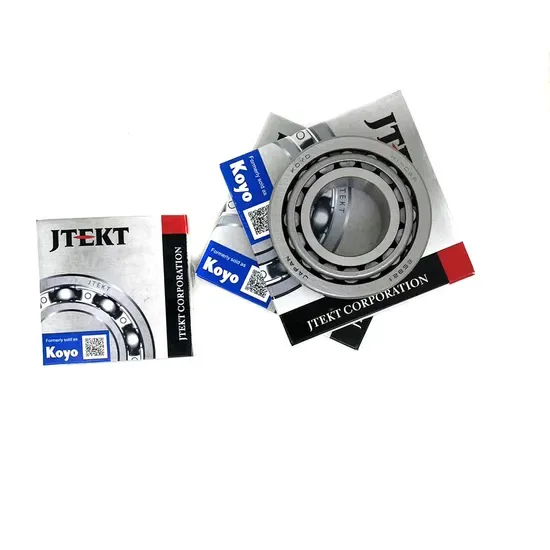 Brands & Alternatives
· 6 min read
Premium vs Economy Motorcycle Bearings: Wholesale Supplier for Bulk Orders
Choosing between premium vs economy motorcycle bearings requires analyzing total cost of ownership rather than just upfront price. Economy options often fail under heavy…
Read the Guide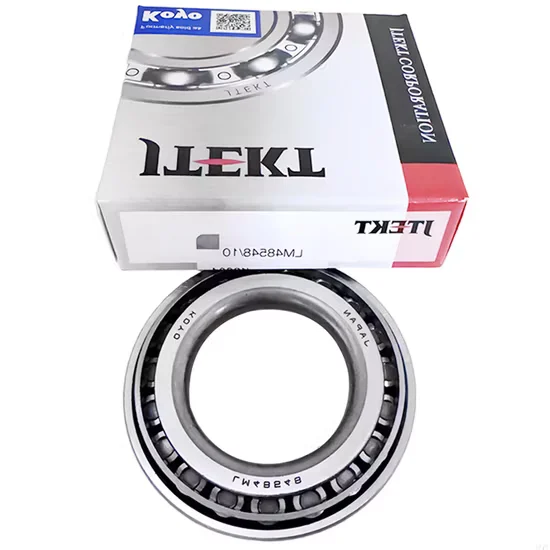 Brands & Alternatives
· 7 min read
Koyo Steering Bearing Equivalents: Cross-Reference & Wholesale Supplier
Stop premature failures by matching internal clearance and cage materials, not just dimensions, when sourcing Koyo steering bearing equivalents. Verify C3/C4 specs and request…
Read the Guide
Bearing enquiry
Send your machine details. Get a written Koyo / JTEKT quote.
KOYO Bearing Supplier quotes a single bearing position or every bearing in an assembly on one enquiry, matched to your machine model and application, with model, quantity, price, lead time and quote validity in writing.
- WhatsApp+1 (702) 981-5880
- Emailinfo@koyoome.com
- Address8 Research Drive, Greenville, SC 20627, USA
"When a Koyo bearing failed on a harvest machine during the season, we needed a replacement urgently. The supplier identified the correct Koyo reference, shipped same-day, and the machine was back in the field within the day."

Request a Bearing Quote
Tell us the machine and the bearing position. Photos of the markings can follow on WhatsApp.