
Koyo Automotive Bearings Wholesale Supplier for Global Bulk Orders
Mixing brands in one container does not save money if customs seizes the cargo.
Sourcing Koyo automotive bearings for global aftermarket distribution requires more than just selecting part numbers; it demands a rigorous strategy for verifying authenticity, managing mixed-brand logistics, and navigating complex customs regulations. The core solution lies in treating the supply chain as a compliance exercise first and a procurement task second, ensuring that every unit of Koyo automotive bearings is accompanied by verifiable traceability documentation and correctly declared brand-specific HS codes to prevent costly port delays.
I still remember the silence on the phone line when a client in Dubai realized their container of wheel hub assemblies was stuck at Jebel Ali Port. We had consolidated a full load to optimize freight costs, mixing genuine Koyo automotive bearings with high-quality domestic alternatives to meet a tight budget. The commercial invoice listed “automotive bearings” generically, failing to distinguish between the Japanese original equipment manufacturer (OEM) brand and the Chinese replacement lines. To customs officials, this looked like an attempt to misdeclare value or origin. The shipment sat for weeks, accruing demurrage charges that erased any savings from the mixed sourcing strategy. That incident shifted my focus from simple order fulfillment to comprehensive supply chain compliance. Now, when clients ask for Koyo automotive bearings, I start by discussing their import license capabilities and customs declaration protocols before we even look at the catalog.
Understanding the logistical risks is only half the battle. The other half is knowing exactly what you are buying within the vast Koyo automotive bearings portfolio and how to validate it against the sea of counterfeits in the global market.
What Defines the Core Koyo Automotive Product Range?
Not all bearings labeled for automotive use meet the same thermal and load specifications.
The term “automotive bearing” is dangerously broad. For distributors stocking Koyo automotive bearings, distinguishing between standard industrial grades and true automotive-spec components is critical. The automotive sector demands higher resistance to thermal cycling, contamination, and variable load patterns compared to stationary industrial machinery.
When evaluating the Koyo automotive bearings range, buyers must look beyond the basic part number. The product line includes deep groove ball bearings for electric motors and alternators, tapered roller bearings for wheel hubs and differentials, and needle roller bearings for transmission systems. Each category has specific metallurgical and tolerance requirements. For instance, wheel hub applications require bearings that can withstand significant axial and radial loads while maintaining precision under high-speed rotation.
| Application Area | Bearing Type | Key Performance Requirement | Verification Focus |
|---|---|---|---|
| Wheel Hubs | Tapered Roller / Ball | High Load Capacity, Sealing Integrity | Seal material quality, grease type |
| Transmissions | Needle / Cylindrical | High Speed, Low Noise | Surface finish, cage material |
| Alternators | Deep Groove Ball | High Temperature Resistance | Grease thermal stability, cage design |
| Steering Systems | Angular Contact | Precision, Durability | Raceway hardness, dimensional stability |
A common mistake among new distributors is assuming that a bearing with the correct dimensions is a suitable substitute. In reality, the internal clearance, such as C3 or C4, and the grease formulation are often tailored for specific vehicle platforms. When sourcing Koyo automotive bearings, requesting the technical data sheet that specifies these internal parameters is essential. Without this data, you risk supplying a component that fits physically but fails prematurely under operational stress.
How to Verify Genuine KOYO Bearings in Bulk Orders?
Authenticity cannot be determined by packaging alone.
The market for Koyo automotive bearings is flooded with sophisticated counterfeits. These fakes often replicate the outer box, the laser etching on the ring, and even the holographic stickers. Relying on visual inspection of the packaging is a recipe for disaster. True verification requires a multi-layered approach that examines the product itself and its accompanying documentation.
First, inspect the bearing surface. Genuine Koyo automotive bearings exhibit a consistent, high-quality finish on the raceways and rolling elements. Counterfeits often show subtle machining marks, inconsistent polishing, or slight discoloration due to inferior heat treatment processes. The laser marking on genuine units is sharp, evenly spaced, and resistant to rubbing, whereas fake markings may appear shallow or uneven.
Second, and more importantly, verify the traceability documentation. Every legitimate batch of Koyo automotive bearings should come with a certificate of conformity or a mill test report that links the specific batch number to the manufacturing facility. This document should include details such as the production date, material grade, and quality control inspection results. If a supplier cannot provide this level of documentation for a bulk order, it is a major red flag.
I once audited a warehouse in Southeast Asia where thousands of Koyo automotive bearings were stored. The boxes looked perfect. However, upon random sampling and cross-referencing the batch numbers with the manufacturer’s database, we found that nearly thirty percent of the stock had invalid or duplicated batch codes. These were not just old stock; they were outright fakes. This experience reinforced the rule: never trust the box, trust the paper trail and the physical metadata of the component.
Can Domestic Brands Replace KOYO in Aftermarket?
Replacement is possible, but only with precise technical cross-referencing.
Many distributors seek domestic alternatives to Koyo automotive bearings to improve margins. While Chinese manufacturing has advanced significantly, not all domestic brands offer the same consistency as established Japanese OEMs. The key to successful substitution is not price, but technical equivalence.
When considering a domestic alternative, you must compare more than just dimensions. Look at the steel purity, the heat treatment process, and the quality of the sealing technology. Premium domestic manufacturers now use vacuum-degassed steel and advanced grinding techniques that approach the performance of global brands. However, lower-tier producers may cut corners on material cleanliness, leading to premature fatigue failure.
To mitigate risk, create a cross-reference matrix that maps specific Koyo automotive bearings part numbers to verified domestic equivalents. This matrix should include notes on any performance trade-offs. For example, a domestic alternative might be suitable for low-speed agricultural applications but not for high-speed highway trucking. By being transparent about these limitations, you build trust with your clients and reduce return rates.
| Feature | Genuine Koyo | Premium Domestic Alternative | Budget Domestic Option |
|---|---|---|---|
| Steel Quality | High Purity, Vacuum Degassed | High Purity, Standard Processing | Standard Commercial Grade |
| Heat Treatment | Controlled Atmosphere | Controlled Atmosphere | Basic Hardening |
| Sealing Technology | Advanced Rubber Compounds | Standard Nitrile Rubber | Basic Rubber |
| Price Point | High | Medium | Low |
| Best Use Case | OEM Replacement, Heavy Duty | General Aftermarket, Fleet Maintenance | Low-Speed, Non-Critical Apps |
Sourcing Koyo automotive bearings alongside these alternatives allows you to offer tiered solutions. Clients who need guaranteed OEM performance can buy the genuine article, while those focused on cost-efficiency for older vehicles can opt for the verified domestic substitute. This strategy diversifies your inventory without compromising your reputation for quality.
How to Avoid Customs Delays in Mixed-Brand Shipments?
Generic declarations are the primary cause of international shipping bottlenecks.
As mentioned in the opening, mixing brands in a single container is a common practice to optimize logistics. However, customs authorities in many regions are increasingly strict about brand declaration. Declaring a container simply as “bearings” when it contains both Koyo automotive bearings and other brands is insufficient and risky.
Each brand should be listed as a separate line item on the commercial invoice and packing list. This transparency helps customs officers verify the value and origin of each component. Additionally, ensure that the country of origin is clearly marked for each line item. Misdeclaring the origin of Koyo automotive bearings as something else to avoid tariffs is illegal and can lead to severe penalties, including blacklisting.
Furthermore, some countries require specific certificates for automotive parts, such as proof of compliance with local safety or environmental standards. Before shipping, check if your destination market has any special requirements for imported bearings. Providing these documents proactively can smooth the clearance process significantly.
I recall a shipment to Latin America where we included a detailed breakdown of each brand and model in the container. The customs broker there noted that this level of detail sped up the inspection process because the officers could quickly verify the goods against the declaration. In contrast, vague descriptions often trigger manual inspections, which delay release and increase costs. When dealing with Koyo automotive bearings, precision in paperwork is just as important as precision in manufacturing.
Conclusion
Compliance and verification are the true drivers of profitability in bearing distribution.
Successfully distributing Koyo automotive bearings globally requires a shift from simple transactional thinking to strategic supply chain management. By understanding the specific technical requirements of the automotive range, implementing rigorous authenticity checks, carefully selecting domestic alternatives, and maintaining transparent customs documentation, you can build a resilient and reputable business. The goal is not just to move boxes, but to deliver reliable solutions that keep vehicles moving and clients trusting your expertise.
Mentioned in this article
Koyo / JTEKT bearings from this guide
These are the Koyo / JTEKT bearing types discussed above. Open any product to check its details, or quote it together with the rest of your repair.

Tapered Roller Bearings
KOYO 30211 30220 30221 Taper Roller Bearing for Automotive Axle Vehicle Spare Parts
View Product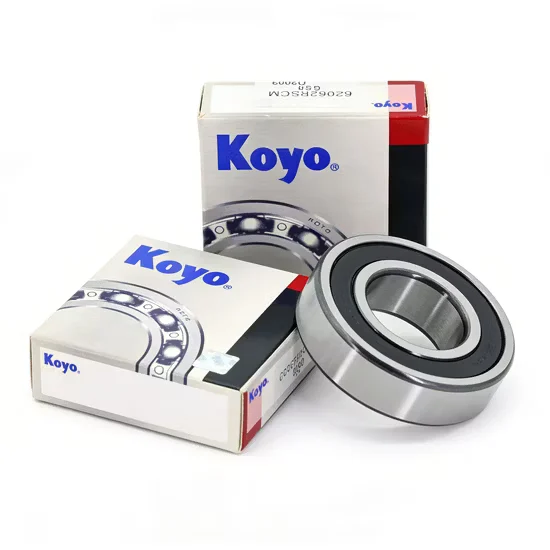
Deep Groove Ball Bearings
Koyo 6003 6205 6301 6004 Sealed Deep Groove Ball Bearing for Automotive Aftermarket
View Product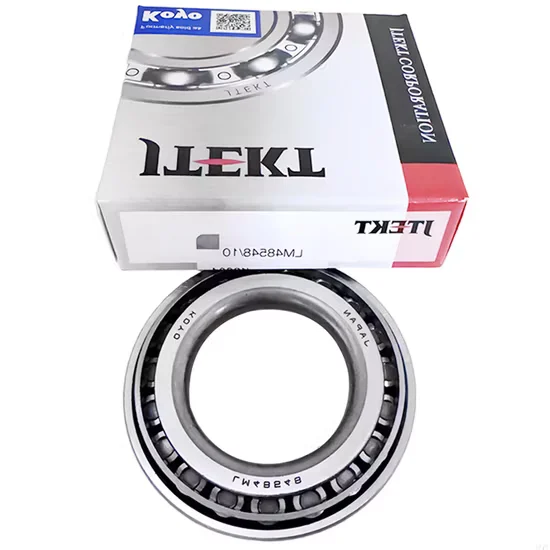
Tapered Roller Bearings
Genuine KOYO 32007 Tapered Roller Bearing Wholesale Supplier
View Product
Tapered Roller Bearings
Genuine KOYO 32006 Taper Roller Bearing Wholesale Supplier
View ProductKeep reading
More bearing selection guides for repair shops
Practical guides from KOYO Bearing Supplier on identifying Koyo / JTEKT bearings for farm machinery, construction equipment and power transmission repairs.
 Brands & Alternatives
· 6 min read
Premium vs Economy Motorcycle Bearings: Wholesale Supplier for Bulk Orders
Choosing between premium vs economy motorcycle bearings requires analyzing total cost of ownership rather than just upfront price. Economy options often fail under heavy…
Read the Guide Brands & Alternatives
· 8 min read
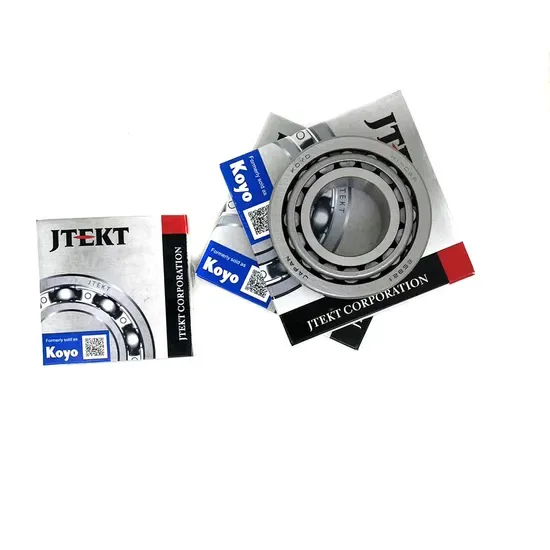
OE Koyo vs Aftermarket Box: Differences for Wholesale Buyers
Understand the critical OE Koyo vs Aftermarket Box differences to avoid severe customs delays and terminal rejections in strict markets. Original packaging features holographic…
Read the Guide Brands & Alternatives · 7 min read
Koyo Steering Bearing Equivalents: Cross-Reference & Wholesale Supplier
Stop premature failures by matching internal clearance and cage materials, not just dimensions, when sourcing Koyo steering bearing equivalents. Verify C3/C4 specs and request…
Read the Guide
Bearing enquiry
Send your machine details. Get a written Koyo / JTEKT quote.
KOYO Bearing Supplier quotes a single bearing position or every bearing in an assembly on one enquiry, matched to your machine model and application, with model, quantity, price, lead time and quote validity in writing.
- WhatsApp+1 (702) 981-5880
- Emailinfo@koyoome.com
- Address8 Research Drive, Greenville, SC 20627, USA
"When a Koyo bearing failed on a harvest machine during the season, we needed a replacement urgently. The supplier identified the correct Koyo reference, shipped same-day, and the machine was back in the field within the day."

Request a Bearing Quote
Tell us the machine and the bearing position. Photos of the markings can follow on WhatsApp.