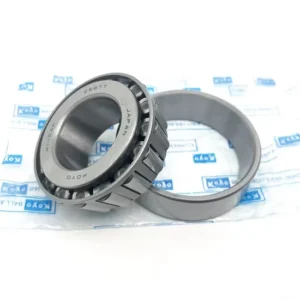
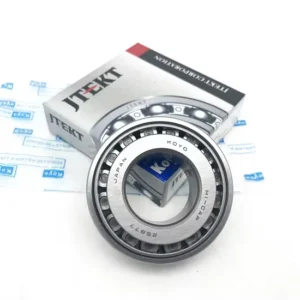
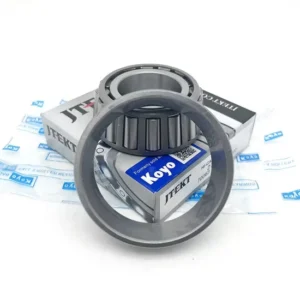
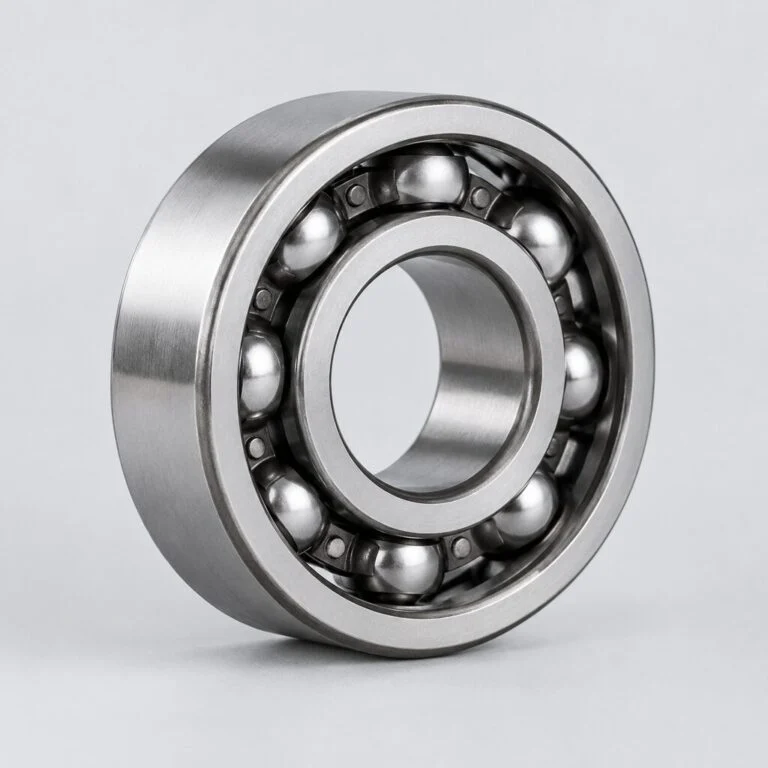
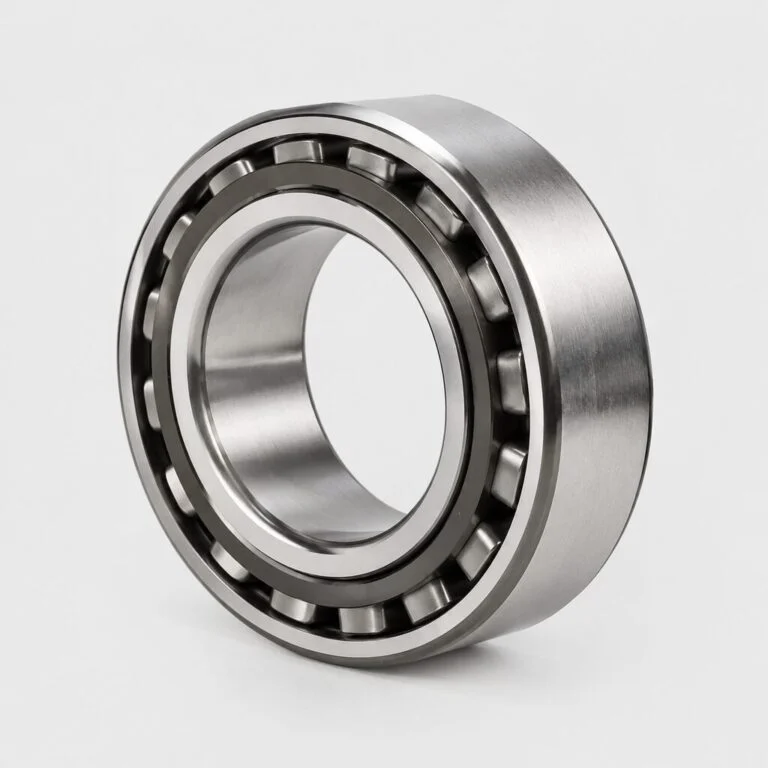
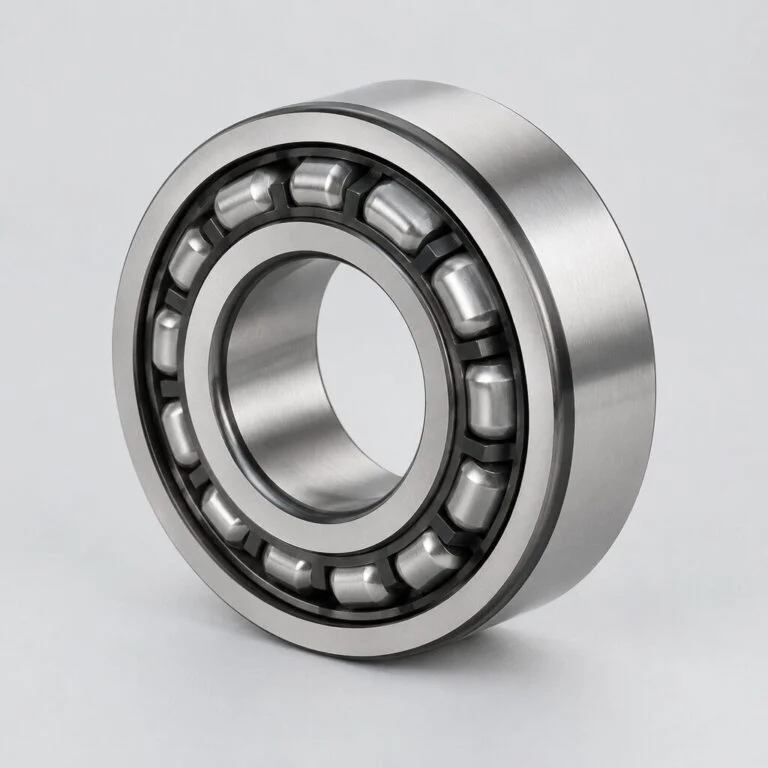
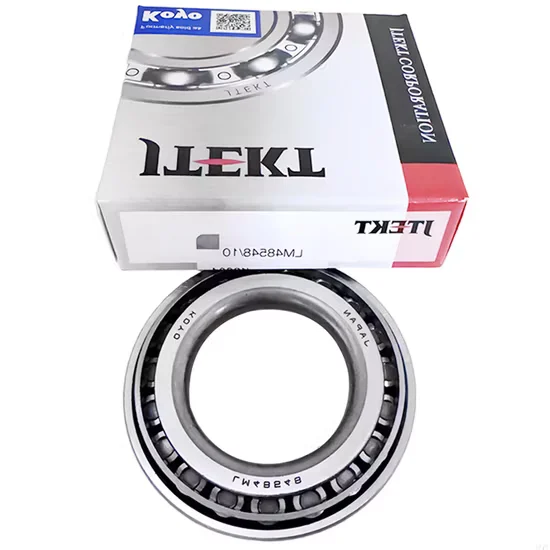
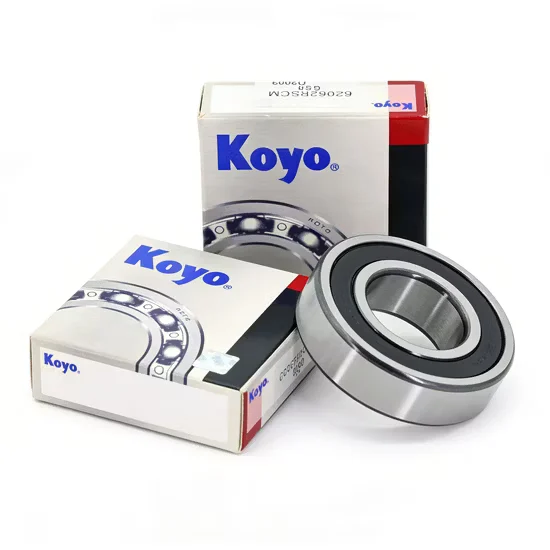
Original Batch Traceability — Every X&S tapered roller bearing shipment includes mill certificates linking heat numbers to specific production runs, ensuring complete material transparency.
Technical Specifications
| Parameter | Value |
| Designation | 33010 30211 33110 32307 33208 |
| Bearing Type | Tapered Roller Bearing |
| Clearance Class | C0/C2/C3/C4 |
| Hardness | HRC58-62 |
| Lubrication | Grease or Oil |
| Origin | Shandong, China |
| HS Code | 8482500090 |
Application Suitability
| Industry | Typical Applications |
| Agricultural Machinery | Tractor wheel hubs, harvester gearboxes, plow shaft supports |
| Manufacturing Plant | Conveyor drive rollers, industrial fan shafts |
| Machinery Repair Shops | MRO replacement for heavy-duty agricultural and industrial shafts |
| Automotive | Wheel hub assemblies, differential pinion shafts |
| Industrial Gearboxes | Input and output shafts requiring combined load capacity |
Why Dust Ingress Destroys the X&S 33010 30211 33110 32307 33208 tapered roller bearing Before Fatigue Does
Contamination causes abrupt seizing long before theoretical rolling contact fatigue limits are reached.
During my time running agricultural after-sales in Nigeria, I replaced a 30211 unit on a local tractor only to see it seize within days because the chosen seal could not handle the extreme field dust. When fine particulates bypass inadequate sealing and mix with lubricants, they create an abrasive paste that scores raceways and triggers catastrophic shaft lockup. Sourcing the correct X&S 33010 30211 33110 32307 33208 tapered roller bearing requires prioritizing environmental protection over mere load ratings. Field conditions rarely mirror laboratory testing environments, meaning that theoretical fatigue limits are entirely irrelevant if the internal geometry is compromised by external contamination within the first few weeks of deployment.

Matching Component Selection to Field Realities
Supplying mixed-brand bearing packages for urgent agricultural maintenance means understanding that a tractor wheel hub operates differently than a clean-room spindle. We apply extensive cross-brand equivalent model consultation to ensure the selected X&S 33010 30211 33110 32307 33208 tapered roller bearing aligns perfectly with the original equipment manufacturer's dimensional and thermal requirements. This prevents the common MRO trap of installing a dimensionally correct but internally mismatched component that fails under field shock loads. Our technical selection support bridges the gap between catalog specifications and the harsh realities of daily equipment operation, ensuring that every replacement part delivers reliable service life.
Operational Challenges and Performance Demands
Agricultural and heavy manufacturing environments subject shafts to severe combined radial and axial loads, often accompanied by heavy shock impacts from uneven terrain or irregular material feed. These fluctuating forces demand high structural rigidity, while the ambient temperature variations dictate strict attention to thermal expansion and its effect on internal clearance. Furthermore, heavy dust and moisture exposure require lubricants that resist washout and degradation, making the choice between grease and oil critical depending on the maintenance interval capabilities of the end user. Proper installation alignment is equally vital to prevent edge loading on the rollers, which rapidly accelerates localized wear and compromises the overall structural integrity of the rotating assembly.
Decoding the Core Engineering Specifications
The HRC58-62 hardness rating ensures the rolling elements and raceways possess the necessary wear resistance to withstand prolonged abrasive exposure without premature spalling. Selecting the appropriate clearance class from the available C0, C2, C3, or C4 options is crucial; for instance, a C3 or C4 clearance compensates for the thermal expansion generated in high-speed gearboxes or the tight interference fits required in heavy-duty wheel hubs. The dual compatibility with both grease and oil lubrication allows maintenance teams to adapt to their existing infrastructure, though oil is generally preferred for high-speed applications to dissipate heat, while grease provides better sealing against agricultural contaminants. Understanding these fundamental design parameters prevents costly operational interruptions.
The Hidden Costs of Incorrect Specification
Installing a standard clearance bearing in an application requiring extra internal clearance leads to rapid thermal preload buildup, resulting in unplanned downtime and catastrophic damage to the surrounding housing. Conversely, excessive clearance in a precision gearbox causes destructive vibration and accelerated wear on the gear teeth. According to established fatigue life calculation frameworks, even minor misalignments or incorrect internal geometries drastically reduce the operational lifespan, turning a minor component replacement into a major assembly rebuild. The financial impact extends far beyond the cost of the replacement part, encompassing lost production time, secondary component damage, and emergency freight expenses.
Advantages of Our Sourcing Approach
We maintain massive spot inventory covering thousands of standard part numbers, ensuring that urgent MRO requirements for specific agricultural models are met without typical multi-week lead times. Our cross-brand equivalent model consultation prevents the costly mistake of substituting a metric series with an incompatible inch-series alternative during emergency repairs. Every shipment includes complete traceability documentation, giving maintenance managers confidence in the material integrity of the replacement parts. Furthermore, our flexible MOQ accommodates everything from a single emergency spare part to full container consolidation shipments, optimizing freight costs for global buyers. This comprehensive approach eliminates the friction of coordinating multiple suppliers for mixed-size bearing packages.
Documentation & Authenticity
- Mill heat number traceability linking each batch to its specific metallurgical origin.
- Dimensional inspection reports verifying taper angle and bore tolerances before dispatch.
- Hardness testing certificates confirming the HRC58-62 raceway and roller specifications.
- Certificate of Conformity validating the origin and manufacturing standards compliance.
Storage, Handling & Mounting
- Retain original VCI packaging until installation to protect the HRC58-62 precision surfaces from humidity.
- Use induction heating for inner ring mounting to preserve the selected C3 or C4 internal clearance.
- Apply clean gloves during handling to prevent acidic skin oils from corroding the exposed raceways.
- Ensure shaft and housing seats are perfectly clean to avoid debris altering the critical taper alignment.
- Verify the correct grease fill volume to prevent churning and excessive thermal buildup in sealed hubs.
Requesting Technical Verification
To ensure optimal performance and prevent premature failure, please provide the specific radial and axial load profiles, operating speeds, and ambient temperature ranges of your equipment. Sharing the original equipment manufacturer part numbers allows our engineering team to perform accurate cross-reference checks and confirm the exact internal geometry required for your application. We also recommend detailing the environmental exposure levels, including dust and moisture presence, so we can advise on the most suitable lubrication and sealing configurations. This collaborative technical review guarantees that the selected components will withstand your unique operational demands.
Frequently Asked Questions
Q: How do I choose between C0, C3, and C4 clearance for agricultural machinery?
A: Standard C0 clearance suits general applications with normal temperatures and fits. For tractor wheel hubs or gearboxes experiencing high thermal expansion or requiring heavy interference fits to prevent creep, C3 or C4 clearances are necessary. Selecting the wrong class leads to either excessive vibration or thermal seizure during operation.
Q: What are the cross-reference equivalents for these models in other global brands?
A: These metric tapered roller bearings correspond to standard ISO dimension series. We provide comprehensive cross-reference mapping to SKF, FAG, NSK, and NTN equivalents, ensuring dimensional interchangeability. Always verify internal geometry and cage design, as external dimensions alone do not guarantee identical load capacity or fatigue life.
Q: Is grease or oil lubrication better for tapered roller bearings in heavy equipment?
A: Oil lubrication excels in high-speed industrial gearboxes by effectively dissipating heat and flushing away wear debris. Conversely, grease is generally preferred for agricultural wheel hubs and slower-moving shafts because it stays in place, provides a secondary seal against dust ingress, and requires less frequent maintenance intervention.
Q: How can I verify the authenticity and origin upon delivery?
A: Every shipment is accompanied by a Certificate of Conformity and original mill test certificates. These documents include specific heat numbers that trace the bearing steel back to its smelting batch. You can cross-verify the dimensional inspection reports against official catalog tolerances to confirm genuine manufacturing standards.
Q: What installation tools are recommended for these tapered roller bearings?
A: Induction heaters are highly recommended for mounting the inner rings, ensuring uniform thermal expansion without damaging the hardened raceways. For setting the correct endplay or preload, use calibrated dial indicators and specialized spanner wrenches, avoiding impact tools that can cause micro-fractures on the roller ends.