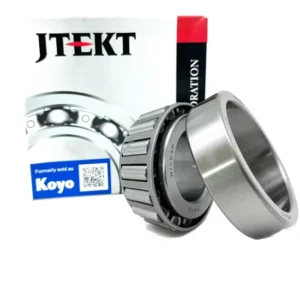
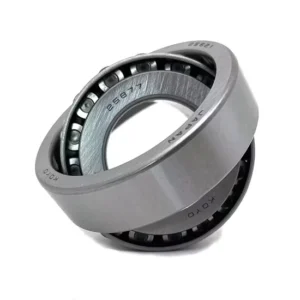
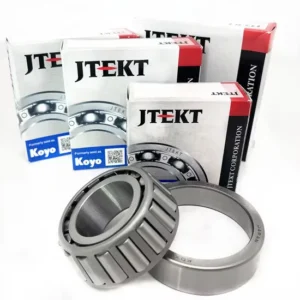
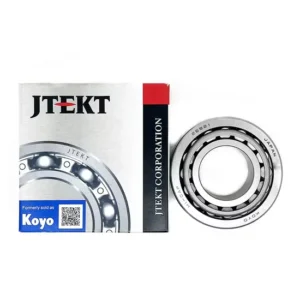
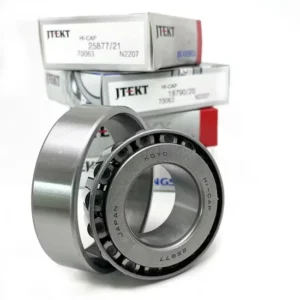
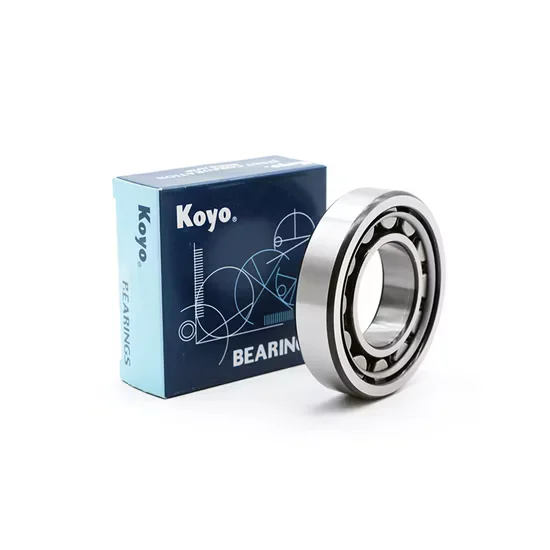
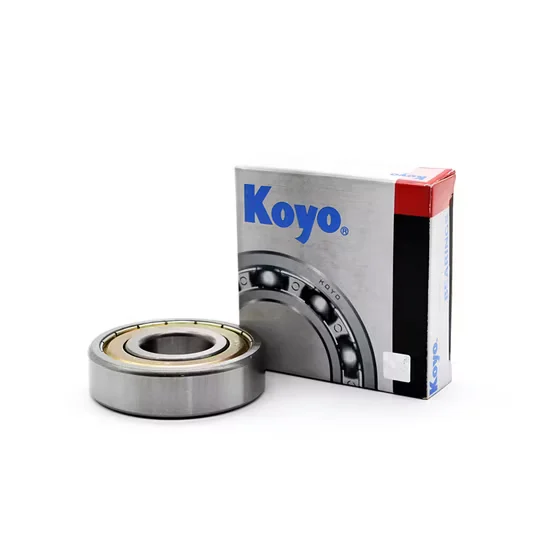
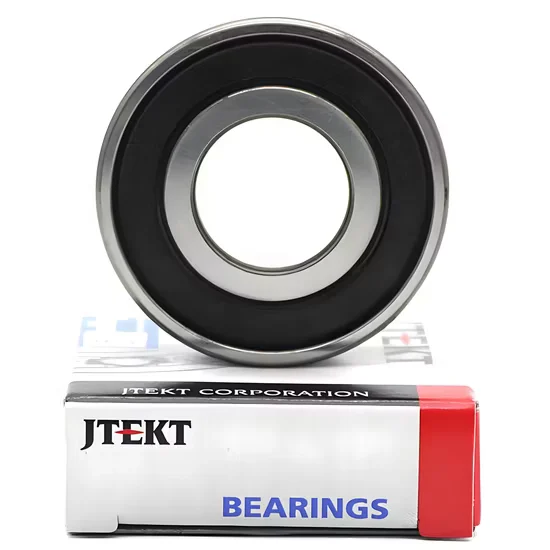
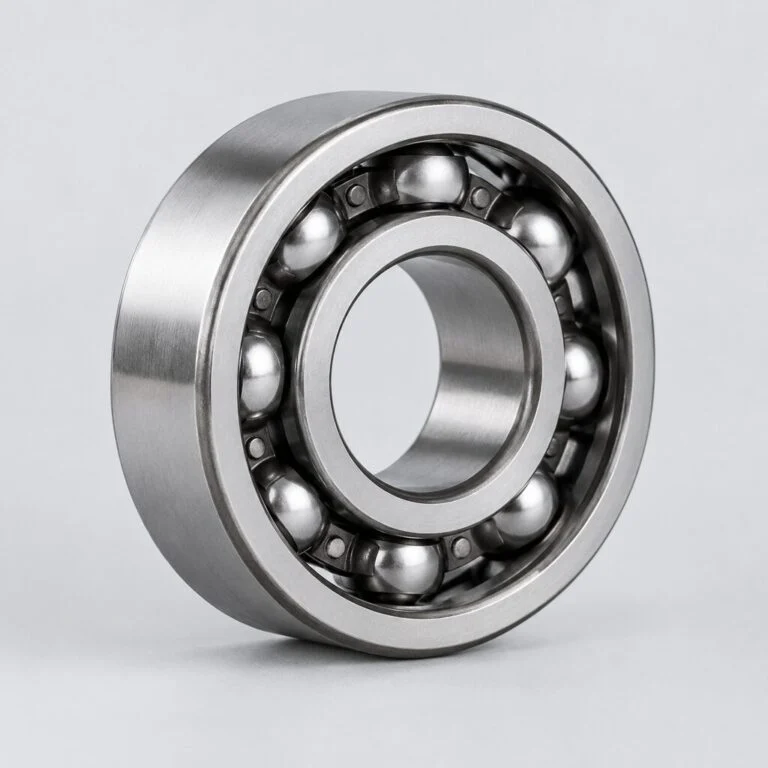
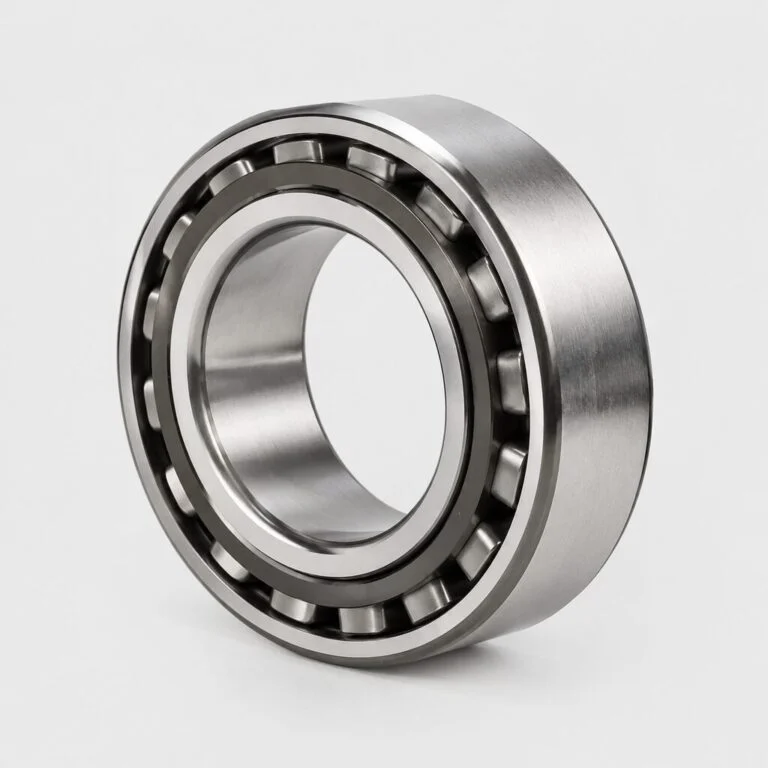
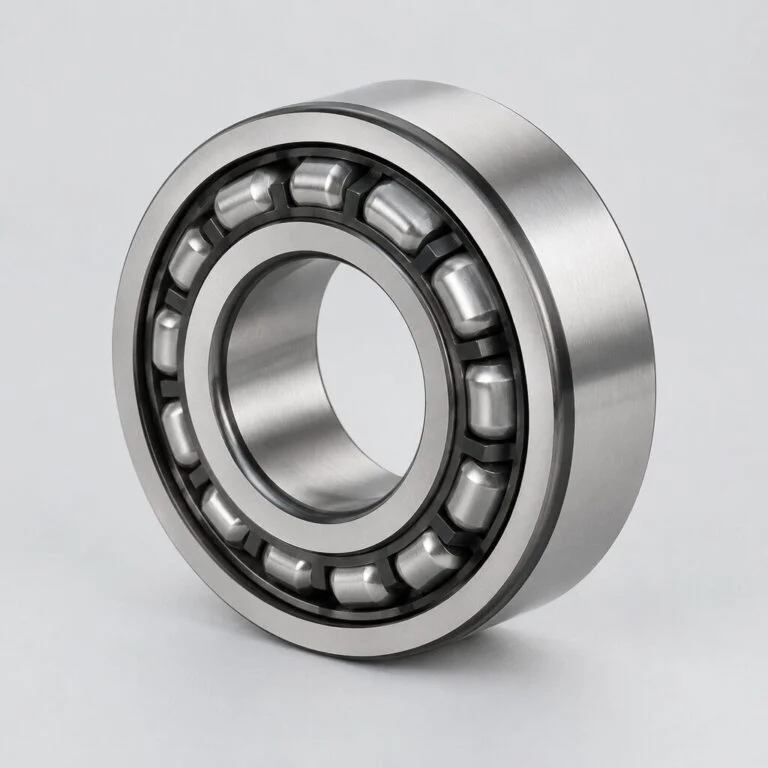
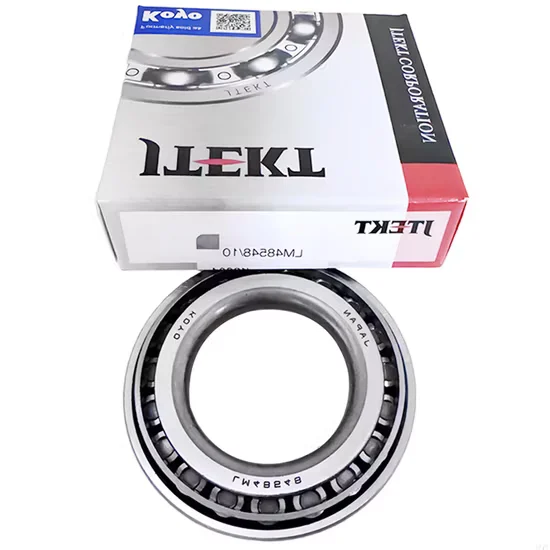
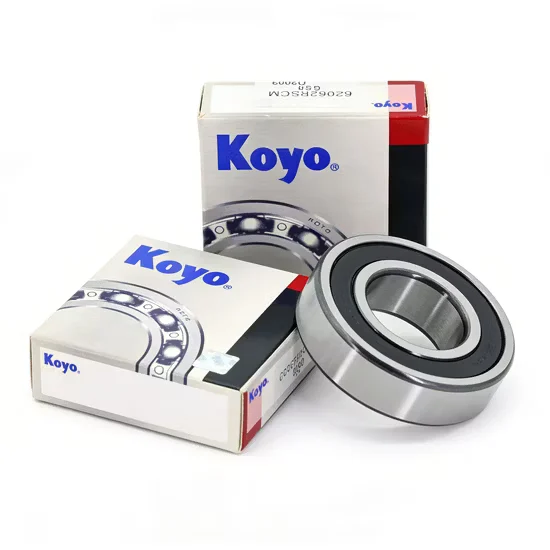
Consolidated Brand Sourcing — Procure mixed-brand bearing packages alongside your Koyo 30318 31305 31306 31307 31308 tapered roller bearing order without coordinating multiple vendors.
Technical Specifications
| Parameter | Value |
| Designation | Koyo 30318 31305 31306 31307 31308 |
| Bearing Type | Tapered Roller Bearing |
| Number of Rows | Single, Double, Four |
| Material | Bearing Steel |
| Precision Class | P0, P6, P5, P4, P2 |
| Load Direction | Radial Bearing |
| Origin | China |
| HS Code | 8482500090 |
Application Suitability
| Industry | Typical Applications |
| Coal Mining | Conveyor drive shafts, continuous miner cutter heads |
| Heavy Equipment | Excavator swing drives, bulldozer final drives |
| Automotive & Transport | Truck wheel hubs, heavy-duty axle differentials |
| Industrial Power | Heavy-duty gearboxes, marine propulsion drives |
Preventing Premature Spalling in Heavy-Duty Conveyors
Proper mounting and authentic metallurgy prevent catastrophic raceway spalling.
When maintaining coal mining conveyors and heavy material handling systems, a significant share of premature failures stems from improper installation practices rather than actual operational loads. Early in my career, I witnessed maintenance crews using open flames to heat bearings for shrink-fitting on site. This reckless thermal abuse instantly destroys the carefully engineered metallographic structure of the bearing steel, altering its hardness profile and residual stress distribution. Consequently, this leads to rapid roller spalling, raceway flaking, and severe unplanned downtime that halts the entire extraction line. Sourcing a genuine Koyo 30318 31305 31306 31307 31308 tapered roller bearing ensures the original heat treatment integrity remains intact from the factory. However, preserving this metallurgical advantage requires the installation process to strictly respect the material's thermal limits and utilize controlled heating methods.

Aligning Tapered Geometry with Mining Loads
Mining equipment and heavy transport vehicles subject drivetrain components to severe shock loads, intense vibrations, and heavy radial forces combined with significant axial thrust. The tapered internal geometry of these components efficiently channels these complex, multidirectional forces into the surrounding housing structure. Selecting the correct Koyo 30318 31305 31306 31307 31308 tapered roller bearing allows maintenance engineers to precisely match the specific row configuration—whether single, double, or four-row—to the exact load profile of the gearbox, wheel hub, or final drive. This precise alignment ensures optimal load distribution across the rollers, preventing localized stress concentrations that typically initiate micro-pitting and subsequent surface fatigue in demanding subterranean environments.
Environmental Contaminants and Lubrication Demands
Coal dust, rock particulates, and pervasive moisture create an aggressively abrasive environment that rapidly degrades inadequately sealed or poorly lubricated mechanical components. In these punishing conditions, the lubrication regime must consistently maintain a sufficient elastohydrodynamic film thickness to physically separate the rolling elements from the raceways. Elevated operating temperatures generated within continuous miner gearboxes or heavily loaded axles can also thin the lubricant base oil, demanding precise internal clearance selection to accommodate thermal expansion without inducing excessive preload. Without adequate contamination exclusion and strictly adhered relubrication intervals, microscopic coal particles infiltrate the contact zones and act as lapping compounds, drastically accelerating surface wear and catastrophic fatigue.
Decoding Precision and Row Configurations
The available precision classes, ranging from standard P0 up to ultra-precise P2, dictate the dimensional accuracy and running smoothness of the entire rotating assembly. While standard P0 or P6 classes generally suffice for general conveyor pulleys and low-speed bulk material handling, high-speed industrial gearboxes or precision marine propulsion drives demand P5 or tighter tolerances to minimize vibration, reduce frictional heat generation, and ensure smooth power transmission. Furthermore, the critical choice between single, double, and four-row arrangements directly influences the axial load capacity, moment stiffness, and overall rigidity of the shaft system. The high-quality bearing steel material provides the necessary foundational fatigue strength, but achieving the rated L10 life relies heavily on matching the exact precision class and row configuration to the specific operational tolerances and speed requirements of the machinery.
The Financial Impact of Counterfeit Components
Installing unverified, counterfeit, or substandard components in critical mining machinery introduces severe hidden costs that extend far beyond the initial purchase price savings. Substandard steel alloys and improper heat treatment protocols result in hardness levels well below specification, leading to rapid plastic deformation, brinelling, and catastrophic structural failure under peak shock loads. Such failures not only destroy adjacent shafts, seals, and expensive housings but also trigger extended production halts that severely impact overall mine output and profitability. Relying exclusively on verified, authorized supply channels mitigates these operational risks, protects the mechanical integrity of the equipment, and ensures the long-term operational continuity of the entire extraction facility.
Securing Traceable Inventory for Critical Spares
Our specialized supply chain prioritizes complete traceability, technical accuracy, and rapid fulfillment for every industrial shipment. We maintain a massive spot inventory covering thousands of standard and special part numbers, ensuring that urgent maintenance requirements for coal mining machinery are met immediately without enduring typical multi-week lead times. Our dedicated engineering team provides comprehensive cross-brand equivalent model consultation, helping you verify dimensional interchangeability and load ratings when replacing legacy components from other manufacturers. Furthermore, we offer highly flexible consolidation shipments, allowing you to mix these specific tapered units with other premium global brands and domestic alternatives in a single container. This integrated logistical approach significantly reduces your freight overhead, simplifies customs clearance, and reduces your overall procurement complexity.
Documentation & Authenticity
- Certificate of Conformity verifying the original manufacturing batch for each tapered unit.
- Official QR code scanning validation to confirm genuine metallurgy and assembly.
- Material inspection reports confirming the specific bearing steel grade and heat treatment.
- Dimensional and running accuracy inspection reports matching the selected P0 to P2 precision class.
- Complete origin documentation and customs declarations for efficient international freight forwarding.
Storage, Handling & Mounting
- Store the four-row configurations horizontally in original packaging to prevent cage deformation and roller skewing.
- Use induction heaters with strict temperature limits rather than open flames to preserve the bearing steel's metallographic structure during shrink-fitting.
- Maintain strict cleanliness protocols when handling open single-row variants to prevent coal dust ingestion before final housing sealing.
- Verify the precise axial clearance adjustment after mounting double-row arrangements to ensure optimal load sharing and prevent premature edge loading.
Engineering Data Required for Technical Review
To facilitate accurate technical review and precise L10 life calculation, please provide the specific radial and axial load profiles, operating speeds, and expected thermal conditions of your target application. Sharing the exact OEM equipment model numbers, shaft diameters, and housing dimensions allows our engineering team to perform rigorous cross-reference verification and confirm the optimal row configuration for your machinery. Detailing the environmental exposure, such as coal dust concentration, moisture levels, and chemical contaminants, will also help us recommend the most appropriate sealing arrangements and lubrication strategies to maximize service intervals and prevent premature ingress-related failures.
Frequently Asked Questions
Q: How can we verify the authenticity of these Koyo tapered roller bearings upon delivery?
A: You can verify authenticity by scanning the official QR code on the packaging using the manufacturer's designated mobile application. Additionally, we provide complete traceability documentation, including original batch certificates and material inspection reports, ensuring every Koyo 30318 31305 31306 31307 31308 tapered roller bearing meets the required metallurgical and dimensional standards before deployment in your mining equipment.
Q: What are the differences in load capacity between single and four-row tapered configurations?
A: Single-row arrangements primarily handle radial loads and require pairing to manage axial thrust in both directions, whereas four-row configurations are engineered to sustain exceptionally heavy radial and bidirectional axial loads simultaneously. Selecting the appropriate row configuration depends on the specific load profile of your coal mining machinery, and our technical team can assist in calculating the required dynamic load rating for your application.
Q: How do we cross-reference equivalent models across different premium bearing brands?
A: Cross-referencing involves matching the critical dimensions, internal geometry, and precision classes against the official catalogs of manufacturers like SKF, Timken, and NSK. We provide comprehensive cross-brand equivalent model consultation to ensure dimensional interchangeability. When substituting a Koyo 30318 31305 31306 31307 31308 tapered roller bearing, we verify the exact contact angles and load ratings to guarantee operational compatibility in your heavy-duty gearboxes.
Q: What precision class should be selected for high-speed industrial gearboxes versus slow conveyor drives?
A: Standard P0 or P6 precision classes are generally sufficient for low-speed, heavy-load applications like conveyor drives where minor runout is tolerable. Conversely, high-speed industrial gearboxes demand P5, P4, or P2 precision classes to minimize vibration, reduce heat generation, and ensure smooth power transmission. We recommend evaluating the operational speed and required running accuracy to determine the most suitable tolerance grade.
Q: How does improper heating during installation affect the bearing steel's performance?
A: Applying uncontrolled heat, such as an open flame, during installation destroys the carefully engineered metallographic structure of the bearing steel, significantly reducing its hardness and fatigue strength. This thermal damage leads to rapid surface spalling and premature failure under heavy mining loads. We strongly advise using calibrated induction heaters with strict temperature controls to preserve the material's integrity during the mounting process.