
Auto Bearing Glossary: Wholesale Supplier for Bulk & MRO Parts
Identical dimensions do not guarantee interchangeability.
Mastering the auto bearing glossary and decoding suffix codes is the only way to ensure accurate MRO replacement, prevent costly equipment downtime, and avoid the trap of assuming visual matches equal functional compatibility.
When I first started working on the assembly line for automotive hub bearings in Ningbo, I assumed that if the outer diameter, inner diameter, and width matched the blueprint, the part would fit. It was a naive assumption that nearly cost us a major client in South America. We shipped a full container of deep groove ball bearings to replace units in their mining conveyor systems. The physical dimensions were perfect. The brand was reputable. Yet, within days, the bearings seized up due to excessive heat. The issue was not the size; it was the internal clearance and seal type, hidden in the suffix codes we had overlooked. That incident forced me to stop looking at bearings as simple metal rings and start reading them as complex engineering components defined by their suffixes.. Understanding these nuances is what separates a parts orderer from a technical resource.
This guide breaks down the essential terminology and suffix logic that governs real-world performance. Whether you are stocking for regional distribution or managing emergency MRO repairs, knowing how to read these codes is critical. As a global full-range bearing supplier, we see daily how misinterpretation of these details leads to inventory waste and operational delays.
What Are the Essential Auto Bearing Terms?
Basic structural terminology forms the foundation of any accurate cross-reference lookup.
Before diving into complex suffixes, one must understand the core types. In the automotive and heavy equipment sectors, the most common types are deep groove ball bearings, tapered roller bearings, and spherical roller bearings. Each serves a distinct load profile. Deep groove ball bearings handle radial and moderate axial loads, making them ubiquitous in electric motors and general automotive applications. Tapered roller bearings, often found in wheel hubs and gearboxes, are designed to handle combined heavy radial and axial loads..
A common mistake among new buyers is confusing “precision” with “durability.” A P5 precision bearing is not necessarily more durable than a P0 in a high-vibration environment; it is simply manufactured to tighter tolerances for high-speed or low-noise applications. Using a high-precision bearing in a dirty, slow-moving agricultural machine can actually lead to premature failure because the tight clearances leave no room for contaminant displacement.
When sourcing from an auto bearing glossary perspective, always verify the basic type first. A cylindrical roller bearing cannot substitute for a spherical roller bearing even if the dimensions align, because the latter accommodates shaft misalignment. This fundamental distinction is where many MRO failures begin. We maintain stock across all these mainstream types, from SKF and FAG to domestic lines like ZWZ and HRB, ensuring that the basic structural requirement is met before addressing the finer details.
How Do Suffix Codes Affect Bearing Performance?
Suffix codes dictate the internal geometry, sealing, and cage material, which are often more critical than the brand name.
The suffix is where the devil hides. Two bearings with the same base number, such as 6205, can behave entirely differently based on their suffixes. The most frequently ignored suffixes relate to internal clearance and seals.
Internal clearance is denoted by codes like C2, C3, C4, and C5. Standard clearance is often implicit (no suffix), but for automotive applications involving thermal expansion, C3 is frequently required. If a mechanic replaces a C3 bearing with a standard clearance unit in a high-temperature engine environment, the inner ring expands, eliminating the internal play. This leads to pre-loading, overheating, and rapid fatigue..
Seal types are another critical variable. Common suffixes include RS1 (rubber seal on one side), 2RS (rubber seals on both sides), and ZZ or 2Z (metal shields). Rubber seals offer better contamination protection but generate more friction and heat. Metal shields allow higher speeds but offer less protection against dust and water. In a muddy off-road vehicle application, using a ZZ shield instead of a 2RS seal will allow grit to enter the raceway, acting as an abrasive paste that destroys the bearing in hours.
| Feature | Standard/Basic | Enhanced/Specific | Application Impact |
|---|---|---|---|
| Internal Clearance | Normal (No suffix) | C3, C4 | C3/C4 prevents seizure in high-temp environments |
| Seal Type | Open (No suffix) | 2RS, ZZ | 2RS protects against contaminants; ZZ allows higher speed |
| Cage Material | Steel (No suffix) | Polyamide (PA66), Brass | Polyamide reduces weight and noise; Brass handles higher temps |
Understanding these codes is essential for anyone using an auto bearing glossary to verify parts. We often consult with clients who have suffered repeated failures because they ordered the “same” bearing without checking if the original had a C3 clearance or a specific polyamide cage. Our cross-brand consultation service helps identify these exact equivalents, ensuring that a substitute from NTN or NSK matches the functional specs of the original SKF or TIMKEN part.
Why Do Dimensional Matches Fail in MRO?
Hidden parameters beyond basic OD/ID/width dictate real compatibility in harsh operating conditions.
It is counter-intuitive, but a bearing that fits perfectly on the shaft may still fail catastrophically. This is because dimensional matching ignores the dynamic requirements of the application. The primary hidden parameters are load rating, limiting speed, and operating temperature range.
In heavy fleet repair, a common error is substituting a standard automotive bearing for a heavy-duty equivalent. While the dimensions match, the heavy-duty version may have larger rolling elements or a different raceway curvature designed to handle shock loads. Using the standard version in a truck suspension system might result in brinelling (denting of the raceway) under heavy loads..
Another factor is the cage design. In high-vibration environments, such as construction machinery, a stamped steel cage might deform or fracture. A machined brass or polyamide cage offers greater resilience. If the auto bearing glossary entry does not specify the cage type, the buyer assumes standard, which may be inadequate for the application.
We once assisted a distributor in Central Asia who was facing high return rates on wheel hub bearings. The dimensions were correct, but the bearings were failing due to vibration-induced cage failure. By switching to a variant with a reinforced polyamide cage, the failure rate dropped noticeably. This highlights why relying solely on dimensional data is insufficient for MRO success.
Our inventory includes thousands of standard and special part numbers, allowing us to offer alternatives that match not just the size, but the operational demands. This mixed-brand sourcing capability ensures that if a specific premium brand is unavailable, a functionally equivalent alternative from another reputable manufacturer can be sourced without compromising performance.
How to Verify Bearing Authenticity & Specs?
Traceability documentation and visual inspection are the only defenses against counterfeit parts in the aftermarket.
The global bearing market is flooded with counterfeits that look identical to genuine products but lack the metallurgical quality and precision. For MRO operators and distributors, verifying authenticity is as important as selecting the right spec. Genuine bearings come with complete traceability documentation, including batch numbers and material certificates..
Visual inspection can reveal obvious fakes. Look for poor quality printing on the packaging, misspelled brand names, or rough finishing on the bearing itself. Genuine bearings from brands like INA, KOYO, or NACHI have precise, laser-etched markings that are difficult to replicate. However, sophisticated fakes can pass visual checks, making documentation crucial.
When sourcing from a wholesale supplier, request proof of origin. Reputable suppliers provide invoices that trace back to authorized distribution channels or direct factory shipments. Be wary of prices that seem too good to be true; they often indicate refurbished or counterfeit goods. In our operations, we prioritize genuine original bearings with full traceability, ensuring that every unit supplied meets ISO-compliant quality assurance standards.
For urgent maintenance requirements, having a supplier who can provide both fast lead-times and verified authenticity is vital. We offer global shipping consolidation and inspection services to ensure that the parts arriving at your site are exactly what was ordered. This level of verification minimizes the risk of unplanned downtime caused by substandard components.
Conclusion
Accurate bearing selection requires looking beyond dimensions to decode suffixes and verify authenticity.
Mastering the auto bearing glossary is not just about memorizing terms; it is about understanding how clearance, seals, and cage materials impact real-world performance. By focusing on these technical details and ensuring supply chain traceability, MRO operators and distributors can avoid costly failures and ensure reliable equipment operation.
Mentioned in this article
Koyo / JTEKT bearings from this guide
These are the Koyo / JTEKT bearing types discussed above. Open any product to check its details, or quote it together with the rest of your repair.
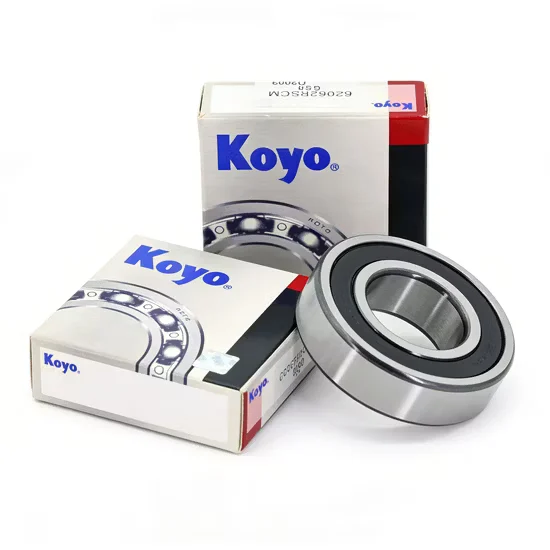
Deep Groove Ball Bearings
Koyo 6003 6205 6301 6004 Sealed Deep Groove Ball Bearing for Automotive Aftermarket
View Product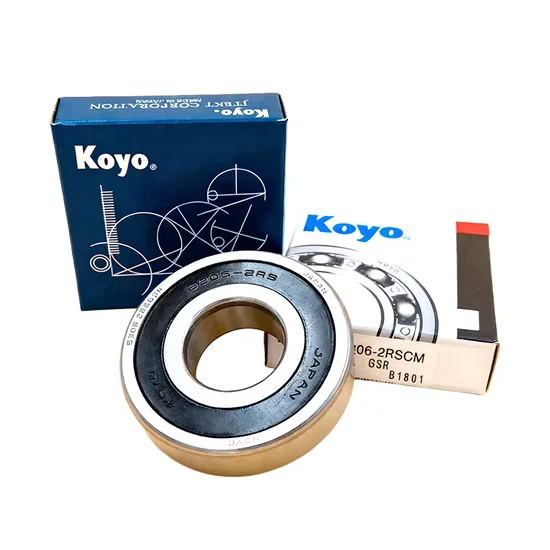
Deep Groove Ball Bearings
6203/6204/6205 Deep Groove Ball Bearing for Generator Equipment
View Product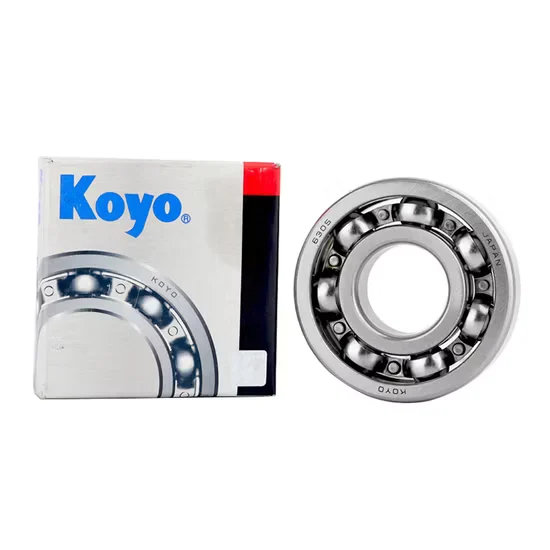
Deep Groove Ball Bearings
KOYO Deep Groove Ball Bearings 6201 6202 6203 6204 6205 Zz 2RS C3
View Product
Tapered Roller Bearings
P5 Koyo 33010 30211 33110 32307 33208 Tapered Roller Bearing for Motor Auto Pump
View ProductKeep reading
More bearing selection guides for repair shops
Practical guides from KOYO Bearing Supplier on identifying Koyo / JTEKT bearings for farm machinery, construction equipment and power transmission repairs.
 Technical Resources
· 8 min read
Needle Bearing Fit & Tolerance Table: Wholesale Supplier for Bulk Orders
Master the needle bearing fit and tolerance table to prevent seizure caused by overly tight fits. Match ISO shaft and housing classes while verifying…
Read the Guide Technical Resources · 6 min read
Auto Bearing Torque Reference Table Wholesale Supplier
Prevent premature bearing failures by strictly following the Auto Bearing Torque Reference Table instead of relying on subjective manual tightening. Learn to distinguish initial…
Read the Guide Technical Resources · 8 min read
OE to Koyo Bearing Cross Reference Table for Wholesale Bulk Supply
Stop relying on base numbers alone with our OE to Koyo cross reference table. Verify critical suffixes, clearances, and seals to prevent premature failure…
Read the Guide
Bearing enquiry
Send your machine details. Get a written Koyo / JTEKT quote.
KOYO Bearing Supplier quotes a single bearing position or every bearing in an assembly on one enquiry, matched to your machine model and application, with model, quantity, price, lead time and quote validity in writing.
- WhatsApp+1 (702) 981-5880
- Emailinfo@koyoome.com
- Address8 Research Drive, Greenville, SC 20627, USA
"When a Koyo bearing failed on a harvest machine during the season, we needed a replacement urgently. The supplier identified the correct Koyo reference, shipped same-day, and the machine was back in the field within the day."

Request a Bearing Quote
Tell us the machine and the bearing position. Photos of the markings can follow on WhatsApp.