
Motorcycle Bearing Size Table: Wholesale Supplier for Bulk Orders
A standard motorcycle bearing size table is insufficient for critical wheel hub applications.
Relying solely on inner and outer diameters when sourcing bearings leads to premature failure, as it ignores the critical specifications defined by suffixes, clearance classes, and seal types. To ensure proper fitment and longevity in harsh operating environments, buyers must cross-reference basic dimensions with detailed technical suffixes such as C3 clearance and 2RS seals.
I learned this lesson the hard way during a trade show in Chicago. A US buyer approached my booth with a request for ten thousand units of 6204 bearings. He held up a generic motorcycle bearing size table and expected a straightforward quote based on the listed dimensions. When I provided a standard price for basic deep-groove ball bearings, he immediately rejected the offer. He explained that his application required specific C3 internal clearance and double rubber seals (2RS) to handle high-speed rotation and exposure to road debris. The basic size table he referenced had omitted these vital suffixes, leading to a potential mismatch that would have caused catastrophic wheel hub failure. This incident shifted my perspective from merely checking length and width to rigorously verifying every technical suffix and tolerance class.
Why Basic Size Tables Fail Motorcycle Wheel Hubs?
Inner and outer diameters alone do not define a bearing’s suitability for motorcycle wheel hubs.
Most procurement professionals start their search with a motorcycle bearing size table, focusing exclusively on the bore diameter, outside diameter, and width. While these dimensions ensure the bearing physically fits into the housing, they do not account for the operational stresses unique to motorcycle wheels. These components face constant vibration, variable loads, and exposure to water, dust, and brake dust. Without the correct internal clearance and sealing, even a perfectly sized bearing will fail prematurely.
The primary oversight in basic tables is the omission of internal clearance. Standard bearings often come with normal clearance (C0), which may be too tight for applications involving significant thermal expansion or high-speed rotation. In motorcycle wheels, the friction generated during braking and riding can cause the inner race to expand. If the clearance is insufficient, this expansion leads to increased friction, overheating, and eventual seizure.
Furthermore, basic tables rarely specify the sealing mechanism. A motorcycle wheel operates in an open environment where contaminants are abundant. Using an open bearing or one with inadequate shielding allows moisture and abrasive particles to enter the raceway. This contamination accelerates wear and degrades the lubricant, drastically reducing the service life. I have seen cases where the absence of proper seals led to a noticeable drop in lifespan, forcing frequent replacements and increasing maintenance costs for end-users.
How to Read Motorcycle Bearing Suffixes Correctly?
Decoding suffixes such as 2RS, ZZ, and C3 is essential for selecting bearings that survive harsh environments.
To move beyond the limitations of a basic motorcycle bearing size table, one must understand the language of bearing suffixes. These alphanumeric codes provide critical information about the bearing’s construction, sealing, and internal geometry. Ignoring them is akin to ordering a tire without specifying its load rating or speed index.
The first key suffix to check is the seal type. For motorcycle wheel hubs, double rubber seals (denoted as 2RS or DDU) are typically preferred. These seals provide robust protection against water and dust ingress while retaining grease within the bearing. In contrast, metal shields (ZZ) offer some protection against larger particles but are less effective against fine dust and moisture. Open bearings, lacking any suffix for sealing, should never be used in exposed wheel applications unless housed in a completely sealed unit.
The second critical suffix relates to internal clearance. The C3 clearance designation indicates a radial internal clearance greater than normal. This extra space accommodates thermal expansion and minor misalignments that occur during operation. For high-performance motorcycles or those subjected to heavy loads, C3 or even C4 clearances may be necessary to prevent binding. Selecting the wrong clearance can result in excessive heat generation and premature fatigue failure.
| Feature | Basic Specification | Critical Suffix Requirement | Impact on Performance |
|---|---|---|---|
| Sealing | None specified | 2RS (Double Rubber Seal) | Prevents contaminant ingress and grease loss |
| Clearance | Normal (C0) | C3 (Greater than Normal) | Accommodates thermal expansion and prevents seizure |
| Tolerance | Standard (P0) | P6 (Higher Precision) | Ensures smoother rotation and reduced vibration |
Understanding these suffixes allows buyers to specify exactly what they need, ensuring that the sourced components meet the rigorous demands of motorcycle applications. It transforms a generic purchase into a precise technical selection.
What are the Standard Dimensions for Common Models?
Step-by-step verification of dimensions for models like 6204 and 6303 ensures accurate physical fitment.
Once the technical requirements are defined through suffixes, the next step is to confirm the physical dimensions using a reliable motorcycle bearing size table. While many bearings share similar dimensions, slight variations can exist between manufacturers or series. Therefore, a systematic approach to dimension verification is crucial.
Start by identifying the most common bearing series used in motorcycle wheels, such as the 6200 and 6300 series. For example, the 6204 bearing is widely used in various motorcycle models. Its standard dimensions are an inner diameter of 20 mm, an outer diameter of 47 mm, and a width of 14 mm. However, simply knowing these numbers is not enough. One must verify that the specific variant being sourced matches these dimensions exactly, as non-standard or custom variants may exist.
The process involves three steps:
- Verify ID/OD/Width: Cross-reference the inner diameter, outer diameter, and width with the OEM specifications or the existing part. Use precise measuring tools to confirm the current bearing’s dimensions if replacing a worn unit.
- Decode Suffixes: As discussed, ensure the suffixes match the application needs. A 6204-2RS-C3 is fundamentally different from a standard 6204 in terms of performance and application suitability.
- Match Tolerance Classes: Check the tolerance class, typically P0 or P6 for general automotive applications. Higher precision classes like P5 are usually reserved for high-speed spindles and may not be cost-effective for standard wheel hubs.
It is also important to note that tapered roller bearings, often used in heavier motorcycle applications or sidecars, require additional attention to preload settings. Unlike deep-groove ball bearings, tapered rollers must be adjusted correctly during installation to ensure optimal performance. A motorcycle bearing size table for tapered rollers will include angle and load ratings, which must be carefully matched to the vehicle’s design specifications.
How to Ensure Cross-Brand Suffix Equivalence?
Verifying that SKF, NSK, and domestic brands share identical technical specs prevents ordering errors in mixed-brand sourcing.
Sourcing bearings from multiple brands can be challenging due to differences in naming conventions and suffix standards. A buyer might find a suitable 6204-2RS-C3 from one manufacturer but struggle to find an exact equivalent from another. This is where expertise in cross-brand equivalence becomes invaluable.
Major international brands like SKF, NSK, FAG, and NTN generally adhere to ISO standards for dimensions and basic suffixes. However, subtle differences in material quality, heat treatment, and manufacturing precision can affect performance. Domestic Chinese brands such as ZWZ, HRB, and LYC have significantly improved their quality and now offer products that meet international standards for many applications. The key is to verify that the suffixes correspond to the same technical specifications across brands.
For instance, a “2RS” seal from one brand should provide comparable protection to a “DDU” seal from another, but it is essential to confirm the material and design details. Similarly, C3 clearance should mean the same radial play range regardless of the manufacturer, as defined by ISO standards.
In our experience, providing technical consultation helps buyers navigate these complexities. We assist clients in matching equivalents across different brands, ensuring that a switch from a premium brand to a cost-effective alternative does not compromise performance. This one-stop mixed-brand sourcing approach allows distributors to optimize their inventory and costs while maintaining reliability. By focusing on genuine traceability and technical accuracy, we help prevent the costly mistakes that arise from assuming all bearings with the same number are identical.
Conclusion
Accurate bearing selection requires more than just a basic size chart.
Success in sourcing motorcycle bearings depends on a holistic understanding of dimensions, suffixes, and operational requirements. By looking beyond the basic motorcycle bearing size table and focusing on critical details like clearance and sealing, buyers can ensure reliable performance and longevity for their applications.
Mentioned in this article
Koyo / JTEKT bearings from this guide
These are the Koyo / JTEKT bearing types discussed above. Open any product to check its details, or quote it together with the rest of your repair.
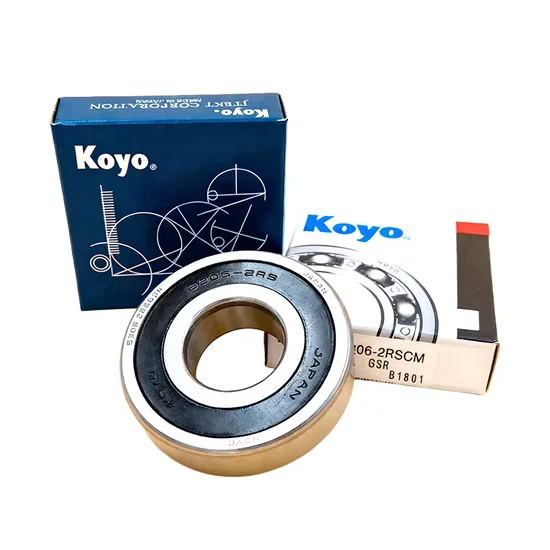
Deep Groove Ball Bearings
6203/6204/6205 Deep Groove Ball Bearing for Generator Equipment
View Product
Deep Groove Ball Bearings
KOYO 6203 6202 6204 Deep Groove Ball Bearing for Electric Fan Genuine Supplier
View Product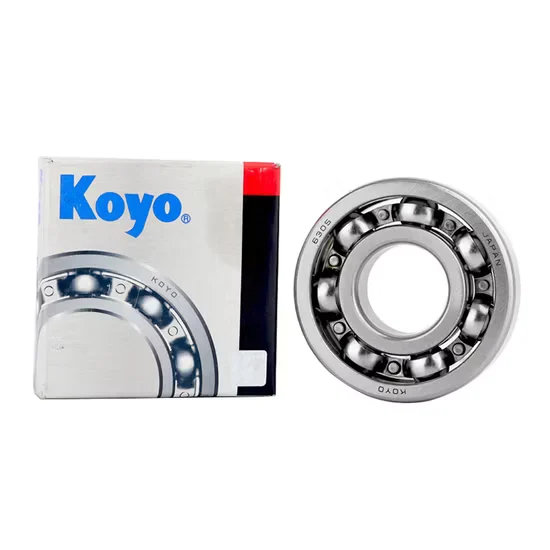
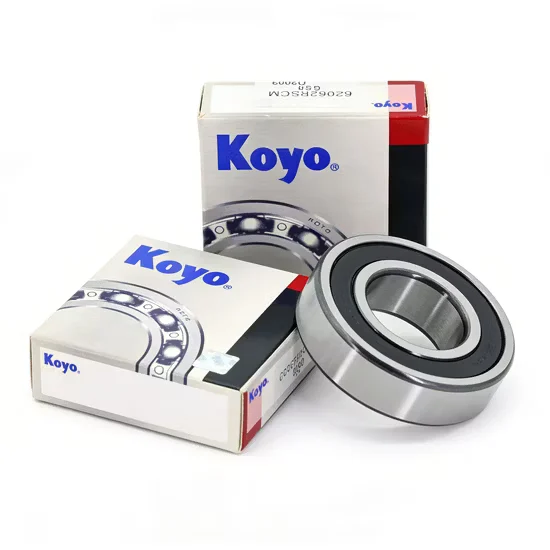
Deep Groove Ball Bearings
KOYO Deep Groove Ball Bearings 6201 6202 6203 6204 6205 Zz 2RS C3
View Product
Deep Groove Ball Bearings
Genuine KOYO 6202 6203 6204 Deep Groove Ball Bearing Wholesale Supplier
View ProductKeep reading
More bearing selection guides for repair shops
Practical guides from KOYO Bearing Supplier on identifying Koyo / JTEKT bearings for farm machinery, construction equipment and power transmission repairs.
 Technical Resources
· 7 min read
Auto Bearing Glossary: Wholesale Supplier for Bulk & MRO Parts
Master the auto bearing glossary to decode suffix codes and prevent costly MRO replacement failures. Identical dimensions do not guarantee interchangeability, as internal clearance…
Read the Guide Technical Resources
· 8 min read
Needle Bearing Fit & Tolerance Table: Wholesale Supplier for Bulk Orders
Master the needle bearing fit and tolerance table to prevent seizure caused by overly tight fits. Match ISO shaft and housing classes while verifying…
Read the Guide Technical Resources
· 7 min read
Auto Bearing Torque Reference Table Wholesale Supplier
Prevent premature bearing failures by strictly following the Auto Bearing Torque Reference Table instead of relying on subjective manual tightening. Learn to distinguish initial…
Read the Guide
Bearing enquiry
Send your machine details. Get a written Koyo / JTEKT quote.
KOYO Bearing Supplier quotes a single bearing position or every bearing in an assembly on one enquiry, matched to your machine model and application, with model, quantity, price, lead time and quote validity in writing.
- WhatsApp+1 (702) 981-5880
- Emailinfo@koyoome.com
- Address8 Research Drive, Greenville, SC 20627, USA
"When a Koyo bearing failed on a harvest machine during the season, we needed a replacement urgently. The supplier identified the correct Koyo reference, shipped same-day, and the machine was back in the field within the day."

Request a Bearing Quote
Tell us the machine and the bearing position. Photos of the markings can follow on WhatsApp.