
Koyo Needle Bearing Size Table: Wholesale Supplier for Bulk Orders
Same outer diameter does not mean interchangeable.
A Koyo needle bearing size table is a verification tool for radial space, internal clearance, and chamfer tolerances, not merely a list of dimensions to copy. Misreading these parameters leads to assembly failures, reduced load capacity, and catastrophic downtime in heavy-duty machinery.
I still remember the silence in a South American assembly plant. It wasn’t the good kind of quiet that comes from focused work; it was the heavy, expensive silence of a halted production line. A batch of needle roller bearings had arrived, and on paper, they matched the specifications perfectly. The outer diameter was correct. The bore size was accurate. Yet, during installation, the cage fractured under minimal pressure. The culprit wasn’t a manufacturing defect in the traditional sense, but a misinterpretation of the data. We had selected a series based solely on boundary dimensions, ignoring the subtle but critical differences in internal clearance and cage design specified in the technical manuals. That incident shifted my approach entirely. I stopped treating dimension charts as simple lookup lists and started using them as diagnostic maps. Now, when clients request bulk orders, we don’t just ship part numbers; we verify the application context against the full engineering profile found in a reliable Koyo needle bearing size table.
This guide breaks down how to read these tables correctly, why same-OD bearings fail, and how to cross-reference models without falling into common traps. For distributors and OEMs managing large inventories, understanding these nuances is the difference between a smooth installation and a costly recall.
How to Read the Koyo Needle Bearing Size Table Correctly?
Most buyers scan a Koyo needle bearing size table for three numbers: bore diameter (d), outer diameter (D), and width (B). While these are essential, they are only the starting point. The real engineering value lies in the supplementary columns that define the bearing’s fit and function within a housing.
The chamfer dimension (r min) is often overlooked until it causes a shaft stress concentration. If the chamfer radius of the bearing is smaller than the fillet radius of the shaft or housing shoulder, the bearing will not seat properly. This creates a gap that leads to uneven load distribution and premature fatigue. Another critical parameter is the reference speed and limiting speed, which dictate whether the bearing can handle the thermal loads generated in high-RPM applications.
| Parameter | Description | Engineering Impact |
|---|---|---|
| Bore (d) & Outer (D) | Boundary dimensions | Determines basic fit in shaft/housing |
| Width (B) | Axial space requirement | Affects axial positioning and load zone |
| Chamfer (r min) | Corner relief dimension | Prevents interference with shaft fillets |
| Internal Clearance | Radial play before mounting | Influences noise, heat, and lifespan |
When sourcing from a Koyo needle bearing size table, always cross-check the chamfer radius against your mechanical drawings. A mismatch of even a fraction of a millimeter can prevent proper seating. In our warehouse, we routinely verify these physical attributes against the documentation for bulk orders. This step ensures that the bearings you receive match not just the nominal size, but the geometric requirements of your assembly.
Why Do Same-OD Needle Bearings Fail During Assembly?
It is a counter-intuitive reality that two needle bearings with identical outer and inner diameters may not be interchangeable. The failure usually stems from differences in internal clearance and cage design, which are not immediately visible in a basic dimension list.
Internal clearance groups, such as C3 or C4, define the radial play within the bearing before it is mounted. A bearing designed for high-temperature operations might have a larger initial clearance to accommodate thermal expansion. If you substitute this with a standard clearance bearing in the same housing, the expansion during operation can eliminate the play entirely, leading to seizure. Conversely, using a high-clearance bearing in a precision application can result in excessive vibration and noise.
Cage design also varies significantly. Some series use stamped steel cages, while others employ machined brass or polymer cages. The material and structure affect the bearing’s ability to retain lubricant and withstand centrifugal forces. A case involving a European gearbox manufacturer illustrated this clearly. They switched to a cheaper alternative with the same boundary dimensions but a different cage type. Under heavy load, the cage deformed, causing the needles to skew and lock up. The downtime cost far exceeded the savings from the initial purchase.
When you consult a Koyo needle bearing size table, look beyond the d, D, and B values. Check the suffix codes that indicate clearance and cage type. Our technical team assists clients in decoding these suffixes to ensure that the replacement or new-installation bearing matches the original engineering intent, not just the physical envelope.
What Are the Critical Steps for Cross-Referencing Koyo Models?
Cross-referencing is a common task for MRO buyers and distributors who need to replace obsolete parts or switch brands for cost efficiency. However, a direct part-number swap is risky without verifying the performance limits. A systematic approach ensures that the alternative meets the operational demands.
First, identify the exact series and suffix from the original bearing. Do not rely on memory or partial markings. Second, consult the Koyo needle bearing size table to confirm the boundary dimensions. Third, and most importantly, compare the dynamic and static load ratings. A bearing might fit physically but lack the load-carrying capacity required for the application.
- Verify Boundary Dimensions: Ensure d, D, and B match exactly. Even small deviations can cause fit issues.
- Check Load Ratings: Compare the basic dynamic load rating (Cr) and static load rating (Cor). The alternative must meet or exceed the original values.
- Confirm Speed Limits: Ensure the limiting speed of the new bearing is suitable for the application’s RPM.
- Match Clearance and Cage: Verify that the internal clearance group and cage material are compatible with the operating conditions.
A Middle East mining operator once faced repeated failures in their crusher bearings. They had cross-referenced based on size alone, ignoring the load rating. The replacement bearings were undersized for the shock loads involved. After we helped them re-evaluate the selection using the full technical data, including load curves and clearance specs, the failure rate dropped noticeably. This experience underscores the need for a holistic view when using a Koyo needle bearing size table for cross-referencing.
How to Avoid Common Sizing Pitfalls in Radial-Space Applications?
Needle roller bearings are often chosen for their compact design, which allows for high load capacity in limited radial spaces. However, this advantage becomes a liability if the radial space is miscalculated. The thin walls of the bearing and the surrounding components require precise tolerance control.
One common pitfall is assuming that a standard shaft tolerance is sufficient. In compact gearboxes, the housing bore and shaft journal must adhere to stricter tolerance classes to ensure proper fit and prevent creep or rotation. Another issue is lubrication. Thicker needle rollers do not always mean higher load capacity if the radial space limits the amount of lubricant that can reach the contact surfaces. Insufficient lubrication leads to metal-to-metal contact, rapid wear, and heat generation.
To avoid these issues, calculate the available radial space carefully. Ensure there is enough room for the bearing, the housing wall, and the necessary lubrication film. Check the shaft and housing tolerances against the bearing’s recommended fits. If the space is tight, consider bearings with optimized internal geometries that maximize load capacity without increasing external dimensions.
In our sourcing process, we emphasize the importance of verifying these spatial constraints. We work with clients to review their mechanical designs and ensure that the selected bearings from the Koyo needle bearing size table will perform reliably in their specific radial-space applications. This proactive approach prevents assembly issues and extends the service life of the machinery.
Conclusion
Accurate interpretation of dimension charts prevents assembly failures.
A Koyo needle bearing size table is more than a list of numbers; it is a comprehensive guide to ensuring compatibility, performance, and reliability. By paying attention to internal clearance, cage design, load ratings, and radial space constraints, engineers and buyers can avoid common pitfalls that lead to downtime and increased costs. Whether you are sourcing for a new OEM project or replacing worn parts in an existing machine, thorough verification of these parameters is essential. Our commitment to technical accuracy and traceability ensures that every bearing delivered meets the rigorous demands of industrial applications.
Mentioned in this article
Koyo / JTEKT bearings from this guide
These are the Koyo / JTEKT bearing types discussed above. Open any product to check its details, or quote it together with the rest of your repair.
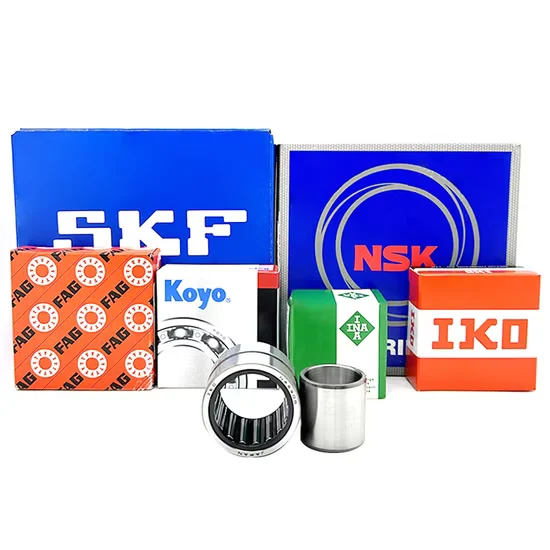
Needle Roller Bearings
Koyo RNAV4903 RNAV4904 RNAV4905 RNAV4906 RNAV4907 Needle Roller Bearings
View Product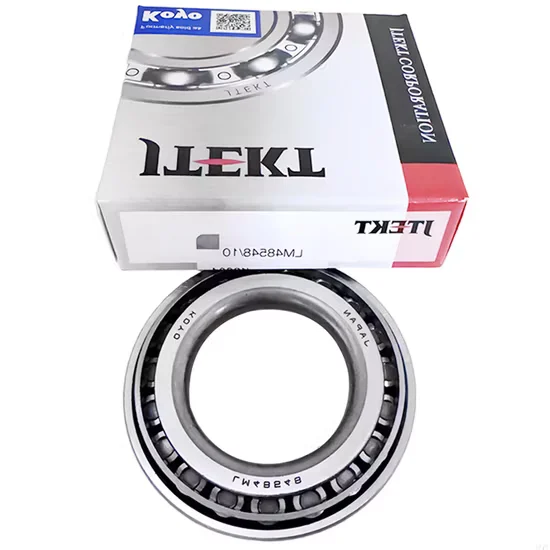
Tapered Roller Bearings
Genuine KOYO 32007 Tapered Roller Bearing Wholesale Supplier
View Product
Tapered Roller Bearings
Genuine KOYO 32006 Taper Roller Bearing Wholesale Supplier
View Product
Cylindrical Roller Bearings
Koyo NSK N408e Cylindrical Roller Bearing Genuine Wholesale Supplier
View ProductKeep reading
More bearing selection guides for repair shops
Practical guides from KOYO Bearing Supplier on identifying Koyo / JTEKT bearings for farm machinery, construction equipment and power transmission repairs.
 Technical Resources
· 7 min read
Auto Bearing Glossary: Wholesale Supplier for Bulk & MRO Parts
Master the auto bearing glossary to decode suffix codes and prevent costly MRO replacement failures. Identical dimensions do not guarantee interchangeability, as internal clearance…
Read the Guide Technical Resources · 8 min read
Needle Bearing Fit & Tolerance Table: Wholesale Supplier for Bulk Orders
Master the needle bearing fit and tolerance table to prevent seizure caused by overly tight fits. Match ISO shaft and housing classes while verifying…
Read the Guide Technical Resources
· 7 min read
Auto Bearing Torque Reference Table Wholesale Supplier
Prevent premature bearing failures by strictly following the Auto Bearing Torque Reference Table instead of relying on subjective manual tightening. Learn to distinguish initial…
Read the Guide
Bearing enquiry
Send your machine details. Get a written Koyo / JTEKT quote.
KOYO Bearing Supplier quotes a single bearing position or every bearing in an assembly on one enquiry, matched to your machine model and application, with model, quantity, price, lead time and quote validity in writing.
- WhatsApp+1 (702) 981-5880
- Emailinfo@koyoome.com
- Address8 Research Drive, Greenville, SC 20627, USA
"When a Koyo bearing failed on a harvest machine during the season, we needed a replacement urgently. The supplier identified the correct Koyo reference, shipped same-day, and the machine was back in the field within the day."

Request a Bearing Quote
Tell us the machine and the bearing position. Photos of the markings can follow on WhatsApp.