
Koyo Bearings for Taxi Fleets: Genuine Wholesale Supplier
Identical dimensions do not guarantee interchangeability.
Sourcing genuine Koyo bearings for taxi fleets requires strict verification of ABS sensor slots and traceability codes to prevent premature failure and costly downtime. The presence of an integrated magnetic encoder is the critical differentiator, not just the outer diameter or bore size. Without verifying the specific part number suffix that denotes ABS compatibility, even authentic bearings will trigger system warnings and compromise vehicle safety in high-mileage urban operations.
The distinction between a standard replacement and a fleet-grade component often lies in microscopic details that are invisible to the naked eye until installation fails. I recall a shipment destined for a busy urban transport hub where the physical measurements matched the original equipment specifications perfectly. The outer race, inner race, and ball complement were identical. Yet, within weeks, the entire batch was returned. The issue was not mechanical wear but electronic silence. The bearings lacked the precise magnetic encoding required by the vehicle’s anti-lock braking system. This mismatch turned a routine maintenance job into a logistical nightmare, highlighting why sourcing Koyo bearings for taxi fleets demands more than just checking box dimensions. It requires a deep understanding of how modern vehicular electronics interact with mechanical rotating components.
Why Genuine Koyo Bearings Are Critical for High-Mileage Taxi Fleets?
Stop-and-go driving creates thermal cycles that expose material inconsistencies.
Taxi operations represent one of the most punishing environments for wheel end components. Unlike highway trucking, which maintains relatively consistent speeds and loads, urban taxis endure constant acceleration, hard braking, and frequent curbing. These actions generate significant lateral forces and heat spikes that test the metallurgical integrity of the bearing steel. Genuine Koyo bearings for taxi fleets are engineered to withstand these specific stress profiles, utilizing high-purity steel that resists micro-cracking under repetitive thermal shock.
Counterfeit or sub-standard alternatives often use recycled steel or inferior heat treatment processes. While they may pass initial static load tests, they fail rapidly under dynamic, high-frequency stress. A fleet manager might save a marginal amount on the initial purchase price, but the cost of premature failure is exponentially higher. This includes not just the part replacement, but the labor, vehicle downtime, and potential liability from brake system malfunctions. The reliability of the bearing directly impacts the operational availability of the vehicle. When a bearing fails, the taxi is off the road. For a fleet operating on tight margins, every hour of downtime erodes profitability.
The longevity of a genuine component is not merely a marketing claim but a result of controlled manufacturing processes. The consistency in cage design, lubricant retention, and seal integrity ensures that the bearing performs predictably over its intended service life. In contrast, non-genuine parts exhibit high variance. One unit might last six months, while another from the same batch fails in three. This unpredictability makes maintenance planning impossible. Fleet managers need certainty. They need to know that when they install a Koyo bearing for taxi fleets, it will perform according to the manufacturer’s specifications, allowing for scheduled maintenance rather than emergency repairs.
How to Verify Koyo Bearing Authenticity and ABS Compatibility?
The part number suffix is the only reliable indicator of ABS functionality.
Verifying authenticity goes beyond checking the packaging. Counterfeiters have become sophisticated in replicating boxes and labels. The true verification lies in the component itself and its associated documentation. For Koyo bearings for taxi fleets, the critical step is cross-referencing the part number suffix with the official technical datasheet. A missing or incorrect suffix often indicates a standard bearing being sold as an ABS-compatible unit. This error is common in mixed batches where suppliers consolidate stock without rigorous technical validation.
I once inspected a container where the external labeling claimed full ABS compatibility. However, upon random sampling, several units lacked the magnetic encoder ring entirely. These were standard bearings repackaged as advanced units. The visual difference is subtle, but the functional difference is absolute. Installing such a bearing results in an immediate ABS warning light on the dashboard. The vehicle’s computer cannot detect wheel speed, disabling critical safety features. This is not a minor inconvenience; it is a regulatory violation in many jurisdictions.
To avoid this, buyers must demand original traceability codes. Each genuine bearing comes with a unique identifier that can be verified against the manufacturer’s production records. This traceability ensures that the part was produced in an authorized facility and has not been tampered with. It also provides a chain of custody that is essential for warranty claims and quality assurance audits. Without this documentation, the risk of receiving counterfeit goods increases significantly.
Furthermore, the physical inspection should include checking the seal type and lubricant fill. Genuine units use specific high-temperature greases designed for long-life applications. Counterfeit units often use generic lubricants that break down quickly under heat, leading to early seizure. By focusing on these technical details, fleet managers can filter out inferior products before they enter their inventory. Sourcing Koyo bearings for taxi fleets thus becomes a process of technical due diligence, not just commercial transaction.
Koyo vs. Alternatives: Specification Matrix for Fleet Sourcing
Load capacity and ABS integration define the total cost of ownership.
When evaluating suppliers, it is tempting to compare prices alone. However, a holistic view reveals that technical specifications drive long-term value. The following matrix highlights key differences between genuine Koyo bearings for taxi fleets and typical aftermarket alternatives. Note that “Alternatives” refers to non-OEM, unverified sources commonly found in general wholesale markets.
| Feature | Genuine Koyo Bearings | Typical Aftermarket Alternatives |
|---|---|---|
| ABS Encoder Integration | Certified magnetic encoder with precise signal output | Often missing or inconsistent signal strength |
| Steel Purity | High-purity vacuum-degassed steel | Variable quality, potential inclusion defects |
| Seal Integrity | Multi-lip design for enhanced contaminant exclusion | Basic single-lip seals prone to leakage |
| Traceability | Full batch-level documentation with unique codes | Limited or self-reported documentation |
| Load Rating Consistency | Strict adherence to ISO/ABMA standards | High variance between batches |
The table illustrates that while alternatives may appear cheaper upfront, they lack the consistency required for fleet operations. The absence of a certified magnetic encoder is a critical failure point. In a taxi fleet, uniformity is key. Mixing genuine and non-genuine parts leads to unpredictable maintenance schedules. A vehicle with a genuine bearing might run for years, while one with an alternative fails prematurely. This disparity complicates inventory management and increases administrative overhead.
Moreover, the steel purity affects fatigue resistance. High-purity steel contains fewer non-metallic inclusions, which are initiation points for cracks. Under the heavy lateral loads of urban driving, these inclusions can lead to spalling and eventual catastrophic failure. Genuine Koyo bearings for taxi fleets minimize this risk through controlled manufacturing processes. Alternatives, lacking such controls, present a higher risk of unexpected breakdowns. For fleet operators, the cost of a single roadside assistance call can outweigh the savings from buying cheaper bearings. Therefore, the specification matrix serves as a tool for risk assessment, not just product comparison.
What Documents Are Required for Bulk Fleet Bearing Procurement?
Traceability documents are the barrier against customs delays and quality disputes.
Procuring Koyo bearings for taxi fleets in bulk involves more than just placing an order. It requires securing a complete set of documentation that proves authenticity and compliance. Missing documents can lead to customs hold-ups, delaying the entire supply chain. I have seen containers stuck at ports for weeks because the certificate of origin did not match the invoice details. Such delays disrupt maintenance schedules and force fleets to keep excessive safety stock, tying up capital.
Essential documents include the Certificate of Origin, Material Test Certificates, and the Manufacturer’s Authorization Letter. The Material Test Certificate verifies the chemical composition and mechanical properties of the steel used. This is crucial for quality assurance teams who need to ensure that the bearings meet specific industry standards. The Manufacturer’s Authorization Letter confirms that the supplier is an authorized distributor, reducing the risk of counterfeit goods.
Additionally, a detailed packing list with batch numbers is vital. This allows for precise tracking of each unit installed in the fleet. If a defect is discovered, the batch number enables a targeted recall, minimizing disruption. Without this level of detail, a defect might require recalling an entire shipment, causing significant operational chaos. For Koyo bearings for taxi fleets, this traceability is not optional; it is a fundamental requirement for professional fleet management.
Suppliers who cannot provide these documents should be avoided. Their inability to produce paperwork often indicates a lack of direct access to the manufacturer, increasing the likelihood of dealing in gray market or counterfeit goods. Professional suppliers understand that documentation is part of the product. It provides the legal and technical backing necessary for large-scale commercial operations. By insisting on complete documentation, fleet managers protect their investment and ensure regulatory compliance.
Conclusion
Authenticity is verified by code, not just by appearance.
Sourcing Koyo bearings for taxi fleets is a technical exercise in risk management. It requires verifying ABS compatibility through part number suffixes and securing full traceability documentation. The cost of failure in high-mileage urban operations far exceeds the savings from unverified alternatives. By prioritizing genuine components with proven provenance, fleet managers ensure vehicle safety, minimize downtime, and maintain operational efficiency. The right bearing keeps the taxi moving; the wrong one stops it cold.
Mentioned in this article
Koyo / JTEKT bearings from this guide
These are the Koyo / JTEKT bearing types discussed above. Open any product to check its details, or quote it together with the rest of your repair.
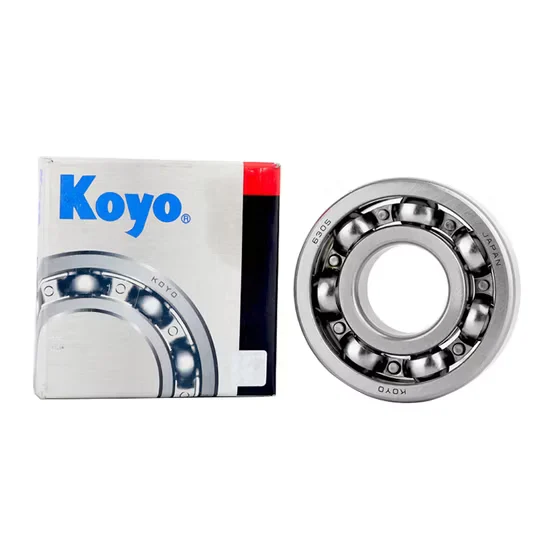
Deep Groove Ball Bearings
KOYO Bearing 6005 6006 6300-6309 Motorcycle Deep Groove Ball Bearings Japan
View Product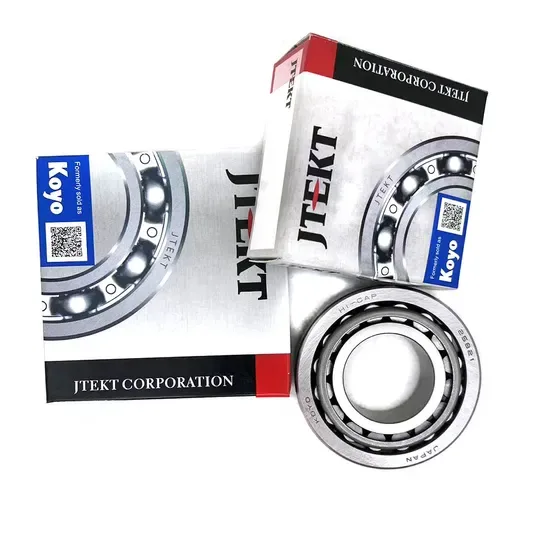
Tapered Roller Bearings
Koyo 30213 30221 30228 Tapered Roller Bearing Single Row for Machinery Part
View Product
Marine Bearings
Koyo 32212 Tapered Roller Bearing for Marine Engines
View Product
Tapered Roller Bearings
Koyo Tapered Roller Bearing 31313 33215 33017 33214 30313 32919 30217 33016
View ProductKeep reading
More bearing selection guides for repair shops
Practical guides from KOYO Bearing Supplier on identifying Koyo / JTEKT bearings for farm machinery, construction equipment and power transmission repairs.
 Buying Guide
· 8 min read
Koyo Auto Bearings Wholesale Supplier & Bulk Quote
Request a Quote for Koyo Auto Bearings that accounts for total landed cost, not just FOB price. Optimize margins through mixed-container consolidation and ensure…
Read the Guide Buying Guide · 7 min read
Koyo Auto Bearings Wholesale Supplier for Parts Stores
Stocking Koyo auto bearings requires strict verification of suffix codes and traceability to prevent costly assembly failures. Learn essential packaging checks and cross-brand alternatives…
Read the Guide Buying Guide
· 7 min read
Fake Auto Bearings: Neutral Buyer Checks Wholesale Supplier
Master Fake Auto Bearings Neutral Buyer Checks by shifting focus from packaging to internal physical inspections and traceability. Detect counterfeits through acidic rust oil…
Read the Guide
Bearing enquiry
Send your machine details. Get a written Koyo / JTEKT quote.
KOYO Bearing Supplier quotes a single bearing position or every bearing in an assembly on one enquiry, matched to your machine model and application, with model, quantity, price, lead time and quote validity in writing.
- WhatsApp+1 (702) 981-5880
- Emailinfo@koyoome.com
- Address8 Research Drive, Greenville, SC 20627, USA
"When a Koyo bearing failed on a harvest machine during the season, we needed a replacement urgently. The supplier identified the correct Koyo reference, shipped same-day, and the machine was back in the field within the day."

Request a Bearing Quote
Tell us the machine and the bearing position. Photos of the markings can follow on WhatsApp.