
Koyo Auto Bearings Wholesale Supplier for Parts Stores
The brand name on the box is not a guarantee of fit.
Stocking genuine Koyo auto bearings requires strict verification of suffix codes, packaging batch consistency, and traceability documentation to ensure authenticity and prevent costly assembly failures in your parts store inventory.
I still remember the silence in my workshop in Dongguan when I realized the mistake. It was not a loud crash, but the quiet dread of knowing a container had already left the port. I had supplied a large batch of wheel bearings to a chain of auto repair shops in Mexico. On paper, everything was perfect. The part numbers matched the order list. The boxes looked pristine. But when the mechanics started installing them, every single unit produced a low-frequency hum during rotation. The issue was not the bearing itself, but the internal clearance code hidden in the suffix. I had overlooked a subtle variation in the radial clearance specification. The result was a total recall, air freight costs that wiped out the profit margin for the entire quarter, and a damaged reputation that took months to rebuild. That incident shifted my perspective entirely. In the aftermarket, precision is not just about dimensions; it is about the invisible parameters defined by suffixes.
For any parts store owner or distributor, understanding this distinction is the difference between a reliable supply chain and a logistical nightmare. When you source from a Koyo auto bearings wholesale supplier, you are not just buying steel rings and balls. You are buying a specific engineering solution defined by alphanumeric codes that dictate performance under load, heat, and speed. Ignoring these details invites failure.
Why Suffix Codes Matter More Than the Brand Name?
A bearing with the correct base number but the wrong suffix is effectively the wrong part.
Many buyers assume that if the base part number matches their catalog, the bearing will fit. This is a dangerous oversimplification. Koyo, like other premium manufacturers, uses suffix codes to specify critical internal attributes such as radial clearance, seal type, cage material, and heat treatment.
Consider the difference between a standard deep groove ball bearing and one designed for high-temperature automotive applications. The base number might be identical, but the suffix indicates whether the internal clearance is C3 (greater than normal) or CN (normal). In an automotive hub assembly, using a CN clearance bearing where a C3 is required can lead to premature seizure due to thermal expansion. Conversely, using C3 where CN is specified results in excessive play and vibration.
| Attribute | Standard Specification | Automotive Application Requirement | Risk of Mismatch |
|---|---|---|---|
| Radial Clearance | CN (Normal) | Often C3 (Greater than Normal) | Seizure or Excessive Play |
| Seal Type | Rubber Contact | High-Temperature Resistant Rubber | Seal Degradation and Leakage |
| Cage Material | Steel Pressed | Polyamide or Reinforced Polymer | Cage Fracture at High Speeds |
| Heat Treatment | Standard | Stabilized for High Temp | Dimensional Instability |
I once consulted for a European distributor who kept receiving returns on a specific alternator bearing. They were sourcing based solely on the base number. Upon inspection, we found they were receiving standard industrial versions instead of the automotive-grade variants with stabilized heat treatment suffixes. The bearings were expanding under the high operating temperatures of modern engines, changing their internal geometry and causing noise. Switching to a verified Koyo auto bearings wholesale supplier who prioritized suffix accuracy eliminated the returns entirely.
The lesson is clear: never order by base number alone. Always verify the full part number, including all suffixes, against the original equipment manufacturer specifications. This level of detail is what separates a professional supplier from a general trader.
How to Verify Koyo Bearing Authenticity in Bulk?
Physical packaging checks and traceability documents are non-negotiable for wholesale orders.
Counterfeit bearings are a pervasive issue in the global aftermarket. They often look convincing at first glance, using copied logos and similar box designs. However, they fail under load because they lack the precise metallurgy and manufacturing tolerances of genuine products.
Verification starts with the packaging. Genuine Koyo bearings come in boxes with specific printing quality, batch numbers, and security features. The box should feel sturdy, with crisp printing that does not smudge. Inside, the bearing is wrapped in anti-corrosion paper that has a distinct texture and smell, different from the generic oily paper used in counterfeits.
But packaging can be faked. The real proof lies in traceability. A reputable Koyo auto bearings wholesale supplier will provide documentation that links the physical batch to the manufacturer’s production records. This includes certificates of origin, material test reports, and batch-specific inspection data. If a supplier cannot provide these documents, or if the documents look generic and unlinked to the specific batch numbers on the boxes, walk away.
I recall inspecting a shipment for a client in Southeast Asia. The boxes looked perfect, but the batch numbers on the inner wrappers did not match the outer cartons. When we requested the traceability docs, the supplier hesitated and provided vague, generalized certificates. We rejected the shipment. Later, independent testing revealed that the steel quality was substandard, with high inclusion levels that would have led to early fatigue failure.
Always request sample units for physical inspection before committing to large volumes. Check the laser etching on the bearing ring. Genuine Koyo markings are sharp, evenly spaced, and resistant to wiping. Counterfeit markings are often shallow, uneven, or easily rubbed off. These small details save you from massive liabilities down the line.
What Are the Best Koyo Alternatives for High-Turnover Parts?
Cross-brand matrices ensure zero downtime when Koyo stock is low.
Even with the best planning, stockouts happen. Global supply chain disruptions can delay shipments of specific Koyo models. For a parts store, having a vehicle waiting for a bearing is lost revenue and customer dissatisfaction. This is where knowledge of cross-brand equivalents becomes vital.
Koyo bearings often have direct equivalents from other premium brands like NSK, NTN, or SKF. These equivalents share the same dimensional standards and performance characteristics, provided the suffix codes are correctly matched.
However, substitution is not always straightforward. Different brands may use different suffix conventions for the same feature. A C3 clearance in Koyo might be labeled differently in another brand’s system. A reliable supplier maintains a comprehensive cross-reference database that maps these nuances accurately.
| Koyo Suffix Feature | Equivalent Feature in Other Premium Brands | Verification Note |
|---|---|---|
| Radial Clearance C3 | C3 (Universal Standard) | Confirm exact micron range per ISO |
| Rubber Seal DDU | 2RS or Similar | Check lip design compatibility |
| Polyamide Cage TN9 | PA66 or Similar | Verify temperature rating |
I worked with a repair group in Latin America that faced a prolonged shortage of a specific Koyo tapered roller bearing. By using our cross-reference data, we identified an equivalent model from another authorized brand in our inventory. We verified the dimensional drawings and load ratings to ensure a perfect match. The substitution was successful, and the shop avoided weeks of downtime. This flexibility is a key advantage of working with a full-range bearing supplier rather than a single-brand distributor.
Maintaining a multi-brand inventory strategy allows you to serve your customers consistently, even when one brand faces supply constraints. It turns a potential crisis into a routine transaction.
How to Optimize MOQ and Consolidation for Parts Stores?
Flexible mixed-batch orders maximize container space and cash flow.
Parts stores often struggle with minimum order quantities (MOQ). Ordering full pallets of a single SKU ties up capital and warehouse space. Many suppliers insist on high MOQs per item, forcing buyers to overstock slow-moving items just to get the fast-moving ones.
The solution is consolidation. A professional Koyo auto bearings wholesale supplier offers flexible MOQs, allowing you to mix different SKUs in a single container. This approach optimizes shipping costs and reduces inventory holding costs. You can order small quantities of high-turnover items alongside larger batches of slow-movers, balancing your stock levels efficiently.
This requires a supplier with a robust warehousing and logistics system. They must be able to pick, pack, and document mixed batches accurately. Traceability becomes even more critical here, as each SKU in the container must be linked to its own batch documentation.
By consolidating orders, you reduce the frequency of shipments and the associated administrative overhead. You also gain leverage in negotiations, as your total container volume is higher, even if individual SKU quantities are lower. This strategy improves your cash flow and allows you to respond more agilely to market demands.
Conclusion
Authenticity and precision are the foundations of a profitable auto parts business.
Stocking Koyo auto bearings is not just about buying a brand; it is about managing technical specifications and supply chain integrity. Verify suffix codes, demand traceability, and use cross-brand alternatives wisely. Partner with a supplier who understands these nuances to protect your reputation and bottom line.
Mentioned in this article
Koyo / JTEKT bearings from this guide
These are the Koyo / JTEKT bearing types discussed above. Open any product to check its details, or quote it together with the rest of your repair.
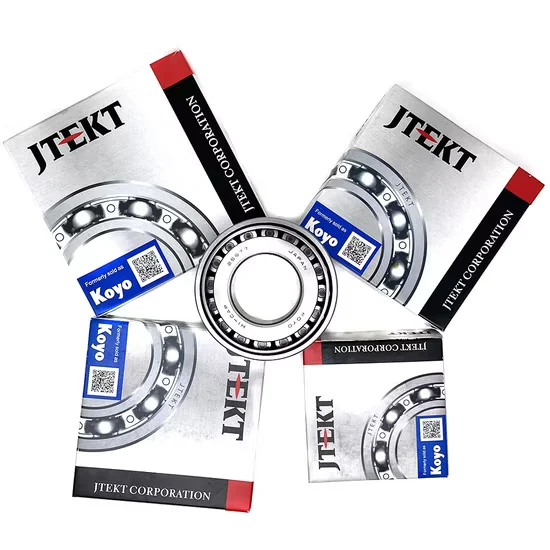
Tapered Roller Bearings
Koyo Tapered Roller Bearing 30203 30204 30205 30206 30207 for Auto Parts Wholesale
View Product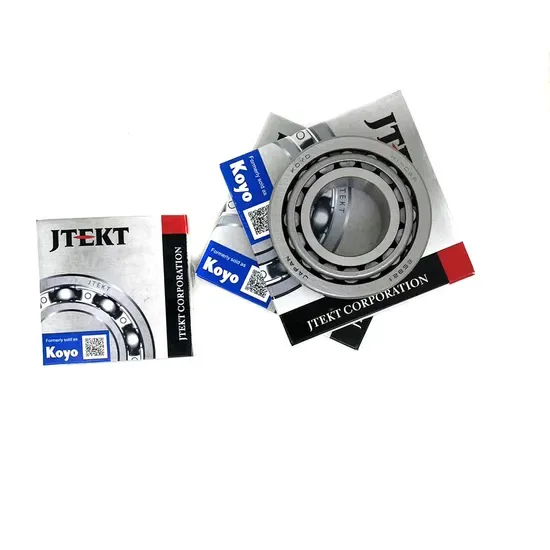
Tapered Roller Bearings
Koyo 30210-30216 Tapered Roller Bearings for Auto Parts Wholesale Supply
View Product
Tapered Roller Bearings
P5 Koyo 33010 30211 33110 32307 33208 Tapered Roller Bearing for Motor Auto Pump
View Product
Tapered Roller Bearings
Jtekt Koyo Tapered Roller Bearing 32010 30302 30303 30304 30305 30306 for Auto Parts
View ProductKeep reading
More bearing selection guides for repair shops
Practical guides from KOYO Bearing Supplier on identifying Koyo / JTEKT bearings for farm machinery, construction equipment and power transmission repairs.
Buying Guide · 7 min read
Koyo Auto Bearings Wholesale Supplier & Bulk Quote
Request a Quote for Koyo Auto Bearings that accounts for total landed cost, not just FOB price. Optimize margins through mixed-container consolidation and ensure…
Read the Guide Buying Guide · 7 min read
Fake Auto Bearings: Neutral Buyer Checks Wholesale Supplier
Master Fake Auto Bearings Neutral Buyer Checks by shifting focus from packaging to internal physical inspections and traceability. Detect counterfeits through acidic rust oil…
Read the Guide Buying Guide
· 6 min read
Buy Genuine Koyo Auto Bearings: Wholesale Supplier for Bulk & MRO
Where to buy Koyo auto bearings requires prioritizing verifiable traceability over lowest prices to avoid costly counterfeits. Compare official dealers, global consolidators, and brokers…
Read the Guide
Bearing enquiry
Send your machine details. Get a written Koyo / JTEKT quote.
KOYO Bearing Supplier quotes a single bearing position or every bearing in an assembly on one enquiry, matched to your machine model and application, with model, quantity, price, lead time and quote validity in writing.
- WhatsApp+1 (702) 981-5880
- Emailinfo@koyoome.com
- Address8 Research Drive, Greenville, SC 20627, USA
"When a Koyo bearing failed on a harvest machine during the season, we needed a replacement urgently. The supplier identified the correct Koyo reference, shipped same-day, and the machine was back in the field within the day."

Request a Bearing Quote
Tell us the machine and the bearing position. Photos of the markings can follow on WhatsApp.