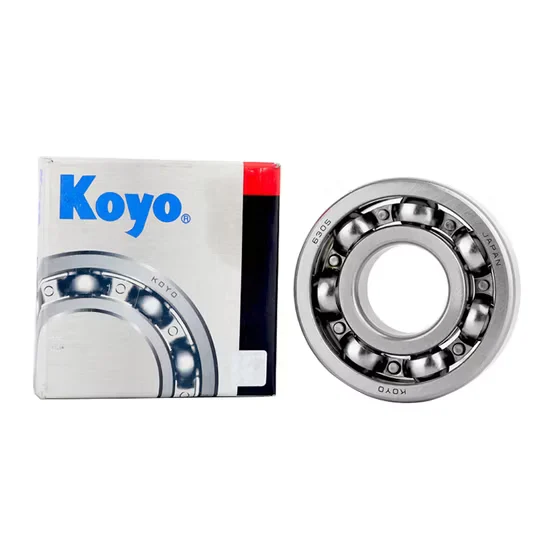
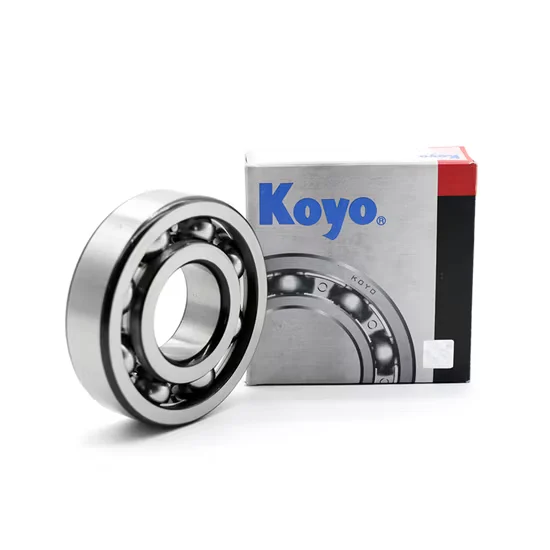
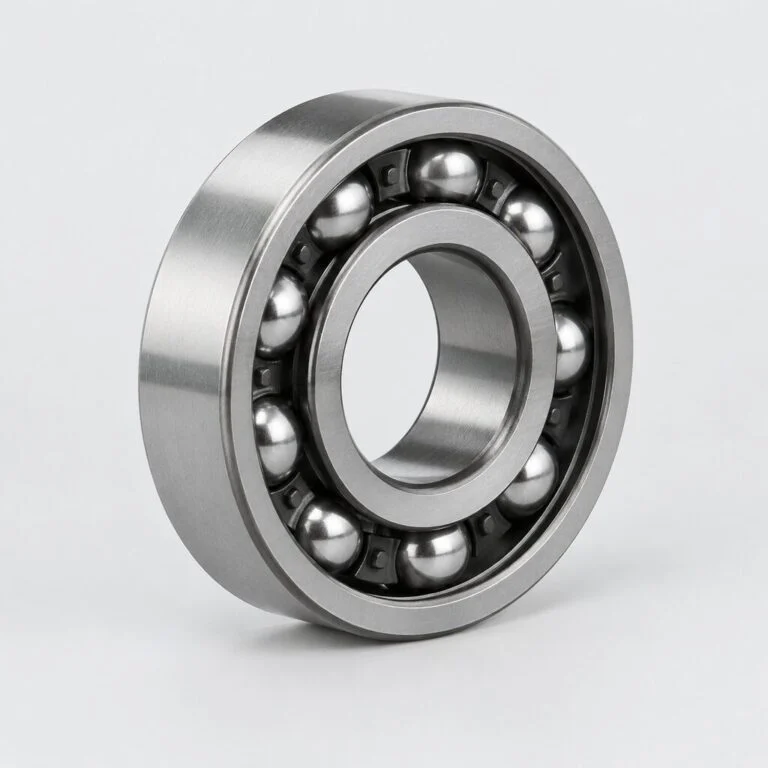
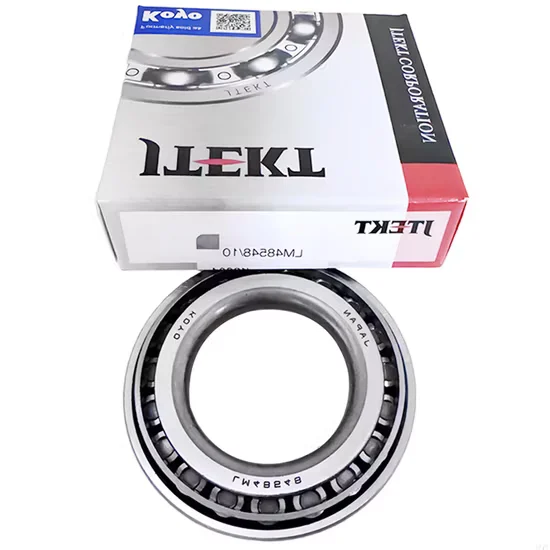
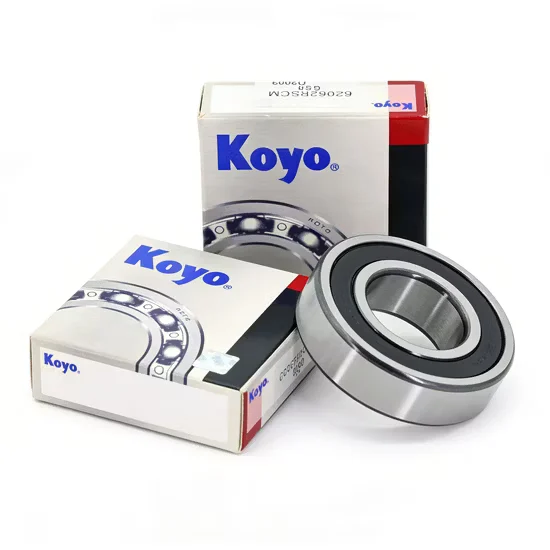
Original Batch Traceability — Every KOYO 6005 deep groove ball bearing ships with unbroken manufacturer lot documentation to guarantee authentic Japanese origin.
Technical Specifications
| Parameter | Value |
| Designation | KOYO 6005 |
| Bearing Type | Deep Groove Ball Bearing |
| Bore Diameter (d) | 25 mm |
| Outside Diameter (D) | 47 mm |
| Width (B) | 12 mm |
| Contact Angle | 0° |
| Arrangement | Non-Aligning Bearing, Unseparated |
| Number of Rows | Single |
| Load Direction | Radial Bearing |
| Material | Bearing Steel |
| Seal or Shield Type | Available in Zz, 2RS, or Open variants |
| Precision Class | Available in P0, P6, P5, or P4 grades |
| Vibration Level | Z1V1, Z2V2, Z3V3 options |
| Origin | Japan |
Application Suitability
| Industry | Typical Applications |
| Motorcycles | Engine side covers, transmission shafts, steering stem assemblies |
| Electric Motors | Rotor shaft supports, cooling fan assemblies |
| Pumps & Gearboxes | Impeller shafts, low-speed gear reduction stages |
| Conveyors | Idler roller ends, drive pulley bearings |
Why Motorcycle Engine Covers Destroy the KOYO 6005 Deep Groove Ball Bearing
Standard clearance and metallic shields fail rapidly when exposed to the extreme heat and abrasive dust typical of Latin American riding conditions.
I spent years handling warranty claims in Mexico where engine side cover bearings seized constantly. Riders complained about stiff clutches and locked transmissions. Teardowns revealed that standard open or metal-shielded units simply baked dry under high thermal loads, allowing fine silica dust to infiltrate the raceways. Selecting the right KOYO 6005 deep groove ball bearing requires matching the seal and internal clearance to these brutal environmental realities rather than defaulting to catalog standards.

Matching the 25x47x12mm Profile to Powertrain Demands
The compact 25 mm bore and 47 mm outer diameter make this component ideal for tight powertrain housings. When sourcing a KOYO 6005 deep groove ball bearing for motorcycle transmissions, we prioritize units that maintain strict dimensional tolerances under thermal expansion. Our supply chain ensures that the selected precision grade aligns perfectly with the OEM's rotational speed requirements, preventing early cage wear in high-RPM zones.
Managing Thermal Expansion and Particulate Ingress
Motorcycle engines generate intense localized heat, which drastically reduces internal clearance if the wrong tolerance class is installed. Furthermore, off-road and urban riding introduces fine abrasive particulates that bypass inadequate sealing. While oil lubrication helps dissipate heat, grease-lubricated variants require high-temperature stable thickeners to prevent bleeding. Choosing between contact rubber seals and non-contact metal shields involves balancing friction generation against the absolute need for contamination exclusion.
Decoding the Single-Row Radial Architecture
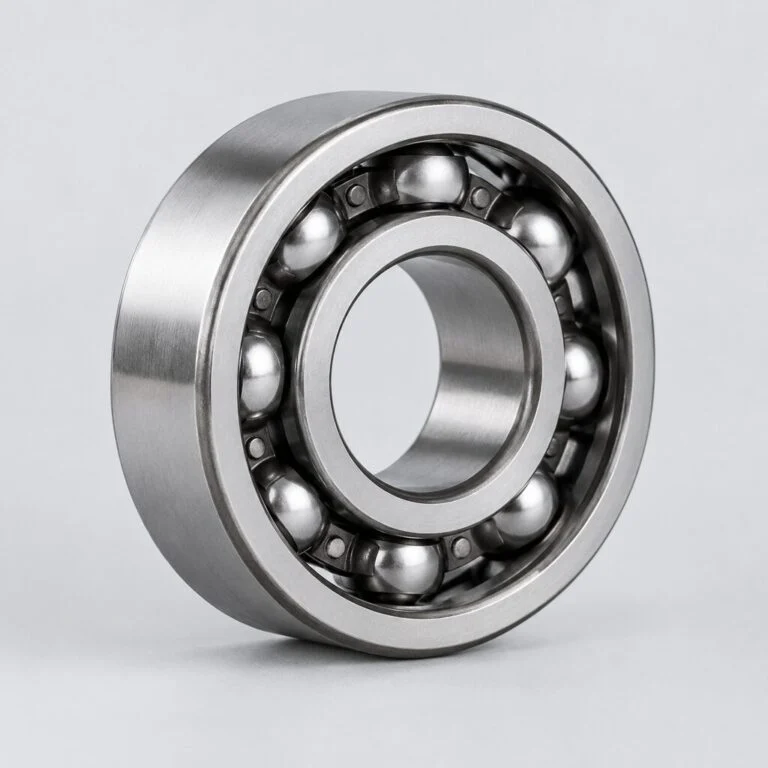
This single-row, non-aligning design relies on a zero contact angle to handle pure radial loads efficiently while accommodating minor axial displacement. The bearing steel construction provides the necessary core hardness for fatigue resistance. Since the base designation lacks specific suffixes, buyers must carefully specify their required seal type and precision class during procurement. For instance, upgrading to a P6 or P5 precision grade significantly reduces vibration and noise, which is critical for high-speed electric motor applications where acoustic performance matters.
The Cascading Impact of Incorrect Clearance Selection
Installing a standard clearance unit in a high-heat engine cover causes thermal expansion to eliminate internal play, leading to catastrophic skidding and raceway spalling. This premature failure often destroys adjacent seals and contaminates the engine oil with metallic debris. Such unplanned downtime not only voids equipment warranties but also forces costly teardowns of the entire transmission assembly to replace a single failed component.
Securing Authentic Japanese Components for Harsh Climates
We specialize in verifying the exact seal and clearance configurations needed for high-dust environments, preventing the common mistake of ordering generic open types for sealed housings. Our inventory includes genuine Japanese-manufactured stock, eliminating the risk of counterfeit parts that plague the motorcycle aftermarket. By consolidating mixed-brand orders, we help MRO facilities secure this exact model alongside other drivetrain components without juggling multiple vendors. Every shipment includes full traceability, ensuring the metallurgical integrity required for demanding powertrain applications.
Documentation & Authenticity
- Certificate of Conformity verifying Japanese origin for the specific production batch.
- Official manufacturer QR codes for instant digital authentication of each unit.
- Dimensional inspection reports confirming 25x47x12 mm tolerances match the requested precision class.
- Material test certificates validating the bearing steel composition and heat treatment.
Storage, Handling & Mounting
- Keep sealed variants in original packaging until installation to protect the factory-applied grease from humidity.
- Use induction heaters for inner ring expansion, avoiding localized torch heating that ruins the bearing steel temper.
- Ensure clean gloves are worn when handling open types to prevent skin acids from initiating raceway corrosion.
- Verify the shaft and housing tolerances before pressing, as the non-aligning design cannot compensate for misalignment.
Providing Operational Data for Technical Verification
To ensure the selected configuration survives your specific operating environment, please share your radial loads, maximum RPM, and expected housing temperatures. If you are replacing an existing unit, providing the original equipment manufacturer part number allows our engineering team to cross-reference the exact clearance and seal requirements. This data enables us to recommend the optimal variant and calculate the expected L10 service life for your application.
Frequently Asked Questions
Q: How can I verify the authenticity of the received components?
A: We provide genuine units equipped with official manufacturer QR codes. You can scan these using the brand's official mobile application to instantly verify the production batch, origin, and authenticity. Additionally, every shipment includes a Certificate of Conformity and original lot traceability documents to ensure complete supply chain transparency.
Q: What is the difference between the available precision classes?
A: The standard P0 class suits general industrial applications, while P6 and P5 grades offer tighter dimensional and running accuracy tolerances. Upgrading to higher precision reduces vibration and noise, which is essential for high-speed electric motors or precision gearboxes. We help you select the right grade based on your specific rotational speed and acoustic requirements.
Q: How do I choose the correct seal type for my environment?
A: Open types require external lubrication and clean environments, while metal shields offer basic dust protection with low friction. For motorcycle engines exposed to high heat and abrasive dirt, rubber contact seals provide superior contamination exclusion. Share your operating conditions with us, and we will recommend the optimal sealing configuration to prevent premature failure.
Q: Can this model handle axial loads in a transmission?
A: While primarily designed for radial loads due to its zero contact angle, the deep groove raceway geometry allows it to support moderate axial loads in both directions. However, for applications with heavy thrust loads or combined loading, we recommend evaluating angular contact or tapered roller alternatives. Provide your exact load vectors so we can verify the suitability for your shaft.