
Koyo Bearings for Hybrid Transmissions Wholesale Supplier
Price is not the primary risk in hybrid transmission sourcing; incorrect cage material is.
To successfully source Koyo bearings for hybrid transmissions, buyers must prioritize verified cage material specifications and full traceability documentation over visual inspection alone. Genuine units require specific polyamide or steel cages designed to handle high-frequency electric motor torque and rapid thermal cycling, preventing silent NVH failures that standard automotive bearings cannot withstand.
Walking through the assembly halls in Rayong, the silence of a halted production line is louder than any machinery. A recent batch intended for a hybrid gearbox trial run arrived with perfect packaging and crisp labeling. Yet, within hours of initial testing, the NVH readings spiked. The culprit was not a counterfeit ring attempting to mimic the logo, but a subtle substitution of cage material. The supplier had provided a standard deep-groove ball bearing suitable for internal combustion engines, not the specialized variant required for the instantaneous torque delivery of electric motors. This mismatch caused microscopic deformation under thermal stress, leading to immediate rejection. Such incidents highlight why selecting Koyo bearings for hybrid transmissions demands a technical audit of material specs rather than just a box check.
Understanding these nuances separates a reliable supply chain from one prone to costly disruptions. The shift toward electrification has changed the mechanical demands on rotating components, making the selection process more critical than ever.
Why Do Standard Koyo Bearings Fail in Hybrid Transmissions?
Hybrid transmissions impose unique thermal and torque loads that expose material flaws in standard automotive bearings.
Internal combustion engines deliver power through gradual RPM increases, allowing bearings to stabilize thermally. In contrast, hybrid systems utilize electric motors that generate maximum torque instantly from zero RPM. This creates sharp shock loads and rapid heat generation cycles that standard bearing designs are not engineered to endure. When a standard bearing is installed in a hybrid gearbox, the cage often becomes the weak point.
The failure mode is rarely catastrophic immediately. Instead, it manifests as increased noise, vibration, and harshness (NVH). For quality control teams, this is a nightmare because the part passes dimensional checks but fails functional performance. The root cause usually lies in the cage material. Standard cages may use materials that soften or deform under the specific frequency of electric motor vibrations. Over time, this leads to clearance changes, lubricant breakdown, and eventual seizure.
Consider a case where a European assembly plant switched to a lower-cost alternative for their hybrid module. The bearings looked identical to the genuine specification. However, after a few weeks of field testing, the return rate climbed due to whining noises at high speeds. Disassembly revealed that the cage had lost its structural rigidity, allowing the rolling elements to skid rather than roll. This silent failure mode is why verifying the exact material grade is non-negotiable when sourcing Koyo bearings for hybrid transmissions.
The industry has moved toward specialized polyamide composites or reinforced steel cages that maintain stability under these dynamic conditions. Without this specific engineering, even a genuine brand name cannot guarantee performance in a hybrid environment.
How to Verify Genuine Koyo Bearings for Hybrid Applications?
Traceability documents and packaging integrity checks are more reliable than visual inspection for identifying genuine parts.
Many buyers rely on visual cues such as logo clarity or packaging color to authenticate bearings. While counterfeits often fail these basic tests, sophisticated fakes can mimic visual details accurately. The only definitive proof of authenticity lies in the documentation trail. Genuine products come with batch-specific certificates that link the physical item to the manufacturer’s production records.
When evaluating a supplier, request the material certificate and the original packing list. These documents should include the specific batch number, manufacturing date, and detailed material composition. For hybrid applications, pay close attention to the cage material code listed in the technical data sheet. If the supplier cannot provide this level of detail, the risk of receiving non-conforming stock increases significantly.
A buyer in Southeast Asia once received a shipment that passed all visual inspections. The boxes were sealed, and the bearings appeared pristine. However, upon requesting the batch traceability docs, the supplier provided generic templates without specific batch numbers. Further testing revealed dimensional tolerance drifts that were within acceptable limits for general industrial use but outside the tight tolerances required for automotive hybrid gearboxes. This inconsistency would have led to premature wear in high-speed operations.
Verifying Koyo bearings for hybrid transmissions requires a systematic approach. Check the laser-etched codes on the bearing rings against the provided documentation. Ensure the font style and depth match official samples. More importantly, confirm that the supplier has a direct line to the manufacturer’s distribution network. This ensures that any discrepancies can be traced back to the source, protecting your production line from unauthorized substitutes.
Which Koyo Bearing Types Suit Specific Hybrid Gearbox Stages?
Different stages of a hybrid gearbox require distinct bearing types to handle varying load profiles and speed requirements.
Hybrid transmissions are complex assemblies with input shafts, output shafts, and intermediate gears, each subject to different mechanical stresses. Selecting the right bearing type for each position is crucial for overall system reliability. A mismatch here can lead to inefficient energy transfer and accelerated wear.
| Gearbox Stage | Primary Load Type | Recommended Bearing Type | Key Material Requirement |
|---|---|---|---|
| Input Shaft | High Radial & Axial | Angular Contact Ball Bearings | High-speed steel cage |
| Output Shaft | Heavy Radial | Cylindrical Roller Bearings | Reinforced polyamide cage |
| Intermediate Gears | Moderate Combined | Deep Groove Ball Bearings | Standard steel cage |
| Electric Motor Support | High Frequency Vibration | Specialized Hybrid Series | Low-friction composite cage |
This matrix serves as a general guide, but specific applications may vary based on the vehicle architecture. For instance, the input shaft often experiences combined loads due to the integration of the electric motor and engine power. Angular contact ball bearings are preferred here for their ability to handle axial forces while maintaining high-speed capability.
On the output side, cylindrical roller bearings are common due to their high radial load capacity. However, in hybrid systems, the cage material must resist the vibrational frequencies generated by the electric motor. Using a standard cage in this position can lead to early fatigue failure.
When sourcing Koyo bearings for hybrid transmissions, consult the official catalog for the latest specifications. Manufacturers frequently update their product lines to meet evolving automotive standards. Relying on outdated cross-reference charts can result in specifying obsolete or suboptimal parts. Always verify the current part number and its specific application notes before placing an order.
What Are the Procurement Risks of Cheap Aftermarket Alternatives?
Hidden costs from line stoppages and rework far outweigh the initial savings from cheaper aftermarket bearings.
The temptation to cut costs by sourcing cheaper alternatives is strong, especially in competitive markets. However, the true cost of a bearing is not just its purchase price but its impact on the entire production process. A single failed batch can halt an assembly line, causing delays that ripple through the supply chain.
Aftermarket alternatives often lack the rigorous quality control of genuine manufacturers. While they may meet basic dimensional standards, they frequently fall short in material purity and heat treatment consistency. In hybrid applications, where precision is paramount, these minor deviations can lead to significant performance issues.
A Middle East distributor once opted for a lower-priced alternative to save on upfront costs. The bearings worked initially, but after a few months, warranty claims began to pour in. Customers reported unusual noises and reduced efficiency. The distributor had to replace the entire stock, covering shipping, labor, and reputation damage. The final cost was several times higher than the initial savings.
Moreover, cheap alternatives often lack proper traceability. If a failure occurs, identifying the root cause becomes difficult without batch-specific data. This uncertainty can lead to broader recalls and loss of customer trust. Investing in genuine Koyo bearings for hybrid transmissions ensures consistent quality and reliable support, minimizing the risk of costly disruptions.
Conclusion
Authenticity and material specificity define success in hybrid transmission bearing procurement.
Selecting the correct components requires looking beyond price tags and visual appearances. Focus on traceability, cage material specifications, and application-specific design features. By prioritizing these factors, buyers can ensure reliable performance and avoid the hidden costs associated with inferior alternatives. Sourcing Koyo bearings for hybrid transmissions is an investment in operational stability and long-term quality.
Mentioned in this article
Koyo / JTEKT bearings from this guide
These are the Koyo / JTEKT bearing types discussed above. Open any product to check its details, or quote it together with the rest of your repair.
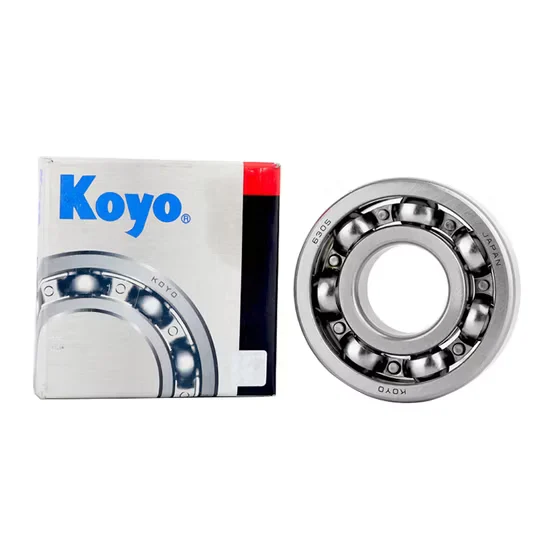
Deep Groove Ball Bearings
KOYO Bearing 6005 6006 6300-6309 Motorcycle Deep Groove Ball Bearings Japan
View Product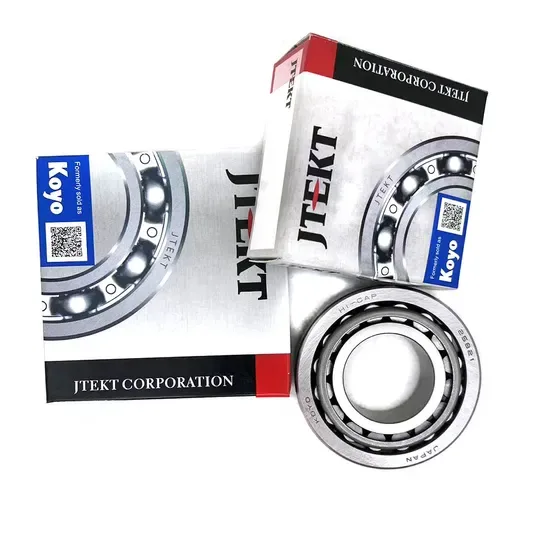
Tapered Roller Bearings
Koyo 30213 30221 30228 Tapered Roller Bearing Single Row for Machinery Part
View Product
Marine Bearings
Koyo 32212 Tapered Roller Bearing for Marine Engines
View Product
Tapered Roller Bearings
Koyo Tapered Roller Bearing 31313 33215 33017 33214 30313 32919 30217 33016
View ProductKeep reading
More bearing selection guides for repair shops
Practical guides from KOYO Bearing Supplier on identifying Koyo / JTEKT bearings for farm machinery, construction equipment and power transmission repairs.
 Buying Guide
· 8 min read
Koyo Auto Bearings Wholesale Supplier & Bulk Quote
Request a Quote for Koyo Auto Bearings that accounts for total landed cost, not just FOB price. Optimize margins through mixed-container consolidation and ensure…
Read the Guide Buying Guide · 7 min read
Koyo Auto Bearings Wholesale Supplier for Parts Stores
Stocking Koyo auto bearings requires strict verification of suffix codes and traceability to prevent costly assembly failures. Learn essential packaging checks and cross-brand alternatives…
Read the Guide Buying Guide
· 7 min read
Fake Auto Bearings: Neutral Buyer Checks Wholesale Supplier
Master Fake Auto Bearings Neutral Buyer Checks by shifting focus from packaging to internal physical inspections and traceability. Detect counterfeits through acidic rust oil…
Read the Guide
Bearing enquiry
Send your machine details. Get a written Koyo / JTEKT quote.
KOYO Bearing Supplier quotes a single bearing position or every bearing in an assembly on one enquiry, matched to your machine model and application, with model, quantity, price, lead time and quote validity in writing.
- WhatsApp+1 (702) 981-5880
- Emailinfo@koyoome.com
- Address8 Research Drive, Greenville, SC 20627, USA
"When a Koyo bearing failed on a harvest machine during the season, we needed a replacement urgently. The supplier identified the correct Koyo reference, shipped same-day, and the machine was back in the field within the day."

Request a Bearing Quote
Tell us the machine and the bearing position. Photos of the markings can follow on WhatsApp.