
Koyo Bearings for Forklift Masts Wholesale Supplier
Cheap mast bearings do not save money; they cost you the entire contract.
Sourcing Koyo bearings for forklift masts requires strict authenticity verification and precise matching of load ratings to lubrication intervals. Genuine components prevent catastrophic cage fragmentation, while counterfeit parts lead to mast jamming and rejected payments within months. Buyers must prioritize traceability documentation and correct clearance selection over initial unit price to ensure operational continuity.
I still remember the smell of burnt grease and the sound of metal grinding against metal in a rental yard in Dongguan. A local fleet manager had swapped out original equipment rollers with unbranded alternatives to cut costs. Three months later, he stood in my workshop, furious. The forklift mast had seized during a high-lift operation, causing a near-miss accident. When we dismantled the assembly, the bearing cages were not just worn; they were shattered into fragments. The steel quality was so poor that it could not withstand the dynamic shock loads inherent to mast operation. This was not a maintenance issue; it was a material failure. That incident shaped my approach to sourcing Koyo bearings for forklift masts. I no longer look at the price tag first. I look at the traceability code. I check the clearance specification. I verify the seal type against the operating environment. In the world of heavy equipment maintenance, the hidden cost of downtime far exceeds the savings from a discounted bearing.
Why Genuine Koyo Bearings Are Critical for Forklift Masts?
Counterfeit parts cause cage fragmentation and mast jamming within months, leading to significant operational losses.
The forklift mast is one of the most stressed components in material handling equipment. It undergoes constant vertical acceleration and deceleration, often while carrying maximum rated loads. Standard deep-groove ball bearings are insufficient for this application. Mast rollers require specific cylindrical or needle roller designs capable of handling high radial loads and shock impacts.
When a non-genuine bearing is installed, the internal geometry often deviates from ISO standards. The raceways may have improper hardness, or the rolling elements may lack the necessary purity. Under heavy load, these defects manifest as micro-cracks that rapidly propagate. The result is not gradual wear but sudden structural failure. I have seen cages disintegrate because the material lacked the toughness to handle the centrifugal forces at high rotational speeds during rapid lifting.
Using genuine Koyo bearings for forklift masts ensures that the component meets the rigorous quality controls established by JTEKT. The steel used is vacuum-degassed to reduce inclusion density, significantly extending fatigue life. For a distributor or MRO buyer, offering genuine parts is not just about ethics; it is about risk management. A single mast failure can halt an entire warehouse operation, leading to penalties that dwarf the cost difference between authentic and counterfeit components.
How to Verify Koyo Bearing Authenticity?
Check traceability documents, packaging integrity, and official supplier channels to avoid counterfeit failures.
Verifying authenticity is not merely about inspecting the box. Counterfeiters have become sophisticated, replicating packaging with high fidelity. The true verification lies in the supply chain trail and physical inspection of the component itself. When I source Koyo bearings for forklift masts, I require full traceability documentation from the manufacturer to the point of sale. This includes batch numbers that can be cross-referenced with official records.
Physical inspection involves checking the laser etching on the bearing ring. Genuine Koyo products feature crisp, deeply etched part numbers and logos that are resistant to wear. Counterfeits often use shallow stamping that fades quickly or appears blurred. Additionally, the surface finish of genuine bearings is smooth and uniform, whereas fake products may exhibit tool marks or uneven grinding patterns.
| Verification Method | Genuine Product Characteristics | Counterfeit Risk Indicators |
|---|---|---|
| Packaging | High-quality cardboard, clear printing, security seals | Flimsy material, blurred text, missing seals |
| Marking | Crisp laser etching, consistent font depth | Shallow stamping, blurred or misaligned text |
| Documentation | Full traceability chain, batch-specific certificates | Generic invoices, missing batch numbers |
| Surface Finish | Uniform, smooth, free of tool marks | Visible grinding marks, uneven polish |
A buyer once received a container of bearings that looked perfect on the outside. However, upon random sampling, the internal clearance varied significantly between units, indicating poor manufacturing consistency. Without proper verification protocols, such inconsistencies go unnoticed until installation. Ensuring that your supplier provides verifiable documentation is the only way to guarantee that the Koyo bearings for forklift masts you receive are authentic.
Which Koyo Mast Bearing Specs Fit Your Operating Conditions?
Selecting the correct seal type and clearance is essential for preventing premature failure in harsh environments.
Not all bearings are created equal, even within the same brand. The operating environment of a forklift dictates the specific specifications required. A forklift operating in a clean indoor warehouse has different needs than one working in a dusty lumber yard or a cold storage facility. Choosing the wrong specification leads to early failure, regardless of the brand’s quality.
The two most critical parameters are seal type and internal clearance. Seal types generally fall into ZZ (metal shields) and 2RS (rubber seals). Metal shields offer lower friction and are suitable for high-speed applications with minimal contamination. Rubber seals provide superior protection against dust and moisture but generate more heat due to friction. For mast rollers, which operate at relatively low speeds but high loads in potentially dirty environments, 2RS seals are often preferred.
Internal clearance is equally vital. Standard clearance may not suffice for applications involving significant thermal expansion or heavy shock loads. C3 or C4 clearances allow for greater internal movement, accommodating heat generation and misalignment without causing binding. Selecting the wrong clearance can lead to overheating and premature seizure.
| Specification | Application Scenario | Benefit | Risk of Incorrect Selection |
|---|---|---|---|
| ZZ Seal | Clean, high-speed environments | Low friction, high speed capability | Poor contamination protection |
| 2RS Seal | Dusty, wet, or outdoor yards | Superior sealing against debris | Higher operating temperature |
| C3 Clearance | Moderate thermal expansion | Accommodates slight misalignment | Potential noise if too loose |
| C4 Clearance | High thermal/heavy shock loads | Prevents binding under extreme conditions | Reduced rigidity if unnecessary |
I recall a case where a client insisted on using ZZ-sealed bearings for forklifts in a cement plant. Within weeks, dust ingress caused abrasive wear, destroying the bearings. Switching to 2RS-sealed Koyo bearings for forklift masts resolved the issue entirely. Understanding these nuances is crucial for making informed procurement decisions.
How to Source Koyo Forklift Bearings Efficiently?
Flexible MOQ and mixed-batch consolidation enable cost-effective procurement for global distributors.
Sourcing genuine components efficiently requires more than just finding a supplier. It demands a partner who understands the complexities of international logistics and inventory management. For distributors serving multiple regions, holding large stocks of every possible SKU is impractical. The solution lies in flexible minimum order quantities and the ability to consolidate mixed batches into single containers.
Many official channels require large volume commitments for specific part numbers, leaving buyers with excess inventory of slow-moving items. A specialized supplier can aggregate demand across various clients, allowing for smaller, more frequent orders of diverse SKUs. This approach reduces capital tie-up and minimizes the risk of obsolescence. Furthermore, consolidated shipping simplifies customs clearance and reduces freight costs per unit.
Traceability remains paramount in this model. Each batch, regardless of size, must come with complete documentation. This ensures that even small emergency orders maintain the same level of authenticity verification as bulk purchases. For MRO buyers, this means faster access to genuine parts without compromising on quality assurance.
When sourcing Koyo bearings for forklift masts, look for suppliers who offer technical support alongside logistical flexibility. The ability to consult on equivalent models or provide alternative solutions during stock shortages adds significant value. This holistic approach ensures that your supply chain is resilient, cost-effective, and reliable.
Conclusion
Authenticity and specification matching are non-negotiable for forklift mast reliability.
Sourcing Koyo bearings for forklift masts is a strategic decision that impacts operational safety and profitability. By prioritizing genuine components, verifying traceability, and selecting appropriate specifications for the operating environment, buyers can avoid costly failures. Efficient sourcing strategies, including mixed-batch consolidation, further enhance value without compromising quality. Trust in verified supply chains to keep your equipment running smoothly.
Mentioned in this article
Koyo / JTEKT bearings from this guide
These are the Koyo / JTEKT bearing types discussed above. Open any product to check its details, or quote it together with the rest of your repair.
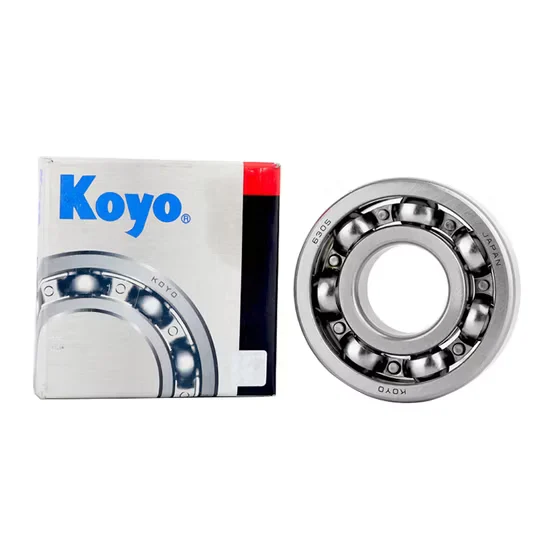
Deep Groove Ball Bearings
KOYO Bearing 6005 6006 6300-6309 Motorcycle Deep Groove Ball Bearings Japan
View Product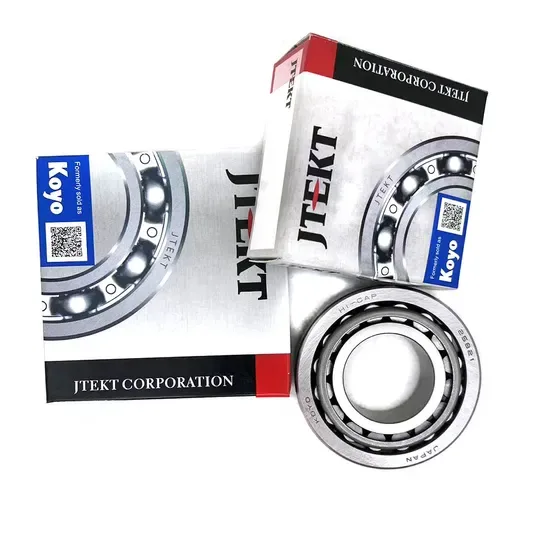
Tapered Roller Bearings
Koyo 30213 30221 30228 Tapered Roller Bearing Single Row for Machinery Part
View Product
Marine Bearings
Koyo 32212 Tapered Roller Bearing for Marine Engines
View Product
Tapered Roller Bearings
Koyo Tapered Roller Bearing 31313 33215 33017 33214 30313 32919 30217 33016
View ProductKeep reading
More bearing selection guides for repair shops
Practical guides from KOYO Bearing Supplier on identifying Koyo / JTEKT bearings for farm machinery, construction equipment and power transmission repairs.
 Buying Guide
· 8 min read
Koyo Auto Bearings Wholesale Supplier & Bulk Quote
Request a Quote for Koyo Auto Bearings that accounts for total landed cost, not just FOB price. Optimize margins through mixed-container consolidation and ensure…
Read the Guide Buying Guide · 7 min read
Koyo Auto Bearings Wholesale Supplier for Parts Stores
Stocking Koyo auto bearings requires strict verification of suffix codes and traceability to prevent costly assembly failures. Learn essential packaging checks and cross-brand alternatives…
Read the Guide Buying Guide
· 7 min read
Fake Auto Bearings: Neutral Buyer Checks Wholesale Supplier
Master Fake Auto Bearings Neutral Buyer Checks by shifting focus from packaging to internal physical inspections and traceability. Detect counterfeits through acidic rust oil…
Read the Guide
Bearing enquiry
Send your machine details. Get a written Koyo / JTEKT quote.
KOYO Bearing Supplier quotes a single bearing position or every bearing in an assembly on one enquiry, matched to your machine model and application, with model, quantity, price, lead time and quote validity in writing.
- WhatsApp+1 (702) 981-5880
- Emailinfo@koyoome.com
- Address8 Research Drive, Greenville, SC 20627, USA
"When a Koyo bearing failed on a harvest machine during the season, we needed a replacement urgently. The supplier identified the correct Koyo reference, shipped same-day, and the machine was back in the field within the day."

Request a Bearing Quote
Tell us the machine and the bearing position. Photos of the markings can follow on WhatsApp.