
Koyo Bearing Range for Nigerian Wholesaler: Bulk Supply
Genuine KOYO bearings do not guarantee successful delivery in Lagos.
The core challenge for regional distributors is not product authenticity, but mastering the intersection of Nigerian customs documentation and tropical maritime moisture protection. Without pre-validated Form M processing and SONCAP certification, even premium inventory faces indefinite port detention. Furthermore, standard factory packaging often fails against high-humidity transit conditions, leading to significant rust damage upon arrival. Success in this market requires a supply partner who treats compliance and preservation as integral to the product, not afterthoughts.
I learned this the hard way during my early years in export operations. Back then, I worked on the quality control floor in Qingdao, where my world was defined by micrometers and surface finish standards. When I transitioned to international sales, I carried that same tunnel vision. I assumed that if the KOYO tapered roller bearings were genuine and packed correctly according to basic ISO standards, they would reach their destination in perfect condition. That assumption collapsed when a full container shipment destined for a major wholesaler in Lagos sat idle at Tin Can Island Port for over two months. The delay was not due to a lack of demand or payment issues, but because the necessary import permits had not been aligned with the shipping timeline. Worse, when the container was finally opened during the peak rainy season, the moisture ingress had compromised the防锈 oil on many units. The buyer rejected the entire lot. That loss taught me that in African bulk trade, paperwork and climate-proofing are just as critical as the steel itself.
Why Did a Genuine KOYO Shipment Fail in Lagos?
Authenticity is irrelevant if the goods cannot clear customs or survive the journey.
Many distributors focus exclusively on verifying serial numbers and holographic labels, believing this secures their reputation. However, the physical integrity of the bearing and its legal status are separate hurdles. In my experience, the failure usually stems from a disconnect between the supplier’s understanding of “export ready” and the importer’s reality of “clearance ready.”
Consider the case of a mid-sized distributor in West Africa who ordered a mixed batch of deep groove ball bearings and spherical roller bearings. The supplier provided all original brand certificates. Yet, the shipment was held because the packaging did not meet the specific humidity resistance required for the long sea voyage through the tropics. Standard cardboard boxes, even when shrink-wrapped, absorb moisture during weeks of ocean transit. By the time the cargo reached the port, the internal relative humidity had risen enough to initiate surface corrosion on the precision-ground raceways.
This scenario highlights a counter-intuitive truth: the most expensive part of importing KOYO bearings Nigeria wholesale is not the purchase price, but the cost of failure. A rejected container means lost capital, demurrage charges, and damaged client relationships. Therefore, the definition of quality must expand beyond dimensional tolerance to include logistical resilience.
What Are the Hidden Customs Traps for Nigerian Bearing Imports?
Form M and SONCAP are non-negotiable prerequisites, not optional paperwork.
Navigating Nigerian import regulations requires precise timing and documentation accuracy. The most common pitfall for new entrants is treating these certifications as administrative formalities to be handled after production. In reality, they must be initiated before the goods leave the factory.
The Form M is the central document for importation into Nigeria. It serves as a declaration of intent and is required for foreign exchange allocation. If this form is not processed and approved before the bill of lading is issued, the cargo cannot be cleared. Similarly, the Standards Organisation of Nigeria Certification Programme (SONCAP) ensures that imported products meet national safety and quality standards. For industrial components like bearings, this involves product registration and shipment certification.
| Documentation Stage | Risk Level | Consequence of Error |
|---|---|---|
| Form M Application | High | Cargo detention at port; inability to access foreign exchange |
| SONCAP Product Registration | Medium | Delay in issuance of Certificate of Conformity |
| Final Inspection & Certification | High | Rejection of shipment if discrepancies found |
A European trading firm once attempted to bypass the strict timeline by shipping goods under a different HS code to expedite clearance. The discrepancy was flagged during a physical inspection, resulting in a fine and a prolonged audit that froze their ability to import for several months. This illustrates why working with a supplier who understands the nuances of bearing import clearance Nigeria is essential. They must be able to provide the technical datasheets and material certifications required for SONCAP registration well in advance of production completion.
How Does Marine Transit Destroy Bearing Quality?
Rainy season transit demands upgraded moisture protection beyond standard export packing.
The journey from East Asia to West Africa involves crossing multiple climate zones. The most dangerous phase is not the loading or unloading, but the weeks spent in the hold of a vessel where temperature fluctuations cause condensation. This phenomenon, known as “container rain,” can drench cargo even if the container appears sealed.
For KOYO tapered roller bearings supplier Lagos clients, this risk is amplified during the rainy season. Standard packaging typically includes a thin layer of anti-rust oil and a plastic wrap. While sufficient for short-distance land transport or air freight, this is inadequate for multi-week sea voyages in high-humidity environments. The oil can migrate or evaporate, leaving the steel vulnerable.
To mitigate this, specialized Vapor Corrosion Inhibitor (VCI) packaging is mandatory. VCI emitters release protective molecules that settle on metal surfaces, forming a microscopic barrier against moisture. Additionally, desiccant bags must be strategically placed within the container to absorb ambient humidity.
I recall a shipment where we switched from standard wrapping to heavy-duty VCI film and added extra desiccants for a client in a coastal region. Despite a delay in port discharge that exposed the container to heavy rains, the bearings inside remained pristine. The buyer noted that previous suppliers had delivered units with visible spotting, which required costly cleaning before resale. This level of care transforms a commodity transaction into a reliable partnership.
How to Secure Your African Bearing Wholesale Margins?
Partner with suppliers offering end-to-end consolidation and documentation support.
Profitability in the bearing distribution business is not just about buying low and selling high. It is about minimizing hidden costs such as demurrage, rejection losses, and emergency air freight for replacement parts. A supplier who offers only product sales leaves you exposed to these risks. A true partner provides a holistic solution.
Consolidation is key for regional distributors who need to stock multiple brands and types. Mixing KOYO bearings with other premium brands like SKF or FAG in a single container optimizes shipping costs and simplifies inventory management. However, this requires a supplier with a broad inventory and the logistical capability to handle mixed-brand documentation.
Moreover, technical support extends beyond selection. Providing localized marketing materials, such as translated datasheets and cross-reference guides, helps wholesalers sell more effectively. When a supplier understands the specific needs of the mining, construction, or automotive sectors in your region, they can recommend the right mix of products to keep your shelves moving.
For instance, a distributor serving the mining sector needed a steady supply of large spherical roller bearings alongside smaller deep groove units for conveyor systems. By consolidating these orders and ensuring all customs paperwork was pre-cleared, we reduced their lead time significantly. This reliability allowed them to negotiate better terms with their own clients, securing their position in a competitive market.
Conclusion
Success in Nigerian bearing wholesale relies on mastering logistics and compliance, not just product sourcing.
Delivering genuine KOYO bearings to Lagos requires a rigorous approach to customs documentation and moisture protection. By prioritizing Form M and SONCAP compliance and investing in VCI packaging, distributors can avoid costly delays and rejections. Partnering with a supplier who integrates these services into their core offering ensures that your inventory arrives ready for sale, protecting your margins and reputation.
Mentioned in this article
Koyo / JTEKT bearings from this guide
These are the Koyo / JTEKT bearing types discussed above. Open any product to check its details, or quote it together with the rest of your repair.
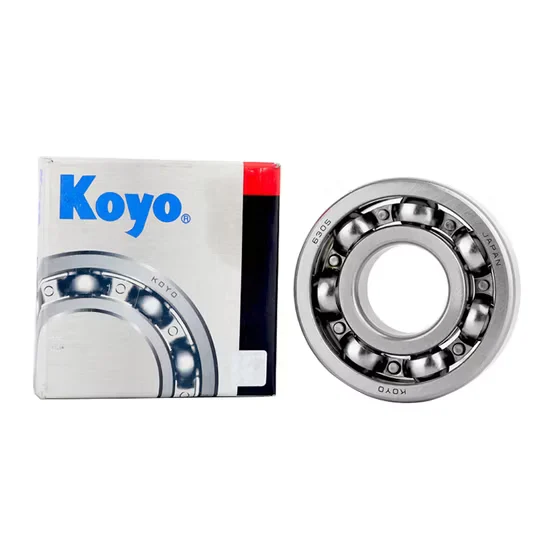
Deep Groove Ball Bearings
KOYO Bearing 6005 6006 6300-6309 Motorcycle Deep Groove Ball Bearings Japan
View Product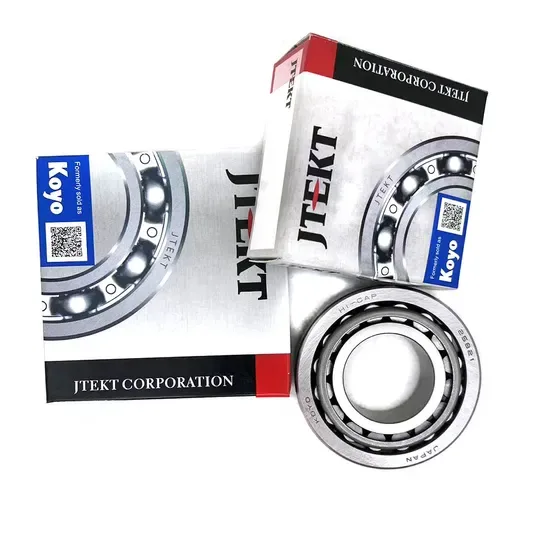
Tapered Roller Bearings
Koyo 30213 30221 30228 Tapered Roller Bearing Single Row for Machinery Part
View Product
Marine Bearings
Koyo 32212 Tapered Roller Bearing for Marine Engines
View Product
Tapered Roller Bearings
Koyo Tapered Roller Bearing 31313 33215 33017 33214 30313 32919 30217 33016
View ProductKeep reading
More bearing selection guides for repair shops
Practical guides from KOYO Bearing Supplier on identifying Koyo / JTEKT bearings for farm machinery, construction equipment and power transmission repairs.
 News & Cases
· 7 min read
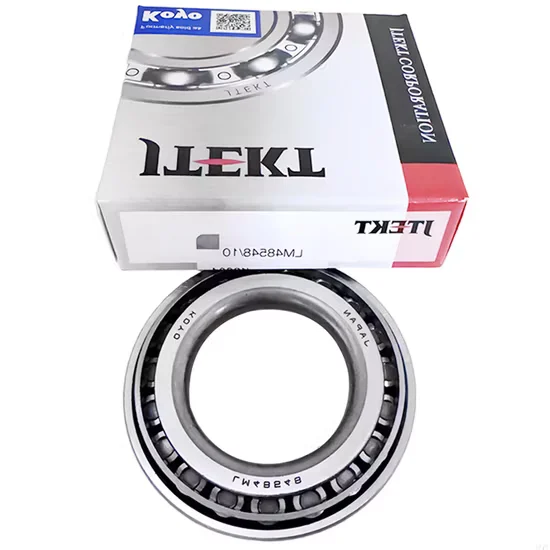
EV Transmission Bearings Wholesale Supplier 2026 Trends
Master EV Transmission Trends 2026 by prioritizing strict supply chain compliance over price to prevent costly port delays. Verify batch traceability and accurate HS…
Read the Guide News & Cases · 7 min read
Genuine SKF FAG NSK Bearings Wholesale Supplier for Auto Aftermarket 2026
Navigate the 2026 Auto Aftermarket Outlook by securing genuine SKF, FAG, and NSK bearings to avoid costly refurbished part failures. Prioritize strict traceability over…
Read the Guide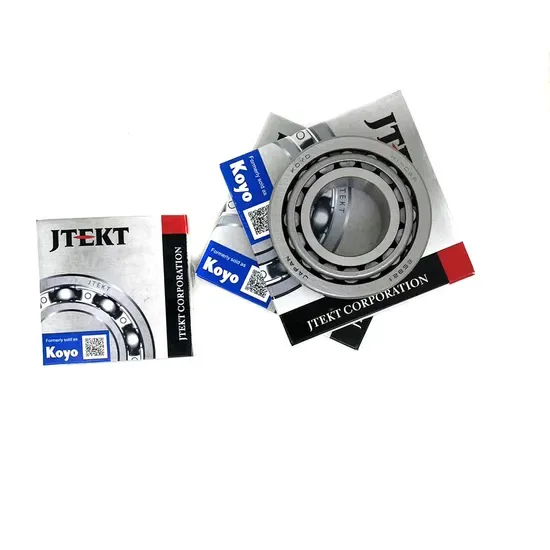 News & Cases
· 7 min read
Motorcycle Bearings for Asia & Africa Markets: Wholesale Supplier
For the 2026 motorcycle market in Asia and Africa, sourcing rugged bearings with multi-lip seals prevents costly warranty claims from dust and mud. Standard…
Read the Guide
Bearing enquiry
Send your machine details. Get a written Koyo / JTEKT quote.
KOYO Bearing Supplier quotes a single bearing position or every bearing in an assembly on one enquiry, matched to your machine model and application, with model, quantity, price, lead time and quote validity in writing.
- WhatsApp+1 (702) 981-5880
- Emailinfo@koyoome.com
- Address8 Research Drive, Greenville, SC 20627, USA
"When a Koyo bearing failed on a harvest machine during the season, we needed a replacement urgently. The supplier identified the correct Koyo reference, shipped same-day, and the machine was back in the field within the day."

Request a Bearing Quote
Tell us the machine and the bearing position. Photos of the markings can follow on WhatsApp.