
EV Transmission Bearings Wholesale Supplier 2026 Trends
Price is not the primary bottleneck in 2026; documentation is.
The core requirement for sourcing EV transmission bearings in 2026 is strict supply chain compliance and batch traceability, not just competitive pricing. Buyers must prioritize suppliers who provide verifiable HS code accuracy and complete material certification to prevent port delays and assembly line halts caused by regulatory scrutiny.
I still remember the silence on the phone from a European Tier-1 supplier last year. It was not the usual chatter about lead times or payment terms. It was the sound of a production line that had stopped. A full container of EV transmission bearings sat at the port of Antwerp, blocked by customs. The issue was not counterfeit goods. The parts were genuine. The issue was missing batch traceability documents and a mismatched HS code. The client faced a three-day downtime. That incident shifted my entire approach to sourcing. In the current market, technical precision means nothing if the paperwork does not match the physical cargo.
The shift in the electric vehicle sector is accelerating. As transmission systems evolve to handle higher RPMs, the demand for high-speed bearings has surged. This evolution makes the role of an EV transmission bearings wholesale supplier more complex than simple logistics. It requires a deep understanding of both mechanical specifications and international trade regulations.
What Drives EV Transmission Bearing Demand in 2026?
Higher rotational speeds in modern EV transmissions require bearings with flawless precision and genuine materials to withstand increased thermal and mechanical stress.
The transition to electric mobility has fundamentally changed the load profiles of transmission components. Unlike internal combustion engines, electric motors deliver instant torque and operate at significantly higher rotational speeds. This places unprecedented demands on the bearings within the transmission system. Standard automotive bearings often fail under these conditions due to heat generation and lubrication challenges.
In 2026, the focus has shifted from basic durability to high-speed compliance. Manufacturers are seeking bearings that can maintain integrity under continuous high-RPM operation. This requires not only superior steel quality but also precise manufacturing tolerances. An EV transmission bearings wholesale supplier must understand these technical nuances. It is not enough to offer a generic part number. The bearing must meet specific speed ratings and thermal stability standards.
I have observed that many buyers initially focus on the brand name alone. They assume that a well-known logo guarantees suitability for EV applications. However, even premium brands have different series designed for different operating conditions. Using a standard industrial bearing in a high-speed EV transmission can lead to premature failure. The consequences are severe, ranging from noise issues to complete transmission lockup.
The market data supports this trend. Reports indicate a steady increase in the adoption of specialized bearings for electric drivetrains. This growth is driven by the need for efficiency and reliability. Suppliers who fail to distinguish between standard and high-speed variants risk supplying unsuitable products. For buyers, this means verifying the technical datasheets against the specific RPM requirements of their application.
Why Do Compliance Gaps Cause Severe Supply Chain Disruptions?
Missing documentation and incorrect HS codes are the leading causes of customs clearance failures, resulting in costly production delays.
Compliance is often viewed as an administrative task, but in international trade, it is a critical operational factor. A single error in classification can halt a shipment for days or weeks. I have seen genuine goods rejected because the HS code did not match the detailed description provided by customs authorities. This is not a matter of intent; it is a matter of precision.
The case in Antwerp was a clear example. The bearings were classified under a general industrial code, but the accompanying invoice listed them as automotive components. This discrepancy triggered a manual inspection. Without the correct batch traceability documents, customs officials could not verify the origin and compliance of the goods. The result was a complete stoppage.
For an EV transmission bearings wholesale supplier, ensuring compliance means more than just filling out forms. It involves verifying that every document aligns with the physical product. This includes material certificates, origin declarations, and accurate HS codes. Buyers must demand this level of transparency. Relying on a supplier who treats documentation as an afterthought is a significant risk.
The cost of non-compliance extends beyond storage fees. It disrupts just-in-time manufacturing schedules. A delay in bearing delivery can halt an entire assembly line. The financial impact far exceeds any savings achieved through lower procurement costs. Therefore, compliance must be integrated into the sourcing strategy from the beginning.
How to Verify Batch Traceability for High-Speed EV Bearings?
Strict document tracking and verification of material certificates are essential to ensure zero disruptions and authentic high-speed performance.
Traceability is the backbone of quality assurance in the bearing industry. It allows buyers to track a bearing back to its production batch and raw material source. For high-speed EV applications, this is crucial. Substandard materials can fail under high stress, leading to catastrophic outcomes.
Verifying traceability requires a systematic approach. First, request the material certificate for the specific batch. This document should detail the steel grade and heat treatment process. Second, cross-reference the batch number on the certificate with the marking on the bearing itself. Any mismatch indicates a potential issue. Third, ensure that the supplier provides a full chain of custody documentation.
I once worked with a buyer who received bearings with forged certificates. The part numbers matched, but the batch details were inconsistent. Upon closer inspection, the steel quality was inferior. These bearings would not have survived the high-RPM demands of an EV transmission. By implementing a strict verification process, the buyer avoided a major quality incident.
An experienced EV transmission bearings wholesale supplier will have these processes in place. They will provide clear, verifiable documentation without hesitation. Buyers should be wary of suppliers who offer vague explanations or delayed responses. Transparency is a sign of reliability.
What Sourcing Strategies Prevent Port Delays and Downtime?
Flexible MOQ options and mixed-brand consolidation with full compliance documentation are key to maintaining smooth logistics and avoiding delays.
Sourcing strategy plays a vital role in mitigating supply chain risks. One effective approach is to work with suppliers who offer flexible minimum order quantities. This allows buyers to test new suppliers or manage inventory more efficiently. Additionally, mixed-brand consolidation can simplify logistics. Instead of managing multiple shipments from different sources, buyers can consolidate orders into a single container.
However, consolidation requires careful management. Each brand and type of bearing must be correctly documented. Mixing different HS codes in a single shipment can complicate customs clearance if not handled properly. An EV transmission bearings wholesale supplier with expertise in consolidation can navigate these complexities. They ensure that each item is classified correctly and that all necessary documents are prepared.
Another strategy is to prioritize suppliers with local warehousing or regional distribution centers. This reduces lead times and provides a buffer against international shipping delays. While global sourcing offers cost advantages, having a local presence can be invaluable during crises. Buyers should evaluate suppliers based on their ability to provide both competitive pricing and logistical resilience.
The goal is to create a supply chain that is both efficient and robust. This means balancing cost, quality, and compliance. By adopting these strategies, buyers can minimize the risk of port delays and production downtime.
Conclusion
Compliance and traceability are the new currency in EV bearing sourcing.
The 2026 landscape for EV transmission bearings demands more than just technical excellence. It requires a rigorous approach to documentation and supply chain transparency. Buyers must partner with an EV transmission bearings wholesale supplier who understands the critical link between compliance and operational continuity. By prioritizing verifiable traceability and accurate classification, businesses can avoid costly disruptions and ensure the reliability of their electric vehicle systems.
Mentioned in this article
Koyo / JTEKT bearings from this guide
These are the Koyo / JTEKT bearing types discussed above. Open any product to check its details, or quote it together with the rest of your repair.
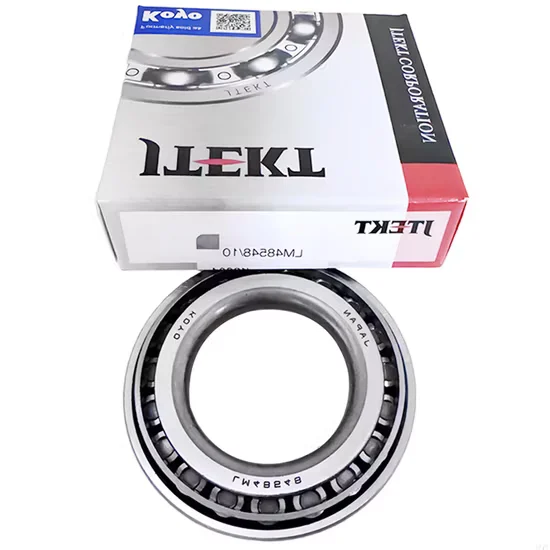
Tapered Roller Bearings
Genuine KOYO 32007 Tapered Roller Bearing Wholesale Supplier
View Product
Tapered Roller Bearings
Genuine KOYO 32006 Taper Roller Bearing Wholesale Supplier
View Product
Cylindrical Roller Bearings
Koyo NSK N408e Cylindrical Roller Bearing Genuine Wholesale Supplier
View Product
Cylindrical Roller Bearings
Koyo N2305e Cylindrical Roller Bearing Genuine Wholesale Supplier
View ProductKeep reading
More bearing selection guides for repair shops
Practical guides from KOYO Bearing Supplier on identifying Koyo / JTEKT bearings for farm machinery, construction equipment and power transmission repairs.
News & Cases · 7 min read
Genuine SKF FAG NSK Bearings Wholesale Supplier for Auto Aftermarket 2026
Navigate the 2026 Auto Aftermarket Outlook by securing genuine SKF, FAG, and NSK bearings to avoid costly refurbished part failures. Prioritize strict traceability over…
Read the Guide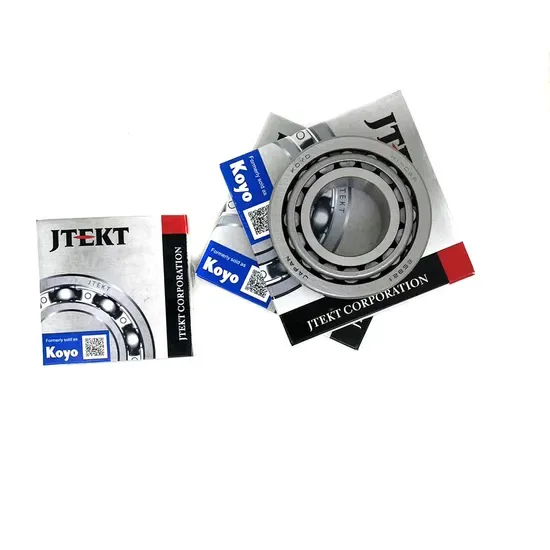 News & Cases
· 7 min read
Motorcycle Bearings for Asia & Africa Markets: Wholesale Supplier
For the 2026 motorcycle market in Asia and Africa, sourcing rugged bearings with multi-lip seals prevents costly warranty claims from dust and mud. Standard…
Read the Guide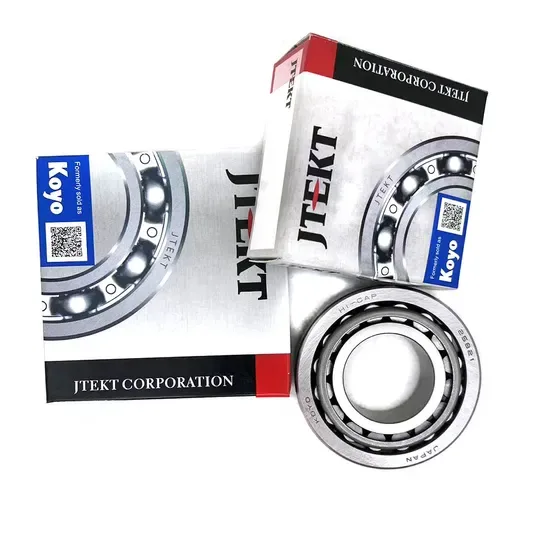 News & Cases
· 7 min read
Bearing Parts Store Fill Rate Improvement: Wholesale Supplier
Struggling with stockouts? Achieve parts store fill rate improvement by shifting from single-brand reliance to multi-brand mixed-batch consolidation. This strategy covers rare emergency models…
Read the Guide
Bearing enquiry
Send your machine details. Get a written Koyo / JTEKT quote.
KOYO Bearing Supplier quotes a single bearing position or every bearing in an assembly on one enquiry, matched to your machine model and application, with model, quantity, price, lead time and quote validity in writing.
- WhatsApp+1 (702) 981-5880
- Emailinfo@koyoome.com
- Address8 Research Drive, Greenville, SC 20627, USA
"When a Koyo bearing failed on a harvest machine during the season, we needed a replacement urgently. The supplier identified the correct Koyo reference, shipped same-day, and the machine was back in the field within the day."

Request a Bearing Quote
Tell us the machine and the bearing position. Photos of the markings can follow on WhatsApp.