
Koyo Auto Bearing Equivalents for Toyota – Wholesale Supplier
Identical base part numbers do not guarantee a direct swap.
Accurate KOYO bearing equivalents for Toyota vehicles require matching not just basic dimensions, but suffix clearance codes and flange thickness to ensure ABS signal stability. A sub-millimeter deviation in the hub flange can disrupt magnetic encoder readings, causing intermittent warning lights even if the bearing rotates smoothly.
I learned this the hard way at a Las Vegas auto parts exhibition years ago. A North American client needed a container load of wheel bearings for Toyota pickups, specifically seeking KOYO alternatives to the original equipment. Confident in the base part number match, I authorized the shipment without verifying the suffix clearance codes or the precise flange thickness tolerances. The cargo sat in the Port of Los Angeles for half a month, accruing demurrage charges, because the installed bearings triggered ABS faults immediately. The issue was not material quality, but a fractional difference in the flange geometry that misaligned the magnetic ring relative to the sensor. That incident shifted my focus from simple part number matching to rigorous cross-brand technical verification. Now, every request for KOYO auto bearing equivalents for Toyota involves a deep dive into dimensional tolerance ranges and clearance mapping.
Why Exact Equivalents Matter for Toyota Hub Bearings?
Base dimensions are merely the entry ticket; flange geometry and ABS alignment are the critical performance factors. Many distributors assume that if the inner diameter, outer diameter, and width match, the bearing is interchangeable. This assumption ignores the integrated nature of modern hub assemblies, where the bearing supports not just the wheel load but also the integrity of the anti-lock braking system data.
The hub bearing assembly in Toyota trucks and SUVs often integrates a magnetic encoder ring. The distance between this ring and the ABS sensor tip is calibrated to a specific air gap. If the replacement bearing has a flange that is even slightly thicker or thinner than the original specification, it shifts the encoder position. This shift alters the magnetic field strength detected by the sensor, leading to erratic signal output or complete failure.
When sourcing KOYO auto bearing equivalents for Toyota, one must look beyond the standard ISO dimensional series. The manufacturer’s drawing may specify a nominal flange thickness, but the actual production tolerance can vary. High-quality equivalents maintain this tolerance within a micron-level precision range, ensuring the encoder remains in the optimal zone. Cheaper alternatives often fail due to these sub-millimeter deviations, not because the steel is soft, but because the geometric fit disrupts the electronic system.
A case from a repair group in Southeast Asia illustrates this. They replaced front hub bearings on a fleet of Hilux pickups using a generic brand that matched the base dimensions. The vehicles ran fine for a few weeks, then began throwing ABS codes during heavy braking. Upon inspection, the flange thickness of the replacement bearings was found to be outside the tight tolerance band required for the sensor alignment. Switching to verified KOYO auto bearing equivalents for Toyota with certified dimensional records resolved the issue immediately. The lesson is clear: dimensional accuracy is non-negotiable for safety-critical components.
KOYO vs. NTN: How to Map Suffix Clearance Codes?
Matching internal clearance codes is essential when substituting brands like KOYO and NTN. While both are premium Japanese manufacturers with high standards, their suffix systems for internal clearance and preload can differ. Using a bearing with the wrong clearance can lead to premature wear or excessive noise, especially in the varying thermal conditions experienced by automotive wheels.
Internal clearance refers to the amount of play between the rolling elements and the raceways when the bearing is unmounted. In automotive applications, this clearance changes once the bearing is pressed into the hub and subjected to operating temperatures. If the initial clearance is too tight, thermal expansion can cause seizure. If it is too loose, vibration and noise increase.
KOYO typically uses suffixes like C3 or C4 to denote standard or greater-than-standard clearance. NTN uses similar alphanumeric codes, but the exact micrometer range for each code can vary slightly between product lines. When looking for KOYO auto bearing equivalents for Toyota, it is crucial to map the original equipment’s clearance requirement to the equivalent code in the replacement brand. A direct translation of the suffix letter is not always sufficient; one must consult the technical catalog to verify the actual radial play values.
| Feature | KOYO Specification Approach | NTN Specification Approach | Verification Requirement |
|---|---|---|---|
| Internal Clearance Suffix | Standardized alphanumeric codes (e.g., C3) | Similar alphanumeric system | Cross-reference radial play tables |
| Preload Type | Often specified for hub units | Specific preload classes | Check manufacturer technical data |
| Thermal Expansion Handling | Designed for automotive temp ranges | Comparable thermal stability | Verify operating temp limits |
A distributor in the Middle East once requested a bulk order of rear wheel bearings for Land Cruiser models. The original parts specified a specific clearance class. The supplier provided NTN bearings with a seemingly equivalent suffix. However, under high ambient temperatures, the bearings exhibited higher than expected noise levels. A detailed comparison revealed that while the suffixes looked similar, the actual radial play range for the NTN batch was at the lower end of the tolerance, leaving less room for thermal expansion compared to the KOYO original. Adjusting the selection to a KOYO auto bearing equivalents for Toyota with a verified wider clearance range solved the noise issue.
This experience highlights the need for precise technical consultation. Relying on visual similarity of suffixes is risky. Professional suppliers maintain cross-brand clearance code mapping matrices to ensure that the replacement bearing performs identically to the original under all operating conditions. This level of detail separates a reliable partner from a simple box mover.
Flange Thickness Tolerances: The Hidden ABS Killer?
Sub-millimeter deviations in flange thickness are a primary cause of ABS signal instability in replaced hub bearings. As mentioned earlier, the magnetic encoder ring is mounted on or near the flange. Its position relative to the stationary ABS sensor is critical. Even a deviation of a fraction of a millimeter can push the encoder out of the sensor’s effective reading zone.
Standard industrial bearings may have looser tolerances for non-critical dimensions like flange thickness. However, automotive hub bearings are precision components where every surface matters. The flange not only provides the mounting surface for the wheel but also acts as the reference plane for the encoder. If the flange is too thick, the encoder moves closer to the sensor, potentially saturating the signal. If it is too thin, the signal becomes weak and intermittent.
When evaluating KOYO auto bearing equivalents for Toyota, one must request detailed dimensional reports that include flange thickness measurements. Reputable manufacturers provide these tolerances in their technical catalogs. Comparing these values against the original equipment specifications ensures that the replacement will not interfere with the vehicle’s electronic safety systems.
A workshop in Europe reported a recurring issue with ABS warnings on a batch of Toyota Avensis vehicles after hub bearing replacement. The bearings were sourced from a low-cost supplier who claimed full compatibility. Investigation showed that the flange thickness varied by up to 0.5 mm across the batch. This variation was enough to cause inconsistent ABS readings. Switching to a supplier who verified the flange thickness against the original Toyota specs eliminated the problem. This underscores the importance of treating flange thickness as a critical dimension, not a secondary feature.
For buyers, this means asking specific questions about tolerance controls. Do not just ask if the bearing fits; ask if the flange thickness is controlled to the same precision as the original. Suppliers who can provide this data demonstrate a deeper understanding of automotive requirements. This attention to detail is what makes KOYO auto bearing equivalents for Toyota a reliable choice for professional repair groups.
How to Verify Traceability When Sourcing Alternatives?
Authenticating cross-brand replacements requires checking for complete traceability documentation. The aftermarket is flooded with counterfeit parts that mimic the packaging and markings of genuine brands. These fakes often use inferior steel and lack the precision engineering required for modern vehicles. Verifying the source is the only way to ensure you are getting what you paid for.
Traceability documents include material certificates, heat treatment records, and dimensional inspection reports. Genuine KOYO bearings come with batch-specific data that links the physical product to its manufacturing history. When sourcing KOYO auto bearing equivalents for Toyota, request these documents from your supplier. A legitimate supplier will provide them without hesitation. Counterfeiters cannot forge consistent, batch-specific technical data.
A buyer in Latin America once received a shipment of bearings that looked identical to genuine KOYO products. The packaging was perfect, and the markings were clear. However, when they requested the material certificate for the batch, the supplier could not provide it. Further testing revealed that the steel hardness was below the required standard, leading to rapid spalling under load. This incident cost the buyer significantly in returns and lost reputation. Had they verified the traceability documents upfront, the loss could have been avoided.
To avoid such risks, establish a checklist for authentication. Check for holographic labels, verify batch numbers with the manufacturer if possible, and insist on full documentation. Reliable suppliers integrate these checks into their sourcing process, ensuring that every unit of KOYO auto bearing equivalents for Toyota they sell is backed by verifiable proof of origin. This diligence protects your business and your customers’ safety.
Conclusion
Precision in every micron ensures safety on the road.
Sourcing the right KOYO auto bearing equivalents for Toyota demands more than matching part numbers; it requires verifying clearance codes, flange tolerances, and traceability. By focusing on these technical details, buyers can avoid costly fitment failures and ensure reliable vehicle performance. Trust in data, not just appearances.
Mentioned in this article
Koyo / JTEKT bearings from this guide
These are the Koyo / JTEKT bearing types discussed above. Open any product to check its details, or quote it together with the rest of your repair.

Tapered Roller Bearings
P5 Koyo 33010 30211 33110 32307 33208 Tapered Roller Bearing for Motor Auto Pump
View Product
Tapered Roller Bearings
Jtekt Koyo Tapered Roller Bearing 32010 30302 30303 30304 30305 30306 for Auto Parts
View Product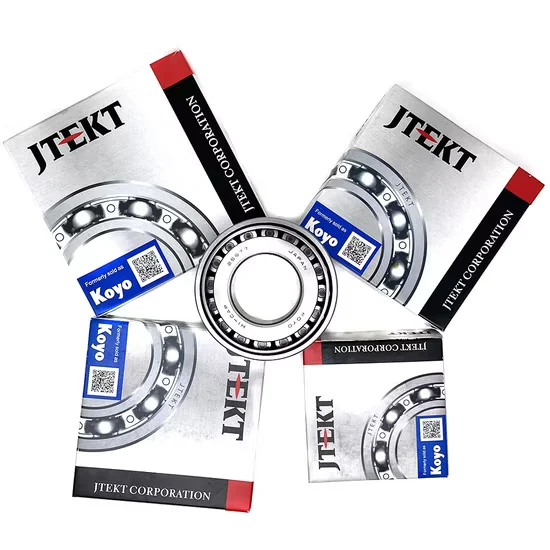
Tapered Roller Bearings
Koyo Tapered Roller Bearing 30203 30204 30205 30206 30207 for Auto Parts Wholesale
View Product
Inch Size Bearings
Koyo L420449/L420410 TRA181504 Tapered Roller Bearing for Auto Parts
View ProductKeep reading
More bearing selection guides for repair shops
Practical guides from KOYO Bearing Supplier on identifying Koyo / JTEKT bearings for farm machinery, construction equipment and power transmission repairs.
 Brands & Alternatives
· 7 min read
Koyo Automotive Bearings Wholesale Supplier for Global Bulk Orders
Master global sourcing of Koyo automotive bearings by solving mixed-brand customs risks and verifying authenticity beyond packaging. Learn to validate technical specs, select reliable…
Read the Guide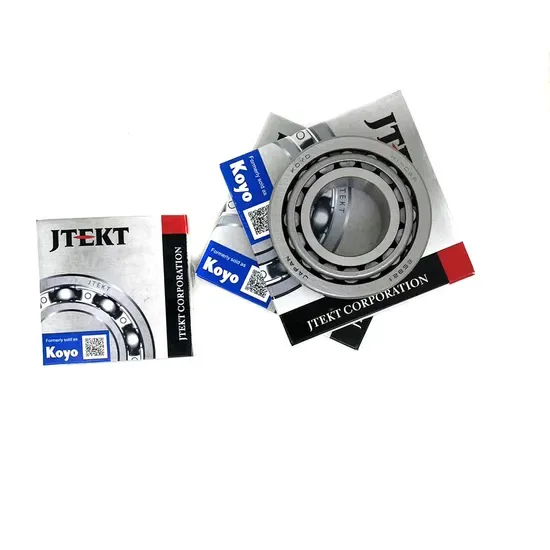 Brands & Alternatives
· 6 min read
Premium vs Economy Motorcycle Bearings: Wholesale Supplier for Bulk Orders
Choosing between premium vs economy motorcycle bearings requires analyzing total cost of ownership rather than just upfront price. Economy options often fail under heavy…
Read the Guide Brands & Alternatives
· 8 min read
OE Koyo vs Aftermarket Box: Differences for Wholesale Buyers
Understand the critical OE Koyo vs Aftermarket Box differences to avoid severe customs delays and terminal rejections in strict markets. Original packaging features holographic…
Read the Guide
Bearing enquiry
Send your machine details. Get a written Koyo / JTEKT quote.
KOYO Bearing Supplier quotes a single bearing position or every bearing in an assembly on one enquiry, matched to your machine model and application, with model, quantity, price, lead time and quote validity in writing.
- WhatsApp+1 (702) 981-5880
- Emailinfo@koyoome.com
- Address8 Research Drive, Greenville, SC 20627, USA
"When a Koyo bearing failed on a harvest machine during the season, we needed a replacement urgently. The supplier identified the correct Koyo reference, shipped same-day, and the machine was back in the field within the day."

Request a Bearing Quote
Tell us the machine and the bearing position. Photos of the markings can follow on WhatsApp.