
Koyo Auto Bearing Equivalents for Nissan Wholesale Supplier
Matching base part numbers is not enough.
To successfully source Koyo auto bearing equivalents for Nissan, you must verify suffixes, internal clearances, and cage materials rather than relying solely on basic dimension codes. Ignoring these specifications leads to assembly line noise, premature wear, and batch rejections.
I still remember the humidity in the QC lab in Yantai when I first started checking bearing clearances. Years later, sitting at a trading desk, I handled an order for a client in Dubai who needed replacements for Nissan gearbox assemblies. The request seemed straightforward: match the KOYO part numbers. I focused entirely on the basic numeric code, ensuring the inner and outer diameters were identical. I ignored the subtle suffix differences indicating clearance classes and cage types. When the shipment arrived, the assembly line reported severe noise during initial testing. The entire batch was rejected. That loss was not due to wrong dimensions, but to mismatched internal geometry. This incident reshaped how I approach every inquiry for Koyo auto bearing equivalents for Nissan. It proved that “equivalent” never means “identical.”
Understanding this distinction is critical for aftermarket suppliers and MRO operators. The goal is to reduce costs without compromising the integrity of the final assembly. This requires a deep dive into technical specifications that go beyond the catalog front page.
Why “Equivalent” Koyo Bearings Fail in Nissan Applications?
The assumption that a bearing with the same basic number will perform identically across brands is a common procurement error. In automotive applications, particularly for Nissan vehicles, the operating environment demands precise internal adjustments. A standard deep groove ball bearing might look the same from the outside, but its internal behavior under load and temperature varies significantly based on manufacturing tolerances.
When sourcing Koyo auto bearing equivalents for Nissan, the primary failure point is often the radial internal clearance. Nissan gearboxes and wheel hubs are designed with specific clearance classes to accommodate thermal expansion and load distribution. If a substitute bearing has a standard clearance (C0) instead of the required C3 or C4 clearance, the rolling elements will bind as the metal expands during operation. This binding generates heat, increases friction, and produces the characteristic whining noise that leads to immediate rejection in quality control checks.
Another critical factor is the cage material. Original equipment specifications often call for polyamide cages in high-speed or high-temperature zones due to their lightweight and self-lubricating properties. Substituting these with steel cages, which are heavier and have different thermal expansion rates, can alter the dynamic balance of the bearing. In one case, a substitution led to early cage wear because the steel could not handle the specific thermal cycling of the Nissan application. The result was a significant drop in lifespan, turning a cost-saving measure into a warranty liability.
These failures are not random. They are the direct result of overlooking the suffixes that define the bearing’s internal architecture. For buyers, this means that a simple cross-reference table is insufficient. You need a verification process that checks every character in the part number.
Critical Specs to Verify: Clearances, Cages, and Seals
To avoid the pitfalls of incorrect substitution, a detailed specification matrix is essential. When evaluating Koyo auto bearing equivalents for Nissan, focus on three key areas: radial clearance, cage type, and seal configuration. These elements dictate how the bearing interacts with the housing and shaft under real-world conditions.
Radial clearance is the most frequent source of error. Automotive applications often require C3 or C4 clearances to allow for heat dissipation and misalignment. A bearing with standard clearance may fit physically but fail functionally.
Cage material affects speed capability and temperature resistance. Polyamide cages are preferred for high-speed applications due to lower inertia, while steel cages offer higher strength for heavy loads. Mixing these up can lead to catastrophic failure.
Seal type determines protection against contaminants. Contact seals provide better protection but generate more heat, while non-contact seals run cooler but allow more ingress. Choosing the wrong seal for a dusty or wet environment compromises the lubricant integrity.
| Specification | Standard Equivalent Risk | Required Verification for Nissan Apps | Impact of Mismatch |
|---|---|---|---|
| Radial Clearance | Assumes C0 (Standard) | Confirm C3 or C4 per OEM spec | Noise, overheating, seizure |
| Cage Material | Defaults to Steel | Check for Polyamide (PA66) or Steel | Weight imbalance, wear, fatigue |
| Seal Type | Generic Rubber Seal | Verify Contact vs. Non-contact design | Contamination ingress or excess heat |
| Lubricant | General Purpose Grease | Match Temperature Range and Viscosity | Premature lubricant breakdown |
This matrix serves as a checklist for every order. It prevents the assumption that “close enough” is acceptable. In the automotive aftermarket, precision is the only metric that matters. Suppliers who ignore these details face higher return rates and damaged reputations.
By strictly adhering to these specifications, buyers can ensure that the Koyo auto bearing equivalents for Nissan they source will perform reliably. This approach shifts the focus from price alone to total cost of ownership, reducing the risk of costly failures downstream.
Common Nissan Application Scenarios & Substitution Rules
Different components within a Nissan vehicle present unique challenges for bearing substitution. Gearboxes and wheel hubs, the two most common replacement scenarios, require distinct strategies. Understanding these nuances is vital for selecting the right Koyo auto bearing equivalents for Nissan.
Gearbox bearings operate under high rotational speeds and variable loads. They are sensitive to clearance and lubrication. A common mistake is substituting a standard industrial bearing for a specialized automotive unit. Industrial bearings may not have the precise surface finish or noise ratings required for passenger comfort.
In one instance, a buyer ordered standard seals for a gearbox application in a dusty environment. The original specification called for contact seals to prevent particulate ingress. The substitution led to contamination of the grease, causing premature wear. The buyer had to arrange emergency re-shipment, incurring significant logistics costs and delaying the repair schedule. This highlights the importance of matching seal types to the operating environment, not just the dimensions.
Wheel hub bearings, on the other hand, face heavy radial and axial loads. They require robust construction and often integrated sensor rings for ABS systems. Substituting these requires careful attention to the magnetic encoder compatibility. A mismatch here can disable safety systems, leading to severe liability issues.
For both scenarios, the rule is consistent: verify the suffix. The suffix tells you if the bearing is designed for high temperature, heavy load, or specific sealing requirements. Ignoring it is a gamble with poor odds. Successful substitution relies on understanding the specific demands of each application point.
How to Source Reliable Alternatives Without Quality Risks
Finding a supplier who understands these technical nuances is as important as the product itself. Many distributors sell based on part numbers alone, lacking the engineering support to verify compatibility. To source reliable Koyo auto bearing equivalents for Nissan, you need a partner who offers traceability and technical cross-checking.
Traceability ensures that the bearings are genuine and not counterfeit. Counterfeit bearings often mimic the packaging and basic markings but fail to meet the material and precision standards of the original manufacturer.
Technical support is equally critical. A competent supplier will not just ship the box; they will confirm the suffixes and clearances before dispatch. This pre-shipment verification acts as a safety net, catching errors before they reach your warehouse or customer.
Flexible MOQs are also a key consideration. Aftermarket demand can be unpredictable, requiring both small emergency orders and large bulk shipments. A supplier with substantial spot inventory and the ability to consolidate mixed-brand orders provides the agility needed to manage stock levels efficiently.
By partnering with a supplier who prioritizes technical accuracy over simple transaction volume, you mitigate the risks associated with cross-brand substitution. This approach ensures that every Koyo auto bearing equivalents for Nissan you procure meets the stringent requirements of modern automotive repair and maintenance.
Conclusion
Equivalence requires verification, not assumption.
Sourcing replacements for Nissan vehicles demands strict attention to suffixes, clearances, and materials. Ignoring these details turns potential savings into costly rejections. Prioritize technical validation and traceable supply chains to ensure reliability.
Mentioned in this article
Koyo / JTEKT bearings from this guide
These are the Koyo / JTEKT bearing types discussed above. Open any product to check its details, or quote it together with the rest of your repair.

Tapered Roller Bearings
P5 Koyo 33010 30211 33110 32307 33208 Tapered Roller Bearing for Motor Auto Pump
View Product
Tapered Roller Bearings
Jtekt Koyo Tapered Roller Bearing 32010 30302 30303 30304 30305 30306 for Auto Parts
View Product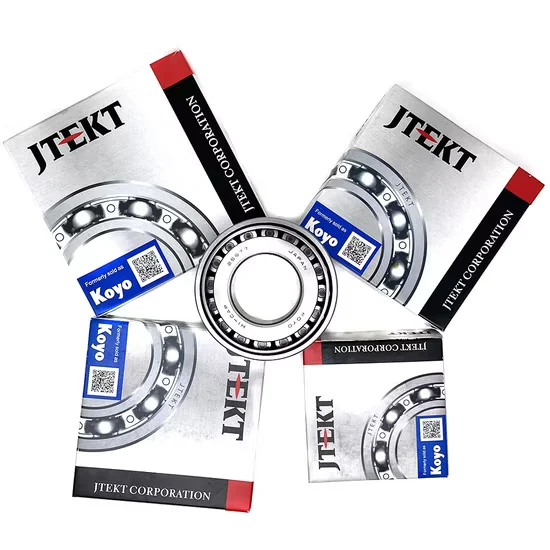
Tapered Roller Bearings
Koyo Tapered Roller Bearing 30203 30204 30205 30206 30207 for Auto Parts Wholesale
View Product
Inch Size Bearings
Koyo L420449/L420410 TRA181504 Tapered Roller Bearing for Auto Parts
View ProductKeep reading
More bearing selection guides for repair shops
Practical guides from KOYO Bearing Supplier on identifying Koyo / JTEKT bearings for farm machinery, construction equipment and power transmission repairs.
 Brands & Alternatives
· 7 min read
Koyo Automotive Bearings Wholesale Supplier for Global Bulk Orders
Master global sourcing of Koyo automotive bearings by solving mixed-brand customs risks and verifying authenticity beyond packaging. Learn to validate technical specs, select reliable…
Read the Guide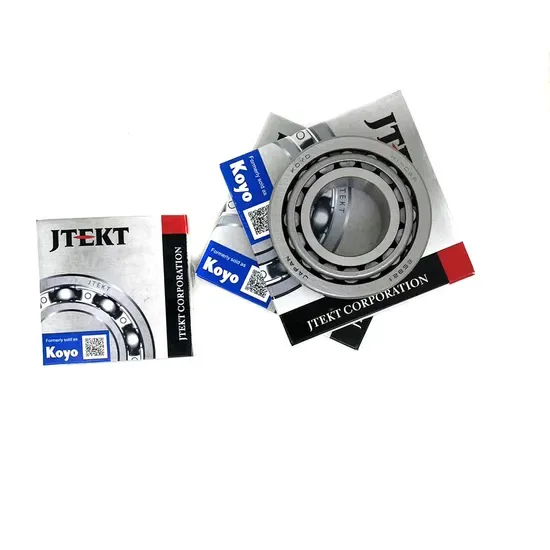 Brands & Alternatives
· 6 min read
Premium vs Economy Motorcycle Bearings: Wholesale Supplier for Bulk Orders
Choosing between premium vs economy motorcycle bearings requires analyzing total cost of ownership rather than just upfront price. Economy options often fail under heavy…
Read the Guide Brands & Alternatives
· 8 min read
OE Koyo vs Aftermarket Box: Differences for Wholesale Buyers
Understand the critical OE Koyo vs Aftermarket Box differences to avoid severe customs delays and terminal rejections in strict markets. Original packaging features holographic…
Read the Guide
Bearing enquiry
Send your machine details. Get a written Koyo / JTEKT quote.
KOYO Bearing Supplier quotes a single bearing position or every bearing in an assembly on one enquiry, matched to your machine model and application, with model, quantity, price, lead time and quote validity in writing.
- WhatsApp+1 (702) 981-5880
- Emailinfo@koyoome.com
- Address8 Research Drive, Greenville, SC 20627, USA
"When a Koyo bearing failed on a harvest machine during the season, we needed a replacement urgently. The supplier identified the correct Koyo reference, shipped same-day, and the machine was back in the field within the day."

Request a Bearing Quote
Tell us the machine and the bearing position. Photos of the markings can follow on WhatsApp.