
Import Duty on Auto Bearings: Wholesale Supplier Guide
Lower declared value does not mean lower duty.
Correct HS classification under code 8482 and market-specific tariff knowledge are critical to avoiding massive port delays and margin erosion in auto bearing imports. Misclassification often triggers whole-vehicle tax rates rather than component duties, leading to financial losses that far exceed the potential savings from aggressive valuation strategies.
I still remember the silence in the warehouse office in Monterrey when the customs broker handed over the revised assessment. We had shipped a full container of automotive hub bearings, expecting standard component tariffs. Instead, local authorities reclassified the goods under a整车 (whole vehicle) category due to a documentation error in the HS code prefix. The cargo sat in Manzanillo for weeks, accumulating demurrage charges that ate through the entire profit margin of the deal. That incident was not just about a fine; it was a lesson in how Latin American port regulations can be more unforgiving than bearing tolerances.
Navigating these waters requires more than just good products; it demands precise administrative preparation. For distributors and aftermarket suppliers, understanding the nuances of Import Duty on Auto Bearings is as vital as knowing the load ratings of the parts themselves.
How Are Auto Bearings Classified by Customs?
Mastering HS 8482 subheadings prevents whole-vehicle rate traps.
Customs authorities do not look at a bearing and see a precision-engineered component; they see a line item in a tariff schedule. The global standard for classification is the Harmonized System, specifically heading 8482 for ball or roller bearings. However, the devil lies in the subheadings. A deep-groove ball bearing for an electric motor might share a broad category with an automotive wheel bearing, but their specific codes and associated duties can differ significantly depending on the importing country’s national tariff schedule.
The most common pitfall is failing to distinguish between general industrial bearings and those specifically designed for automotive applications. Some jurisdictions apply different duty rates based on the intended use or the technical specifications listed in the commercial invoice. If the description is vague, such as “steel ring,” customs may default to a higher, generic rate or, worse, suspect undervaluation.
| Classification Factor | Correct Approach | Risk of Error |
|---|---|---|
| HS Code Prefix | Use specific 8482 subheadings for auto bearings | Generic code triggers higher scrutiny |
| Product Description | Specify “Automotive Hub Bearing” with part number | Vague terms like “metal part” cause delays |
| Material Declaration | State bearing steel grade clearly | Missing material info leads to physical inspection |
| Intended Use | Declare “Aftermarket Replacement” if applicable | Ambiguity may invoke OEM-specific tariffs |
In my experience, a discrepancy in the first four digits of the HS code can change the duty rate from single digits to double digits. For instance, certain tapered roller bearings used in heavy-duty truck axles may face different anti-dumping duties compared to standard passenger car bearings.
To mitigate this, pre-clearance consultation is essential. Verifying the correct Import Duty on Auto Bearings code with a local broker before shipment leaves the origin port saves weeks of uncertainty. This is where having a supplier who understands global trade compliance becomes a strategic advantage, ensuring that the paperwork matches the physical goods down to the last digit.
What Are the Tariff Differences Across Key Markets?
LatAm, Middle East, and Africa have distinct duty structures and FTA exemptions.
Tariff landscapes are not uniform. A strategy that works in Dubai may fail in Lagos or Sao Paulo. Understanding these regional differences is key to optimizing landed costs. In Latin America, particularly in countries like Mexico and Brazil, import duties are often high to protect local manufacturing. However, Free Trade Agreements (FTAs) can offer relief if the correct certificates of origin are provided. It is a counter-intuitive reality that many FTAs exclude specific precision bearing tiers, meaning a generic certificate may not suffice for high-precision automotive grades.
In the Middle East, the approach is often more streamlined but strictly enforced regarding valuation. Consolidated mixed-brand containers can optimize tariff brackets if the declaration is clear. I recall a shipment to a hub in Jebel Ali where we consolidated various brands into a single TEU. By clearly separating the lines by brand and HS code within the same container, we avoided the highest bracket applied to mixed miscellaneous goods, resulting in noticeable cost savings.
Africa presents a different challenge: document alignment. In many African ports, the physical inspection is less frequent than the document check. If the commercial invoice, packing list, and bill of lading do not match perfectly in terms of weight, quantity, and description, the cargo is rejected or held. Pre-shipment document alignment is critical here. A minor typo in the part number can lead to days of clearance time reduction issues.
| Region | Primary Tariff Characteristic | Key Compliance Focus |
|---|---|---|
| Latin America | High protective duties, complex FTAs | Certificate of Origin accuracy |
| Middle East | Streamlined but strict valuation | Consistent CIF/FOB declaration |
| Africa | Document-heavy clearance | Perfect match across all shipping docs |
These regional nuances mean that a one-size-fits-all approach to Import Duty on Auto Bearings is ineffective. Distributors must tailor their documentation strategy to the destination. For example, while CIF valuation is standard in many places, some markets insist on FOB bases for duty calculation, which changes the taxable amount significantly.
Why Do Shipments Get Stuck at the Port?
Documentation mismatches and valuation disputes cause the majority of delays.
It is rarely the quality of the bearing that stops a shipment; it is the paper trail. Customs authorities are increasingly using automated systems to flag discrepancies. If the declared value of a batch of NSK or SKF bearings is significantly lower than the historical average for that HS code, the system flags it for manual review. This does not mean the price is wrong, but it does mean the shipment will sit until a human officer verifies it.
A common mistake is declaring a lower value to reduce duty. As noted earlier, this often backfires. Customs may reject the declared value and impose a penalty, or they may reclassify the goods under a different category with a higher duty rate. In one case, a buyer attempted to declare hub bearings as simple steel rings to avoid automotive tariffs. The physical inspection revealed the precision grinding and sealing, leading to a reclassification that included both the higher duty and a fine for misdeclaration.
Another frequent issue is the lack of traceability documentation. For genuine bearings, especially from premium brands like FAG, INA, or TIMKEN, customs may request proof of authenticity to combat counterfeit goods. If the supplier cannot provide complete traceability documents, such as original mill certificates or authorized distribution letters, the cargo may be held indefinitely.
To avoid these pitfalls, ensure that every document tells the same story. The commercial invoice, packing list, and bill of lading must align perfectly. Any deviation, no matter how small, invites scrutiny. Understanding the specific Import Duty on Auto Bearings requirements of the destination country includes knowing what documents are mandatory for clearance, not just what the duty rate is.
How to Optimize Landed Costs Legally?
Strategic consolidation and accurate pre-clearance filing protect margins.
Optimizing costs is not about evading taxes; it is about paying the correct amount efficiently. One effective method is strategic consolidation. By mixing slow-moving and fast-moving items in a single container, distributors can balance the overall duty burden. However, this requires precise HS code mapping for each item. A mixed container with incorrect coding for even one item can jeopardize the entire shipment.
Pre-clearance filing is another powerful tool. Submitting documents to customs before the vessel arrives allows for early detection of issues. If there is a question about the HS code or value, it can be resolved while the goods are still at sea, rather than sitting on the dock accruing demurrage. This proactive approach reduces the risk of unexpected costs and ensures smoother cash flow.
Additionally, leveraging free trade agreements correctly can yield significant savings. But this requires diligence. Not all bearings qualify, and the rules of origin must be met. For example, if the bearings are sourced from China but assembled in a country with an FTA with the destination, the certificate of origin must reflect the correct processing level. Incorrect claims can lead to retroactive duties and penalties.
| Optimization Strategy | Implementation Requirement | Benefit |
|---|---|---|
| Strategic Consolidation | Accurate HS code for each SKU | Balanced duty burden per container |
| Pre-clearance Filing | Early document submission | Reduced port dwell time |
| FTA Utilization | Valid Certificate of Origin | Lower or zero duty rates |
| Traceability Docs | Complete chain of custody proof | Faster authenticity verification |
For buyers sourcing from global suppliers, working with a partner who offers HS code pre-consultation and complete traceability documentation is invaluable. It transforms the supply chain from a cost center into a competitive advantage. By ensuring that every aspect of the Import Duty on Auto Bearings process is handled with precision, distributors can protect their margins and maintain reliable service for their own customers.
Conclusion
Precision in paperwork is as critical as precision in manufacturing.
Navigating global tariffs requires a deep understanding of HS codes, regional variations, and documentation standards. Mistakes in classification or valuation lead to costly delays and eroded profits. By focusing on accurate data, strategic consolidation, and compliant practices, buyers can ensure smooth customs clearance and sustainable business growth.
Mentioned in this article
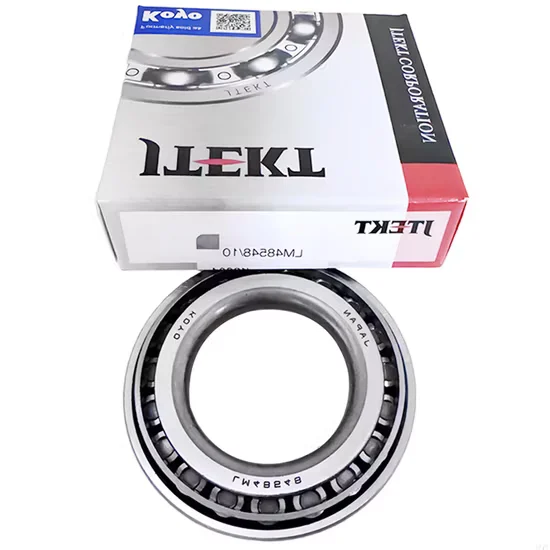
Koyo / JTEKT bearings from this guide
These are the Koyo / JTEKT bearing types discussed above. Open any product to check its details, or quote it together with the rest of your repair.

Tapered Roller Bearings
P5 Koyo 33010 30211 33110 32307 33208 Tapered Roller Bearing for Motor Auto Pump
View Product
Tapered Roller Bearings
Jtekt Koyo Tapered Roller Bearing 32010 30302 30303 30304 30305 30306 for Auto Parts
View Product
Railway Bearings
X&S 30304 30306 30307 Tapered Roller Bearings for Railway Axle Auto Parts
View Product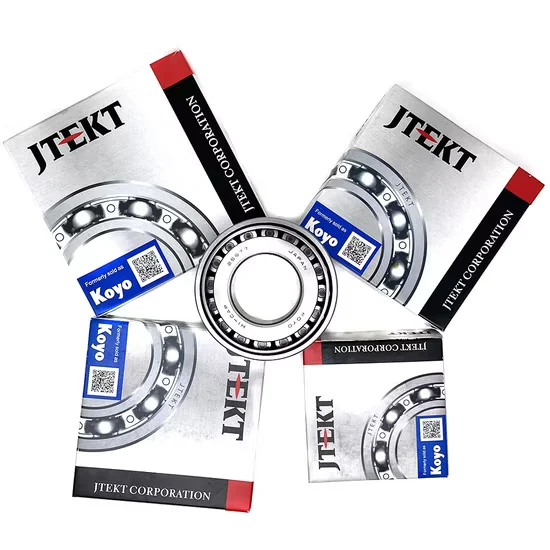
Tapered Roller Bearings
Koyo Tapered Roller Bearing 30203 30204 30205 30206 30207 for Auto Parts Wholesale
View ProductKeep reading
More bearing selection guides for repair shops
Practical guides from KOYO Bearing Supplier on identifying Koyo / JTEKT bearings for farm machinery, construction equipment and power transmission repairs.
 Procurement & Trade FAQs
· 7 min read
Rebuild Kit Supply for Transmission Shops: Wholesale Bearing Supplier
Transmission rebuild kit supply depends on accurate HS codes and detailed BOMs to prevent customs delays. Learn how mixed bearing consolidation and robust packaging…
Read the Guide Procurement & Trade FAQs · 7 min read
Genuine Bearing Stock Programs for Motorcycle Dealers: Wholesale Supplier
Optimize Motorcycle Dealer Stock Programs by balancing cross-brand bearing equivalency, genuine traceability, and flexible MOQs to prevent costly warranty claims. Verify dimensional tolerance and…
Read the Guide Procurement & Trade FAQs · 7 min read
Express Shipping for Urgent Bearing Repairs: Global Wholesale Supplier
Master express shipping for urgent bearing replacements by prioritizing customs clearance over flight speed to eliminate port bottlenecks. Optimize volumetric weight, consolidate mixed-brand orders,…
Read the Guide
Bearing enquiry
Send your machine details. Get a written Koyo / JTEKT quote.
KOYO Bearing Supplier quotes a single bearing position or every bearing in an assembly on one enquiry, matched to your machine model and application, with model, quantity, price, lead time and quote validity in writing.
- WhatsApp+1 (702) 981-5880
- Emailinfo@koyoome.com
- Address8 Research Drive, Greenville, SC 20627, USA
"When a Koyo bearing failed on a harvest machine during the season, we needed a replacement urgently. The supplier identified the correct Koyo reference, shipped same-day, and the machine was back in the field within the day."

Request a Bearing Quote
Tell us the machine and the bearing position. Photos of the markings can follow on WhatsApp.