
Genuine Bearing Stock Programs for Motorcycle Dealers: Wholesale Supplier
The cheapest unit price often leads to the highest warranty claim costs.
Effective motorcycle dealer stock programs require balancing cross-brand bearing equivalency, genuine traceability, and flexible MOQs to prevent warranty claims and optimize inventory costs. Sourcing decisions must prioritize dimensional tolerance verification and clearance calculation over initial purchase price to ensure long-term reliability for mixed-fleet maintenance.
I still remember the chill of a Chicago winter when a Midwest repair chain called me in panic. They had stocked what they thought were standard front-wheel bearings for a popular cruiser model. The parts looked identical to the eye, but after a few thousand miles, customers reported persistent humming and vibration. The issue was not the brand, but the internal clearance. The workshop had installed bearings with standard C0 clearance into modified wheels that ran hotter than factory specs. The grease broke down, the balls expanded, and the raceways seized. That failure cost them far more in labor and reputation than the savings from buying non-verified stock. It taught me that for any serious Motorcycle Dealer Stock Programs, technical compatibility is as critical as commercial terms.
This reality drives the need for a sophisticated approach to inventory. Dealers cannot simply rely on OEM part numbers, which often limit market coverage and inflate costs. Instead, they need a partner who understands how to navigate cross-brand equivalents while maintaining strict quality control.
How to Select Cross-Brand Bearing Equivalents for Motorcycle Stock?
Matching specs and clearances across brands prevents fitment failures.
Many dealers hesitate to stock non-OEM bearings due to fear of incompatibility. However, sticking strictly to original equipment manufacturer part numbers limits service capacity and ties up capital in slow-moving SKUs. The key to successful Motorcycle Dealer Stock Programs lies in understanding that bearing dimensions are standardized globally, but internal designs vary by application.
When evaluating equivalents, one must look beyond the outer diameter and bore size. The critical parameters are the internal radial clearance and the precision class. For instance, a bearing designated as P0 (standard precision) may suffice for a low-speed agricultural implement, but a motorcycle wheel hub rotating at high speeds requires tighter tolerances to minimize noise and heat generation.
Consider the case of a regional distributor in Southeast Asia who struggled with dead stock. He was holding multiple boxes of the same bearing from different brands, each labeled with a unique OEM reference. By consolidating these into a single cross-referenced SKU based on ISO dimensions and load ratings, he reduced his inventory footprint significantly. This consolidation allowed him to offer better availability to his repair shop clients without increasing his capital tie-up.
| Parameter | OEM-Specific Stock | Cross-Brand Equivalent Strategy |
|---|---|---|
| Part Number Reference | Single brand only | Multi-brand lookup based on dimensions |
| Inventory Turnover | Low due to specific fitment | High due to universal applicability |
| Technical Verification | Relies on OEM catalog | Requires dimensional tolerance check |
| Cost Efficiency | Premium pricing | Competitive sourcing cost |
To implement this, dealers must verify the dimensional tolerance of the equivalent bearing. A micrometer check on the inner and outer rings can reveal if a budget option meets the required micron-level precision. If the variance is too high, the bearing will not seat correctly in the hub, leading to premature wear. Our consultation service helps dealers map their high-turnover OEM numbers to reliable equivalents from premium global brands like SKF, NSK, or FAG, ensuring that the replacement part meets or exceeds the original specification.
What Traceability Documents Are Required for Genuine Motorcycle Bearings?
ISO compliance and origin certificates protect dealers from counterfeit claims.
In the aftermarket, the line between genuine and counterfeit is often blurred by packaging. A box may look authentic, but the bearing inside could be made from substandard steel. For dealers participating in robust Motorcycle Dealer Stock Programs, proof of origin is not just paperwork; it is insurance against liability.
Counterfeit bearings often fail catastrophically because they lack the proper heat treatment and material purity. Genuine bearings from brands like TIMKEN, KOYO, or NTN undergo rigorous quality control, including vacuum degassing to remove impurities from the steel. Without traceability, a dealer cannot prove that a failed part was genuine, leaving them exposed to warranty claims from end-users.
A European wind farm operator once faced a similar issue with industrial bearings, where lack of documentation led to a complete audit of their supply chain. While motorcycles are smaller, the principle remains: if you cannot trace it, do not stock it. Essential documents include the Certificate of Origin, material test reports, and batch-specific quality certificates. These documents verify that the bearings were produced in the manufacturer’s authorized facilities and meet international standards.
Dealers should request full traceability docs for every batch. This includes verifying the batch number on the bearing cage against the supplier’s invoice. If a supplier cannot provide this link, the risk of receiving counterfeit goods is high. We provide complete traceability documentation for all our genuine products, ensuring that every bearing can be traced back to its production source. This level of transparency builds trust with repair workshops that demand genuine quality for their customers.
How to Optimize MOQ and Consolidation for Mixed-Fleet Repair Shops?
Flexible MOQs and mixed-container consolidation reduce capital tie-up.
Repair shops often service a mixed fleet of motorcycles, from small commuters to heavy cruisers. Stocking enough variety to cover all models is challenging, especially when suppliers impose high minimum order quantities (MOQs). Traditional Motorcycle Dealer Stock Programs often force dealers to buy full pallets of a single SKU, leading to overstock of slow movers and stockouts of fast movers.
The solution is flexible consolidation. Instead of ordering full containers of one brand or type, dealers can mix different bearing types and sizes in a single shipment. This approach allows for smaller batch orders of high-value items like tapered roller bearings for heavy hubs, while stocking larger quantities of common deep-groove ball bearings.
For example, a repair group in Latin America reduced its dead stock by switching to a mixed-batch consolidation model. They ordered small quantities of various needle bearings and thrust bearings alongside their main volume items. This flexibility allowed them to respond quickly to urgent maintenance needs without tying up cash in excess inventory. The ability to order from single-unit emergency spare parts to full container loads enables dealers to maintain lean inventory levels while ensuring high availability.
Our service supports this by offering massive spot inventory covering thousands of standard and special part numbers. We handle the consolidation of mixed-brand packages, ensuring that each item is properly packed and documented for customs clearance. This reduces the administrative burden on dealers and speeds up the replenishment cycle.
Why Do Standard Bearings Fail in Modified Motorcycle Applications?
Ignoring clearance and tolerance in modified hubs causes premature noise.
Modern motorcycle enthusiasts frequently modify their bikes, installing wider tires or custom wheels. These modifications change the load dynamics and thermal conditions of the wheel hubs. Standard bearings designed for factory specs may not survive these altered conditions. A common mistake in Motorcycle Dealer Stock Programs is assuming that a direct OEM replacement is always sufficient for modified applications.
The primary culprit is internal clearance. Factory bearings are typically set with a specific preload or clearance to handle standard loads. When a wheel is widened or the offset is changed, the leverage on the bearing increases, generating more heat. If the bearing does not have sufficient internal clearance (such as C3 or C4), the rolling elements expand and bind, leading to rapid failure and audible noise.
I recall a case where a customer installed high-performance brakes on a sportbike. The increased heat from braking transferred to the wheel hub, causing the standard grease to degrade and the bearing to seize. The solution was not a different brand, but a bearing with higher temperature resistance and appropriate clearance for the new thermal load. Understanding these technical nuances is essential for dealers who want to support the modification market.
Dealers must educate their clients on the importance of selecting bearings with the correct clearance for modified setups. This requires technical selection support, which we provide through our cross-brand equivalent consultation. By analyzing the specific application conditions, we help dealers recommend bearings that will withstand the stresses of modified motorcycles, reducing warranty returns and enhancing customer satisfaction.
Conclusion
Technical precision and traceability define successful inventory strategies.
Optimizing Motorcycle Dealer Stock Programs is not about finding the lowest price, but about securing the right technical fit and verifiable quality. By focusing on cross-brand equivalency, demanding full traceability, and leveraging flexible consolidation, dealers can reduce dead stock and prevent costly warranty claims. The goal is to provide repair shops with reliable, genuine components that keep motorcycles on the road, not in the shop.
Mentioned in this article
Koyo / JTEKT bearings from this guide
These are the Koyo / JTEKT bearing types discussed above. Open any product to check its details, or quote it together with the rest of your repair.

Railway Bearings
Genuine Koyo 32011 32209 32212 Tapered Roller Bearing for Railway Locomotive Axle Boxes
View Product
Railway Bearings
Genuine Koyo Tapered Roller Bearings 32019 32020 32021 32022 32024 for Railway Machinery
View Product
Tapered Roller Bearings
Genuine Koyo Tapered Roller Bearing 32212 32213 32214 32215 32216 for Fan Spare Parts
View Product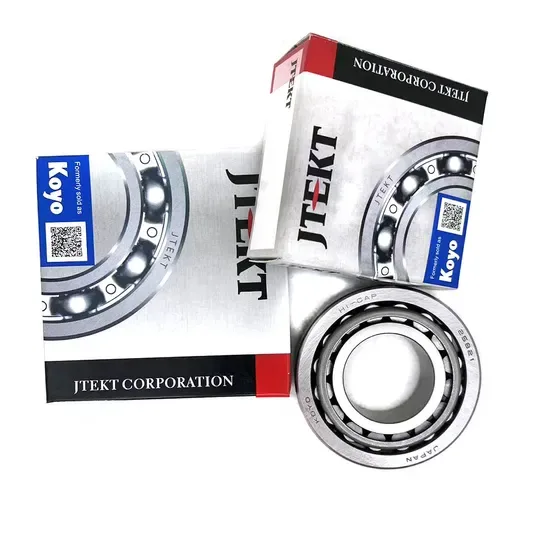
Tapered Roller Bearings
Koyo 32207 30208 30307 Tapered Roller Bearing Genuine Supplier
View ProductKeep reading
More bearing selection guides for repair shops
Practical guides from KOYO Bearing Supplier on identifying Koyo / JTEKT bearings for farm machinery, construction equipment and power transmission repairs.
 Procurement & Trade FAQs
· 7 min read
Rebuild Kit Supply for Transmission Shops: Wholesale Bearing Supplier
Transmission rebuild kit supply depends on accurate HS codes and detailed BOMs to prevent customs delays. Learn how mixed bearing consolidation and robust packaging…
Read the Guide Procurement & Trade FAQs · 7 min read
Express Shipping for Urgent Bearing Repairs: Global Wholesale Supplier
Master express shipping for urgent bearing replacements by prioritizing customs clearance over flight speed to eliminate port bottlenecks. Optimize volumetric weight, consolidate mixed-brand orders,…
Read the Guide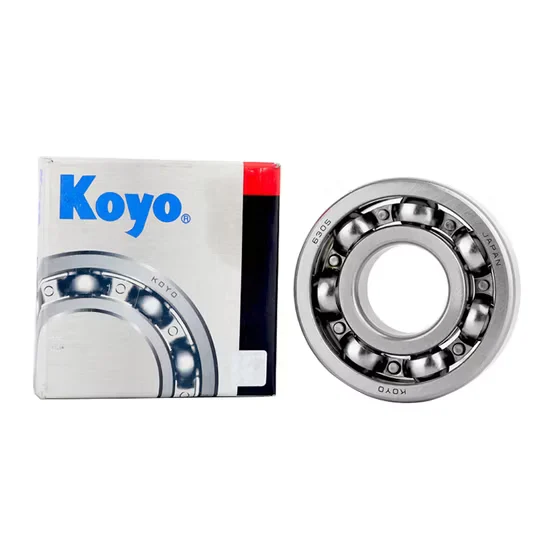 Procurement & Trade FAQs
· 8 min read
Koyo Bearings for Single-Garage Orders Wholesale Supplier
Ordering Koyo bearings for single-garage orders via LCL shipment risks costly customs holds if documentation is inaccurate. Avoid delays by using granular, itemized packing…
Read the Guide
Bearing enquiry
Send your machine details. Get a written Koyo / JTEKT quote.
KOYO Bearing Supplier quotes a single bearing position or every bearing in an assembly on one enquiry, matched to your machine model and application, with model, quantity, price, lead time and quote validity in writing.
- WhatsApp+1 (702) 981-5880
- Emailinfo@koyoome.com
- Address8 Research Drive, Greenville, SC 20627, USA
"When a Koyo bearing failed on a harvest machine during the season, we needed a replacement urgently. The supplier identified the correct Koyo reference, shipped same-day, and the machine was back in the field within the day."

Request a Bearing Quote
Tell us the machine and the bearing position. Photos of the markings can follow on WhatsApp.