
Bajaj & TVS Motorcycle Bearings: Genuine Wholesale Supplier
Cheap bearings do not save money; they destroy revenue.
Selecting genuine Bajaj and TVS motorcycle bearings is the single most critical decision for aftermarket distributors operating in harsh environments. Counterfeit components lead to catastrophic wheel seizures, engine failures, and irreversible brand damage, while verified genuine parts ensure durability and traceability. Sourcing must prioritize documented authenticity over initial unit cost to protect long-term profitability.
I still remember the smell of burnt grease in a small workshop in Lagos. A customer dragged his Bajaj three-wheeler in after it seized on a dusty highway. When we split the rear hub, the bearing rollers were not just worn; they were shattered into black dust. The customer accused us of selling fake parts. We refunded him, took the loss, and later traced the batch to a unverified supplier who had swapped genuine steel for low-grade substitutes. That incident changed how I view supply chains. In regions where roads are unpaved and dust is constant, a bearing is not just a component; it is the difference between a daily income and a stranded vehicle.
This reality drives the demand for reliable sourcing. Distributors across Africa and the Middle East do not need cheaper options; they need parts that survive. Understanding why specific specs matter, how to spot fakes, and how to build a resilient supply chain is essential for anyone dealing with Bajaj and TVS motorcycle bearings.
Why Do Bajaj and TVS Motorcycles Demand Specific Bearing Specs?
Standard seals fail quickly in high-dust, high-load conditions.
Motorcycles like the Bajaj Boxer or TVS Apache are workhorses. They carry heavy loads, navigate potholes, and operate in environments saturated with fine particulate matter. A standard automotive bearing might suffice for a sedan on a paved city street, but it will not survive a delivery route in rural areas. The load ratings and sealing technologies must match the operational stress.
For instance, rear wheel bearings in three-wheelers experience significant radial and axial loads due to cargo weight. If the bearing cage is not robust enough, or if the seal friction torque is too high causing heat buildup, the grease breaks down. Once the grease fails, metal-on-metal contact begins, leading to rapid seizure.
| Feature | Standard Aftermarket Bearing | Genuine/OEM-Spec Bearing |
|---|---|---|
| Seal Type | Basic rubber lip | Heavy-duty labyrinth or double-lip |
| Dust Resistance | Vulnerable | Robust |
| Grease Retention | Sample-level | Full batch-level consistency |
| Load Capacity | Basic | Certified for high radial load |
| Traceability | Not provided | Verifiable via batch code |
I have seen distributors try to substitute generic bearings to cut costs. The result is always the same: a spike in warranty claims. A TVS Apache rider once brought in an engine with premature bearing wear. The dust had bypassed the inadequate seal, contaminating the raceway. This was not a manufacturing defect; it was a specification mismatch. Using Bajaj and TVS motorcycle bearings designed for these specific conditions means choosing components with superior sealing solutions that keep contaminants out and lubricant in.
How to Identify Counterfeit Bearings in the Aftermarket?
Visual inspection alone is no longer sufficient to detect high-quality fakes.
Counterfeiters have become sophisticated. They replicate packaging, logos, and even holograms. However, they cannot easily replicate the metallurgical quality of the steel or the precision of the grinding process. Relying solely on the box is a recipe for disaster. Distributors must implement a multi-layer verification process.
First, check the weight. Genuine bearings use high-carbon chromium steel, which has a specific density. Counterfeits often use lower-grade steel or improper hardening, resulting in slight weight discrepancies. Second, examine the finish. Genuine races are mirror-smooth. Fakes often have visible tool marks or inconsistent polishing. Third, verify the traceability. Every genuine batch should have a code that links back to the manufacturer’s production facilities.
A distributor in Nairobi once received a shipment that looked perfect. The boxes were identical to the original. But when we weighed a sample batch, each bearing was slightly lighter. Upon cutting one open, we found the rollers were hollowed out internally to save material. They would have failed within weeks. This is why sourcing Bajaj and TVS motorcycle bearings requires partners who provide full documentation, not just pretty boxes.
| Verification Method | Reliability Level | Required Tools |
|---|---|---|
| Packaging Check | Low | Visual |
| Weight Comparison | Medium | Precision scale |
| Surface Finish Inspection | Medium | Magnifying glass |
| Batch Code Traceability | High | Supplier database access |
| Material Hardness Test | Very High | Hardness tester |
Without traceability, you are gambling. With it, you are managing risk.
What Are the Real Costs of Using Fake Bearings?
Downtime costs far exceed the initial purchasing savings.
Many buyers focus on the unit price. They see a genuine bearing costing significantly more than a generic alternative and choose the latter. This is a false economy. The real cost of a bearing is not its purchase price; it is the cost of failure.
Consider a commercial fleet operator. If a bearing fails, the vehicle is off the road. For a taxi or delivery bike, every day off the road is lost income. Plus, there is the cost of towing, labor for replacement, and potential damage to other components like the hub or axle. In severe cases, a seized wheel can cause an accident, leading to liability issues.
I recall a case where a workshop saved a small amount on a bulk order of non-genuine parts. Within months, they faced a wave of returns. The cost of replacing the parts, refunding customers, and losing their reputation was many times higher than the initial savings. Their brand trust was eroded. In the aftermarket, trust is currency. Once lost, it is hard to regain. Sourcing genuine Bajaj and TVS motorcycle bearings protects this trust. It ensures that when a mechanic installs a part, it stays installed.
How to Build a Reliable Mixed-Brand Sourcing Strategy?
Flexibility and traceability are more valuable than lowest price.
Distributors often need to source various brands and sizes. Managing multiple suppliers for each brand is inefficient. It leads to fragmented inventory, inconsistent quality control, and complex logistics. A better approach is to partner with a single, reliable supplier who offers a mixed-brand portfolio.
This strategy allows for consolidated shipping, reducing freight costs. It also simplifies quality assurance, as you deal with one entity responsible for the authenticity of all products. However, this only works if the supplier has direct access to genuine stocks from major manufacturers like SKF, FAG, NSK, and TIMKEN, alongside reliable domestic lines.
When I source for clients, I look for partners who offer flexible MOQs. Sometimes a client needs a single emergency spare; other times, they need a container load. A rigid supplier cannot serve both needs. Furthermore, technical support is crucial. Being able to cross-reference models and get advice on equivalent specifications saves time and prevents errors. For example, if a specific OEM part is out of stock, knowing which premium alternative fits perfectly keeps the supply chain moving.
By integrating genuine Bajaj and TVS motorcycle bearings into a broader, traceable supply chain, distributors can offer their customers reliability without sacrificing efficiency. It is about building a system that withstands the pressures of the market, just like the bearings themselves must withstand the pressures of the road.
Conclusion
Authenticity is the foundation of profitability in the aftermarket.
Choosing the right bearings for Bajaj and TVS motorcycles is not just a technical decision; it is a business strategy. Counterfeits offer short-term savings but deliver long-term losses through failures and reputational damage. By prioritizing traceability, understanding specific operational demands, and partnering with suppliers who offer genuine, mixed-brand solutions, distributors can secure their position in the market. Reliable Bajaj and TVS motorcycle bearings keep vehicles running, businesses thriving, and trust intact.
Mentioned in this article
Koyo / JTEKT bearings from this guide
These are the Koyo / JTEKT bearing types discussed above. Open any product to check its details, or quote it together with the rest of your repair.
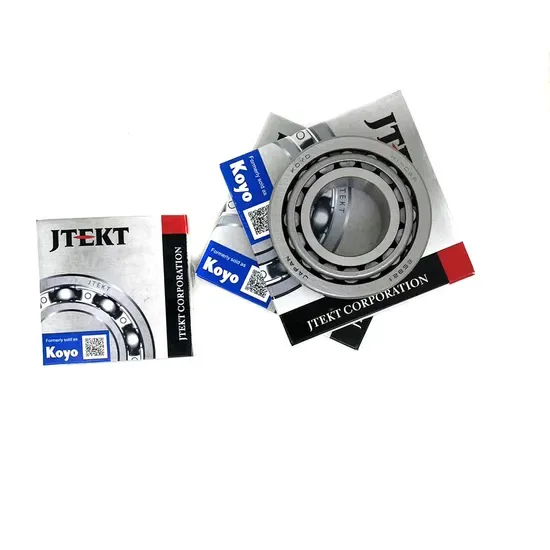
Tapered Roller Bearings
X&S Tapered Roller Bearing 33115 33116 33117 33118 33119 for Truck Motorcycle
View Product
Deep Groove Ball Bearings
Japan 6201/6202/6301-2RS/Zz Deep Groove Ball Bearing for Motorcycle
View Product
Deep Groove Ball Bearings
KOYO 6007 ZZ 2RS Open Deep Groove Ball Bearings for Motorcycle Parts
View Product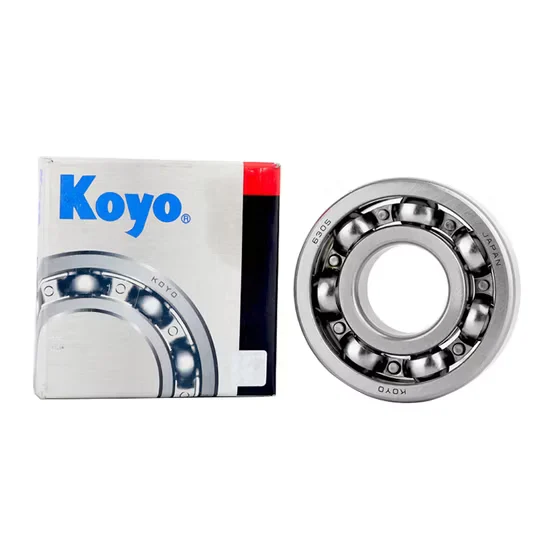
Deep Groove Ball Bearings
KOYO Bearing 6005 6006 6300-6309 Motorcycle Deep Groove Ball Bearings Japan
View ProductKeep reading
More bearing selection guides for repair shops
Practical guides from KOYO Bearing Supplier on identifying Koyo / JTEKT bearings for farm machinery, construction equipment and power transmission repairs.
 Applications & Industries
· 8 min read
Small Engine Crankshaft Bearings Wholesale Supplier
Selecting the correct Bearings in Small Engine Crankshafts requires strict clearance matching and material verification rather than simple part number lookup. Standard units often…
Read the Guide Applications & Industries · 7 min read
Forklift Mast Bearings Wholesale Supplier | Genuine SKF FAG NSK Bulk
Selecting forklift mast bearings requires matching groove profiles and clearances to harsh environments to prevent premature seizure. Sourcing only genuine SKF, FAG, and NSK…
Read the Guide Applications & Industries · 6 min read
Outboard Lower Unit Bearings Wholesale Supplier
Prevent catastrophic gearcase failures by selecting Bearings in Outboard Lower Units that balance high-speed load capacity with strict corrosion resistance. Learn why standard tapered…
Read the Guide
Bearing enquiry
Send your machine details. Get a written Koyo / JTEKT quote.
KOYO Bearing Supplier quotes a single bearing position or every bearing in an assembly on one enquiry, matched to your machine model and application, with model, quantity, price, lead time and quote validity in writing.
- WhatsApp+1 (702) 981-5880
- Emailinfo@koyoome.com
- Address8 Research Drive, Greenville, SC 20627, USA
"When a Koyo bearing failed on a harvest machine during the season, we needed a replacement urgently. The supplier identified the correct Koyo reference, shipped same-day, and the machine was back in the field within the day."

Request a Bearing Quote
Tell us the machine and the bearing position. Photos of the markings can follow on WhatsApp.