
Auto Parts Barcodes: Wholesale Supplier for Bulk Bearing Orders
A barcode mismatch does not just slow down a warehouse; it triggers customs seizures.
For auto parts retail and industrial distribution, strict alignment between inner packaging barcodes and outer carton labels is the single most critical factor for successful import clearance and inventory accuracy. Compliance with GS1 standards ensures that every bearing unit is traceable from the factory floor to the final repair shop, preventing costly delays at border checkpoints.
I learned this lesson the hard way in a dusty aftermarket workshop in Riyadh. Back then, I was handling售后 (after-sales) for automotive repairs, surrounded by stacks of wheel hub bearings. The work was physical, but the real headache came when we started importing bulk shipments. One consignment of tapered roller bearings arrived with pristine outer cartons, but the individual retail boxes inside had no scannable codes. The local customs officer held the container for days because the manifest did not match the physical labeling. My client, a large distributor in Jeddah, was furious. His warehouse team could not scan the items into their system, causing a massive backlog. That experience shifted my focus entirely. Now, when I manage bulk bearing orders, I treat barcode compliance as seriously as the steel quality itself.
This guide breaks down why barcodes are more than just retail checkout tools. They are the backbone of global trade logistics. If you are sourcing bearings for resale or MRO use, understanding these standards is non-negotiable.
Why Do Auto Parts Barcodes Cause Customs Delays?
Mismatched inner and outer codes trigger immediate inspections and potential seizures.
Many buyers assume that as long as the product is genuine, the packaging details are secondary. This is a dangerous misconception. Customs authorities in many regions, particularly in the Middle East and Southeast Asia, use automated scanning systems to verify shipment contents against digital manifests. If the barcode on the inner box of a deep-groove ball bearing does not logically map to the code on the master carton, the system flags it as a discrepancy.
The root cause is often a lack of data synchronization between the manufacturer’s production line and the export documentation. When a supplier prints labels without verifying the GS1 standard mapping, the serial numbers or batch codes may not align. For a buyer, this means the container sits at the port while officials manually verify every box. This process can take days or even weeks, incurring demurrage charges that far exceed the cost of the goods.
Consider a recent case involving a shipment of spherical roller bearings destined for a mining project. The outer cartons were labeled correctly, but the inner bags lacked the required 2D matrix codes for batch traceability. The customs agency suspected counterfeit goods because the traceability chain was broken. The shipment was held for inspection, delaying the entire maintenance schedule for the client’s crushers. By ensuring that every layer of packaging carries compliant, synchronized barcodes, we eliminate this risk. Our process involves rigorous pre-shipment checks where we scan random samples to confirm that the inner and outer data match perfectly before the container leaves the factory.
What Are the Essential Barcode Standards for Bearings?
GS1 compliance and part-number traceability are mandatory for global distribution.
Not all barcodes are created equal. For auto parts retail and industrial supply, the industry standard is GS1. This system provides a unique identity for each trade item, ensuring that a specific SKF or FAG bearing can be distinguished from similar models across different brands. Using proprietary or non-standard codes limits your ability to sell through major distribution channels, as most modern warehouse management systems require GS1-compatible data.
The choice between 1D and 2D barcodes also matters. While traditional linear barcodes (1D) are sufficient for basic identification, 2D codes like Data Matrix or QR codes carry significantly more information. They can store batch numbers, manufacturing dates, and origin details within a small space. This is crucial for bearings, where traceability is key to warranty claims and quality control.
| Feature | 1D Barcode (Linear) | 2D Barcode (Data Matrix/QR) |
|---|---|---|
| Data Capacity | Limited to part number | High (includes batch, date, origin) |
| Scanning Speed | Fast for simple ID | Requires slightly more processing |
| Traceability | Basic | Full batch-level traceability |
| Space Requirement | Larger footprint | Compact, suitable for small boxes |
| Industry Preference | Legacy systems | Modern global supply chains |
For buyers sourcing mixed-brand containers, adherence to these standards ensures that all products, whether from NSK, TIMKEN, or domestic Chinese lines, can be managed in a single inventory system. We ensure that every bearing we supply, from angular contact ball bearings to needle bearings, carries labels that meet these international requirements. This allows distributors to integrate our products seamlessly into their existing ERP systems without manual data entry errors.
How to Ensure Warehouse Scanning Accuracy?
Strict data mapping between retail boxes and master cartons prevents inbound failures.
Warehouse efficiency relies on speed. When a shipment arrives, the receiving team scans the outer carton to update inventory levels. If the system expects a certain quantity of cylindrical roller bearings but the inner boxes do not scan individually, the entire inbound process halts. This is not just an inconvenience; it creates a bottleneck that affects downstream operations.
The solution lies in rigorous data mapping. Before production, we define the relationship between the unit level (single bearing box), the inner pack (if applicable), and the master carton. Each level must have a unique but related identifier. This hierarchy allows scanners to recognize that ten individual boxes belong to one master carton. Without this logic, warehouse staff must open every box to count items manually, which is labor-intensive and prone to error.
A European distributor once reported that their scanning error rate dropped noticeably after switching to suppliers who provided fully mapped barcode structures. Previously, they spent hours reconciling physical counts with system records due to mismatched labels. By implementing strict inner/outer carton data mapping, we help clients achieve near-zero scanning errors. This attention to detail extends to our mixed-brand consolidation services, where we ensure that different brands follow a unified labeling protocol within the same container.
How to Manage Barcodes for Mixed-Brand Containers?
Standardized labeling protocols ensure smooth multi-brand consolidation.
Sourcing from multiple brands like INA, KOYO, and NACHI in a single container is cost-effective, but it introduces complexity in labeling. Each brand may have its own default packaging style, which can lead to a chaotic mix of barcode formats. For a wholesaler, this inconsistency makes inventory management difficult.
To address this, we apply a standardized labeling protocol for all mixed-brand shipments. Regardless of the original manufacturer, we ensure that the outer shipping marks and inner product labels adhere to a consistent format that meets the buyer’s local requirements. This includes clear part number references, brand identification, and compliant barcodes. This approach allows buyers to treat a mixed container as a unified stock pool, simplifying picking and packing processes.
For example, a client in Latin America needed a urgent shipment of thrust bearings and insert bearings from three different manufacturers. By standardizing the barcode placement and data structure across all brands, we enabled their warehouse team to process the entire container in a single shift. This level of coordination requires deep familiarity with both the technical specifications of the bearings and the logistical requirements of the destination market. Our team handles this complexity, ensuring that every box, regardless of brand, is ready for immediate shelf placement upon arrival.
Conclusion
Barcode compliance is a strategic asset, not an administrative afterthought.
In the world of auto parts retail and industrial distribution, the physical quality of the bearing is only half the battle. The other half is ensuring that the product can move smoothly through customs and into your warehouse. Strict adherence to GS1 standards, precise inner/outer code mapping, and standardized labeling for mixed brands are essential for operational success. By prioritizing these details, buyers can avoid costly delays and maintain efficient inventory flows.
Mentioned in this article
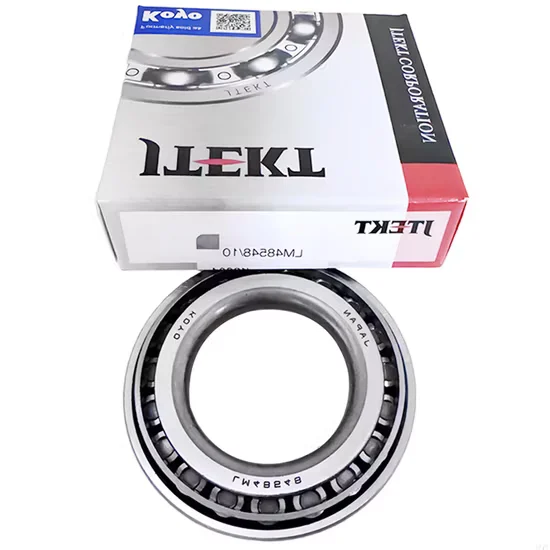
Koyo / JTEKT bearings from this guide
These are the Koyo / JTEKT bearing types discussed above. Open any product to check its details, or quote it together with the rest of your repair.

Tapered Roller Bearings
Jtekt Koyo Tapered Roller Bearing 32010 30302 30303 30304 30305 30306 for Auto Parts
View Product
Railway Bearings
X&S 30304 30306 30307 Tapered Roller Bearings for Railway Axle Auto Parts
View Product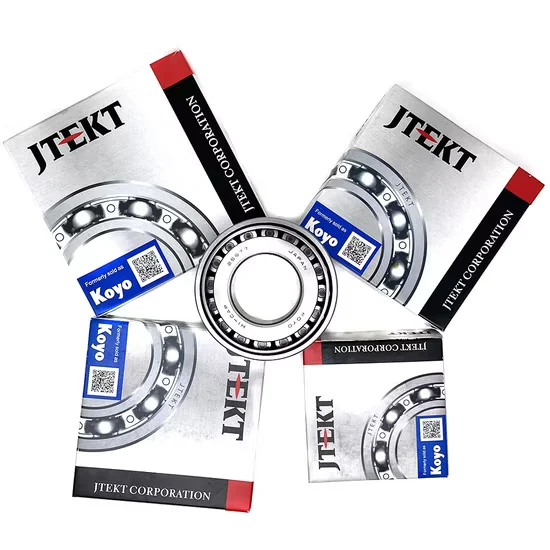
Tapered Roller Bearings
Koyo Tapered Roller Bearing 30203 30204 30205 30206 30207 for Auto Parts Wholesale
View Product
Inch Size Bearings
Koyo L420449/L420410 TRA181504 Tapered Roller Bearing for Auto Parts
View ProductKeep reading
More bearing selection guides for repair shops
Practical guides from KOYO Bearing Supplier on identifying Koyo / JTEKT bearings for farm machinery, construction equipment and power transmission repairs.
 Procurement & Trade FAQs
· 7 min read
Rebuild Kit Supply for Transmission Shops: Wholesale Bearing Supplier
Transmission rebuild kit supply depends on accurate HS codes and detailed BOMs to prevent customs delays. Learn how mixed bearing consolidation and robust packaging…
Read the Guide Procurement & Trade FAQs · 7 min read
Genuine Bearing Stock Programs for Motorcycle Dealers: Wholesale Supplier
Optimize Motorcycle Dealer Stock Programs by balancing cross-brand bearing equivalency, genuine traceability, and flexible MOQs to prevent costly warranty claims. Verify dimensional tolerance and…
Read the Guide Procurement & Trade FAQs · 7 min read
Express Shipping for Urgent Bearing Repairs: Global Wholesale Supplier
Master express shipping for urgent bearing replacements by prioritizing customs clearance over flight speed to eliminate port bottlenecks. Optimize volumetric weight, consolidate mixed-brand orders,…
Read the Guide
Bearing enquiry
Send your machine details. Get a written Koyo / JTEKT quote.
KOYO Bearing Supplier quotes a single bearing position or every bearing in an assembly on one enquiry, matched to your machine model and application, with model, quantity, price, lead time and quote validity in writing.
- WhatsApp+1 (702) 981-5880
- Emailinfo@koyoome.com
- Address8 Research Drive, Greenville, SC 20627, USA
"When a Koyo bearing failed on a harvest machine during the season, we needed a replacement urgently. The supplier identified the correct Koyo reference, shipped same-day, and the machine was back in the field within the day."

Request a Bearing Quote
Tell us the machine and the bearing position. Photos of the markings can follow on WhatsApp.