
Auto Bearings Container Orders: Wholesale Supplier for Bulk Global Shipping
Maximizing container space is the fastest way to destroy your profit margin.
Wholesale auto bearing container orders demand precise load distribution, specialized anti-rust treatment, and flawless mixed-brand consolidation rather than merely maximizing cubic volume. Without these controls, trans-oceanic temperature swings and improper stacking lead to crushed crates and rusted inventory upon arrival.
I learned this lesson the hard way on the docks of Los Angeles. Years ago, a Midwestern auto parts chain placed a large order for a mixed container of wheel hubs and tapered rollers. Eager to optimize freight costs, we stacked heavy spherical rollers directly over light deep-groove bearings without adequate load separators. During the trans-pacific voyage, significant temperature fluctuations caused condensation inside the sealed unit. When the container doors opened, the bottom wooden crates were pulverized, and hundreds of bearings were covered in surface rust. The claim cost far exceeded the savings from tight packing. That disaster reshaped my approach to logistics. It proved that wholesale global shipping is not about stuffing a box; it is about engineering the journey.
This experience drives every consolidation decision I make today. Whether you are sourcing SKF, FAG, or domestic Chinese lines, the physics of the ocean remain unchanged. Here is how to structure your shipments to ensure they arrive in sellable condition.
Why do mixed-brand auto bearing containers suffer transit damage?
Improper stacking and lack of physical separators are the primary causes of crushing and corrosion in mixed loads.
When you combine different brands and sizes in a single shipment, you introduce variable weights and packaging densities. A container of auto bearings is not a uniform block of steel. It is a complex assembly of heavy industrial units and delicate precision components. If treated as a monolith, the heavier items will inevitably compromise the lighter ones during the constant vibration and shifting of a sea voyage.
The risk is compounded by the environment. Maritime transport involves extreme humidity and temperature cycles. Daytime heat expands the air inside the container, while nighttime cooling causes moisture to condense on the coldest surfaces—often the metal bearings themselves. Without specific protective measures, this “container rain” leads to rapid oxidation.
Consider a recent shipment to a distributor in Southeast Asia. The order included a mix of TIMKEN tapered rollers and lighter NSK deep-groove ball bearings. The initial plan called for standard palletizing. However, we identified that the weight differential would cause the lower layers of the NSK boxes to deform under the pressure of the TIMKEN units if stacked directly. We adjusted the plan to use reinforced plywood separators and vertical stacking columns. This simple structural change prevented any compression damage.
Transit damage is rarely an accident; it is a failure of planning. By recognizing that mixed-brand loads require distinct handling protocols, you protect your inventory from the two biggest threats: physical crush and environmental rust.
How to calculate load distribution for heavy and light bearings?
Strict weight limits and mandatory load separators are required to protect lighter units from heavier counterparts.
Calculating load distribution is not just about staying under the maximum payload of the container. It is about ensuring that the floor loading capacity and the structural integrity of the packaging can withstand the dynamic forces of shipping. Heavy spherical roller bearings and light automotive hub units have vastly different density profiles. Placing them without a calculated strategy invites disaster.
The first step is to categorize your inventory by weight class. Heavy items, such as large spherical or cylindrical roller bearings, must form the base layer or be stacked in independent columns. Lighter items, like small deep-groove ball bearings or needle bearings, should never be placed beneath heavier goods.
| Load Factor | Heavy Bearings (e.g., Spherical Rollers) | Light Bearings (e.g., Deep-Groove Ball) | Mixed Load Strategy |
|---|---|---|---|
| Stacking Height | Limited by crate strength | Limited by weight pressure | Separate columns required |
| Separator Need | High-density plywood | Standard cardboard | Reinforced timber mandatory |
| Floor Loading | Concentrated point load | Distributed load | Use dunnage to spread weight |
| Risk Profile | Crushing lower layers | Being crushed | Isolate via vertical stacking |
A European wind farm operator once faced a similar challenge when importing maintenance spares. They attempted to mix heavy main shaft bearings with smaller generator bearings in one container. By using a load distribution matrix, we determined that the heavy units needed their own palletized zones with direct floor contact, while the lighter units could be stacked higher but only in areas free from heavy overhead weight. This method ensured that no single point in the container exceeded the safe load limit of the packaging.
Proper load distribution transforms a chaotic mix of parts into a stable, secure cargo. It prevents the bottom-layer collapse that leads to costly claims and delayed projects.
What anti-rust treatments survive trans-oceanic temperature swings?
VCI packaging and precise desiccant dosage are non-negotiable for long voyages across varying climates.
Standard oil coating is often insufficient for trans-oceanic shipping. The temperature swings between tropical ports and temperate destinations create a cycle of condensation that can penetrate basic packaging. To combat this, you need a multi-layered defense system that addresses both ambient humidity and direct contact corrosion.
Vapor Corrosion Inhibitor (VCI) paper is the industry standard for long-term protection. Unlike traditional grease, VCI emits molecules that settle on the metal surface, forming a microscopic protective layer. This layer is effective even if the packaging is slightly compromised. However, VCI alone cannot handle high humidity levels inside a sealed container.
Desiccants are the second critical component. The quantity of desiccant must be calculated based on the container volume and the expected duration of the voyage. A general rule is to use sufficient units to absorb moisture generated by the cargo and the air inside the container. For a standard 40-foot container, this often requires multiple large-capacity desiccant bags hung from the ceiling rails to maximize air exposure.
A client in the Middle East experienced severe rust issues with previous suppliers who used only oil paper. After switching to a combination of VCI wrapping and high-capacity silica gel desiccants, their rejection rate due to corrosion dropped noticeably. The key was ensuring the desiccants were active before sealing and that the VCI paper fully enclosed each bearing unit.
Ignoring these treatments is a gamble with the climate. By implementing VCI and desiccants, you create a controlled micro-environment that survives the harshest maritime conditions.
How to ensure flawless mixed-brand consolidation and documentation?
Professional consolidation services guarantee space optimization and complete customs traceability for complex orders.
Mixed-brand consolidation is more than just putting different boxes in one container. It requires meticulous documentation and strategic packing to ensure smooth customs clearance and easy identification at the destination. When you source from multiple brands like SKF, NTN, and domestic lines, each comes with its own packaging standards and labeling systems. Harmonizing these into a single shipment requires expert oversight.
The first element is accurate documentation. Each brand’s part numbers must be cross-referenced with the commercial invoice and packing list. Discrepancies here can lead to customs delays or seizures. A professional consolidator verifies that the physical goods match the paperwork exactly, ensuring that every SKU is accounted for.
The second element is spatial optimization. Instead of randomly filling gaps, a structured approach uses a 3D loading plan. This plan accounts for the dimensions of each brand’s packaging, ensuring that voids are minimized without compromising the load distribution principles discussed earlier. This maximizes the CBM utilization rate while maintaining safety.
For a regional distributor in Latin America, we consolidated an order containing over fifty different SKUs from three major brands. By creating a detailed loading map and verifying all traceability documents beforehand, we reduced the unloading time at their warehouse by half. The clear labeling and organized stacking allowed their team to identify and store each brand’s inventory efficiently.
Flawless consolidation turns a logistical headache into a competitive advantage. It ensures that your mixed-brand orders arrive not just intact, but ready for immediate distribution.
Conclusion
Safe delivery is the result of engineered logistics, not luck.
Wholesale auto bearing container orders require a disciplined approach to load distribution, anti-rust protection, and documentation. By prioritizing structural integrity over pure volume and using specialized treatments like VCI and desiccants, you protect your investment from the rigors of global shipping. Professional consolidation ensures that these technical details are executed flawlessly, giving you peace of mind and a reliable supply chain.
Mentioned in this article
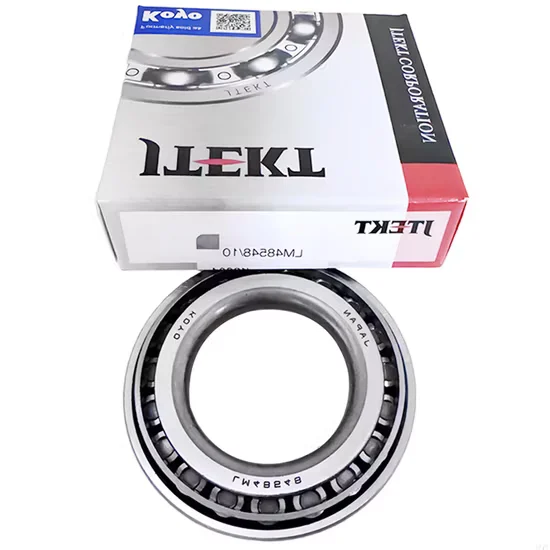
Koyo / JTEKT bearings from this guide
These are the Koyo / JTEKT bearing types discussed above. Open any product to check its details, or quote it together with the rest of your repair.

Tapered Roller Bearings
P5 Koyo 33010 30211 33110 32307 33208 Tapered Roller Bearing for Motor Auto Pump
View Product
Tapered Roller Bearings
Jtekt Koyo Tapered Roller Bearing 32010 30302 30303 30304 30305 30306 for Auto Parts
View Product
Railway Bearings
X&S 30304 30306 30307 Tapered Roller Bearings for Railway Axle Auto Parts
View Product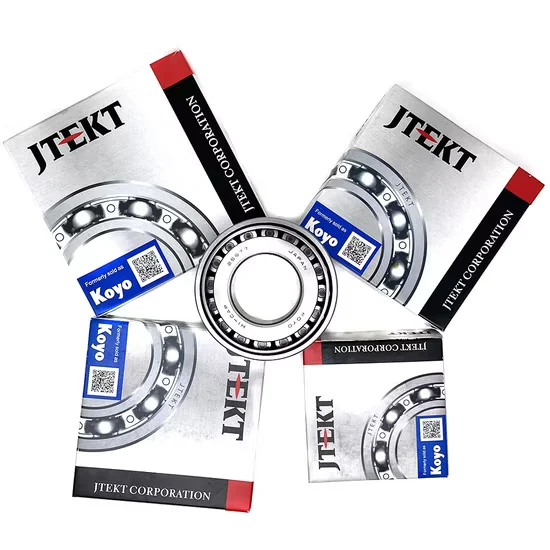
Tapered Roller Bearings
Koyo Tapered Roller Bearing 30203 30204 30205 30206 30207 for Auto Parts Wholesale
View ProductKeep reading
More bearing selection guides for repair shops
Practical guides from KOYO Bearing Supplier on identifying Koyo / JTEKT bearings for farm machinery, construction equipment and power transmission repairs.
 Procurement & Trade FAQs
· 7 min read
Rebuild Kit Supply for Transmission Shops: Wholesale Bearing Supplier
Transmission rebuild kit supply depends on accurate HS codes and detailed BOMs to prevent customs delays. Learn how mixed bearing consolidation and robust packaging…
Read the Guide Procurement & Trade FAQs · 7 min read
Genuine Bearing Stock Programs for Motorcycle Dealers: Wholesale Supplier
Optimize Motorcycle Dealer Stock Programs by balancing cross-brand bearing equivalency, genuine traceability, and flexible MOQs to prevent costly warranty claims. Verify dimensional tolerance and…
Read the Guide Procurement & Trade FAQs · 7 min read
Express Shipping for Urgent Bearing Repairs: Global Wholesale Supplier
Master express shipping for urgent bearing replacements by prioritizing customs clearance over flight speed to eliminate port bottlenecks. Optimize volumetric weight, consolidate mixed-brand orders,…
Read the Guide
Bearing enquiry
Send your machine details. Get a written Koyo / JTEKT quote.
KOYO Bearing Supplier quotes a single bearing position or every bearing in an assembly on one enquiry, matched to your machine model and application, with model, quantity, price, lead time and quote validity in writing.
- WhatsApp+1 (702) 981-5880
- Emailinfo@koyoome.com
- Address8 Research Drive, Greenville, SC 20627, USA
"When a Koyo bearing failed on a harvest machine during the season, we needed a replacement urgently. The supplier identified the correct Koyo reference, shipped same-day, and the machine was back in the field within the day."

Request a Bearing Quote
Tell us the machine and the bearing position. Photos of the markings can follow on WhatsApp.