
Wheel Bearing Failure Patterns: Global Supplier & Cross-Reference Support
Identical outer dimensions do not guarantee a functional replacement.
Wheel bearing failures are rarely caused by dimensional mismatches alone; the true determinants of lifespan are internal clearance classes, seal integrity, and adherence to original equipment manufacturer operating conditions. Accurate diagnosis requires analyzing failure morphology against ISO standards rather than simply swapping part numbers.
My early days in the logistics sector taught me that shipping a box is merely the beginning of the transaction, not the end. I once handled an urgent order for a mining client in Latin America who needed wheel hub bearings for a heavy-duty truck fleet. Relying on standard cross-reference tables, I supplied a well-known German brand equivalent to their original Swedish specification. The external dimensions were perfect. The load ratings appeared sufficient on paper. Yet, within months, the client reported catastrophic cage fractures. The email I received was furious, accusing us of supplying counterfeit goods. It was only after we retrieved the failed units and compared the suffix codes that the truth emerged: the original bearings specified a C4 internal clearance for high-temperature, heavy-load expansion, while the replacement had standard C3 clearance. The tighter fit caused thermal locking under sustained mining loads. That incident shifted my entire approach to technical sourcing. Now, when I encounter field failures, I look past the basic part number to inspect the specific operational context and original design nuances.
Understanding these nuances is critical for any procurement team managing maintenance, repair, and operations inventory. This guide dissects common failure modes and explains how precise cross-referencing prevents repeat downtime.
What Are the Most Common Wheel Bearing Failure Patterns?
Spalling, cage fracture, and seal leakage represent the primary visible symptoms of wheel bearing distress, each pointing to a distinct root cause.
When a bearing fails, it leaves physical evidence. Identifying this pattern is the first step in preventing recurrence. Spalling appears as flaking or pitting on the raceways or rolling elements. It is often mistaken for material fatigue, but in many cases, it stems from incorrect fit tolerances during installation. If a bearing is press-fitted with excessive force or misaligned, stress concentrations develop at specific points, leading to premature surface degradation.
Cage fracture is more severe and typically indicates extreme operational stress. In heavy equipment applications, such as mining trucks or construction excavators, the cage holds the rolling elements in place. If the internal clearance is too tight, thermal expansion has nowhere to go, causing the rollers to bind and exert lateral force on the cage until it snaps. This is not a quality defect in the steel; it is a system mismatch.
Seal leakage is perhaps the most insidious failure mode. Grease escapes, contami* This often happens when replacements use generic rubber seals instead of the specialized fluorocarbon or polyacrylate compounds specified by the original equipment manufacturer for high-temperature or chemical environments. A visual inspection might show a clean exterior, but inside, the grease has turned dark and gritty, signaling contamination ingress due to seal incompatibility.
Recognizing these patterns allows maintenance teams to move beyond simple replacement and address the underlying mechanical or specification error.
Why Do Cross-Reference Bearings Fail Prematurely?
Ignoring original equipment manufacturer clearance suffixes and seal types creates hidden mismatches that lead to early failure despite correct external dimensions.
The assumption that identical bore and outer diameter measurements ensure interchangeability is a dangerous oversimplification. Two bearings may share the same basic part number prefix but differ critically in their suffixes, which denote internal geometry and sealing technology. For instance, a standard deep-groove ball bearing might be available with RS1, 2Z, or open configurations. Substituting a shielded 2Z bearing for a contact-sealed RS1 unit in a wet environment will almost certainly result in rapid contamination and failure.
Internal clearance is another frequent point of failure in cross-referencing. Bearings are manufactured with specific radial internal clearances, denoted by codes like C2, C3, C4, or C5. Standard commercial bearings usually come with C3 clearance. However, applications involving significant temperature differentials or heavy preload require C4 or even C5 clearance to accommodate thermal expansion. Using a C3 bearing in a C4 application restricts the necessary expansion, leading to increased friction, heat generation, and eventual seizure. This is precisely what happened in the Latin American mining case I previously mentioned. The cost of the wrong bearing was negligible compared to the downtime and secondary damage to the hub assembly.
Furthermore, load rating verification is often overlooked. Dynamic and static load ratings must match or exceed the original specifications. Some aftermarket alternatives may meet dimensional standards but use lower-grade steel or less precise grinding processes, resulting in lower actual load capacity. Without verifying these parameters through official technical datasheets, buyers risk installing components that cannot withstand the operational stresses.
Accurate cross-referencing requires a holistic view of the bearing’s internal architecture, not just its external envelope.
How to Diagnose Root Causes on Site?
Effective diagnosis involves inspecting operational conditions, checking fit tolerances, and analyzing lubrication state before removing the failed component.
Before discarding a failed bearing, gather data from the site. Start by reviewing the operational history. Was the equipment subjected to unexpected shock loads? Did it operate in extreme temperatures? These factors influence the choice of clearance and lubricant. Next, inspect the housing and shaft for wear. Damage to the seating surfaces can indicate improper installation or previous misalignment, which will compromise any new bearing regardless of its quality.
Check the fit tolerances using precision measuring tools. Ensure that the shaft diameter and housing bore are within the recommended tolerance bands for the specific bearing type. Interference fits that are too tight can crush the bearing rings, while loose fits allow rotation and fretting corrosion. Use micrometers and bore gauges to verify these dimensions against the manufacturer’s specifications.
Analyze the lubrication condition. Extract a sample of the remaining grease and examine its color, consistency, and odor. Dark, oxidized grease suggests overheating, while gritty texture indicates contamination. Check for signs of water ingress, which can cause rust and emulsification. Verify that the grease type matches the application requirements regarding temperature range, speed, and load. Using a general-purpose lithium grease in a high-speed, high-temperature application can lead to rapid breakdown and loss of lubricity.
This systematic approach ensures that the root cause is identified and addressed, preventing the same failure from recurring with the new replacement.
How to Select the Right Replacement Bearing?
Verifying internal specifications beyond basic dimensions ensures the replacement bearing meets the exact operational demands of the application.
Selecting the correct replacement involves a detailed checklist that goes beyond the part number. First, confirm the internal clearance class. Match the suffix code of the original bearing exactly, or consult the equipment manufacturer’s manual if the original suffix is unknown. Do not assume standard clearance is appropriate for heavy-duty or high-temperature applications.
Second, verify the seal type. Identify whether the original used contact seals, non-contact shields, or open designs. Consider the environmental conditions: dust, moisture, chemicals, and temperature. Choose a seal material that offers compatibility with these factors. For example, fluorocarbon seals provide superior resistance to high temperatures and aggressive chemicals compared to standard nitrile rubber.
Third, validate the load ratings. Ensure that the dynamic and static load capacities of the replacement meet or exceed the original specifications. Check the fatigue limit load if the application involves variable or shock loading. Consult technical datasheets from reputable manufacturers to confirm these values.
Finally, consider the brand authenticity and traceability. Source bearings from authorized distributors who can provide documentation proving the origin of the products. Counterfeit or substandard bearings may look identical but lack the metallurgical quality and precision grinding required for reliable performance. Our team provides cross-brand equivalent consultation and genuine traceability support to ensure exact spec matching for every order. We maintain a massive spot inventory covering thousands of standard and special part numbers from premium global brands, allowing us to fulfill urgent maintenance requirements without compromising on quality.
By adhering to this rigorous selection process, you ensure that the replacement bearing delivers the expected service life and reliability.
Conclusion
Precision in specification matters more than speed in procurement.
Wheel bearing longevity depends on matching internal clearance, seal integrity, and load capacity to the specific operational environment. Diagnosing failure patterns accurately and selecting replacements based on comprehensive technical data prevents costly repeat failures. Prioritize verified specifications and authentic sourcing to maintain equipment reliability and minimize unplanned downtime.
Mentioned in this article
Koyo / JTEKT bearings from this guide
These are the Koyo / JTEKT bearing types discussed above. Open any product to check its details, or quote it together with the rest of your repair.
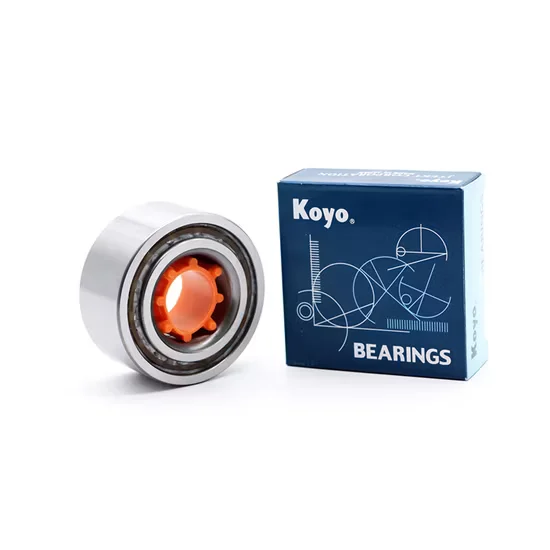
Cylindrical Roller Bearings
Koyo Bahb311316b Auto Wheel Bearing Drive Axle Hub Unit
View Product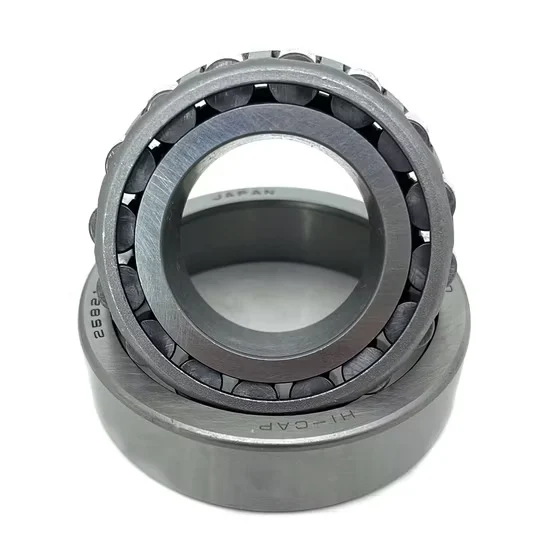
Tapered Roller Bearings
Genuine Koyo Tapered Roller Bearing 30123 30214 30215 30216 30217 for Car Wheel Hub
View Product
Wheel Bearings
Koyo Dac34640037 Wheel Hub Bearing Genuine Auto Spare Parts
View Product
Tapered Roller Bearings
X&S Tapered Roller Bearing 30205 30303 30206 for Car Accessories
View ProductKeep reading
More bearing selection guides for repair shops
Practical guides from KOYO Bearing Supplier on identifying Koyo / JTEKT bearings for farm machinery, construction equipment and power transmission repairs.
Installation & Maintenance · 6 min read
Auto Bearing Jobs Workshop Checklist: Wholesale Supplier
Prevent premature auto bearing failure with a standardized auto bearing installation checklist that addresses critical storage, inspection, and mounting protocols. Verify rotational smoothness, maintain…
Read the Guide Installation & Maintenance
· 7 min read
Genuine Bearing Supplier for Garage Tools: Wholesale Bulk & MRO
Prevent premature failures with the right garage tools for bearing jobs by addressing installation errors rather than manufacturing defects. Learn systematic removal and pressing…
Read the Guide Installation & Maintenance
· 8 min read
Transmission Bearing Noise Diagnosis: Genuine Wholesale Supplier
Master transmission bearing noise diagnosis to distinguish installation errors from clearance defects in harsh environments. Use ultrasonic detection and spectral analysis to identify root…
Read the Guide
Bearing enquiry
Send your machine details. Get a written Koyo / JTEKT quote.
KOYO Bearing Supplier quotes a single bearing position or every bearing in an assembly on one enquiry, matched to your machine model and application, with model, quantity, price, lead time and quote validity in writing.
- WhatsApp+1 (702) 981-5880
- Emailinfo@koyoome.com
- Address8 Research Drive, Greenville, SC 20627, USA
"When a Koyo bearing failed on a harvest machine during the season, we needed a replacement urgently. The supplier identified the correct Koyo reference, shipped same-day, and the machine was back in the field within the day."

Request a Bearing Quote
Tell us the machine and the bearing position. Photos of the markings can follow on WhatsApp.