
Transmission Bearing Noise Diagnosis: Genuine Wholesale Supplier
Loud noise does not always mean poor installation.
Accurate transmission bearing noise diagnosis requires systematic acoustic analysis and strict verification of bearing clearance and authenticity to prevent catastrophic downtime in harsh environments. Relying solely on auditory checks or immediate replacement without root cause analysis often leads to recurring failures, especially when counterfeit components with incorrect internal specifications are involved.
The first time I heard that specific, high-pitched scream from a cement mill main drive in Nigeria, I was standing next to the local maintenance manager who was already blaming the installation team. The ambient temperature was hovering near forty degrees Celsius, and the dust coating every surface was thick enough to write in. He insisted the fitters had used too much force during mounting. But when we opened the housing, the cage wasn’t just damaged; it was fragmented. The rollers were scattered like shrapnel. This was not an installation error. It was a clearance mismatch in a batch of bearings that looked genuine but failed under thermal expansion.. That incident shifted my focus from simple logistics to the technical nuances of transmission bearing noise diagnosis. In regions with extreme operating conditions, the difference between a genuine component and a visually similar substitute is measured in hours of uptime, not just dollars saved on procurement.
Understanding why these components fail requires looking beyond the obvious symptoms. Most operators assume that vibration equals wear, but in reality, early-stage defects manifest as specific acoustic signatures long before visible damage occurs. By mastering the diagnostic process, maintenance teams can distinguish between lubrication issues, structural defects, and counterfeit parts.
Why Do Transmission Bearings Scream in Harsh Environments?
Distinguishing installation errors from material and clearance defects is the first step in effective troubleshooting.
In heavy industries like mining and cement production, bearings operate under mixed loads and high temperatures. A common misconception is that any unusual noise indicates a mounting error. However, the root cause is often incorrect internal clearance, particularly in non-genuine batches. When a bearing is manufactured to standard tolerances but lacks the precise heat treatment or dimensional accuracy of the original brand, it cannot handle the thermal expansion inherent in continuous operation..
Consider a scenario in a mining conveyor gearbox. The operator reported a gradual shift in acoustic tone over several weeks. Instead of immediate replacement, we analyzed the load conditions. The bearing was subjected to variable shocks and steady heavy loads. The noise was not a sharp crack, which would suggest spalling, but a low-frequency rumble that intensified with speed. This indicated that the internal geometry was deforming under stress, likely due to substandard steel purity or improper hardening depth. Genuine bearings from brands like SKF or FAG are designed with specific metallurgical properties to resist such deformation, whereas counterfeits often use inferior materials that soften under heat..
Another frequent issue is lubrication starvation causing false noise signals. In pump and motor assemblies, insufficient grease volume can lead to metal-to-metal contact that mimics the sound of a damaged raceway. However, this noise typically resides in the ultrasonic frequency range. Identifying this distinction prevents unnecessary teardowns and allows for corrective lubrication instead. The key is to recognize that the environment dictates the failure mode. In hot, dusty climates, the margin for error in bearing selection is virtually zero.
Step 1: How to Isolate Noise Using Ultrasonic & Vibration Tools?
Bypass low-frequency background noise to capture early fault frequencies using specialized detection equipment.
Traditional stethoscopes are insufficient for modern transmission bearing noise diagnosis because they cannot filter out the ambient roar of heavy machinery. True diagnosis requires ultrasonic detection to isolate high-frequency emissions generated by early-stage defects. These sounds are often inaudible to the human ear but are clear indicators of friction and micro-cracking..
To implement this, follow a structured approach:
- Establish a Baseline: Measure the ultrasonic decibel levels of healthy bearings in similar operating conditions. This provides a reference point for future comparisons. Without a baseline, it is difficult to determine if a current reading is abnormal.
- Scan Critical Points: Use an ultrasonic probe to scan the bearing housing at multiple points. Focus on areas where load is highest. Look for spikes in decibel readings that exceed the baseline by a significant margin.
- Filter Background Noise: Modern detectors allow for frequency filtering. Set the device to ignore low-frequency vibrations caused by gears or motors, focusing only on the high-frequency range associated with bearing elements.
- Track Trends: Record readings over time. A sudden increase suggests acute damage, while a gradual rise indicates wear or lubrication issues. Consistent monitoring helps predict failure before it causes unplanned downtime.
A case from a steel plant in Southeast Asia illustrates this value. The maintenance team noticed a slight hum from a reducer but could not pinpoint the source using traditional methods. By employing ultrasonic scanning, they identified a specific bearing with rising decibel trends, despite normal vibration levels. This early warning allowed them to schedule a replacement during a planned shutdown, avoiding a costly emergency stop..
Step 2: How to Decode the Acoustic Spectrum for Root Causes?
Map specific frequency bands to inner race, outer race, or cage failures to identify the exact defect.
Once noise is isolated, the next step is to interpret the acoustic spectrum. Different components within a bearing generate distinct frequencies when damaged. Envelope spectrum analysis, often performed via Fast Fourier Transform (FFT), helps decompose complex signals into their constituent parts. This method reveals patterns that correspond to specific failure modes..
For instance, irregularities in the inner race typically produce frequencies related to the shaft rotation speed and the number of rolling elements. Outer race defects generate frequencies tied to the stationary housing. Cage failures, often caused by lubrication issues or excessive clearance, result in lower-frequency modulations. By matching the detected frequencies to these theoretical values, technicians can pinpoint the damaged component without disassembly.
In a recent project involving a wind farm operator, vibration sensors detected abnormal readings in a gearbox. FFT analysis revealed peaks corresponding to the outer race frequency. This directed the maintenance team to inspect the housing fit rather than the shaft alignment, saving hours of unnecessary work. The ability to decode these signals transforms noise from a vague symptom into a precise diagnostic tool. It also helps in verifying whether the noise is mechanical or electrical, a common confusion in motor-driven systems.
Moreover, understanding ISO 10816 vibration severity zones provides context for the urgency of the issue. While acoustic analysis identifies the type of fault, vibration severity standards help determine if immediate action is required or if monitoring can continue. Combining these methods ensures a comprehensive assessment of bearing health.
Step 3: How to Verify Bearing Authenticity Before Replacement?
Check traceability documents and clearance specs to prevent repeat failures caused by counterfeit parts.
Most operators replace bearings immediately upon detecting noise, assuming the part is worn out. However, if the replacement is a counterfeit or incorrectly specified unit, the failure will recur. True resolution requires verifying traceability docs to avoid recurring failures. In many global markets, counterfeit bearings are indistinguishable from genuine ones by visual inspection alone. They may carry authentic-looking packaging and logos but lack the internal precision required for heavy-duty applications..
Verification involves several critical steps:
- Documentation Review: Request full traceability documentation from the supplier. This includes material certificates, heat treatment records, and origin proofs. Genuine suppliers provide these documents readily, while counterfeit sources often hesitate or provide vague assurances.
- Clearance Class Verification: Ensure the bearing matches the required clearance class, such as C3 or C4, for the specific application. Incorrect clearance is a leading cause of premature failure in high-temperature environments. As seen in the Nigerian cement mill case, a standard clearance bearing in a high-heat setting will seize or fragment.
- Physical Inspection: While limited, physical checks can reveal inconsistencies. Look for precise engraving of lot numbers and brand logos. Counterfeits often have shallow or uneven markings. Check the smoothness of the rolling elements and the quality of the cage material.
As a global full-range bearing supplier, we emphasize the importance of sourcing from verified channels. Our portfolio includes genuine products from mainstream international brands like SKF, FAG, NSK, and TIMKEN, alongside reliable domestic lines. We provide complete traceability documentation for every batch, ensuring that MRO managers and distributors can verify authenticity before installation. This commitment to transparency helps clients avoid the hidden costs of counterfeit failures, such as extended downtime and secondary equipment damage.
When selecting a transmission bearing noise diagnosis partner, prioritize those who offer technical selection support. Understanding the specific工况 (operating conditions) of your machinery is crucial for choosing the right clearance and material. Our team assists clients in cross-brand equivalent model consultation, ensuring that replacements meet or exceed original specifications. This level of support is essential for maintaining operational continuity in harsh environments.
Conclusion
Accurate diagnosis saves more than just bearings; it protects entire production lines.
Transmission bearing noise diagnosis is not merely about listening to machines; it is a systematic process involving ultrasonic detection, spectral analysis, and rigorous authenticity verification. By moving beyond superficial fixes and addressing root causes like clearance mismatches and counterfeit parts, operators can significantly reduce unplanned downtime. In harsh industrial environments, the reliability of your supply chain is as critical as the quality of your maintenance practices. Ensuring genuine traceability and precise technical selection is the ultimate safeguard against catastrophic failure.
Mentioned in this article
Koyo / JTEKT bearings from this guide
These are the Koyo / JTEKT bearing types discussed above. Open any product to check its details, or quote it together with the rest of your repair.
Marine Bearings
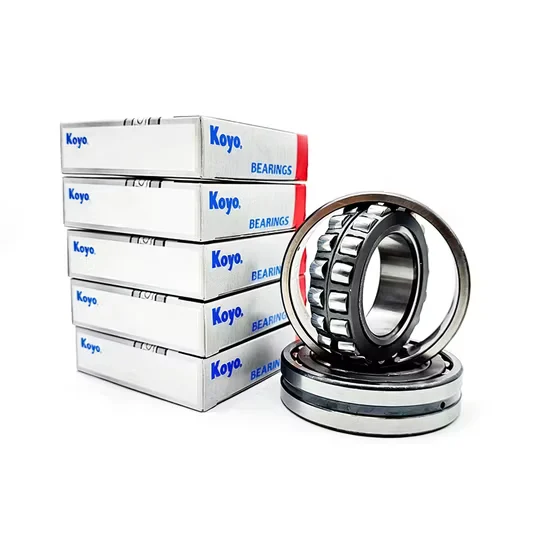
KOYO 22314 Spherical Roller Bearing 70x150x51mm for Marine Transmissions
View Product
Cylindrical Roller Bearings
Koyo NSK N408e Cylindrical Roller Bearing Genuine Wholesale Supplier
View Product
Cylindrical Roller Bearings
Koyo N2305e Cylindrical Roller Bearing Genuine Wholesale Supplier
View Product
Tapered Roller Bearings
BDL 30204 Tapered Roller Bearing Genuine Wholesale Supplier
View ProductKeep reading
More bearing selection guides for repair shops
Practical guides from KOYO Bearing Supplier on identifying Koyo / JTEKT bearings for farm machinery, construction equipment and power transmission repairs.
 Installation & Maintenance
· 6 min read
Auto Bearing Jobs Workshop Checklist: Wholesale Supplier
Prevent premature auto bearing failure with a standardized auto bearing installation checklist that addresses critical storage, inspection, and mounting protocols. Verify rotational smoothness, maintain…
Read the Guide Installation & Maintenance
· 6 min read
Genuine Bearing Supplier for Garage Tools: Wholesale Bulk & MRO
Prevent premature failures with the right garage tools for bearing jobs by addressing installation errors rather than manufacturing defects. Learn systematic removal and pressing…
Read the Guide Installation & Maintenance
· 6 min read
Clutch Bearing Noise Diagnosis: Genuine Parts Wholesale Supplier
Clutch Bearing Noise Diagnosis reveals that whining often stems from improper preload or cross-brand clearance mismatch rather than manufacturing defects. Verify internal clearances against…
Read the Guide
Bearing enquiry
Send your machine details. Get a written Koyo / JTEKT quote.
KOYO Bearing Supplier quotes a single bearing position or every bearing in an assembly on one enquiry, matched to your machine model and application, with model, quantity, price, lead time and quote validity in writing.
- WhatsApp+1 (702) 981-5880
- Emailinfo@koyoome.com
- Address8 Research Drive, Greenville, SC 20627, USA
"When a Koyo bearing failed on a harvest machine during the season, we needed a replacement urgently. The supplier identified the correct Koyo reference, shipped same-day, and the machine was back in the field within the day."

Request a Bearing Quote
Tell us the machine and the bearing position. Photos of the markings can follow on WhatsApp.