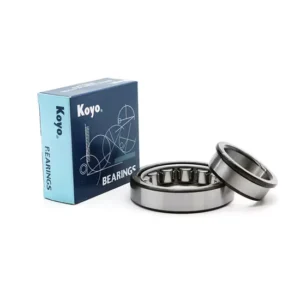
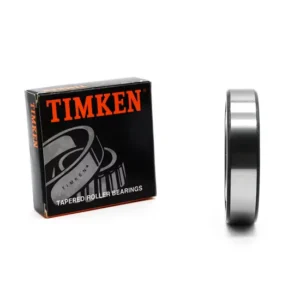
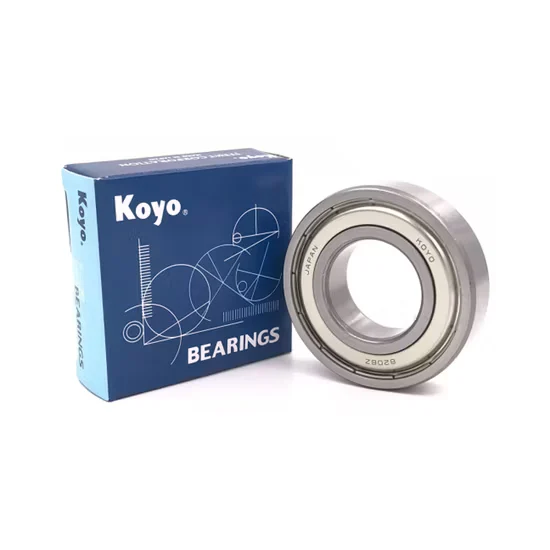
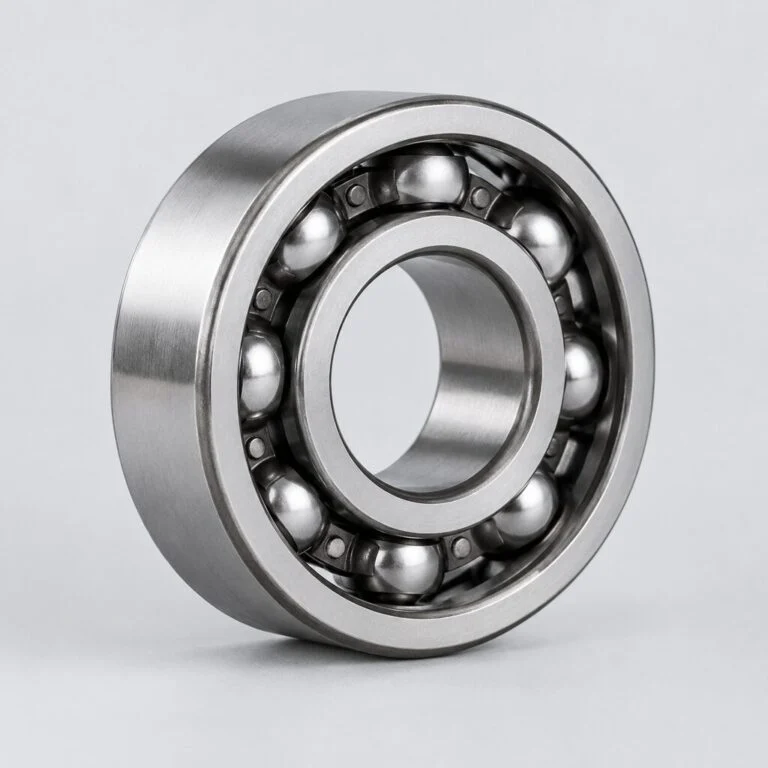
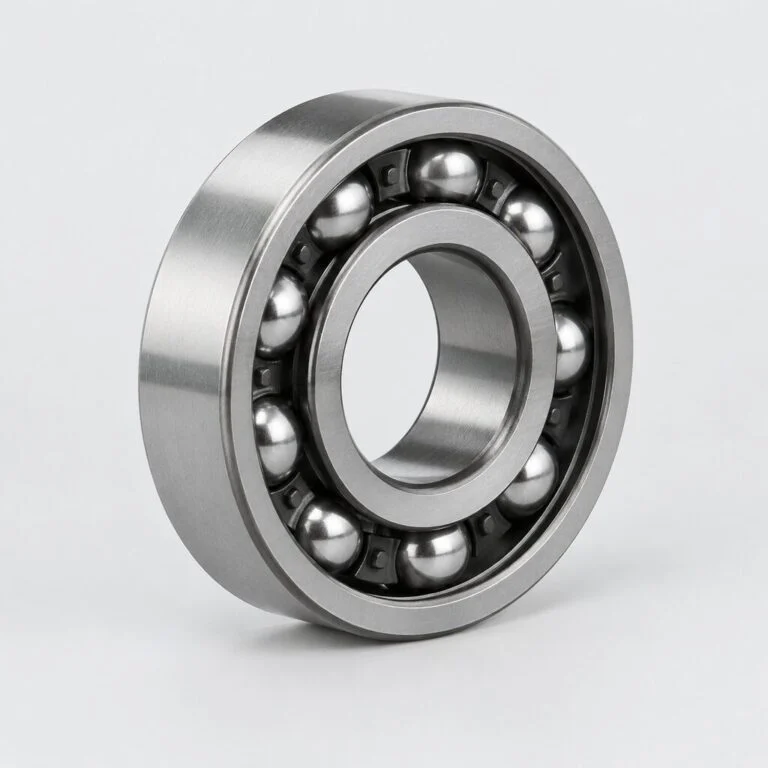
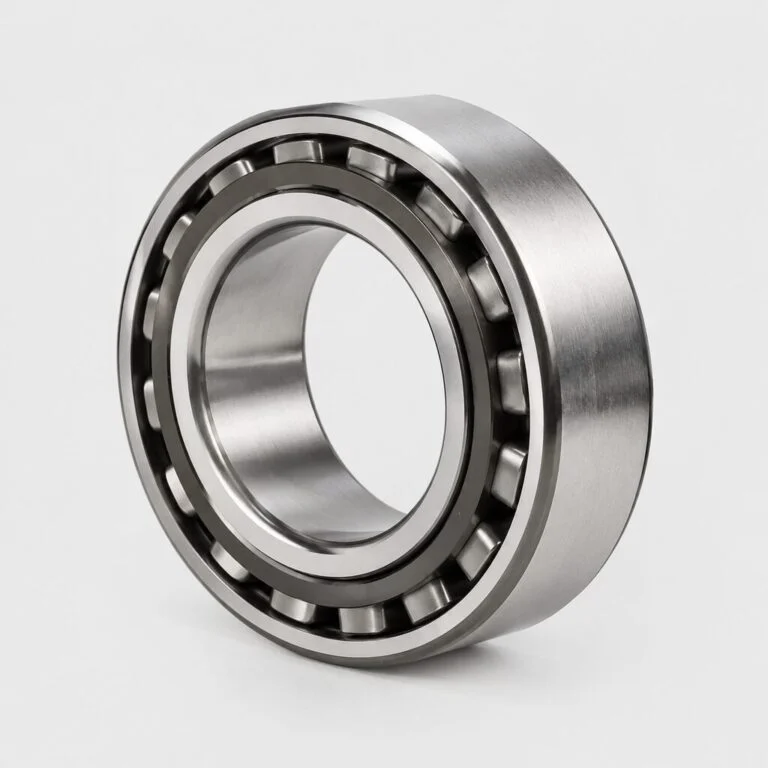
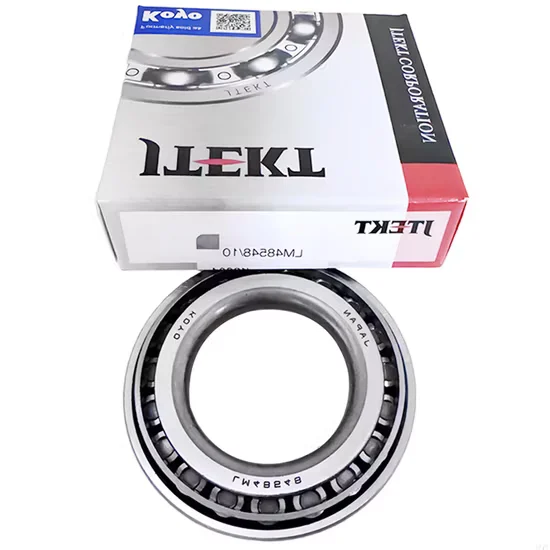
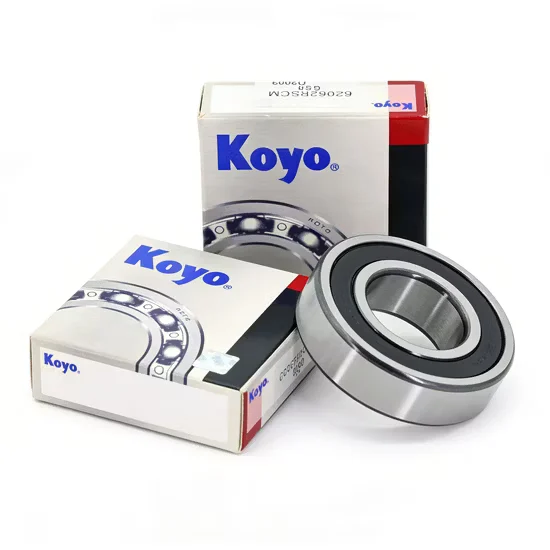
Official App Verification — Every N321EM shipped includes a scannable QR code linking directly to the manufacturer's authenticity database.
Technical Specifications
| Parameter | Value |
| Designation | N321EM |
| Bearing Type | Cylindrical Roller Bearing |
| Bore Diameter (d) | 105 mm |
| Outside Diameter (D) | 225 mm |
| Width (B) | 49 mm |
| Cage Material | Machined Brass (M suffix) |
| Internal Design | Enhanced Capacity (E suffix) |
| Seal or Shield Type | Open |
| Precision Class | P0, P6, P5, P4, P2 |
| Arrangement | Single Row, Separable |
| Load Direction | Radial |
| Material | Bearing Steel |
Application Suitability
| Industry | Typical Applications |
| Mining & Metallurgy | Rolling mill work rolls and backup rolls |
| Heavy Machinery | Heavy-duty gearbox shaft supports |
| Rail & Transit | Traction motor rotor bearings |
Why Cage Material Dictates Survival in Rolling Mills
When sourcing a Koyo Timken NSK N321EM cylindrical roller bearing for high-vibration environments, the cage is the first component to fail if incorrectly specified.
Brass cages absorb shock loads that shatter stamped steel alternatives.
Early in my career doing heat treatment and grinding in Dongguan, I specified stamped steel cages for an N322EM in a steel mill to cut costs. The high-vibration environment snapped the cage, halting the entire line. That failure reshaped my approach to heavy-duty selections. Today, when evaluating radial load capacity, I never compromise on cage material, ensuring machined brass is utilized to prevent catastrophic unplanned downtime. The continuous shock loads inherent in metallurgical processes demand a cage structure that maintains roller spacing without yielding to fatigue. Selecting the correct internal architecture is not merely a theoretical exercise; it is the primary defense against sudden mechanical seizure.

Matching the Enhanced Design to Extreme Radial Loads
The optimized internal geometry of this Koyo Timken NSK N321EM cylindrical roller bearing maximizes the contact area between the rollers and raceways. This structural advantage directly addresses the severe radial forces encountered in traction motors and mill stands. By refining the roller profile and raceway curvature, the enhanced design mitigates edge stress concentrations that typically initiate surface spalling. Our engineering team frequently cross-references mixed-brand requirements to ensure the enhanced capacity design aligns perfectly with your specific load profiles, guaranteeing that the theoretical dynamic load ratings translate into reliable field performance under continuous heavy loading.
Navigating Thermal Expansion and Lubrication Starvation
In heavy-duty gearboxes, operational heat fundamentally alters internal clearance and lubricant viscosity. Open-type configurations require precise external lubrication routing to prevent metal-to-metal contact at elevated temperatures. Without adequate oil flow or grease replenishment, the thermal expansion of the shaft can eliminate the necessary internal clearance, leading to severe roller skidding and premature raceway spalling. Proper installation practices and rigorous contamination control are equally critical to maintain the integrity of the separable inner and outer rings. Furthermore, the absence of integrated seals means that environmental particulates can easily ingress the rolling zone if the housing sealing arrangement is poorly maintained, drastically accelerating abrasive wear and compromising the structural integrity of the bearing steel.
Decoding the E and M Suffixes for Heavy-Duty Reliability
The 'E' suffix on the Koyo Timken NSK N321EM cylindrical roller bearing denotes an enhanced internal design, optimizing roller profiles to distribute radial stresses more evenly across the raceway. This modification noticeably extends the fatigue life under continuous heavy loading by reducing localized Hertzian contact pressures. Equally vital is the 'M' suffix, indicating a machined brass cage. Unlike pressed steel cages, the solid brass construction provides superior guidance and damping characteristics under high-vibration conditions, preventing roller skewing. The separable design allows the inner ring to be mounted independently from the outer ring and roller assembly, significantly simplifying maintenance routines in confined gearbox housings. Available precision classes range from standard P0 up to P2, accommodating diverse rotational accuracy requirements and ensuring minimal runout in high-speed applications.
The Financial Impact of Incorrect Suffix Selection
Selecting a standard clearance or stamped steel cage for a high-temperature, high-vibration application inevitably leads to premature failure. According to ISO 281 frameworks, ignoring the dynamic load adjustments for harsh operating conditions drastically reduces the calculated rating life. Such misapplications result in catastrophic damage to adjacent shaft components and void manufacturer warranties. The resulting unplanned downtime in a continuous rolling mill far outweighs any initial procurement savings. When a cage fractures, the rollers cluster together, causing immediate seizure and severe scoring of the shaft journal, which transforms a simple bearing replacement into a complex, multi-week shaft refurbishment project.
Securing Authenticity and Technical Alignment
Sourcing genuine multi-brand inventory eliminates the risk of receiving counterfeit components with substandard metallurgy. We verify the exact cage material and internal geometry suffixes, ensuring you do not accidentally receive a stamped steel variant when a machined brass cage is required. Our cross-brand equivalent consultation guarantees that the dimensional and performance characteristics match your original equipment specifications. Furthermore, flexible consolidation shipping allows you to mix single-unit emergency spares with full container loads. Comprehensive traceability documentation accompanies every shipment to support your quality management audits, ensuring that every component deployed in your critical machinery has a verifiable origin and meets stringent international quality benchmarks.
Traceability and Quality Assurance Records
- Certificate of Conformity verifying the exact N321EM batch and manufacturing origin.
- Scannable QR codes linking to the official manufacturer authenticity database.
- Dimensional inspection reports confirming the 105x225x49 mm tolerances match the requested precision class.
- Material certificates validating the bearing steel and machined brass cage composition.
- Running accuracy test results for P4 or P2 graded units prior to dispatch.
Preservation and Installation Protocols
- Store the open-type bearing in its original VCI packaging to prevent raceway corrosion before installation.
- Use induction heaters for the inner ring mounting, strictly monitoring temperature to preserve the bearing steel hardness.
- Apply clean gloves during handling to avoid transferring moisture to the exposed machined brass cage.
- Ensure the separable outer ring* roller edge loading.
- Flush the gearbox with clean oil to eliminate debris before the initial lubrication of the open bearing.
Engineering Data Required for Technical Validation
To accurately validate the selection and calculate the L10 rating life, please provide the specific radial loads, operating speeds, and thermal conditions of your application. Sharing the OEM equipment serial numbers allows our team to perform precise cross-reference checks against N322EM or N324EM alternatives. Detailing the housing constraints and lubrication methods ensures the recommended precision class and clearance perfectly match your operational demands. Supplying comprehensive operational data enables our engineers to model the thermal gradients and recommend the optimal internal clearance class, preventing the detrimental effects of thermal expansion on the bearing's internal geometry during peak operational loads.
Frequently Asked Questions
Q: How do I verify the authenticity of the received N321EM bearing?
A: Every genuine unit includes a unique QR code that links directly to the manufacturer's official verification application. Scanning this code confirms the production batch, origin, and original specifications. We also provide a Certificate of Conformity and dimensional inspection reports to ensure the component meets your exact procurement requirements and quality standards.
Q: What is the difference between the M and J cage suffixes in cylindrical roller bearings?
A: The M suffix indicates a machined brass cage, which offers superior strength, vibration damping, and heat dissipation for heavy-duty applications. In contrast, a J suffix denotes a pressed steel cage, which is lighter and suitable for standard loads but prone to fracture under severe shock or high-vibration conditions typical in rolling mills.
Q: How do precision classes P0 through P2 affect the performance of this cylindrical roller bearing?
A: Standard P0 precision is adequate for general heavy machinery where minor runout is acceptable. Higher grades like P4 and P2 feature strictly controlled dimensional and running accuracy tolerances, significantly reducing vibration and heat generation. These tighter tolerances are essential for high-speed traction motors and precision gearbox shafts requiring optimal rotational stability.
Q: Can I cross-reference the N321EM with other brands like SKF or NSK?
A: Yes, cross-referencing the Koyo Timken NSK N321EM cylindrical roller bearing is common, but you must align the internal design, clearance, and cage suffixes. For example, ensuring the enhanced capacity and machined brass cage specifications match across different manufacturers prevents performance discrepancies. Our engineering team verifies these three critical alignment points to guarantee interchangeable reliability.
Q: What lubrication strategy is recommended for the open-type design in heavy-duty gearboxes?
A: Open bearings rely entirely on the gearbox's circulating oil splash or directed jet lubrication. It is crucial to maintain adequate oil flow to cool the machined brass cage and flush away wear particles. Regular oil analysis and filtration maintenance are necessary to prevent abrasive contamination from accelerating raceway wear and reducing the bearing's operational lifespan.