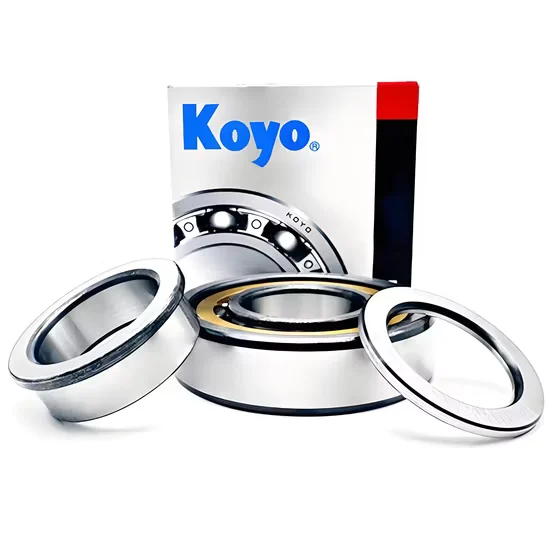
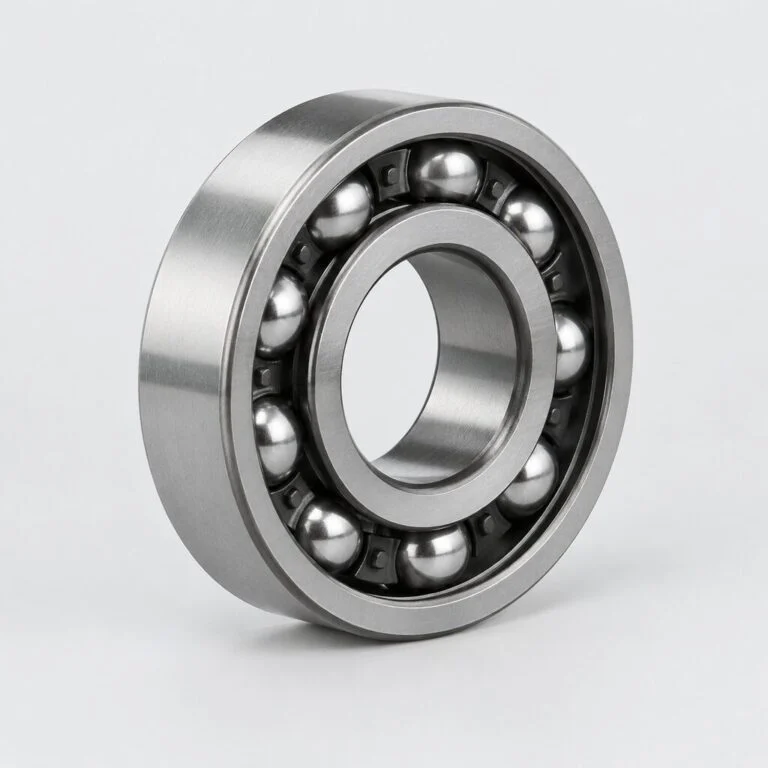
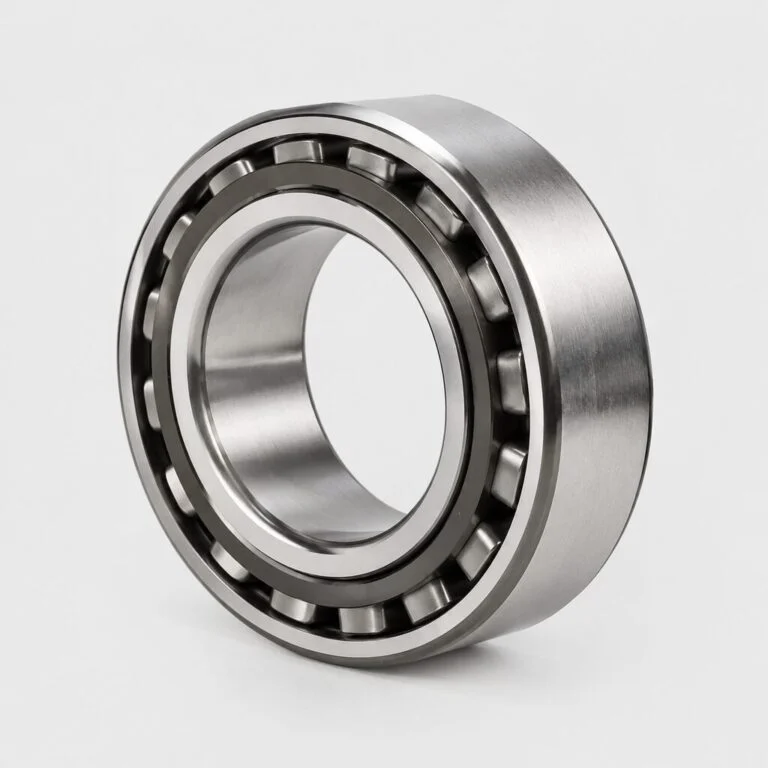
Cross-Reference Alignment — verifying clearance, cage material, and precision across N328em and N330em equivalents prevents mismatched radial load capacities in heavy-duty gearboxes.
Technical Specifications
| Parameter | Value |
| Designation | KOYO N326EM |
| Bearing Type | Cylindrical Roller Bearing |
| Bore Diameter (d) | 130 mm |
| Outside Diameter (D) | 280 mm |
| Width (B) | 58 mm |
| Cage Material | Machined brass cage (M suffix) |
| Seal or Shield Type | Open |
| Precision Class | P0, P6, P5, P4, P2 |
| Load Direction | Radial Bearing |
| Material | Available in bearing steel variants |
| Origin | Japan |
Application Suitability
| Industry | Typical Applications |
| Heavy-duty gearboxes | Main drive shafts and high-torque transmission stages |
| Rolling mills | Work roll and backup roll neck assemblies |
| Mining machinery | Crushers and vibrating screen eccentric shafts |
| Steel mill equipment | Continuous casting machine roll segments |
Why Standard Cages Shatter in KOYO N326EM cylindrical roller bearing Applications
The machined brass cage is not an optional upgrade; it is the absolute barrier against catastrophic structural failure under extreme radial loads.
When rolling mills or heavy-duty gearboxes operate under continuous high-stress conditions, pressed steel cages often experience severe fatigue and fragmentation. Early in my career, I witnessed a complete production line halt in a Dongguan steel plant because a standard cage was substituted for a heavy-duty brass design to cut costs, leading to immediate jamming and massive repair bills. Selecting the correct KOYO N326EM cylindrical roller bearing ensures the internal components can dissipate heat and withstand immense centrifugal forces without disintegrating. The operational reality of heavy machinery demands components that resist deformation under shock loading, making the specific cage material a critical deciding factor rather than a minor detail.

Matching Operational Profiles to Suffix Designations
Matching the exact operational profile requires looking far beyond basic envelope dimensions to the specific suffix designations that dictate internal geometry. The enhanced capacity design and machined brass cage make this KOYO N326EM cylindrical roller bearing exceptionally suited for environments where shock loads and high radial forces are constant and unforgiving. Our engineering team meticulously cross-checks these specific suffix requirements against your equipment's operational data, load spectra, and thermal profiles to prevent premature wear. By analyzing the exact stress points within your gearbox or mill stand, we ensure the selected configuration delivers reliable performance without unexpected degradation.
Navigating Thermal Gradients and Contamination Risks
Heavy industrial environments subject radial bearings to extreme thermal gradients, severe particulate contamination, and unpredictable shock loads. Open seal types require rigorous external lubrication strategies, relying on continuous oil flow or precise grease replenishment to flush out microscopic debris and manage friction heat effectively. Without adequate lubrication, the thermal expansion of the rolling elements can rapidly eliminate internal clearance, leading to catastrophic seizure and raceway scoring. Proper installation and precise shaft alignment are equally critical to prevent uneven load distribution across the single row of rollers, which would otherwise accelerate localized fatigue. Maintaining the correct operating temperature is essential to preserve the structural integrity of the chosen material under continuous heavy loading.
Decoding the Enhanced Capacity and Cage Architecture
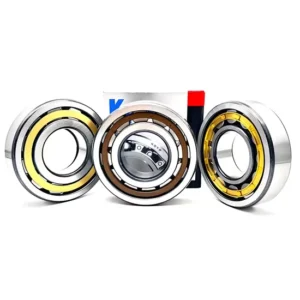
The 'E' suffix denotes an enhanced capacity design, optimizing the internal geometry and roller profile to maximize the radial load rating without altering the external envelope dimensions. Complementing this structural upgrade, the 'M' suffix specifies a machined brass cage, which provides superior structural integrity, significantly better heat dissipation, and higher resistance to vibration compared to pressed steel alternatives. The open seal configuration allows for highly flexible lubrication choices, accommodating both oil bath and high-velocity circulating oil systems typical in industrial gearboxes and mill drives. Available in bearing steel variants, the separated design simplifies complex mounting and dismounting procedures, allowing the inner ring and outer ring to be installed independently to achieve optimal interference fits. Available precision classes range from standard P0 up to P2, accommodating varying demands for rotational accuracy, noise reduction, and precise thickness control in rolling operations.
The Financial Impact of Incorrect Cage Selection
Substituting a standard cage for a machined brass variant in high-load applications inevitably leads to unplanned downtime, severe secondary damage, and catastrophic failure of adjacent machinery components. When the cage fragments under stress, the rolling elements skew and jam, destroying the raceways and potentially warping the main drive shaft beyond repair. Such premature failure voids equipment warranties and incurs massive financial losses that far exceed the initial component cost, disrupting entire production schedules. Adhering to established failure analysis frameworks highlights that incorrect cage selection and ignorance of suffix specifications are primary root causes of sudden mechanical breakdowns in heavy industry. Procurement decisions based solely on upfront price rather than exact specification matching ultimately result in exponentially higher total ownership costs.
Securing Genuine Specifications and Traceability
We strictly verify the 'EM' suffix combination upon every order, as this specific pairing is the most frequently mismatched specification when buyers seek cost reductions on heavy-duty cylindrical rollers. Our supply chain guarantees genuine Japan origin products with complete traceability, entirely eliminating the risk of counterfeit bearings that severely plague the industrial MRO market. We provide comprehensive cross-reference consultations for equivalent models like N328em and N330em, ensuring the internal clearance and precision classes align perfectly with your existing assembly requirements. Our massive spot inventory covers thousands of standard part numbers, enabling rapid dispatch for urgent maintenance requirements without ever compromising authenticity or technical accuracy. By focusing on exact specification matching rather than generic substitutions, we protect your machinery from the hidden costs of incompatible components.
Documentation & Authenticity
- Certificate of Conformity validating the genuine Japan origin and manufacturing standards.
- Original manufacturer batch numbers and QR codes for direct digital verification.
- Dimensional inspection reports confirming the 130 mm bore and 280 mm outside diameter tolerances.
- Material test certificates verifying the specific steel composition and brass cage metallurgy.
- Running accuracy inspection reports matching the requested P0 to P2 precision class.
Storage, Handling & Mounting
- Store the open-type bearing in its original anti-corrosion packaging until installation to prevent surface oxidation.
- Use induction heating for the inner ring mounting, strictly monitoring temperature to preserve the material integrity.
- Apply clean lint-free gloves when handling the machined brass cage to avoid acidic sweat corrosion.
- Ensure the separated inner and outer rings are kept matched and clearly labeled during assembly.
- Flush the open bearing with clean lubricant immediately after unpacking to remove residual preservative oils.
Engineering Validation and Inquiry Requirements
To ensure precise technical validation and optimal performance, please provide your equipment's specific radial and axial load profiles, operating speeds, and expected thermal conditions. Sharing the exact OEM equipment model numbers allows our engineering team to perform accurate cross-reference checks and detailed L10 life recalculations adapted to your actual operating environment. Detailing the installation space constraints, shaft deflection limits, and environmental exposure will help us confirm the optimal clearance class and lubrication strategy for your specific application. This collaborative technical review ensures that the selected bearing configuration will deliver maximum reliability and service life under your unique operational parameters.
Frequently Asked Questions
Q: How can I verify the authenticity of the KOYO bearing using official tools?
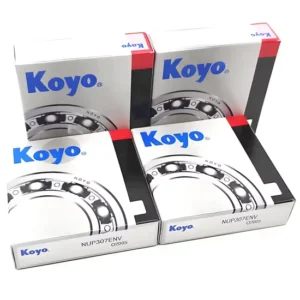
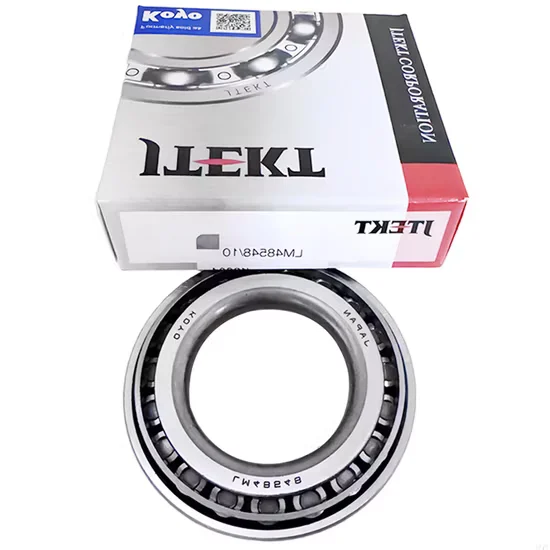
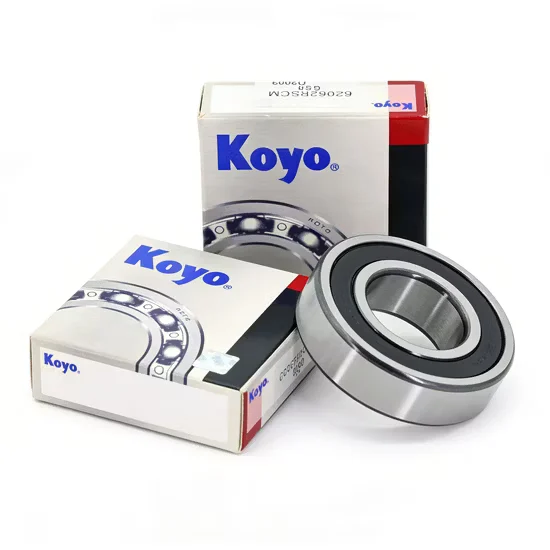
A: You can verify authenticity by scanning the QR code on the packaging using the manufacturer's official mobile application. This digital check confirms the original batch number, production date, and Japan origin, ensuring the component is not a counterfeit. We also provide complete traceability documentation with every shipment to support your internal quality audits.
Q: What are the cross-reference considerations for N328em and N330em models?
A: When evaluating N328em or N330em as cross-references, you must align the internal clearance, cage material, and precision class with your specific application. Simply matching the outer dimensions is insufficient, as variations in the enhanced capacity design or brass cage specifications can drastically alter the radial load performance and operational lifespan in heavy-duty gearboxes.
Q: How does the machined brass cage compare to pressed steel in heavy-duty use?
A: A machined brass cage offers substantially higher structural rigidity, better heat dissipation, and superior resistance to vibration and shock loads compared to pressed steel. In high-stress environments like rolling mills, the brass design prevents cage fragmentation and roller skewing, thereby avoiding catastrophic jamming and significantly extending the operational service life of the assembly.
Q: What is the recommended lubrication method for this open-type cylindrical roller bearing?
A: For open-type designs, continuous circulating oil or regular grease replenishment is recommended depending on the operating speed and thermal load. The absence of integrated seals requires a reliable external sealing solution to prevent particulate contamination. Proper lubrication intervals must be established based on the specific environmental conditions to prevent friction-induced thermal expansion and subsequent seizure.
Q: How do I select the correct precision class for rolling mill applications?
A: Rolling mill applications typically require higher precision classes, such as P5 or P4, to ensure smooth operation, minimize vibration, and maintain strict thickness tolerances during the rolling process. Standard P0 precision may suffice for less critical auxiliary drives. Evaluating the required rotational accuracy and acceptable noise levels will dictate the most appropriate precision rating for your specific machinery.