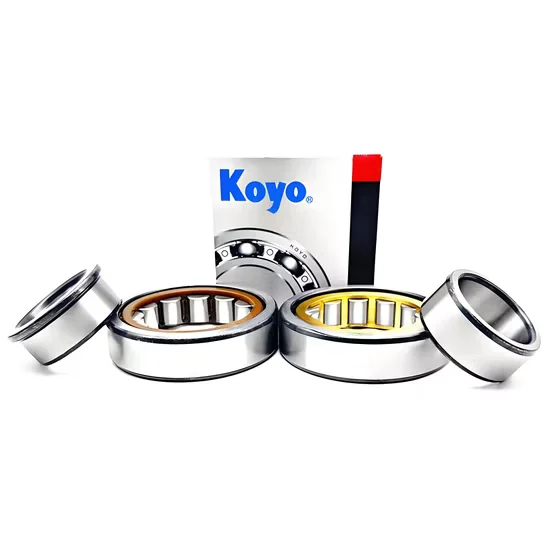
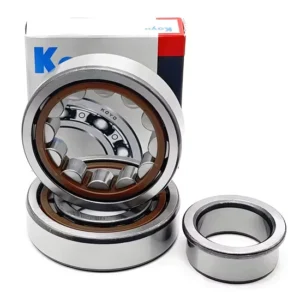
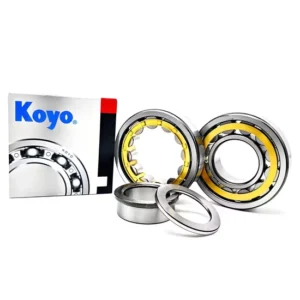
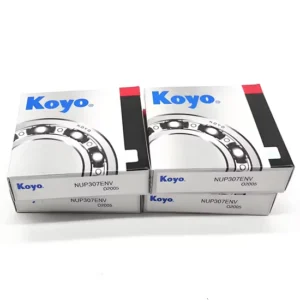
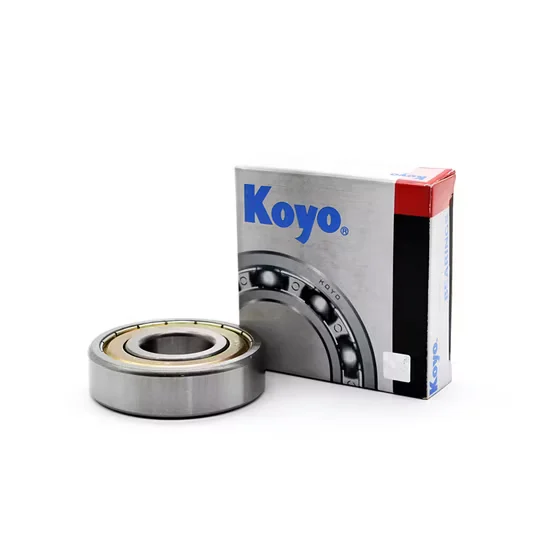
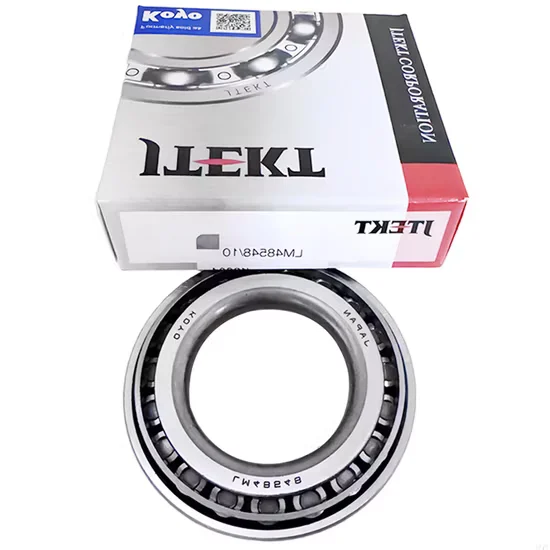
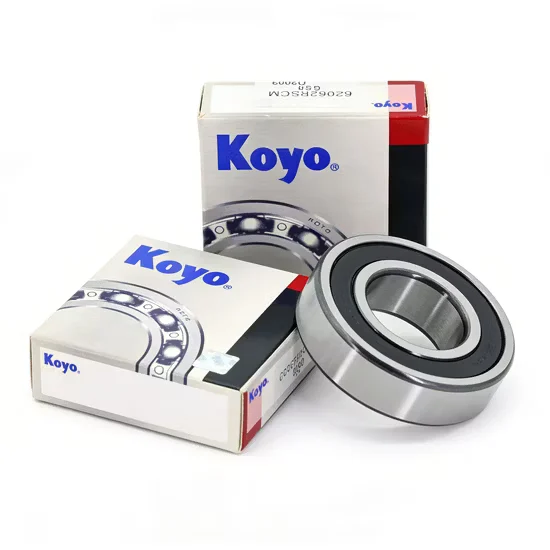
Authentic KOYO verification — Scan the official QR code on each KOYO N220EM box to confirm factory origin and batch traceability.
Technical Specifications
| Parameter | Value |
| Designation | KOYO N220EM |
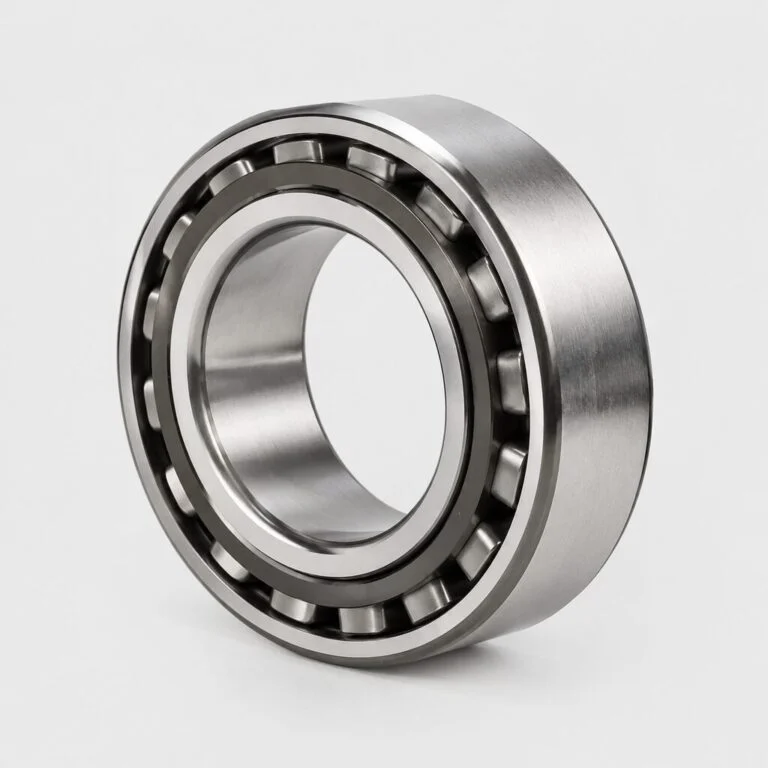
| Bearing Type | Cylindrical Roller Bearing |
| Bore Diameter (d) | 100 mm |
| Outside Diameter (D) | 180 mm |
| Width (B) | 34 mm |
| Material | Bearing steel standard, with stainless variants available |
| Number of Rows | Single Row |
| Seal or Shield Type | Open |
| Separated | Separable |
| Load Direction | Radial |
| Cage Material | Machined brass |
| Internal Design | Enhanced capacity |
Application Suitability
| Industry | Typical Applications |
| Heavy Machinery | Main drive gearboxes in mining excavators |
| Metal Processing | Work roll and backup roll necks in rolling mills |
| Rail Transit | Traction motor suspension systems |
Why High-Vibration Gearboxes Destroy Standard Cages Before the KOYO N220EM cylindrical roller bearing Fails
Cage fatigue precedes roller spalling when resonance exceeds the structural limits of pressed steel.
During my early field service years at a Chilean copper mine, we faced recurring early spalling on cylindrical roller bearings in the main hoist drives. The root cause was not the radial load, but maintenance workers using open flames to heat the inner rings, completely destroying the metallographic structure of the steel. We switched to strict induction heating protocols and specified machined brass cages to survive the severe underground vibrations. Standard pressed steel cages simply shatter under such continuous high-frequency shaking, scattering metal fragments throughout the gearbox oil sump and causing catastrophic secondary damage to the gear teeth. Upgrading the cage material and installation method completely eliminated these sudden drivetrain seizures.

Matching Heavy-Duty Radial Loads with Proven Field Engineering
Sourcing the right KOYO N220EM cylindrical roller bearing requires more than just matching basic dimensions; it demands a deep understanding of the operational environment and the specific failure modes inherent to heavy machinery. Our engineering team provides comprehensive cross-brand equivalent model consultation to ensure your heavy-duty gearboxes receive components that withstand extreme radial forces without compromising rotational accuracy. We regularly consolidate mixed-brand packages for bulk project orders, ensuring your rolling mills and mining excavators stay operational without waiting for fragmented, delayed shipments from multiple vendors. By analyzing the specific load spectra of your equipment, we help you avoid the common trap of under-specifying the internal design for applications that experience heavy shock loading.
Navigating Thermal Expansion and Lubrication Starvation in Rolling Mills
Radial loads in metal processing equipment generate immense friction heat, demanding open-type bearings that allow flexible oil circulation to wash away metallic debris and cool the raceways. When thermal expansion alters the internal clearance during continuous operation, an optimized internal design compensates for the dimensional shifts, preventing the rollers from skidding. Without adequate oil flow, the machined brass cage experiences accelerated wear, leading to sudden seizure and massive production losses. Proper induction heating during installation prevents the inner ring from cracking under thermal shock, while the open design ensures that fresh lubricant continuously reaches the contact zones, flushing out microscopic wear particles that would otherwise act as an abrasive grinding paste.
Decoding the E and M Suffixes for Maximum Durability
The E suffix indicates an enhanced internal design with optimized roller profiles and a maximum number of rolling elements, significantly increasing the radial load-carrying capacity compared to standard executions. Meanwhile, the M suffix designates a solid machined brass cage, which is absolutely critical for high-vibration environments where lighter pressed steel cages would suffer from fatigue cracking and structural collapse. This heavy-duty brass construction provides superior guidance for the rolling elements, maintaining stability and precise alignment even when the gearbox experiences sudden torque reversals or extreme shock loads. Furthermore, the separable design allows the inner ring to be mounted independently from the outer ring and roller assembly, drastically simplifying maintenance procedures and reducing equipment downtime in confined industrial spaces.
The Hidden Costs of Ignoring Suffix Accuracy in Procurement
Substituting a specified machined brass cage with a cheaper pressed steel alternative leads to catastrophic cage fragmentation under heavy vibration, a failure mode that is often misdiagnosed as a lubrication issue. According to established failure analysis frameworks, such structural collapses cause severe secondary damage to the shaft journal and the gearbox housing, resulting in extensive unplanned downtime and expensive machining repairs. Procurement decisions based solely on initial purchase price rather than exact suffix matching inevitably trigger premature failure, void equipment warranties, and disrupt the entire production schedule. The true cost of a mismatched component always far exceeds the minor savings achieved during the initial purchasing phase.
Securing Traceable Components for Critical Drivetrains
We maintain massive spot inventory covering thousands of standard part numbers, ensuring the exact KOYO N220EM cylindrical roller bearing is ready for immediate dispatch to your facility. Buyers frequently receive mismatched suffixes or counterfeit parts from unauthorized traders; we guarantee complete traceability documentation and original manufacturer batch codes for every single unit shipped. Our dedicated technical selection support helps you verify clearance classes, precision tolerances, and cage materials before you finalize your purchase order. Flexible minimum order quantities accommodate everything from single-unit emergency replacements to full container consolidation shipments for major plant overhauls. Furthermore, our global shipping consolidation and rigorous pre-shipment inspection services ensure your heavy-equipment spares arrive safely and correctly at remote mining or manufacturing sites.
Documentation & Authenticity
- Official QR verification codes confirming the exact KOYO N220EM batch origin.
- Material certificates validating the standard bearing steel metallurgical composition.
- Dimensional inspection reports verifying the 100 mm bore and 180 mm outside diameter.
- Factory conformity certificates proving the machined brass cage specification.
Storage, Handling & Mounting
- Store the open-type bearing in its original moisture-proof packaging until immediately before mounting.
- Use induction heaters instead of open flames to mount the 100 mm inner ring safely.
- Keep the separable inner ring and outer roller assembly separated until the final alignment step.
- Apply clean gloves to prevent hand sweat from corroding the exposed machined brass cage surfaces.
- Flush the open bearing with clean oil to remove preservative before introducing operational lubricant.
Technical Review and Selection Guidance
To ensure optimal performance and maximum service life, please share your specific radial load calculations, operational speeds, and ambient temperature ranges so our engineers can perform a precise L10 life verification. Provide the original equipment manufacturer part numbers and equipment model details so our technical team can execute a comprehensive cross-reference check. Detailing the housing tolerances, shaft fits, and specific operating environment allows us to recommend the most appropriate internal clearance class and confirm the lubrication strategy for your exact application.
Frequently Asked Questions
Q: How can I verify the authenticity of the machined brass cage specification?
A: You can verify the authenticity by scanning the official QR code on the packaging using the manufacturer's application. Additionally, request the original factory dimensional and material inspection reports, which explicitly state the machined brass cage construction. We provide complete traceability documentation to ensure the component matches your exact engineering requirements.
Q: What are the cross-reference considerations for the enhanced internal design?
A: When cross-referencing this enhanced design to other brands, you must ensure the equivalent model also features an optimized roller profile and matching internal clearance. Simply matching the basic dimensions is insufficient, as the load-carrying capacity differs. Our technical team verifies these internal geometries to guarantee the replacement performs identically under heavy radial loads.
Q: How should I choose between oil and grease for this open-type bearing?
A: Oil lubrication is generally preferred for high-speed or high-temperature rolling mill applications because it dissipates heat and flushes away wear particles. Grease is suitable for moderate speeds where sealing out contaminants is the primary concern. Since this is an open-type design, the choice depends entirely on your equipment's existing sealing arrangements and maintenance intervals.
Q: Why is induction heating mandatory for mounting the inner ring?
A: Open flames create uneven thermal gradients that destroy the metallographic structure of the standard steel material, leading to premature spalling. Induction heating provides uniform, controlled temperature distribution across the bore, ensuring a proper interference fit without damaging the material. This method is critical for maintaining the structural integrity of the inner ring in high-vibration gearboxes.
Q: What is the advantage of the separable design during maintenance?
A: The separable design allows the inner ring to be mounted onto the shaft independently of the outer ring and roller assembly. This simplifies the installation process in confined gearbox housings and makes it easier to inspect the rolling elements and machined brass cage during routine maintenance without completely dismantling the surrounding equipment structure.