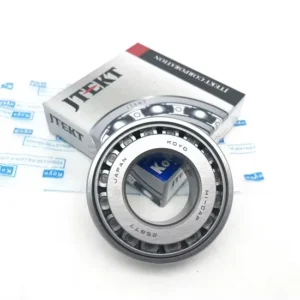
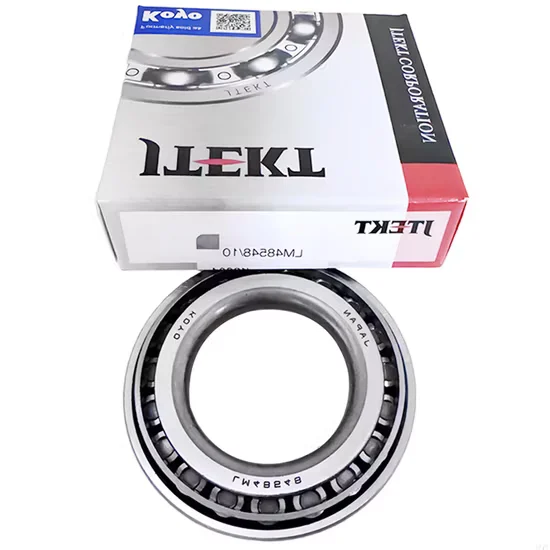
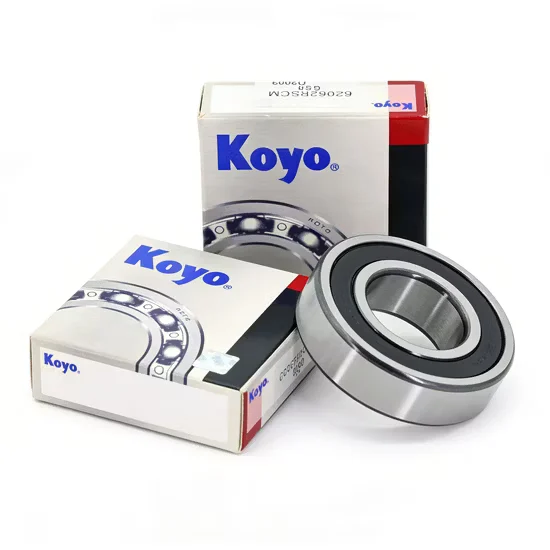
Cross-Reference Alignment Verified — Dimensional and load profiles for the 30309 30310 30311 30312 30313 30314 series are validated against global equivalent catalogs to ensure direct interchangeability.
Technical Specifications
| Parameter | Value |
| Designation | 30309 30310 30311 30312 30313 30314 |
| Bearing Type | Tapered Roller Bearing |
| Material | Chrome Steel Gcr15 (standard), stainless steel variants available |
| Clearance Class | C0 / C2 / C3 / C4 |
| Hardness | HRC58-62 |
| Lubrication | Grease or Oil |
| Origin | Shandong, China |
Application Suitability
| Industry | Typical Applications |
| Automotive & Transport | Wheel hubs and truck axles requiring high radial and axial load capacity |
| Heavy Industry | Industrial gearboxes and heavy-duty machinery drive trains |
| Marine & Manufacturing | Marine drives and general manufacturing plant equipment |
Why Open-Flame Heating Destroys Your Koyo 30309 30310 30311 30312 30313 30314 tapered roller bearing Before It Even Spins
Localized thermal shock from improper mounting permanently alters the metallurgical structure of chrome steel rings.
I witnessed a complete production line shutdown in a Brazilian mine after maintenance crews used an open torch to force a bearing onto a shaft. The extreme, uneven heat ruined the internal crystalline structure, leading to immediate seizure under load. Such catastrophic installation errors bypass all manufacturer warranties and trigger severe unplanned downtime. When heavy-duty machinery halts unexpectedly, the financial bleed extends far beyond the replacement part, encompassing lost production hours and secondary shaft damage. Proper installation protocols are non-negotiable for preserving component integrity.

Matching Load Profiles to Tapered Geometry
The conical internal geometry of the Koyo 30309 30310 30311 30312 30313 30314 tapered roller bearing is engineered to resolve combined radial and axial forces simultaneously. In applications like truck axles and industrial gearboxes, these components must endure intense shock loads while maintaining precise alignment. When retrofitting older equipment or replacing obsolete parts, our engineering team provides cross-brand equivalent model consultation to ensure the selected taper angle perfectly matches your specific load vectors. This technical selection support prevents premature edge-loading, distributes stress evenly across the raceway, and significantly extends operational service intervals in demanding environments.
Handling Heavy-Duty Operational Stresses
Heavy-duty machinery and marine drives subject these components to continuous vibration and fluctuating thermal cycles. Operating temperatures shift dramatically during startup and peak load phases, making the choice between C0, C2, C3, and C4 clearance classes critical to accommodate thermal expansion without losing internal preload. Proper lubrication selection—whether grease or oil—must align with the rotational speed and environmental contamination levels to maintain a stable elastohydrodynamic film. Furthermore, exposed environments in mining and construction demand rigorous contamination control, as abrasive particulates ingress through inadequate seals will rapidly accelerate surface fatigue and micropitting.
Decoding Material Hardness and Clearance Tolerances
The raceways and rolling elements are typically manufactured from Chrome Steel Gcr15, though stainless steel variants are available for specific corrosive environments. The standard material achieves a hardness of HRC58-62 to resist abrasive wear and surface spalling under heavy impact. Selecting the correct internal clearance is equally vital; C0 represents standard clearance, while C3 and C4 provide extra internal space for applications involving high-speed rotation or significant shaft-to-housing temperature differentials. Using a standard C0 clearance in a high-heat gearbox environment will cause the component to run tight, generating excess friction and rapid degradation. Conversely, applying a C4 clearance in a low-speed, high-precision setup introduces unwanted vibration and noise. Understanding these tolerance classes ensures the component operates within its designed thermal and mechanical boundaries, preventing catastrophic internal binding.
The Financial Impact of Improper Installation and Selection
Relying on incorrect clearance classes or employing destructive mounting techniques leads to catastrophic damage and immediate warranty voidance. According to failure mode frameworks like ISO 15243, thermal discoloration and smearing from improper heating are classified as severe mounting defects that compromise the entire assembly. Such premature failures not only destroy the component but also score adjacent shafts and distort housings, multiplying repair expenses exponentially. Ultimately, the cost of unplanned downtime, secondary equipment damage, and emergency freight logistics vastly outweighs the initial investment in proper induction heating tools and correct specification matching.
Securing Authentic Components and Technical Certainty
Sourcing genuine parts for the 30309 30310 30311 30312 30313 30314 series requires strict verification, as visual inspection alone cannot confirm internal clearance classes or metallurgical integrity. We provide complete traceability documentation for every shipment, ensuring you receive authentic products with verified Gcr15 material certificates. Our massive spot inventory covers these standard part numbers, allowing flexible MOQ from single-unit emergency replacements to full container consolidation shipments. Furthermore, our competitive sourcing cost compared to direct official channels helps optimize your MRO budget without compromising on quality. Our long-term after-sales technical support includes failure analysis to guide your maintenance teams away from destructive practices, ensuring reliable performance across global operations.
Documentation & Authenticity
- Certificate of Conformity verifying the authentic origin of the supplied components.
- Original batch traceability records linking the specific production run to the manufacturer.
- Material inspection reports confirming the Gcr15 chrome steel chemical composition.
- Dimensional and running accuracy inspection reports validating the requested C0-C4 clearance class.
Storage, Handling & Mounting
- Store the components in their original, unopened packaging to prevent humidity ingress and surface corrosion on the Gcr15 steel.
- Use controlled induction heaters rather than open flames to mount the inner rings, preserving the HRC58-62 hardness structure.
- Verify the specific clearance class (C0, C2, C3, or C4) marked on the packaging before installation to match the thermal operating conditions.
- Apply the recommended grease or oil lubrication immediately after mounting if the application requires external lubrication topping.
- Handle the separated cones and cups with clean gloves to prevent particulate contamination from entering the rolling contact zones.
Preparing Your Technical Parameters for Review
To ensure optimal lifespan and precise fitment, please share your specific operating parameters, including radial and axial load profiles, rotational speeds, and steady-state operating temperatures. Providing the original equipment manufacturer part numbers or existing housing dimensions allows our engineering team to perform accurate cross-reference verification and L10 life calculations. This technical review guarantees that the selected clearance class and lubrication method perfectly align with your heavy-duty application requirements, preventing costly field modifications.
Frequently Asked Questions
Q: How can I verify the authenticity of these components before installation?
A: Authenticity is confirmed through comprehensive traceability documentation, including original batch records and material certificates. We strongly advise against relying solely on visual checks, as counterfeit parts often mimic external packaging but fail in metallurgical composition. Requesting the Certificate of Conformity and cross-checking the Gcr15 material specs ensures you receive genuine products capable of handling heavy-duty loads.
Q: What is the practical difference between C0, C3, and C4 clearance classes?
A: C0 is the standard internal clearance suitable for normal operating temperatures and speeds. C3 and C4 offer progressively larger internal gaps, which are essential for applications experiencing high thermal expansion or where the inner ring runs significantly hotter than the outer housing. Selecting the correct class prevents the bearing from running tight and seizing under heavy-duty thermal conditions.
Q: Why is open-flame heating strictly prohibited during installation?
A: Applying an open torch creates localized thermal shock, unevenly heating the chrome steel and permanently destroying the HRC58-62 crystalline structure. This metallurgical degradation leads to immediate softening, rapid surface spalling, and catastrophic seizure under load. Always use controlled induction heating equipment to expand the inner ring uniformly, ensuring a secure fit without compromising the material's engineered hardness.
Q: How do I choose between grease and oil lubrication for my gearbox?
A: The choice depends on rotational speed, operating temperature, and the need for heat dissipation. Oil lubrication is typically preferred for high-speed industrial gearboxes because it efficiently carries away frictional heat and flushes out wear particles. Grease is better suited for slower-speed, heavily loaded applications like truck axles, where it provides a stable seal against environmental contamination and requires less frequent maintenance.