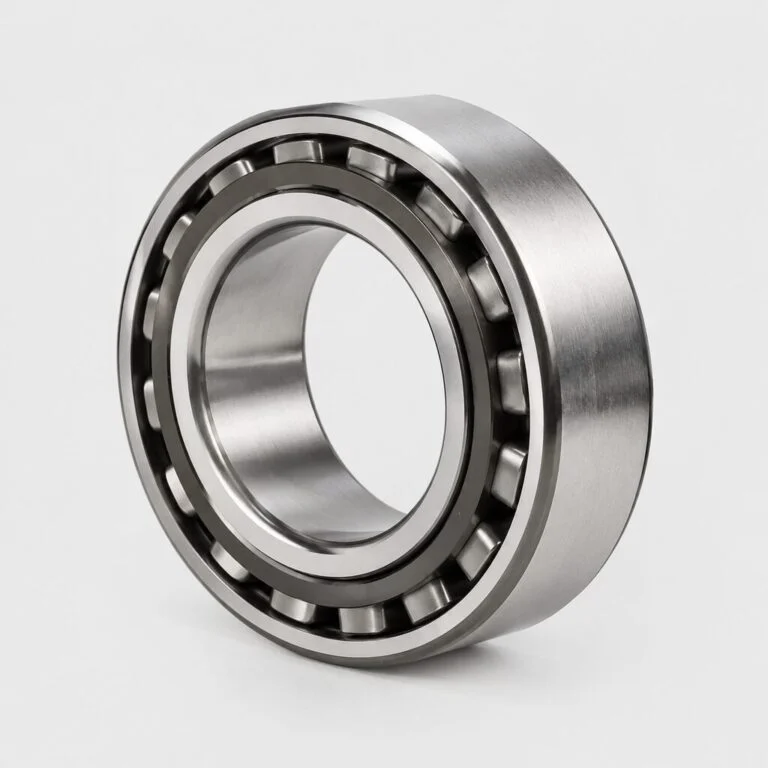
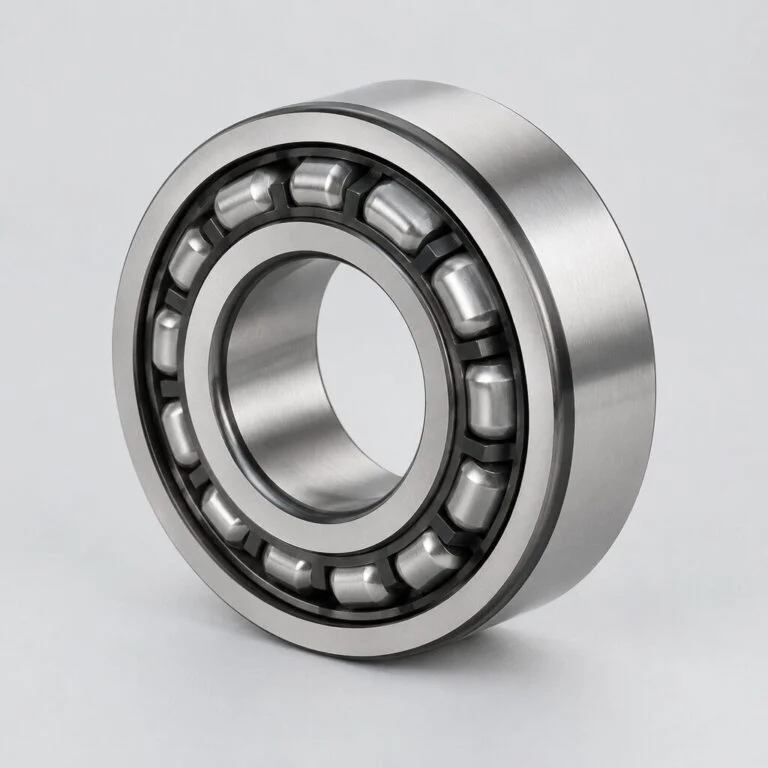
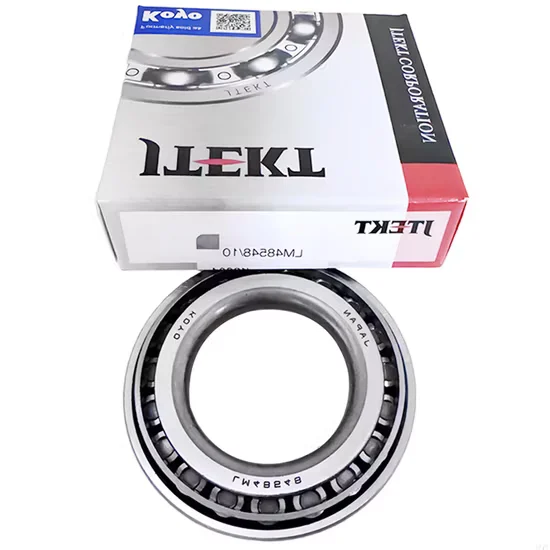
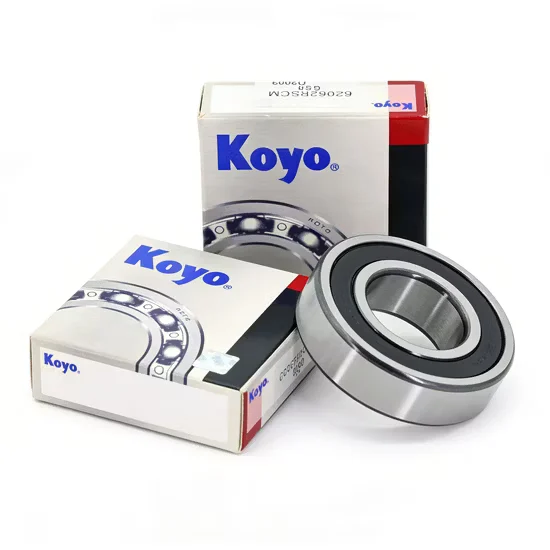
Cross-Reference Alignment — verifying dimensional, load, and clearance matches across OEM catalogs prevents mismatched installations.
Technical Specifications
| Parameter | Value |
| Designation | KOYO 32218/32220/32222/32310/32311 |
| Bearing Type | Tapered Roller Bearing |
| Structure | Single Row, Separable |
| Outside Diameter (D) | 35mm - 180mm |
| Cage Material | Iron, Brass, or Nylon options |
| Precision Class | P0, P6, P5, P4, P2 |
| Seal or Shield Type | Open, Zz, 2RS |
| Lubrication | Grease or Oil |
| Origin | Japan |
Application Suitability
| Industry | Typical Applications |
| Automotive & Heavy Transport | Wheel hubs and truck axles |
| Industrial Power Transmission | Heavy-duty gearboxes and reducers |
| Off-Highway & Mining | Construction equipment and mining machinery drives |
| Marine Engineering | Marine propulsion and drive shafts |
Preventing Thermal Seizure in KOYO 32218/32220/32222/32310/32311 Tapered Roller Bearing Assemblies
Proper clearance selection and exact cross-referencing eliminate the hidden friction that destroys heavy-duty drivetrains.
Sourcing mixed-model tapered roller bearings for heavy equipment often leads to catastrophic thermal seizure when clearance classes are mismatched during cross-referencing. I once saw a shipment of similar metric taper bearings fail in Dubai simply because a suffix variation was overlooked, causing the rollers to bind under high ambient heat. Ensuring exact OEM specification alignment for your KOYO 32218/32220/32222/32310/32311 tapered roller bearing inventory prevents these costly field failures. When procurement teams rely on generic part numbers without verifying the internal geometry and clearance specifications, the resulting friction generates excessive heat that rapidly degrades the lubricant. This thermal breakdown accelerates wear on the raceways and rollers, ultimately leading to complete mechanical lockup. By rigorously validating the dimensional and clearance equivalencies before shipment, we ensure that every bearing performs reliably under the intense operational demands of modern industrial and automotive applications.

Matching Operational Demands with Precision Taper Designs
Selecting the right KOYO 32218/32220/32222/32310/32311 tapered roller bearing requires balancing radial loads with axial thrust components inherent in gearboxes and wheel hubs. Our engineering team verifies the exact load vectors and mounting dimensions to ensure the single-row separable design handles your specific combined loading without premature edge stress. The conical geometry of the rollers and raceways is specifically engineered to accommodate these complex multi-directional forces, distributing the stress evenly across the contact area. When applied to heavy-duty truck axles or industrial reducers, this load distribution capability significantly extends the operational lifespan of the assembly. Furthermore, understanding the specific operational envelope of your machinery allows us to recommend the optimal internal configuration, ensuring that the bearing maintains its structural integrity even under severe shock loading conditions typical in mining and construction environments.
Overcoming Heavy-Duty Friction and Contamination Challenges
Tapered roller configurations in mining and construction equipment face severe shock loads and abrasive dust ingress. The choice between open, Zz, or 2RS sealing directly impacts friction heat generation versus contamination protection, while grease or oil lubrication must be matched to the operating speed and thermal dissipation limits of the housing. Selecting the appropriate cage material—iron, brass, or nylon—further dictates how well the assembly withstands vibration and temperature fluctuations. In environments where fine particulate matter is prevalent, such as quarry operations or agricultural processing, the sealing arrangement becomes the primary defense against premature abrasive wear. Conversely, in high-speed marine drives or enclosed gearboxes, minimizing seal friction is paramount to prevent excessive heat buildup. Balancing these competing demands requires a thorough analysis of the operating environment, ensuring that the chosen bearing configuration delivers reliable performance without compromising thermal stability or structural durability.
Decoding the Engineering Behind Single-Row Taper Geometries
The separable cup and cone design of these models allows for independent mounting and precise preload adjustment, which is critical for achieving optimal stiffness in truck axles. Precision classes ranging from P0 to P2 dictate the running accuracy and noise levels, where higher precision is essential for high-speed industrial gearboxes. Furthermore, the availability of iron, brass, or nylon cages provides flexibility; brass cages offer superior durability under high vibration and shock loads, while nylon cages reduce weight and operating noise in lighter automotive applications. The precise machining of the roller ends and the rib contact area ensures that the bearing can sustain heavy axial loads without experiencing excessive sliding friction. This meticulous geometric alignment minimizes internal heat generation, allowing the bearing to operate efficiently even when subjected to continuous heavy radial and thrust loads. Understanding these intricate design features enables maintenance engineers to make informed decisions regarding preload settings and lubrication intervals, ultimately maximizing the reliability of the entire drivetrain system.
The Hidden Financial Drain of Incorrect Bearing Selection
Installing a taper bearing with inadequate clearance or the wrong cage material for a high-shock environment inevitably leads to unplanned downtime and catastrophic damage to adjacent shaft components. According to industry failure analysis frameworks, misalignment and improper internal clearance account for a significant share of premature failures. This not only voids equipment warranties but also multiplies maintenance labor costs far beyond the initial component price. When a bearing seizes due to thermal expansion exceeding the internal clearance limits, the resulting force can fracture the housing or bend the drive shaft, transforming a simple replacement task into a major mechanical overhaul. Procurement decisions based solely on initial purchase price often ignore these downstream risks, leading to inflated total cost of ownership. Prioritizing exact specification matching and authentic sourcing mitigates these hidden expenses, ensuring continuous operation and protecting the broader mechanical infrastructure from collateral damage.
Securing Authenticity and Technical Accuracy in Your Supply Chain
We provide fully traceable KOYO inventory with complete documentation, eliminating the risk of counterfeit parts that plague the heavy machinery aftermarket. Our cross-referencing protocol strictly verifies dimensional and clearance equivalencies, preventing the exact suffix and fitment errors that cause field seizures. With massive spot inventory covering this KOYO 32218/32220/32222/32310/32311 tapered roller bearing range, we support everything from single-unit emergency replacements to full-container project consolidation. Additionally, our technical team offers precise selection support to ensure the chosen cage and seal configuration perfectly matches your operational environment. By maintaining direct access to authentic manufacturer production facilities, we guarantee that every bearing meets the stringent metallurgical and geometric standards required for demanding industrial applications. This comprehensive approach to sourcing and technical validation provides procurement managers and maintenance engineers with the confidence that their critical rotating equipment is protected by genuine, high-performance components.
Documentation & Authenticity
- Certificate of Conformity verifying Japanese origin for all KOYO shipments.
- Original manufacturer batch traceability linking each bearing to its production run.
- Dimensional inspection reports confirming P-class tolerances before dispatch.
- Anti-counterfeit verification guidance for authenticating packaging and part markings.
Storage, Handling & Mounting
- Store the separable cup and cone sets in original packaging to prevent dust ingress before assembly.
- Use induction heating for the inner ring mounting to avoid damaging the precision raceways.
- Maintain strict cleanliness when handling brass cage variants to prevent abrasive particle embedding.
- Adjust the axial clearance precisely during mounting to accommodate thermal expansion in gearboxes.
- Apply the specified grease or oil immediately if installing open-type bearings in exposed hubs.
Engineering Review for Optimal Fitment
To ensure precise technical validation, please provide your equipment's radial and axial load profiles, operating speeds, and housing dimensions. Sharing the original OEM part numbers allows our team to perform a rigorous cross-reference check, confirming that the selected models meet your exact clearance and sealing requirements.
Frequently Asked Questions
Q: How do I verify the authenticity of these KOYO tapered roller bearings upon delivery?
A: We supply original manufacturer batch traceability documents and a Certificate of Conformity with every shipment. You can also verify the packaging security seals and part number engravings against official KOYO authentication guidelines to ensure complete genuineness before installation.
Q: What are the operational differences between iron, brass, and nylon cages?
A: Brass cages offer exceptional durability and heat dissipation for high-vibration mining equipment, while iron cages provide a cost-effective solution for standard industrial gearboxes. Nylon cages are lighter and quieter, making them ideal for automotive wheel hubs where reduced friction and noise are prioritized.
Q: How do I select the correct precision class for my application?
A: Standard P0 precision is generally sufficient for heavy-duty truck axles and construction machinery where load capacity is the primary concern. However, high-speed industrial gearboxes and marine drives often require P5 or P4 precision to minimize running noise, reduce vibration, and ensure exact shaft positioning.
Q: What is the proper mounting procedure for separable tapered roller bearings?
A: The separable design allows the cup and cone to be mounted independently. The inner ring should typically be heated using an induction heater for a secure interference fit on the shaft, while the outer cup is pressed into the housing. Final axial clearance must be carefully adjusted during assembly.
Q: How do I choose between open, 2RS, and Zz seal types?
A: Open bearings are best for enclosed gearboxes where they share the system's oil bath. Zz metal shields offer basic dust protection with minimal friction for high-speed applications, while 2RS rubber seals provide maximum contamination exclusion for wheel hubs and outdoor construction equipment operating in dirty environments.