
Motorcycle Steering Head Bearing Replacement Wholesale Supplier
Hammering bearings into a steering stem is not installation; it is destruction.
Proper motorcycle steering head bearing replacement requires the use of dedicated hydraulic or mechanical press tools to apply uniform axial force, combined with precise preload adjustment to eliminate axial play without inducing binding. Impact installation causes microscopic raceway damage and cage deformation that leads to premature failure, while incorrect tightening torque accelerates grease breakdown and generates excessive heat under load.
I still remember the humidity in a Ho Chi Minh City workshop where I watched a mechanic use a large iron hammer and a socket extension to drive a tapered roller bearing onto a steering stem. The sound was sharp and metallic, echoing off the concrete walls. Within months, that same bike returned with a seized steering column. The inner race had cracked, and the cage was twisted out of shape. This was not an isolated incident. Across Southeast Asia, Latin America, and the Middle East, I have seen identical patterns of early failure rooted in violent assembly methods.
The market for aftermarket parts is flooded with components that fail not because of material quality, but because of improper handling during the service process. For distributors and workshop owners, understanding the technical nuances of motorcycle steering head bearing replacement is critical to reducing warranty claims and building trust with end-users.
Why Do Motorcycle Steering Bearings Fail Prematurely?
Impact loading during installation creates invisible stress fractures that propagate under operational vibration.
Most mechanics believe that if a bearing fits snugly after being hammered in, the job is done. However, the root cause of early cage and raceway damage is often the microscopic deformation caused by impact forces. When a hammer strikes the inner ring, the energy transfer is uneven. This can distort the geometry of the rolling elements and the cage, even if the bearing appears seated correctly.
In one case, a distributor in Latin America reported a high rate of returns from fleet maintenance centers. The bearings were lasting only a fraction of their expected service life. Upon inspection, we found that the rollers showed signs of brinelling—small indentations on the raceways caused by shock loads during installation. These defects created noise and vibration almost immediately after the bike left the shop.
Another frequent issue is incorrect preload. Many technicians tighten the steering nut until there is zero play, believing tighter is better. In reality, excessive preload compresses the grease film, leading to rapid breakdown and overheating. The bearing generates friction instead of rolling smoothly, which wears down the races and increases steering stiffness.
| Failure Mode | Visual Indicator | Root Cause |
|---|---|---|
| Cage Deformation | Twisted or broken cage bars | Impact installation with hammer |
| Raceway Brinelling | Small dents on inner/outer rings | Shock load during pressing or seating |
| Grease Breakdown | Dark, dried-out lubricant | Excessive preload causing overheating |
| Spalling | Flaking metal on raceways | Fatigue from misalignment or contamination |
Understanding these failure mechanisms is essential for anyone involved in motorcycle steering head bearing replacement. It shifts the focus from merely swapping parts to ensuring the integrity of the entire steering assembly.
What Specialized Tools Are Required for Bearing Replacement?
Using dedicated press tools and pullers prevents mechanical damage during disassembly and assembly.
You cannot achieve a professional result with basic hand tools alone. The removal of old bearings often requires a slide hammer or a specialized puller to extract the outer races from the headstock without damaging the frame. For installation, a hydraulic press or a bearing driver kit with correctly sized adapters is non-negotiable.
In many workshops, especially in emerging markets, the lack of proper tools is a significant barrier. A distributor in the Middle East once shared that his customers frequently returned bearings, claiming they were defective. After visiting several shops, he realized they were using makeshift drivers that did not distribute force evenly across the bearing face. This led to tilting during insertion, which damaged the seals and misaligned the rollers.
Investing in the right toolkit pays for itself by reducing rework. A proper bearing press allows for controlled, slow application of force. This ensures the bearing seats squarely against the shoulder of the steering stem. Additionally, dial indicators are necessary for measuring axial play accurately after assembly. Guessing the tightness by feel is unreliable and often leads to the preload issues mentioned earlier.
For suppliers, offering tool kits alongside bearings can be a strategic move. It educates the customer and ensures the product is installed correctly, which reduces the likelihood of false warranty claims. This approach transforms a simple transaction into a value-added service partnership.
How to Correctly Install and Adjust Steering Head Bearings?
Step-by-step press fitting and precise axial play adjustment ensure smooth steering and maximum lifespan.
The installation process must be methodical. First, clean the steering stem and headstock thoroughly. Any debris left behind will act as an abrasive, accelerating wear. Next, apply a thin layer of high-quality grease to the races and rollers. Do not pack the bearing completely full, as this can cause churning and heat buildup.
Use a press to drive the inner race onto the steering stem. Ensure the force is applied only to the inner race. Pressing on the outer race or the cage will destroy the bearing. Once both upper and lower bearings are seated, install the dust seals carefully to prevent contamination.
Adjustment is the most critical step. Tighten the steering stem nut gradually while rotating the handlebars. The goal is to find the point where there is no vertical play, but the steering still moves freely through its full range without binding. A common technique is to lift the front wheel and let it fall to the side under its own weight. If it stays in place or falls too slowly, the preload is too high. If it drops instantly with a clunk, there is too much play.
| Step | Action | Key Parameter |
|---|---|---|
| 1 | Cleaning | Remove all old grease and debris |
| 2 | Lubrication | Apply thin, even coat of high-load grease |
| 3 | Pressing | Use press on inner race only |
| 4 | Sealing | Install dust seals without twisting |
| 5 | Adjustment | Zero axial play, no binding |
This meticulous approach to motorcycle steering head bearing replacement ensures that the component performs as designed. It eliminates the variables that lead to premature failure and provides a consistent experience for the rider.
How to Choose the Right Replacement Bearings for Your Market?
Sourcing genuine, high-quality tapered roller bearings from reliable global suppliers minimizes after-sales issues.
Not all bearings are created equal. The market is filled with counterfeit products that look identical to genuine items but lack the metallurgical quality and precision manufacturing required for heavy-load applications. For distributors, the risk of stocking inferior goods is high. One bad batch can damage a reputation built over years.
Genuine bearings from established manufacturers like SKF, NSK, TIMKEN, and FAG offer consistent quality and traceability. They are manufactured to strict ISO standards, ensuring dimensional accuracy and material purity.
When sourcing for motorcycle steering head bearing replacement, consider the specific demands of your local market. In regions with rough road conditions, bearings with higher load ratings and robust sealing solutions are preferable. In warmer climates, grease stability becomes a critical factor.
A reliable supplier should provide more than just products. They should offer technical support, helping you select the right equivalent models when original part numbers are unavailable. They should also provide documentation that verifies the authenticity of the goods. This level of transparency builds confidence and reduces the administrative burden of dealing with quality disputes.
By partnering with a supplier who understands the technical requirements of motorcycle steering head bearing replacement, you can offer your customers a solution that lasts. This reduces the frequency of repairs and enhances the overall value proposition of your business.
Conclusion
Correct installation and genuine components are the foundation of reliable steering performance.
Motorcycle steering head bearing replacement is a technical procedure that demands respect for engineering principles. Avoiding impact installation and achieving precise preload are not optional steps; they are essential for safety and longevity. Distributors and workshops that prioritize proper tools and authentic parts will see fewer returns and happier customers.
Mentioned in this article
Koyo / JTEKT bearings from this guide
These are the Koyo / JTEKT bearing types discussed above. Open any product to check its details, or quote it together with the rest of your repair.
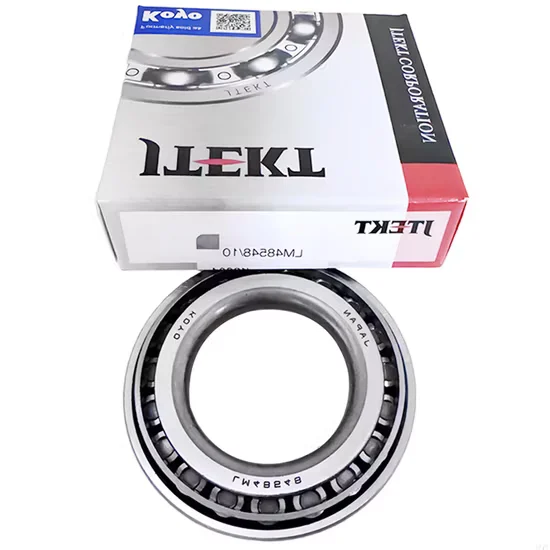
Tapered Roller Bearings
Genuine KOYO 32007 Tapered Roller Bearing Wholesale Supplier
View Product
Tapered Roller Bearings
Genuine KOYO 32006 Taper Roller Bearing Wholesale Supplier
View Product
Cylindrical Roller Bearings
Koyo NSK N408e Cylindrical Roller Bearing Genuine Wholesale Supplier
View Product
Cylindrical Roller Bearings
Koyo N2305e Cylindrical Roller Bearing Genuine Wholesale Supplier
View ProductKeep reading
More bearing selection guides for repair shops
Practical guides from KOYO Bearing Supplier on identifying Koyo / JTEKT bearings for farm machinery, construction equipment and power transmission repairs.
 Installation & Maintenance
· 6 min read
Auto Bearing Jobs Workshop Checklist: Wholesale Supplier
Prevent premature auto bearing failure with a standardized auto bearing installation checklist that addresses critical storage, inspection, and mounting protocols. Verify rotational smoothness, maintain…
Read the Guide Installation & Maintenance
· 7 min read
Genuine Bearing Supplier for Garage Tools: Wholesale Bulk & MRO
Prevent premature failures with the right garage tools for bearing jobs by addressing installation errors rather than manufacturing defects. Learn systematic removal and pressing…
Read the Guide Installation & Maintenance
· 8 min read
Transmission Bearing Noise Diagnosis: Genuine Wholesale Supplier
Master transmission bearing noise diagnosis to distinguish installation errors from clearance defects in harsh environments. Use ultrasonic detection and spectral analysis to identify root…
Read the Guide
Bearing enquiry
Send your machine details. Get a written Koyo / JTEKT quote.
KOYO Bearing Supplier quotes a single bearing position or every bearing in an assembly on one enquiry, matched to your machine model and application, with model, quantity, price, lead time and quote validity in writing.
- WhatsApp+1 (702) 981-5880
- Emailinfo@koyoome.com
- Address8 Research Drive, Greenville, SC 20627, USA
"When a Koyo bearing failed on a harvest machine during the season, we needed a replacement urgently. The supplier identified the correct Koyo reference, shipped same-day, and the machine was back in the field within the day."

Request a Bearing Quote
Tell us the machine and the bearing position. Photos of the markings can follow on WhatsApp.