
Koyo vs Torrington Needle Bearings: Genuine Wholesale Supplier for Bulk Orders
Identical boundary dimensions do not guarantee interchangeability.
While Koyo and Torrington needle bearings share similar basic dimensional standards, direct substitution without verifying drawn cup tolerances, cage structures, and internal clearances frequently leads to premature mechanical failure. Successful cross-referencing requires a technical audit of internal geometry rather than relying solely on part number charts.
I still remember the humidity in the warehouse that day when a container from South America arrived for inspection. The client, a major agricultural machinery distributor, had switched from Torrington to Koyo needle bearings based on a simple dimension check. On paper, the outer diameter and width matched perfectly. In practice, the cages jammed within months of operation. The issue was not the brand quality—both are premium manufacturers—but the subtle differences in drawn cup wall thickness and cage retention methods. This incident shifted my focus from mere part-number matching to deep structural verification. Many buyers assume that because both brands adhere to ISO metric standards, they are drop-in replacements. This assumption ignores the proprietary engineering nuances that define performance under heavy load.
Understanding these distinctions is critical for procurement managers and MRO operators who aim to optimize costs without compromising equipment uptime. The following analysis breaks down the structural variances and provides a framework for safe cross-brand sourcing.
Are Koyo and Torrington Needle Bearings Truly Interchangeable?
Basic dimensional compatibility does not equate to functional interchangeability.
The core argument for interchangeability usually rests on boundary dimensions: bore diameter, outside diameter, and width. Both Koyo and Torrington manufacture bearings that comply with international dimensional standards. However, the internal architecture tells a different story. Direct substitution often fails because the drawn cup tolerance bands differ between the two manufacturers. A bearing that fits snugly in a housing designed for Torrington may spin loosely if replaced with a Koyo unit, or vice versa, due to minute variations in the outer ring’s external diameter tolerance.
Consider the case of a heavy equipment repair shop in Central Asia. They replaced worn Torrington bearings with Koyo equivalents in a gearbox assembly. The drawn cup thickness variance, though within acceptable individual standards, caused the outer ring to spin in the housing under high torque. This led to significant downtime and housing damage. The lesson here is that interchangeability is not a binary yes or no; it is a conditional status dependent on the specific application’s tolerance requirements.
When evaluating Koyo vs Torrington needle bearings, one must look beyond the catalog numbers. The roller profile crowning and the end treatment of the needles also vary. These factors influence load distribution and stress concentration. Ignoring them can result in edge loading and early fatigue failure. For distributors stocking multi-brand inventories, this means that a simple cross-reference list is insufficient. Technical datasheets must be compared side-by-side to ensure that the internal clearance and fit classes align with the original equipment manufacturer’s specifications.
What Are the Key Structural Differences Between Koyo and Torrington?
Torrington and Koyo differ significantly in drawn cup thickness, cage retention methods, and roller profile design.
To understand why failures occur during cross-brand substitution, we must dissect the structural components. The drawn cup, which serves as the outer ring in many needle bearing applications, is formed from thin sheet metal. The manufacturing process affects the wall thickness consistency and the hardness profile of the cup. Torrington, now part of Timken, has historically utilized specific forming techniques that result in a distinct cup rigidity. Koyo, part of JTEKT Corporation, employs different stamping and heat-treatment protocols. These process differences lead to variations in how the bearing reacts to housing deformation and thermal expansion.
The cage structure is another critical differentiator. Cages guide the needle rollers and maintain their spacing. Some designs use stamped steel cages with specific window geometries, while others may use machined brass or polymer materials in higher-end series. The retention method—how the cage holds the rollers in place during installation and operation—varies between brands. In the earlier mentioned agricultural machinery case, the misaligned cage structure caused the rollers to skew under load, leading to jamming. This was not a material defect but a geometric incompatibility.
| Feature | Typical Characteristics | Impact on Interchangeability |
|---|---|---|
| Drawn Cup Wall Thickness | Varies by manufacturer process | Affects housing fit and heat dissipation |
| Cage Retention Method | Stamped vs. Machined, Window Geometry | Influences roller guidance and lubrication flow |
| Roller Profile Crowning | Specific radius and length ratios | Determines load distribution and edge stress |
| Internal Clearance | Standard, C3, C4 options | Must match original design for thermal expansion |
Another subtle difference lies in the radial internal clearance. Bearings are available in standard clearance or increased clearance classes like C3 or C4. If a machine was designed with Torrington bearings having a specific C3 clearance, replacing them with Koyo bearings that have a different baseline clearance can lead to either excessive play or pre-loading. Both scenarios are detrimental. Excessive play causes vibration and noise, while pre-loading generates heat and rapid wear. Therefore, when comparing Koyo vs Torrington needle bearings, verifying the clearance class is as important as checking the dimensions.
How to Avoid Catastrophic Failures When Cross-Referencing Brands?
Always verify radial clearance, housing fit tolerances, and cage compatibility rather than relying solely on part number cross-reference charts.
Avoiding failure requires a systematic approach to cross-referencing. The first step is to obtain the original bearing’s full specification, not just the part number. This includes the internal clearance class, cage type, and any special coatings or treatments. Next, compare these specifications with the proposed alternative. Do not assume that a “standard” bearing from one brand matches the “standard” of another. Standards provide a range, and manufacturers often operate at different points within that range.
A common mistake is ignoring the housing condition. If the housing has worn slightly to accommodate the original bearing’s tolerance band, a new bearing from a different brand with a tighter tolerance band may not fit. Conversely, a looser tolerance band may lead to spinning. In a recent project for a mining client, we encountered mixed batch consolidation issues. The distributor had sourced bearings from multiple suppliers without verifying radial clearance differences. This led to a high ratio of warranty claims and increased after-sales costs. The solution was to implement a strict verification protocol where each batch was checked against the original equipment specifications before shipment.
| Risk Factor | Potential Consequence | Mitigation Strategy |
|---|---|---|
| Unverified Radial Clearance | Pre-loading or Excessive Play | Check clearance class (C0, C3, C4) explicitly |
| Housing Fit Tolerance Mismatch | Outer Ring Spinning or Difficult Installation | Measure housing bore and compare with bearing OD tolerance |
| Cage Incompatibility | Roller Jamming or Poor Lubrication | Verify cage material and window geometry |
| Load Rating Discrepancy | Premature Fatigue Failure | Compare dynamic and static load ratings |
It is also essential to consider the lubrication requirements. Different cage materials and surface finishes may interact differently with various lubricants. A grease that works well with a stamped steel cage might not provide adequate protection for a different cage design. Consulting with technical experts who understand these nuances can prevent costly mistakes. For large-scale procurements, requesting sample units for bench testing before full deployment is a prudent strategy. This allows for real-world validation of fit and function under controlled conditions.
Which Brand Should You Choose for Specific Industrial Applications?
Selection depends on specific load profiles, space constraints, and whether the application demands metric or inch-series precision.
Choosing between Koyo and Torrington is not about declaring one brand superior to the other. Both are reputable manufacturers with extensive histories in the bearing industry. The choice should be driven by the specific requirements of the application. For automotive applications where space is at a premium and high-speed performance is critical, the specific roller profiling of one brand might offer an advantage. In heavy industrial settings like mining or construction, where shock loads are common, the robustness of the drawn cup and the cage design become paramount.
For regional distributors and MRO operators, the decision often involves balancing availability and cost. However, cost savings from switching brands can be quickly erased by the expenses associated with premature failure. A mid-six-figure loss in downtime and replacement parts far outweighs the initial procurement savings. Therefore, the focus should be on total cost of ownership rather than just unit price.
In our experience serving clients across multiple regions, we have found that successful cross-brand substitution requires more than just a product swap. It demands a holistic approach that includes technical consultation and supply chain traceability. We provide one-stop cross-brand equivalent consultation services, helping clients verify tolerances and ensuring that mixed-brand consolidations meet strict quality standards. This support is crucial for maintaining equipment uptime and optimizing procurement strategies.
When sourcing Koyo vs Torrington needle bearings, it is vital to work with suppliers who understand these technical intricacies. A genuine wholesale supplier for bulk orders should offer more than just inventory. They should provide the technical expertise needed to navigate the complexities of cross-brand equivalence. This includes access to detailed datasheets, technical support for model selection, and assurance of product authenticity. By prioritizing technical verification and reliable sourcing, businesses can mitigate risks and achieve long-term operational efficiency.
Conclusion
Dimensional similarity is not a substitute for technical compatibility.
Successful substitution of Koyo and Torrington needle bearings requires rigorous verification of internal geometries, clearances, and cage structures. Relying solely on part number cross-references invites mechanical failure and increased operational costs. Prioritize technical due diligence and partner with suppliers who offer comprehensive verification support to ensure reliability and longevity in your industrial applications.
Mentioned in this article
Koyo / JTEKT bearings from this guide
These are the Koyo / JTEKT bearing types discussed above. Open any product to check its details, or quote it together with the rest of your repair.
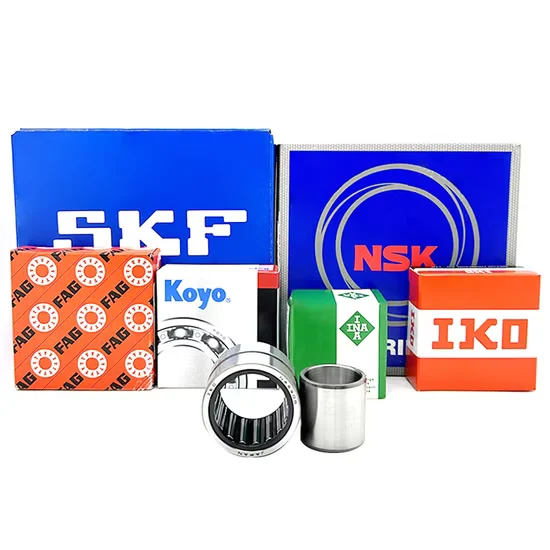
Needle Roller Bearings
Koyo RNAV4903 RNAV4904 RNAV4905 RNAV4906 RNAV4907 Needle Roller Bearings
View Product
Cylindrical Roller Bearings
Koyo NSK N408e Cylindrical Roller Bearing Genuine Wholesale Supplier
View Product
Cylindrical Roller Bearings
Koyo N2305e Cylindrical Roller Bearing Genuine Wholesale Supplier
View Product
Tapered Roller Bearings
BDL 30204 Tapered Roller Bearing Genuine Wholesale Supplier
View ProductKeep reading
More bearing selection guides for repair shops
Practical guides from KOYO Bearing Supplier on identifying Koyo / JTEKT bearings for farm machinery, construction equipment and power transmission repairs.
 Brands & Alternatives
· 7 min read
Koyo Automotive Bearings Wholesale Supplier for Global Bulk Orders
Master global sourcing of Koyo automotive bearings by solving mixed-brand customs risks and verifying authenticity beyond packaging. Learn to validate technical specs, select reliable…
Read the Guide Brands & Alternatives
· 6 min read
Premium vs Economy Motorcycle Bearings: Wholesale Supplier for Bulk Orders
Choosing between premium vs economy motorcycle bearings requires analyzing total cost of ownership rather than just upfront price. Economy options often fail under heavy…
Read the Guide Brands & Alternatives
· 8 min read
OE Koyo vs Aftermarket Box: Differences for Wholesale Buyers
Understand the critical OE Koyo vs Aftermarket Box differences to avoid severe customs delays and terminal rejections in strict markets. Original packaging features holographic…
Read the Guide
Bearing enquiry
Send your machine details. Get a written Koyo / JTEKT quote.
KOYO Bearing Supplier quotes a single bearing position or every bearing in an assembly on one enquiry, matched to your machine model and application, with model, quantity, price, lead time and quote validity in writing.
- WhatsApp+1 (702) 981-5880
- Emailinfo@koyoome.com
- Address8 Research Drive, Greenville, SC 20627, USA
"When a Koyo bearing failed on a harvest machine during the season, we needed a replacement urgently. The supplier identified the correct Koyo reference, shipped same-day, and the machine was back in the field within the day."

Request a Bearing Quote
Tell us the machine and the bearing position. Photos of the markings can follow on WhatsApp.