
Koyo vs NTN Auto Wheel Bearings: Genuine Wholesale Supplier
Visual similarity does not equal interchangeability.
Selecting between Koyo and NTN wheel bearings requires matching specific internal clearance codes to the vehicle model and verifying distinct packaging seal formats to prevent aftermarket rejection. Mismatched clearance causes installation noise, while ignored packaging details trigger buyer disputes.
I still recall the humidity in the Tunisian port warehouse. A container I had consolidated for a North African distributor sat open, revealing rows of hub units. The client was furious. He had ordered Koyo and NTN bearings for the same fleet of commercial vehicles, assuming the Japanese brands were identical substitutes. They were not. The repair shops rejected the NTN units because the outer packaging seals differed from what they expected based on previous Koyo shipments. Worse, the internal clearance selected for the high-temperature desert climate was incorrect for the specific NTN design variant, leading to immediate noise upon installation. This was not a quality failure; it was a specification mismatch. That incident reshaped how I approach every inquiry for Koyo vs NTN wheel bearings. It is not about which brand is better, but which brand fits the specific mechanical and logistical requirements of the end user.
The aftermarket is littered with such avoidable errors. Distributors often treat these premium Japanese brands as commodities, ignoring the nuanced engineering differences that define their performance. Understanding these distinctions is critical for anyone sourcing Koyo vs NTN wheel bearings for resale or fleet maintenance.
What are the core spec differences between Koyo and NTN?
Internal clearance and seal design vary strictly by model, not just by brand.
Many buyers assume that a Koyo bearing and an NTN bearing with the same part number are functionally identical. While they may share dimensional standards, their internal architectures often differ. The most critical distinction lies in internal clearance. Both manufacturers offer standard clearances, but their interpretation of optimal clearance for specific automotive applications can diverge. For instance, a bearing designed for a high-speed European sedan might require a different preload strategy than one intended for a heavy-duty pickup truck in Southeast Asia.
When comparing Koyo vs NTN wheel bearings, you must look beyond the outer diameter. The seal design is another major differentiator. Koyo often utilizes specific rubber compounds and lip configurations optimized for low friction, while NTN may prioritize robustness against contamination in their seal geometry for certain off-road applications. These differences are not visible to the naked eye until the unit is installed or tested under load.
| Feature | Koyo Approach | NTN Approach | Sourcing Implication |
|---|---|---|---|
| Internal Clearance | Model-specific optimization, often tighter for passenger cars | Varied by series, some lines favor wider clearance for durability | Must verify C3/C4 codes per vehicle manual |
| Seal Design | Low-friction lip configurations common | Robust contamination resistance in heavy-duty lines | Check compatibility with local road conditions |
| Load Rating | High precision for OEM-style fitment | Strong focus on impact resistance in aftermarket lines | Match to vehicle usage profile (city vs. off-road) |
A distributor in Latin America once reported a spike in returns for a specific SUV model. The issue was not defectiveness but noise. The bearings supplied had standard clearance, but the vehicle’s hub assembly design required a specific preloaded setup that one brand provided as default while the other did not. By switching to the brand that matched the OEM clearance specification, the returns dropped noticeably. This highlights why asking for the exact vehicle model before quoting is essential when dealing with Koyo vs NTN wheel bearings.
How do packaging details affect aftermarket acceptance?
Distinct seal formats and box designs require strict verification to avoid buyer rejection.
In the global aftermarket, perception often drives acceptance. Repair shops and end-users develop familiarity with specific packaging cues. If a box looks different, suspicion arises. Koyo and NTN have distinct packaging ecosystems. Koyo boxes often feature specific holographic labels and color schemes that vary by region, while NTN uses its own unique sealing tapes and batch code placements.
I have seen entire shipments held up because the distributor did not inform the buyer that the packaging had been updated by the manufacturer. A repair chain in the Middle East refused a batch of NTN bearings because the security seal on the box was a different color than the previous shipment. They suspected counterfeits. In reality, it was a genuine factory update. However, the lack of prior communication led to a costly delay and a strained relationship. When sourcing Koyo vs NTN wheel bearings, you must verify the current packaging standards for the target market.
This is where pre-dispatch verification becomes non-negotiable. It is not enough to simply ship “genuine” goods. You must ensure the physical presentation matches the buyer’s expectations. For distributors mixing brands in a single container, this complexity multiplies. A mixed container of Koyo and NTN units requires careful documentation to explain any visual discrepancies in packaging to the final recipient.
Failure to address these visual details can lead to claims of counterfeit goods, even when the product is authentic. The solution is transparent communication and, if possible, providing photos of the actual batch packaging before shipment. This simple step builds trust and prevents unnecessary disputes over Koyo vs NTN wheel bearings.
Why does matching clearance prevent installation claims?
Incorrect clearance causes operational noise and premature failure, leading to massive claim costs.
The most expensive mistake in bearing distribution is not shipping a fake part, but shipping a real part with the wrong specification. Internal clearance determines how a bearing handles thermal expansion and load. If the clearance is too tight, the bearing overheats and seizes. If it is too loose, it vibrates and creates noise.
In my early days, I learned that “standard” clearance is a myth in automotive applications. Different vehicles operate under vastly different thermal and load conditions. A taxi in Cairo faces different stresses than a private car in Oslo. Koyo and NTN both offer multiple clearance options, such as C3 or C4, but they may not label them identically across all product lines. A C3 clearance from one brand might behave differently than a C3 from another due to variations in raceway geometry.
A European fleet operator once experienced a wave of wheel hub failures. The investigation revealed that the replacement bearings had been sourced without regard for the specific clearance required by the vehicle manufacturer. The bearings were genuine, but the clearance was inappropriate for the high-load, high-speed operation of the fleet. The result was a mid-six-figure loss in replacements and downtime. By implementing a strict cross-reference process that matched the vehicle’s OEM specification to the specific clearance code of the Koyo vs NTN wheel bearings, subsequent orders proceeded without issue.
This experience underscores the need for technical consultation during the sourcing phase. It is not sufficient to rely solely on part numbers. Understanding the application context ensures that the selected bearing will perform as intended, reducing the risk of costly after-sales claims.
How to source genuine Koyo and NTN reliably?
Ensure traceability and flexible consolidation to mitigate sourcing pitfalls.
Sourcing genuine Japanese bearings in a market flooded with counterfeits requires a rigorous approach. Authenticity is not just about the product; it is about the supply chain. Reliable suppliers provide complete traceability documentation, linking each batch to the manufacturer’s production facilities.
For distributors, the ability to consolidate mixed brands is a significant advantage. Instead of ordering full containers of a single brand, which ties up capital and inventory space, buyers can mix Koyo and NTN units based on local demand. This flexibility allows for better inventory management and faster response to market changes. However, mixed containers require careful handling to ensure that packaging differences do not cause confusion.
A key strategy is to work with suppliers who offer cross-brand consultation. They can help identify which brand is more suitable for specific applications or which has better availability for urgent orders. This technical support is invaluable when navigating the complexities of Koyo vs NTN wheel bearings. It transforms the supplier from a mere vendor into a strategic partner.
Moreover, verifying the supplier’s stock sources is crucial. Genuine products should come with official certificates and batch numbers that can be verified with the manufacturer. Avoid suppliers who cannot provide this level of transparency. The cost of verifying authenticity is far lower than the cost of dealing with counterfeit claims.
By focusing on traceability, flexibility, and technical support, distributors can secure a reliable supply of high-quality bearings. This approach minimizes risk and maximizes customer satisfaction, ensuring long-term business stability.
Conclusion
Precision in specification and verification prevents aftermarket disasters.
Choosing between Koyo and NTN is not a matter of brand loyalty but of technical fit. Matching internal clearance to vehicle requirements and verifying packaging details are essential steps to avoid costly claims. By prioritizing traceability and technical consultation, distributors can navigate the complexities of Koyo vs NTN wheel bearings with confidence.
Mentioned in this article
Koyo / JTEKT bearings from this guide
These are the Koyo / JTEKT bearing types discussed above. Open any product to check its details, or quote it together with the rest of your repair.
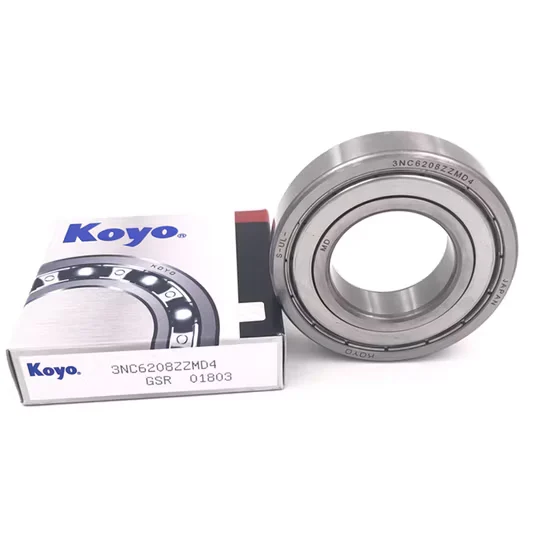
Deep Groove Ball Bearings
NTN 6016-2RS/Z2 Z3 Deep Groove Ball Bearing Auto Parts
View Product
Deep Groove Ball Bearings
Genuine NTN 6203-2RS Deep Groove Ball Bearing Low Vibration Auto Parts
View Product
Deep Groove Ball Bearings
NTN 61892 Deep Groove Ball Bearing for Auto Parts Machinery
View Product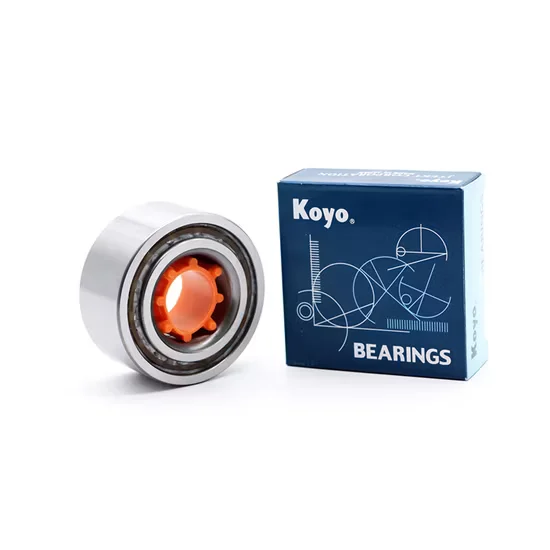
Cylindrical Roller Bearings
Koyo Bahb311316b Auto Wheel Bearing Drive Axle Hub Unit
View ProductKeep reading
More bearing selection guides for repair shops
Practical guides from KOYO Bearing Supplier on identifying Koyo / JTEKT bearings for farm machinery, construction equipment and power transmission repairs.
 Brands & Alternatives
· 7 min read
Koyo Automotive Bearings Wholesale Supplier for Global Bulk Orders
Master global sourcing of Koyo automotive bearings by solving mixed-brand customs risks and verifying authenticity beyond packaging. Learn to validate technical specs, select reliable…
Read the Guide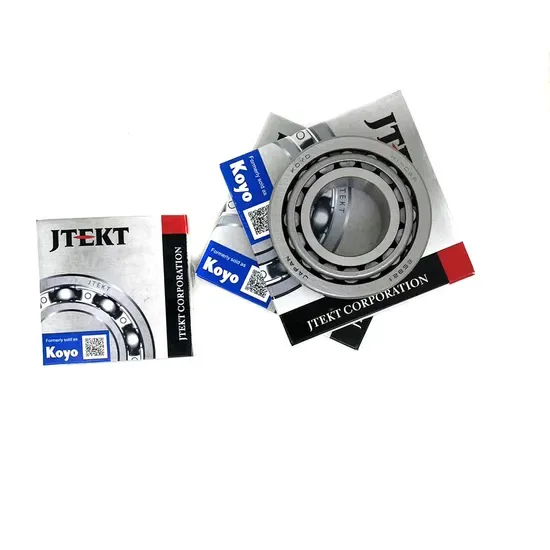 Brands & Alternatives
· 6 min read
Premium vs Economy Motorcycle Bearings: Wholesale Supplier for Bulk Orders
Choosing between premium vs economy motorcycle bearings requires analyzing total cost of ownership rather than just upfront price. Economy options often fail under heavy…
Read the Guide Brands & Alternatives
· 8 min read
OE Koyo vs Aftermarket Box: Differences for Wholesale Buyers
Understand the critical OE Koyo vs Aftermarket Box differences to avoid severe customs delays and terminal rejections in strict markets. Original packaging features holographic…
Read the Guide
Bearing enquiry
Send your machine details. Get a written Koyo / JTEKT quote.
KOYO Bearing Supplier quotes a single bearing position or every bearing in an assembly on one enquiry, matched to your machine model and application, with model, quantity, price, lead time and quote validity in writing.
- WhatsApp+1 (702) 981-5880
- Emailinfo@koyoome.com
- Address8 Research Drive, Greenville, SC 20627, USA
"When a Koyo bearing failed on a harvest machine during the season, we needed a replacement urgently. The supplier identified the correct Koyo reference, shipped same-day, and the machine was back in the field within the day."

Request a Bearing Quote
Tell us the machine and the bearing position. Photos of the markings can follow on WhatsApp.