
Koyo vs IKO Needle Bearings: Genuine Wholesale Supplier for Bulk Orders
Both brands are premium, but they solve different mechanical problems.
For high-load, heavy-shock applications like mining crushers or steel mill rollers, Koyo needle bearings generally offer superior structural stability due to their robust cage designs and material consistency. For compact, high-precision mechanisms requiring complex cam follower integration or minimal envelope dimensions, IKO is often the preferred choice. The critical risk in bulk sourcing is not choosing the wrong brand, but receiving refurbished units disguised as new stock, which compromises both brands’ engineered tolerances.
I still remember the silence of a production line in Suzhou that should have been roaring. A client had mixed Koyo and IKO components in a high-speed packaging machine, assuming “needle bearing” was a generic commodity term. Within months, the cam followers seized. The failure wasn’t due to brand inferiority, but rather a fundamental mismatch in application logic and, as we later discovered, a batch of non-genuine parts that lacked the proper heat treatment. That incident shifted my focus from simple sales to rigorous technical verification. In the global market, where supply chains are opaque, knowing the difference between Koyo vs IKO needle bearings is only half the battle; ensuring authenticity is the other.
When procurement teams ask about Koyo vs IKO needle bearings, they are usually trying to balance performance with availability. My experience on the ground, installing and replacing these components, has shown that while both Japanese manufacturers produce world-class products, their engineering philosophies diverge in ways that matter for specific industrial sectors. This guide breaks down those differences and provides a framework for sourcing genuine units in bulk.
How Do Load Capacity and Structural Design Differ Between Koyo and IKO?
Koyo typically prioritizes load-carrying capacity and shock resistance, while IKO focuses on compactness and integrated functional designs.
The core distinction lies in how each brand approaches the constraint of space versus the demand for durability. Koyo, part of the JTEKT Corporation, has a long heritage in automotive and heavy industry. Their needle roller bearings often feature reinforced cages designed to withstand significant radial loads and vibration. In contrast, IKO, under Nippon Thompson Co., Ltd., pioneered the cam follower and linear motion guide. Their needle bearings are frequently optimized for intricate mechanisms where space is at a premium, such as in robotics or precision machine tools.
To visualize this for buyers, consider the following qualitative comparison matrix. Note that exact numerical load ratings vary by specific series and size, so we focus on design intent and structural characteristics.
| Feature | Koyo Needle Bearings | IKO Needle Bearings |
|---|---|---|
| Primary Design Focus | High radial load capacity, shock resistance | Compact envelope, integrated cam/linear functions |
| Cage Construction | Robust, often stamped steel or machined brass for stability | Precision-machined, optimized for low friction in tight spaces |
| Typical Application | Automotive transmissions, agricultural machinery, heavy gearboxes | Industrial robots, printing presses, semiconductor equipment |
| Material Treatment | Standardized high-carbon chromium steel with controlled hardening | Specialized surface treatments for wear resistance in oscillating motion |
| Availability in Bulk | Widely available in standard metric sizes globally | Strong presence in specialized cam follower and linear guide combos |
A case from a Latin American mining operation illustrates this. They initially specified IKO bearings for a crusher application due to local distributor availability. However, the extreme shock loads caused premature cage deformation. Switching to Koyo equivalents, which offered a heavier cage profile for the same dimensional envelope, extended the service life noticeably. This does not mean IKO is inferior; it means the application demanded the structural philosophy Koyo employs. When evaluating Koyo vs IKO needle bearings, the load profile must dictate the brand choice, not just price or availability.
What Are the Critical Authenticity Markers for Bulk Sourcing?
Genuine needle bearing supplier China markets are flooded with refurbished and counterfeit units that mimic laser coding but fail under stress.
The biggest threat to your operation isn’t choosing between Koyo or IKO; it’s receiving fake products labeled as either. In my years dealing with imports and exports, I’ve seen batches where the outer packaging looked perfect, but the bearings inside had been cleaned, repackaged, and sold as new. These units lack the precise heat treatment and material purity of the originals.
Authenticity verification requires a multi-layered approach. First, inspect the laser marking. Genuine Koyo and IKO bearings have crisp, deeply etched codes that are uniform and resistant to smudging. Counterfeits often use shallow printing that fades or feels rough to the touch. Second, check the cage material. Originals use high-quality brass or steel with a consistent finish. Refurbished units may show signs of previous installation, such as minor scratches on the roller ends or inconsistent lubrication.
A European wind farm operator once faced repeated gearbox failures. They sourced bearings from a low-cost trader who claimed to offer genuine stock. Upon inspection, we found that the bearings were indeed marked correctly, but the internal clearance was inconsistent, indicating they were likely assembled from mixed scrap parts. The cost of downtime far exceeded the savings from the cheaper supplier.
To mitigate this risk, always request material certification and traceability documents. A reliable partner will provide batch numbers that can be verified against the manufacturer’s records. Avoid suppliers who cannot provide this documentation or who offer prices significantly below market average. When searching for a genuine needle bearing supplier China, prioritize those who invest in quality control and transparent supply chains over those who compete solely on price.
Why Does Application Specificity Matter in Brand Selection?
Using a general-purpose bearing in a specialized application leads to premature failure, regardless of brand prestige.
Many buyers treat needle bearings as interchangeable commodities. This is a dangerous assumption. Koyo and IKO have developed specialized series for specific industries. For example, IKO’s cam followers are integral to many automation systems. Substituting them with a standard Koyo needle bearing, even if the dimensions match, can lead to misalignment and increased wear because the cam follower is designed to handle combined loads and specific mounting configurations.
Conversely, in heavy-duty automotive applications, Koyo’s expertise in transmission bearings makes their products highly suitable. Their materials are optimized for the high-speed, high-temperature environment of a gearbox. Using an IKO bearing designed for static or slow-moving precision equipment in this context could result in thermal degradation and fatigue failure.
I recall a project involving a textile machine manufacturer in Southeast Asia. They were experiencing frequent stoppages due to bearing overheating. The original design used a standard needle bearing. After analyzing the operating conditions, we recommended switching to a Koyo series with enhanced heat resistance and better lubrication retention. The result was a significant reduction in maintenance frequency. This highlights the importance of matching the bearing’s engineered strengths to the application’s demands.
When comparing Koyo vs IKO needle bearings, look beyond the basic dimensions. Consider the operating environment: Is there high shock load? Is space extremely limited? Is there exposure to contaminants? These factors will guide you to the right brand and series. A knowledgeable supplier can help navigate these choices, providing technical datasheets and cross-reference guidance to ensure optimal performance.
How Can Buyers Ensure Consistent Quality in Large Orders?
Batch-to-batch consistency is critical for OEMs, and it requires strict quality assurance protocols from the supplier.
For industrial machinery manufacturers, consistency is as important as initial quality. A bearing that works perfectly in one batch but fails in the next can disrupt entire production lines. This is why sourcing from a partner with robust quality control is essential. Look for suppliers who perform incoming inspections on every batch, checking dimensions, hardness, and surface finish.
Storage conditions also play a vital role. Bearings are sensitive to humidity and temperature fluctuations. A professional supplier will maintain climate-controlled warehouses to prevent corrosion before the product reaches the customer. Ask potential partners about their storage practices and inventory turnover rates. High turnover ensures fresher stock, reducing the risk of degradation from long-term storage.
Additionally, consider the supplier’s ability to handle mixed-brand orders. Many projects require a combination of Koyo, IKO, and other brands. A capable supplier can consolidate these into a single shipment, simplifying logistics and reducing customs complexity. This service is particularly valuable for MRO operations that need to replenish diverse spare parts quickly.
By focusing on these operational details, buyers can secure a reliable supply chain that supports their long-term business goals. The goal is not just to buy bearings, but to partner with a supplier who understands the technical and logistical challenges of your industry.
Conclusion
Selecting between Koyo and IKO requires aligning their distinct engineering strengths with your specific mechanical demands.
Koyo excels in heavy-load, high-shock environments, while IKO dominates in compact, precision-focused applications. However, the most critical factor for success is ensuring the authenticity and consistency of the products you source. By prioritizing verified suppliers, demanding traceability, and understanding the technical nuances of each brand, you can minimize downtime and maximize operational efficiency. Trust your technical judgment, verify your supply chain, and choose the partner that supports your long-term reliability.
Mentioned in this article
Koyo / JTEKT bearings from this guide
These are the Koyo / JTEKT bearing types discussed above. Open any product to check its details, or quote it together with the rest of your repair.
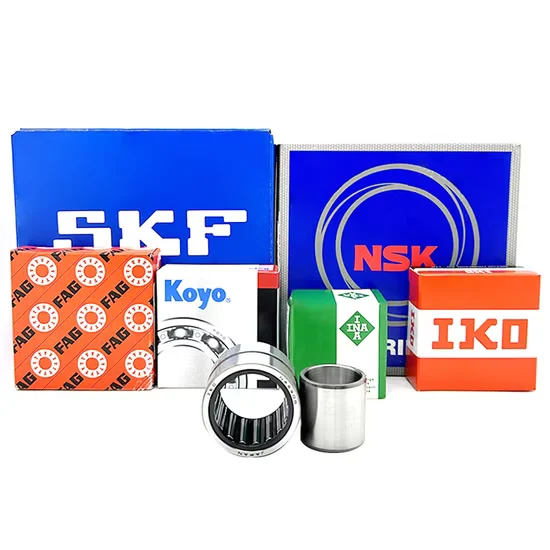
Needle Roller Bearings
Koyo RNAV4903 RNAV4904 RNAV4905 RNAV4906 RNAV4907 Needle Roller Bearings
View Product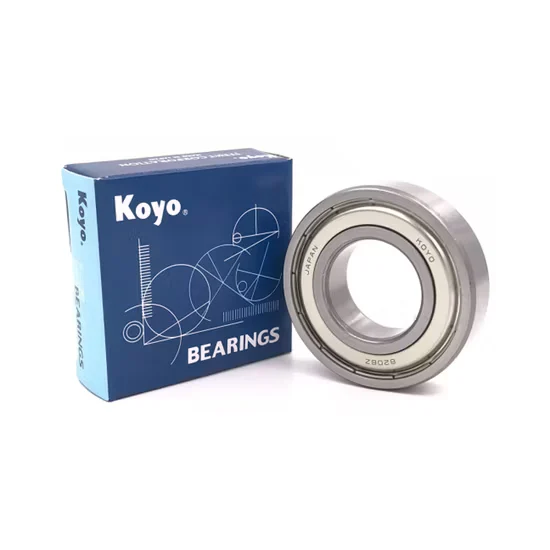
Deep Groove Ball Bearings
16003 Deep Groove Ball Bearing Zz 2RS DDU NTN NSK IKO Koyo
View Product
Deep Groove Ball Bearings
16004 Zz 2RS DDU Deep Groove Ball Bearing NTN NSK IKO Koyo Wholesale
View Product
Cylindrical Roller Bearings
Koyo NSK N408e Cylindrical Roller Bearing Genuine Wholesale Supplier
View ProductKeep reading
More bearing selection guides for repair shops
Practical guides from KOYO Bearing Supplier on identifying Koyo / JTEKT bearings for farm machinery, construction equipment and power transmission repairs.
 Brands & Alternatives
· 7 min read
Koyo Automotive Bearings Wholesale Supplier for Global Bulk Orders
Master global sourcing of Koyo automotive bearings by solving mixed-brand customs risks and verifying authenticity beyond packaging. Learn to validate technical specs, select reliable…
Read the Guide Brands & Alternatives
· 6 min read
Premium vs Economy Motorcycle Bearings: Wholesale Supplier for Bulk Orders
Choosing between premium vs economy motorcycle bearings requires analyzing total cost of ownership rather than just upfront price. Economy options often fail under heavy…
Read the Guide Brands & Alternatives
· 8 min read
OE Koyo vs Aftermarket Box: Differences for Wholesale Buyers
Understand the critical OE Koyo vs Aftermarket Box differences to avoid severe customs delays and terminal rejections in strict markets. Original packaging features holographic…
Read the Guide
Bearing enquiry
Send your machine details. Get a written Koyo / JTEKT quote.
KOYO Bearing Supplier quotes a single bearing position or every bearing in an assembly on one enquiry, matched to your machine model and application, with model, quantity, price, lead time and quote validity in writing.
- WhatsApp+1 (702) 981-5880
- Emailinfo@koyoome.com
- Address8 Research Drive, Greenville, SC 20627, USA
"When a Koyo bearing failed on a harvest machine during the season, we needed a replacement urgently. The supplier identified the correct Koyo reference, shipped same-day, and the machine was back in the field within the day."

Request a Bearing Quote
Tell us the machine and the bearing position. Photos of the markings can follow on WhatsApp.