
Koyo vs Exedy Release Bearings Wholesale Supplier
Most buyers assume release bearings are universally interchangeable commodity parts.
Koyo and Exedy release bearings serve fundamentally different OEM ecosystems; substituting them without matching thermal and load specifications leads to premature failure in heavy-duty conditions. Koyo excels in pure radial and axial load dynamics, while Exedy integrates closely with clutch cover assemblies. For aftermarket distributors and fleet MROs, understanding this distinction is critical for preventing costly returns and ensuring vehicle uptime.
I still remember the heated phone call from a parts distributor in Lagos. He had stocked a container of standard-spec bearings for a fleet of heavy-duty trucks operating in congested urban routes. Within weeks, his phones were ringing off the hook with complaints of seized clutches. When I visited his warehouse, the smell of burnt friction material was unmistakable. He had substituted a Koyo unit for an application originally designed for an Exedy-integrated system, ignoring the specific thermal thresholds required for prolonged idle times in traffic. That mistake cost him not just the freight, but his reputation with local fleet operators. It was a harsh lesson in why generic cross-referencing fails when engineering tolerances diverge.
Understanding these nuances separates a reliable supplier from a mere box mover. Let us dissect the technical realities behind these two major brands.
What are the core design differences between Koyo and Exedy release bearings?
Koyo focuses on pure bearing dynamics, whereas Exedy prioritizes system integration.
The fundamental divergence lies in their engineering philosophy. Koyo, as a dedicated bearing manufacturer, designs its release bearings to withstand extreme radial and axial loads with high precision. Their strength is in the metallurgy and the geometric accuracy of the rolling elements. In contrast, Exedy is primarily a clutch system manufacturer. Their release bearings are often engineered as part of a holistic clutch kit, meaning the internal clearances and travel distances are optimized specifically for their own pressure plates and cover assemblies.
| Design Feature | Koyo Approach | Exedy Approach |
|---|---|---|
| Primary Engineering Focus | Bearing dynamic load capacity | Clutch system integration |
| Internal Clearance | Optimized for standalone durability | Matched to specific clutch fork travel |
| Material Heat Treatment | Standardized high-grade steel protocols | System-specific thermal resilience |
| OEM Ecosystem | Broad multi-brand compatibility | Strong tie to specific clutch assemblies |
This difference becomes critical during replacement. A mechanic might find that a Koyo bearing fits physically into an Exedy-designed housing, but the internal clearance may not accommodate the slight variances in clutch fork movement. Over time, this mismatch causes abnormal friction. I have seen countless cases where the bearing did not fail due to wear, but because the subtle misalignment generated excess heat that the lubricant could not dissipate.
For a wholesaler, this means you cannot simply swap part numbers based on outer diameter alone. You must verify whether the original equipment manufacturer (OEM) specified a bearing designed for independent load handling or one tuned for a specific clutch assembly. Ignoring this leads to the kind of premature failures that erode customer trust.
How do thermal and load specs differ in heavy-duty vs light-duty applications?
Heavy-duty applications demand higher thermal thresholds to withstand prolonged clutch slip.
In light commercial vehicles, the primary stressor is frequency of engagement. However, in heavy-duty trucks, especially those navigating congested urban centers or steep gradients, the release bearing faces sustained thermal loads. The bearing must endure the heat generated by clutch drag during slow-moving traffic. This is where the specification gap widens significantly.
Standard light-duty bearings often lack the thermal endurance required for these conditions. When a heavy-duty truck idles in traffic with the clutch partially engaged, the temperature at the bearing interface can spike dramatically. If the bearing’s grease formulation or seal material is not rated for these elevated temperatures, it will degrade rapidly.
I recall a case involving a fleet operator in Southeast Asia. They attempted to cut costs by using light-duty spec bearings in their medium-tonage delivery trucks. The result was a surge in warranty claims. The bearings were not failing from mechanical overload but from thermal breakdown. The grease had carbonized, leading to seizure. Switching to heavy-duty spec bearings, which feature enhanced thermal stability and robust sealing, resolved the issue. The replacement cycle extended noticeably, and the total cost of ownership dropped despite the higher initial unit price.
| Application Scenario | Thermal Stress Level | Recommended Spec Type |
|---|---|---|
| Urban Delivery (Stop-Start) | High | Heavy-Duty Thermal Resistant |
| Highway Long-Haul | Moderate | Standard Heavy-Duty |
| Light Commercial | Low to Moderate | Standard Light-Duty |
| Off-Road Construction | High (Vibration + Heat) | Reinforced Sealed Heavy-Duty |
Selecting the correct spec is not about over-engineering; it is about matching the component to the operational reality. For distributors, stocking heavy-duty variants for regions with intense traffic or challenging terrain is a strategic necessity, not an upsell.
Why do cross-brand substitutions lead to premature failure?
Mismatched internal clearances and clutch fork travel tolerances cause abnormal friction and overheating.
The most common misconception in the aftermarket is that if it fits, it works. This is dangerously incorrect for release bearings. The interaction between the bearing, the clutch fork, and the pressure plate finger is a precise mechanical dance. Each millimeter of travel matters.
When a bearing from one brand is substituted for another without verifying the travel tolerance, two failure modes emerge. First, if the bearing is too tight, it may not fully disengage the clutch, leading to drag and heat buildup. Second, if it is too loose, it can rattle or fail to apply sufficient force to the pressure plate, causing slippage. Both scenarios generate excessive heat, which is the primary enemy of bearing longevity.
A European repair group once reported a batch of failures in their vocational training fleet. Upon investigation, we found they had used a generic cross-reference that matched the bolt pattern but ignored the height differential of the bearing collar. This small discrepancy altered the leverage point on the clutch fork. The drivers reported a “spongy” pedal feel before the bearings eventually seized. The failure was not due to poor quality but to geometric incompatibility.
To prevent this, always check the traceability documentation. Verify that the alternative bearing matches the exact OEM clutch system specs, not just the physical dimensions. Look for certifications that confirm the bearing has been tested for the specific axial load and travel requirements of the target vehicle platform.
How to verify authenticity and select the right alternative?
Check traceability docs and match exact OEM clutch system specs rather than just physical dimensions.
In a market flooded with counterfeits, verification is paramount. Genuine Koyo and Exedy products come with complete traceability documentation. This includes batch numbers, material certificates, and quality assurance records. Distributors should insist on these documents from their suppliers. Without them, you are gambling with your clients’ reputations.
When selecting an alternative, do not rely solely on part number cross-references provided by third-party databases. These lists are often incomplete or outdated. Instead, consult the technical datasheets provided by the manufacturer. Look for details on internal clearance codes, such as C3 or C4, which indicate the bearing’s ability to handle thermal expansion.
I advise my partners to maintain a mixed-batch consolidation strategy. By sourcing genuine products from a reliable global supplier, you can ensure that every unit in your inventory meets the required standards. This approach allows you to offer your customers the flexibility of choosing between premium OEM-matched parts and cost-effective alternatives, backed by the assurance of authenticity.
| Verification Step | Action Required | Purpose |
|---|---|---|
| Documentation Check | Request batch traceability records | Confirm genuine origin |
| Spec Matching | Compare axial load and travel tolerance | Ensure mechanical compatibility |
| Visual Inspection | Check for proper branding and packaging | Identify obvious counterfeits |
| Technical Consultation | Engage supplier for cross-reference validation | Avoid database errors |
This rigorous approach minimizes the risk of failure and builds long-term trust with your customers. It transforms your role from a simple vendor to a technical partner who understands the intricacies of automotive systems.
Conclusion
Precision matters more than price in clutch system maintenance.
Koyo and Exedy release bearings are engineered for distinct operational paradigms. Substituting them without regard for thermal and load specifications invites failure. By prioritizing technical compatibility and authentic sourcing, distributors can protect their clients from costly downtime and build a reputation for reliability. Always verify specs, demand traceability, and choose solutions that match the real-world demands of the vehicle.
Mentioned in this article
Koyo / JTEKT bearings from this guide
These are the Koyo / JTEKT bearing types discussed above. Open any product to check its details, or quote it together with the rest of your repair.
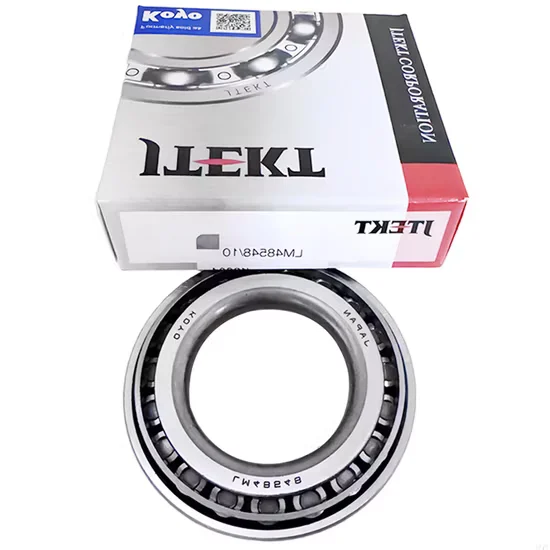
Tapered Roller Bearings
Genuine KOYO 32007 Tapered Roller Bearing Wholesale Supplier
View Product
Tapered Roller Bearings
Genuine KOYO 32006 Taper Roller Bearing Wholesale Supplier
View Product
Cylindrical Roller Bearings
Koyo NSK N408e Cylindrical Roller Bearing Genuine Wholesale Supplier
View Product
Cylindrical Roller Bearings
Koyo N2305e Cylindrical Roller Bearing Genuine Wholesale Supplier
View ProductKeep reading
More bearing selection guides for repair shops
Practical guides from KOYO Bearing Supplier on identifying Koyo / JTEKT bearings for farm machinery, construction equipment and power transmission repairs.
 Brands & Alternatives
· 7 min read
Koyo Automotive Bearings Wholesale Supplier for Global Bulk Orders
Master global sourcing of Koyo automotive bearings by solving mixed-brand customs risks and verifying authenticity beyond packaging. Learn to validate technical specs, select reliable…
Read the Guide Brands & Alternatives
· 6 min read
Premium vs Economy Motorcycle Bearings: Wholesale Supplier for Bulk Orders
Choosing between premium vs economy motorcycle bearings requires analyzing total cost of ownership rather than just upfront price. Economy options often fail under heavy…
Read the Guide Brands & Alternatives
· 8 min read
OE Koyo vs Aftermarket Box: Differences for Wholesale Buyers
Understand the critical OE Koyo vs Aftermarket Box differences to avoid severe customs delays and terminal rejections in strict markets. Original packaging features holographic…
Read the Guide
Bearing enquiry
Send your machine details. Get a written Koyo / JTEKT quote.
KOYO Bearing Supplier quotes a single bearing position or every bearing in an assembly on one enquiry, matched to your machine model and application, with model, quantity, price, lead time and quote validity in writing.
- WhatsApp+1 (702) 981-5880
- Emailinfo@koyoome.com
- Address8 Research Drive, Greenville, SC 20627, USA
"When a Koyo bearing failed on a harvest machine during the season, we needed a replacement urgently. The supplier identified the correct Koyo reference, shipped same-day, and the machine was back in the field within the day."

Request a Bearing Quote
Tell us the machine and the bearing position. Photos of the markings can follow on WhatsApp.