
Koyo Tapered Wheel Bearings for Older Cars Wholesale Supplier
Matching the original part number is often the fastest way to ruin an older vehicle’s hub assembly.
Selecting the correct Koyo tapered wheel bearings for older cars requires prioritizing internal clearance classes that accommodate chassis wear and harsh operating conditions, rather than strictly adhering to obsolete OEM specifications. For aging fleets, standard CN clearance frequently leads to premature thermal failure, while adjusted C3 clearance or specific sealing configurations provide the necessary tolerance for degraded mating surfaces.
Walking through the dusty aisles of the auto parts district in District 5, Ho Chi Minh City, the smell of old grease and rubber is a constant reminder of why theoretical specs often fail in the real world. A local workshop owner recently slammed a box of returned bearings on my counter. These were genuine units, sourced correctly by part number, yet they had seized after less than two thousand kilometers on a fleet of aging pickup trucks. The issue was not counterfeit goods; it was a mismatch between the bearing’s internal geometry and the worn state of the vintage hubs. In Southeast Asia, where roads can be unforgiving and maintenance intervals are often extended due to operational demands, the standard approach to replacement does not work for legacy vehicles.
This reality shifts the focus from simple part matching to technical selection. When dealing with older cars, the surrounding hardware—the hub, the spindle, and the seal seating—has changed dimensionally over years of use. Ignoring these changes while installing brand-new, tight-tolerance components creates a conflict that generates excessive heat. Understanding this dynamic is essential for any distributor or repair specialist managing inventory for aging automotive fleets.
Why Do Standard Koyo Bearings Fail in Older Cars?
Worn hubs and inconsistent road surfaces demand specific clearance adjustments that standard replacements do not provide.
The primary reason for premature failure in older vehicles is not the quality of the bearing itself, but the interaction between the new bearing and the aged housing. Over time, the bore of the wheel hub elongates slightly, and the spindle may develop minor surface irregularities. When a new Koyo tapered wheel bearings unit with standard internal clearance is pressed into a worn hub, the outer ring can distort. This distortion reduces the effective internal clearance, causing the rollers to bind under load.
In regions with rough terrain, the impact loads are significantly higher than those encountered on paved highways. A bearing that is already preloaded due to housing distortion has no room to absorb these shocks. The result is rapid temperature rise, lubricant breakdown, and eventual seizure. This is particularly common in commercial vehicles like vans and pickups that carry heavy loads over unpaved roads. The failure mode is often mistaken for a manufacturing defect, but it is actually an application error.
Another critical factor is contamination. Older sealing systems are often less effective, or the sealing surfaces on the spindle are corroded. Dust and moisture enter the assembly, mixing with the grease. If the bearing clearance is too tight, there is insufficient space for the contaminated lubricant to circulate, leading to abrasive wear. Selecting Koyo tapered wheel bearings for older cars involves evaluating the condition of the entire wheel end assembly, not just the bearing kit. Without this holistic view, even the highest quality components will underperform.
How to Choose the Right Clearance for Aging Chassis?
Match CN or C3 clearance classes to the actual measured wear of the hub and spindle.
Internal clearance is the most critical specification for tapered roller bearings in worn applications. Standard bearings typically come with CN (Normal) clearance. However, for older cars with measurable hub wear, C3 (Greater than Normal) clearance is often required. The additional internal space allows the bearing to accommodate slight misalignments and thermal expansion without generating excessive preload.
Determining the correct class requires measurement. If the hub bore is within original specifications, CN clearance is appropriate. If the bore shows signs of elongation or if the vehicle operates in high-temperature environments, C3 clearance becomes necessary. It is important to note that increasing clearance is not a universal fix; too much clearance can lead to vibration and noise. The goal is to find the balance that compensates for wear without sacrificing stability.
| Condition | Recommended Clearance | Rationale |
|---|---|---|
| New or Refurbished Hub | CN (Normal) | Maintains optimal rigidity and noise performance. |
| Mild Hub Wear / High Temp | C3 (Greater than Normal) | Compensates for thermal expansion and minor misalignment. |
| Severe Hub Wear | C3 + Spacer/Shim Adjustment | Requires mechanical adjustment to restore proper preload. |
| Heavy Load / Rough Terrain | C3 | Provides margin for impact loads and housing distortion. |
A practical example involves a rural van repair shop that consolidated its inventory to handle various old models. By stocking both CN and C3 variants of popular Koyo tapered wheel bearings, the technicians could select the appropriate unit based on a quick visual and tactile inspection of the hub. This approach reduced return rates significantly because the bearings were matched to the reality of the vehicle’s condition, not just its model year.
Technicians should also consider the sealing type. For older cars, bearings with integrated seals or compatible external seals are crucial. The seal must fit the worn spindle surface effectively to keep contaminants out. If the spindle is damaged, it should be repaired or replaced before installing the new bearing, regardless of the clearance class chosen.
Koyo vs. Alternatives: Which Brand Suits Older Fleets?
Genuine Koyo bearings offer a balance of durability and availability that cheaper alternatives cannot match in harsh conditions.
When sourcing for older fleets, distributors often face the choice between premium brands like Koyo, NTN, and NSK, and lower-cost alternatives. While price is a factor, the total cost of ownership tells a different story. Cheaper bearings often use lower-grade steel or less precise manufacturing processes, resulting in inconsistent hardness and surface finish. In the demanding environment of an older car with a worn chassis, these inconsistencies lead to rapid fatigue failure.
Koyo, as part of JTEKT, maintains strict quality control standards that ensure consistent performance. The steel used in genuine Koyo tapered wheel bearings is clean and homogeneous, providing better resistance to shock loads. This is vital for older vehicles where the suspension may not absorb impacts as effectively as it did when new. Alternatives may save money upfront, but the frequency of replacement and the risk of collateral damage to hubs and spindles make them more expensive in the long run.
| Feature | Genuine Koyo | Low-Cost Alternatives | Premium Competitors (NTN/NSK) |
|---|---|---|---|
| Steel Quality | High Purity, Consistent | Variable, Often Lower Grade | High Purity, Consistent |
| Manufacturing Precision | Micron-level Control | Basic Tolerances | Micron-level Control |
| Availability | Wide Global Stock | Limited SKUs | Wide Global Stock |
| Suitability for Worn Hubs | High (with correct clearance) | Low | High (with correct clearance) |
| Cost | Competitive | Low | Higher |
A Middle East distributor once reported that switching from a budget brand to genuine Koyo for a fleet of off-road taxis doubled the service life of the wheel ends. The taxis operated in dusty, sandy conditions where sealing and material integrity were paramount. The initial investment was higher, but the reduction in downtime and parts consumption justified the switch. This experience highlights that for older cars, reliability is more valuable than unit price.
It is also worth noting that Koyo offers a wide range of cross-references for older part numbers. This makes it easier for workshops to find suitable replacements for discontinued OEM parts. When comparing brands, ensure that the alternative offers equivalent load ratings and dimensional accuracy. Never compromise on these core specifications for the sake of cost savings.
How to Source Genuine Koyo Bearings in Bulk?
Verify traceability and consolidate mixed SKUs to ensure authenticity and operational efficiency.
Sourcing genuine Koyo tapered wheel bearings for older cars requires a supplier who understands the complexities of the aftermarket. Counterfeit bearings are prevalent in many regions, and they often look identical to genuine products. The only way to ensure authenticity is to work with suppliers who provide complete traceability documentation. This includes batch numbers, origin certificates, and direct links to the manufacturer’s distribution network.
For distributors and large repair workshops, buying in bulk is essential for cost management. However, older car fleets require a diverse range of part numbers. Ordering full containers of a single SKU is impractical. A better approach is to work with suppliers who offer mixed-batch consolidation. This allows buyers to combine various Koyo bearing models, along with complementary brands like NTN or NSK, into a single shipment. This flexibility reduces inventory costs and ensures that the right parts are available when needed.
A European wind farm operator faced similar challenges with industrial bearings, where mixed-brand sourcing was necessary for maintenance. By consolidating orders, they reduced shipping costs and simplified customs clearance. The same principle applies to automotive parts. A supplier who can handle mixed SKUs provides a significant logistical advantage, especially for businesses serving diverse vehicle types.
Technical support is another critical aspect of sourcing. A reliable supplier should offer cross-brand equivalent model consultation. If a specific Koyo part number is unavailable, they should be able to recommend a suitable alternative from another premium brand without compromising performance. This level of expertise helps buyers make informed decisions and avoid costly mistakes. When evaluating suppliers, look for those who provide technical datasheets and application guidance, not just price quotes.
Conclusion
Proper selection and sourcing are the keys to extending the life of older vehicles.
Choosing Koyo tapered wheel bearings for older cars is not just about finding the right part number; it is about understanding the unique demands of aged chassis and harsh operating conditions. By selecting the correct clearance class and ensuring genuine quality, distributors and repair shops can significantly reduce failure rates and improve customer satisfaction. Sourcing from reputable suppliers who offer traceability and mixed-batch consolidation further enhances operational efficiency. This approach transforms a simple replacement task into a strategic maintenance solution.
Mentioned in this article
Koyo / JTEKT bearings from this guide
These are the Koyo / JTEKT bearing types discussed above. Open any product to check its details, or quote it together with the rest of your repair.
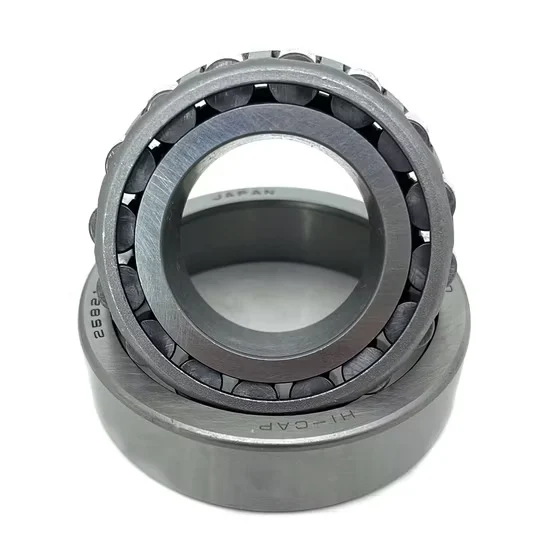
Tapered Roller Bearings
Genuine Koyo Tapered Roller Bearing 30123 30214 30215 30216 30217 for Car Wheel Hub
View Product
Tapered Roller Bearings
Koyo Tapered Roller Bearing 31313 33215 33017 33214 30313 32919 30217 33016
View Product
Railway Bearings
Genuine Koyo Tapered Roller Bearings 32019 32020 32021 32022 32024 for Railway Machinery
View Product
Tapered Roller Bearings
Genuine Koyo Tapered Roller Bearing 32212 32213 32214 32215 32216 for Fan Spare Parts
View ProductKeep reading
More bearing selection guides for repair shops
Practical guides from KOYO Bearing Supplier on identifying Koyo / JTEKT bearings for farm machinery, construction equipment and power transmission repairs.
 Buying Guide
· 8 min read
Koyo Auto Bearings Wholesale Supplier & Bulk Quote
Request a Quote for Koyo Auto Bearings that accounts for total landed cost, not just FOB price. Optimize margins through mixed-container consolidation and ensure…
Read the Guide Buying Guide · 7 min read
Koyo Auto Bearings Wholesale Supplier for Parts Stores
Stocking Koyo auto bearings requires strict verification of suffix codes and traceability to prevent costly assembly failures. Learn essential packaging checks and cross-brand alternatives…
Read the Guide Buying Guide
· 7 min read
Fake Auto Bearings: Neutral Buyer Checks Wholesale Supplier
Master Fake Auto Bearings Neutral Buyer Checks by shifting focus from packaging to internal physical inspections and traceability. Detect counterfeits through acidic rust oil…
Read the Guide
Bearing enquiry
Send your machine details. Get a written Koyo / JTEKT quote.
KOYO Bearing Supplier quotes a single bearing position or every bearing in an assembly on one enquiry, matched to your machine model and application, with model, quantity, price, lead time and quote validity in writing.
- WhatsApp+1 (702) 981-5880
- Emailinfo@koyoome.com
- Address8 Research Drive, Greenville, SC 20627, USA
"When a Koyo bearing failed on a harvest machine during the season, we needed a replacement urgently. The supplier identified the correct Koyo reference, shipped same-day, and the machine was back in the field within the day."

Request a Bearing Quote
Tell us the machine and the bearing position. Photos of the markings can follow on WhatsApp.