
Koyo Steering Bearings Column & Rack Wholesale Supplier
Matching a part number does not guarantee a fit.
Selecting Koyo steering bearings requires strict adherence to original equipment dimensional tolerances, particularly regarding spline fits, and specific application environments rather than relying on generic part numbers. A mismatch in imperial versus metric spline tolerance or confusing column axial load requirements with rack radial vibration resistance leads to immediate assembly failure or premature wear.
I still remember the humidity in Monterrey’s auto parts district when I opened that container. The client, a major distributor for Northern Mexico, had ordered what he thought was a standard batch of steering column units. On paper, the part numbers matched. In the workshop, however, the steering shaf*ufacturing defect; it was a tolerance oversight. I had failed to distinguish between the subtle imperial spline specifications common in older North American platforms and the metric standards used in newer global models. The return freight cost several times the value of the goods, a mid-six-figure loss that taught me to never trust a part number without verifying the physical interface.
This experience reshaped how I approach sourcing. For distributors and repair groups, the challenge isn’t just finding stock; it’s ensuring that the stock matches the precise mechanical reality of the vehicle platform. Whether you are stocking for high-volume aftermarket sales or supplying heavy-duty fleet repairs, understanding the mechanical distinction between column and rack applications is critical.
What are the key differences between Koyo steering column and rack bearings?
Column bearings support axial loads and steering shaft rotation, while rack bearings endure high radial loads and road-induced vibrations.
Treating these two components as interchangeable is a common error that leads to rapid failure. The operating environment for each is fundamentally different, requiring distinct internal geometries and load ratings.
Steering column bearings are primarily designed to support the rotating input shaft from the steering wheel down to the gearbox. Their main function is to handle axial loads generated by the driver’s input and minor radial loads from shaft misalignment. They often feature sealed designs to prevent dust ingress from the passenger compartment or engine bay. In contrast, rack bearings are mounted directly on the steering rack pinion or within the rack housing. They face severe radial loads from tire contact patches and constant high-frequency vibrations from road surfaces. Using a column bearing in a rack application will result in quick fatigue due to insufficient radial capacity, while using a rack bearing in a column may introduce unnecessary friction or noise.
| Feature | Steering Column Bearing | Steering Rack Bearing |
|---|---|---|
| Primary Load Type | Axial and light radial | Heavy radial and shock |
| Vibration Exposure | Low to moderate | High and continuous |
| Sealing Requirement | Dust and moisture protection | High-pressure water and debris resistance |
| Failure Mode | Binding or noise during rotation | Premature wear or pitting |
| Typical Application | Input shaft support | Pinion gear support |
A European repair group once reported a noticeable drop in replacement cycles after switching to specified rack-grade units for their off-road fleet vehicles. The standard bearings they previously used could not withstand the constant shock loading from uneven terrain.
When sourcing Koyo steering bearings, verify the load direction specified in the OEM manual. Do not assume cross-compatibility based on outer diameter alone.
Why do steering bearings fail during installation?
Spline tolerance mismatches between imperial and metric standards cause binding and immediate damage.
The most frequent cause of installation failure is not the quality of the bearing but the incompatibility of the spline fit. Many vehicle platforms, especially those with historical ties to US manufacturing, use imperial splines, while modern global platforms use metric. The difference in tooth profile and pitch is minimal to the naked eye but significant enough to prevent proper seating or cause excessive play.
Before assembly, precise dimensional verification is mandatory. This involves measuring the major and minor diameters of the spline and checking the pressure angle. A simple go/no-go gauge test can prevent costly returns. I have seen entire batches rejected because the supplier provided metric-spec bearings for a vehicle requiring imperial fits. The installer forced the bearing onto the shaft, damaging the spline teeth and compromising the structural integrity of the steering column.
- Check the spline standard: Confirm if the vehicle platform uses imperial or metric splines.
- Measure clearance: Ensure the fit is snug but allows free rotation without binding.
- Inspect for damage: Look for any nicks or deformations on the shaft before pressing the bearing.
A regional wholesaler in Southeast Asia faced a similar issue when consolidating orders for mixed-brand vehicles. Without proper cross-referencing, they shipped metric units for legacy models, leading to widespread fitment complaints.
Always request technical datasheets that specify the spline compatibility when ordering Koyo steering bearings. Do not rely solely on the part number description.
How to choose the right Koyo steering bearing for your market?
Match the bearing to the specific vehicle platform and operating environment, such as standard passenger cars versus heavy-duty off-road use.
One size does not fit all. The operating conditions of the vehicle dictate the required bearing specifications. Passenger cars in urban environments have different demands compared to heavy-duty trucks or off-road machinery.
For standard passenger vehicles, focus on noise reduction and smooth rotation. Koyo offers precision-grade bearings that minimize friction and ensure quiet operation. However, for heavy-duty fleets or off-road applications, prioritize durability and sealing. These environments generate higher temperatures and expose components to mud, water, and debris. Bearings with enhanced sealing technologies and higher load capacities are essential to prevent premature failure.
Consider the following factors when selecting:
- Vehicle Type: Passenger car, light truck, or heavy commercial vehicle.
- Operating Environment: Urban, highway, or off-road.
- Load Requirements: Standard axial/radial loads or high-shock conditions.
- Sealing Needs: Basic dust protection or high-pressure water resistance.
A heavy-duty fleet repair shop in Brazil reported that standard rack bearings failed frequently in their off-road mining trucks. By switching to bearings designed for high-vibration and heavy-load conditions, they extended the service life meaningfully.
Consult with suppliers who can provide application-specific recommendations rather than just part number matches.
Where to source genuine Koyo steering bearings globally?
Partner with full-range suppliers offering traceability, mixed-brand consolidation, and technical cross-reference support.
Sourcing genuine parts requires more than just finding a low price. It demands a supply chain that ensures authenticity and provides technical backing. Counterfeit or substandard bearings can lead to safety hazards and reputational damage for distributors.
Look for suppliers who maintain massive spot inventory and offer complete traceability documentation. This ensures that every unit can be verified as genuine Koyo product. Additionally, the ability to consolidate mixed-brand orders is crucial for wholesalers who serve diverse markets. Technical support for cross-referencing part numbers and verifying specifications adds significant value, reducing the risk of fitment errors.
- Traceability: Ensure each batch comes with original manufacturer documentation.
- Inventory Depth: Choose suppliers with extensive stock of both common and rare SKUs.
- Technical Support: Access to engineers who can verify spline fits and load ratings.
- Consolidation: Ability to mix Koyo products with other brands like SKF, NSK, or TIMKEN in one shipment.
A Latin American distributor successfully reduced their return rate by partnering with a supplier who provided detailed technical cross-reference services. This allowed them to accurately match bearings to specific vehicle platforms, avoiding the spline tolerance issues that had previously plagued their operations.
Verify the supplier’s capability to handle complex sourcing requirements before placing large orders.
Conclusion
Precision in specification prevents failure in application.
Selecting the correct Koyo steering bearings involves understanding the distinct mechanical roles of column and rack units and verifying spline tolerances rigorously. Sourcing from partners who provide genuine products with full traceability and technical support ensures reliability for your customers. Avoid generic substitutions and prioritize exact fitment to maintain safety and performance.
Mentioned in this article
Koyo / JTEKT bearings from this guide
These are the Koyo / JTEKT bearing types discussed above. Open any product to check its details, or quote it together with the rest of your repair.
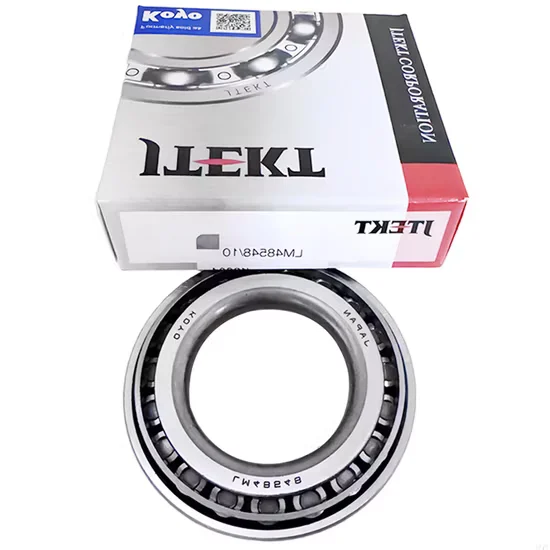
Tapered Roller Bearings
Genuine KOYO 32007 Tapered Roller Bearing Wholesale Supplier
View Product
Tapered Roller Bearings
Genuine KOYO 32006 Taper Roller Bearing Wholesale Supplier
View Product
Cylindrical Roller Bearings
Koyo NSK N408e Cylindrical Roller Bearing Genuine Wholesale Supplier
View Product
Cylindrical Roller Bearings
Koyo N2305e Cylindrical Roller Bearing Genuine Wholesale Supplier
View ProductKeep reading
More bearing selection guides for repair shops
Practical guides from KOYO Bearing Supplier on identifying Koyo / JTEKT bearings for farm machinery, construction equipment and power transmission repairs.
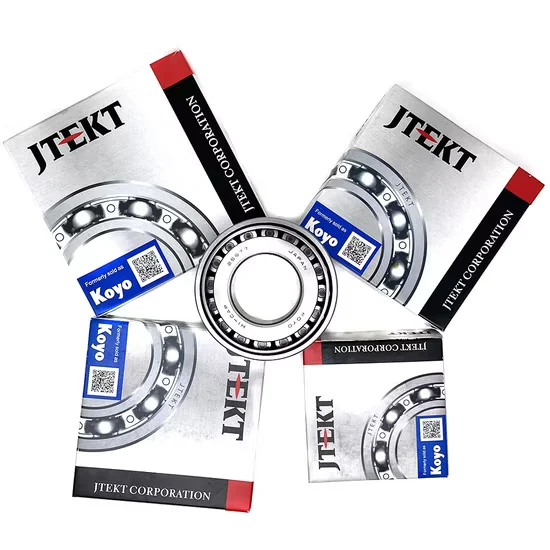 Buying Guide
· 8 min read
Koyo Auto Bearings Wholesale Supplier & Bulk Quote
Request a Quote for Koyo Auto Bearings that accounts for total landed cost, not just FOB price. Optimize margins through mixed-container consolidation and ensure…
Read the Guide Buying Guide · 7 min read
Koyo Auto Bearings Wholesale Supplier for Parts Stores
Stocking Koyo auto bearings requires strict verification of suffix codes and traceability to prevent costly assembly failures. Learn essential packaging checks and cross-brand alternatives…
Read the Guide Buying Guide
· 7 min read
Fake Auto Bearings: Neutral Buyer Checks Wholesale Supplier
Master Fake Auto Bearings Neutral Buyer Checks by shifting focus from packaging to internal physical inspections and traceability. Detect counterfeits through acidic rust oil…
Read the Guide
Bearing enquiry
Send your machine details. Get a written Koyo / JTEKT quote.
KOYO Bearing Supplier quotes a single bearing position or every bearing in an assembly on one enquiry, matched to your machine model and application, with model, quantity, price, lead time and quote validity in writing.
- WhatsApp+1 (702) 981-5880
- Emailinfo@koyoome.com
- Address8 Research Drive, Greenville, SC 20627, USA
"When a Koyo bearing failed on a harvest machine during the season, we needed a replacement urgently. The supplier identified the correct Koyo reference, shipped same-day, and the machine was back in the field within the day."

Request a Bearing Quote
Tell us the machine and the bearing position. Photos of the markings can follow on WhatsApp.