
Koyo One-Way Clutch Bearings Wholesale Supplier for Bulk Orders
The lowest unit price often hides the highest total cost of ownership.
Procuring Koyo one-way clutch bearings requires a rigorous three-dimensional selection matrix that prioritizes internal clearance and lubricant compatibility over initial purchase price. Failure to match these technical specifications to specific operating conditions—such as high-torque reversal or extreme ambient temperatures—leads to premature reverse failure, unplanned downtime, and exponential emergency logistics costs. Genuine sourcing is verified not by packaging alone but through traceable documentation and consistent batch-level quality assurance from authorized global channels.
I still recall the silence in a Nigerian mining site when a primary crusher halted unexpectedly. The cause was not a mechanical breakage but a batch of Koyo one-way clutch bearings held up at the port for over a week due to vague customs declarations. By the time the parts cleared, the production loss had already eclipsed the savings from choosing a cheaper, less documented supplier. Later, in Ethiopia, I witnessed a different failure mode: a bulk order arrived on spec for dimensions but failed within months because the internal clearance was standard rather than the required C3 for high-thermal expansion environments. These incidents underscore that technical precision and logistical clarity are inseparable from commercial value.
Why Do Koyo One-Way Clutch Bearings Fail Prematurely?
Misalignment between bearing specifications and operational stress is the primary driver of early reverse failure.
Many procurement teams focus exclusively on dimensional accuracy, assuming that if the outer diameter and bore match, the bearing will perform. This overlooks the critical role of internal clearance and lubricant viscosity in one-way clutch applications. When a bearing operates under high radial loads or significant temperature fluctuations, standard clearance can lead to preload issues, causing the rollers to jam or slip during the freewheeling phase.
Consider a case in South Africa where a steel plant replaced a set of clutches with what appeared to be identical units. The new bearings seized after a few weeks of operation. The root cause was not the brand but the lubricant. The original equipment manufacturer specified a high-temperature synthetic grease, but the replacement batch used a standard mineral-based lubricant that broke down under the sustained heat of the mill environment. The resulting carbonization locked the internal mechanism, turning a simple maintenance task into a major overhaul.
| Failure Mode | Technical Root Cause | Operational Consequence |
|---|---|---|
| Reverse Slippage | Incorrect internal clearance (too loose) | Loss of torque transmission, equipment drift |
| Internal Seizure | Lubricant breakdown or incompatibility | Complete lock-up, shaft damage, motor overload |
| Cage Fracture | Excessive vibration or misalignment | Catastrophic failure, debris contamination |
| Premature Wear | Contaminated lubrication or poor sealing | Reduced service life, increased maintenance frequency |
Selecting Koyo one-way clutch bearings without verifying these parameters invites risk. The visual similarity between standard and specialized variants masks critical internal differences. A thorough technical review must include an analysis of the expected load cycle, ambient temperature range, and required freewheeling speed. Only then can the correct clearance class and lubricant type be identified.
How to Select the Right Koyo One-Way Bearing?
A structured selection matrix integrating size, clearance, and lubrication ensures optimal performance.
Choosing the right Koyo one-way clutch bearings involves more than matching part numbers. It requires a holistic assessment of the application’s mechanical and environmental demands. The first step is confirming the dimensional fit, but this is merely the entry point. The next critical layer is internal clearance. For applications involving significant thermal expansion, such as those near furnaces or in direct sunlight, a C3 or C4 clearance is often necessary to prevent preload-induced failure.
The third dimension is lubrication. One-way clutches are sensitive to viscous drag. If the grease is too thick, it may impede the freewheeling action; if too thin, it fails to protect against wear during engagement. The drop point of the grease must exceed the maximum operating temperature by a safe margin. Additionally, the base oil viscosity must align with the rotational speed to ensure adequate film formation without excessive churning heat.
| Selection Parameter | Standard Application | High-Temperature/Heavy Load | High-Speed/Freewheeling |
|---|---|---|---|
| Internal Clearance | Normal (CN) | C3 or C4 | Normal (CN) or C2 |
| Lubricant Base | Mineral Oil | Synthetic Hydrocarbon | Low-viscosity Synthetic |
| Grease Consistency | NLGI 2 | NLGI 1 or 2 (High Temp) | NLGI 0 or 1 |
| Seal Type | Rubber Contact | High-Temp Fluoroelastomer | Low-Friction Non-Contact |
A European wind farm operator once faced repeated failures in their yaw drive systems. The issue was traced to the use of standard grease in a component that experienced frequent micro-movements and temperature swings. Switching to a specialized synthetic lubricant matched to the Koyo one-way clutch bearings extended the service interval significantly. This highlights the importance of treating lubrication as a design parameter, not an afterthought.
When sourcing, request detailed technical datasheets that specify these parameters. Do not rely solely on generic catalog descriptions. Verify that the supplier can provide batch-specific information regarding lubricant type and clearance class. This level of transparency is a hallmark of genuine product distribution and reduces the risk of mismatched components.
Genuine vs. Fake: How to Verify Koyo Bearings?
Authenticity is confirmed through traceable documentation and consistent packaging details, not just logos.
The market for Koyo one-way clutch bearings is saturated with counterfeits that mimic external appearance but lack internal precision. These fakes often use inferior steel and improper heat treatment, leading to rapid fatigue and failure. Distinguishing genuine products requires a multi-layered verification approach. Start with the packaging. Authentic Koyo boxes feature high-quality printing, precise barcodes, and specific security labels that change color or pattern under different lighting conditions.
However, packaging can be replicated. The most reliable verification lies in the documentation. Genuine bearings come with a certificate of conformity that includes the batch number, manufacturing date, and specific technical parameters. Cross-reference this batch number with the supplier’s records. A reputable distributor will maintain a complete chain of custody from the manufacturer to the end user.
| Verification Method | Genuine Product Indicator | Counterfeit Warning Sign |
|---|---|---|
| Packaging Quality | Sharp printing, secure seals, correct fonts | Blurred text, flimsy cardboard, spelling errors |
| Marking Clarity | Laser-etched or deeply stamped, uniform depth | Shallow, uneven, or easily rubbed off markings |
| Documentation | Full traceability, batch-specific certs | Generic invoices, missing batch numbers |
| Physical Finish | Smooth raceways, consistent cage finish | Rough surfaces, visible tool marks, uneven gaps |
In a recent audit for a Middle East distributor, we identified a batch of suspicious bearings by noting inconsistencies in the laser marking depth. Further inspection revealed slight deviations in the cage geometry, which would have led to premature wear. By rejecting this batch and sourcing from a verified channel, the client avoided potential field failures.
Always insist on seeing the original packing list and certificate before finalizing large orders. If a supplier hesitates to provide these documents or offers vague explanations, consider it a red flag. Genuine Koyo one-way clutch bearings are backed by a transparent supply chain that prioritizes accountability.
Where to Source Genuine Koyo Bearings Reliably?
Reliable sourcing depends on suppliers with full-category mixing capabilities and robust customs clearance support.
Finding a trustworthy source for Koyo one-way clutch bearings goes beyond identifying a vendor with stock. It requires a partner who understands the complexities of global logistics and technical compliance. Many buyers face delays due to incorrect customs classifications or incomplete documentation. A skilled supplier navigates these hurdles by providing precise harmonized system codes and supporting paperwork tailored to the destination country’s regulations.
Moreover, industrial projects often require a mix of brands and sizes. A supplier capable of consolidating various bearing types into a single shipment reduces logistics costs and simplifies inventory management. This one-stop sourcing model is particularly valuable for MRO operations where downtime is costly and speed is essential.
Consider the experience of a construction machinery OEM in Southeast Asia. They needed a urgent mix of spherical roller bearings and one-way clutches for a project deadline. By leveraging a supplier with extensive spot inventory and consolidation services, they received all components in a single, customs-cleared shipment. This approach eliminated the risk of partial deliveries and ensured the project stayed on schedule.
When evaluating suppliers, look for those who offer technical selection support. The ability to consult on cross-brand equivalents or troubleshoot application issues adds significant value. It transforms the transaction from a simple purchase into a strategic partnership. Ensure the supplier has a proven track record in your specific industry, whether it is mining, automotive, or heavy manufacturing.
Conclusion
Precision in selection and verification protects operational continuity.
Sourcing Koyo one-way clutch bearings demands a shift from price-focused buying to value-driven engineering. By prioritizing internal clearance, lubricant compatibility, and authentic traceability, buyers can avoid the hidden costs of premature failure. Partnering with suppliers who offer technical expertise and logistical reliability ensures that every bearing performs as intended, safeguarding both equipment and productivity.
Mentioned in this article
Koyo / JTEKT bearings from this guide
These are the Koyo / JTEKT bearing types discussed above. Open any product to check its details, or quote it together with the rest of your repair.
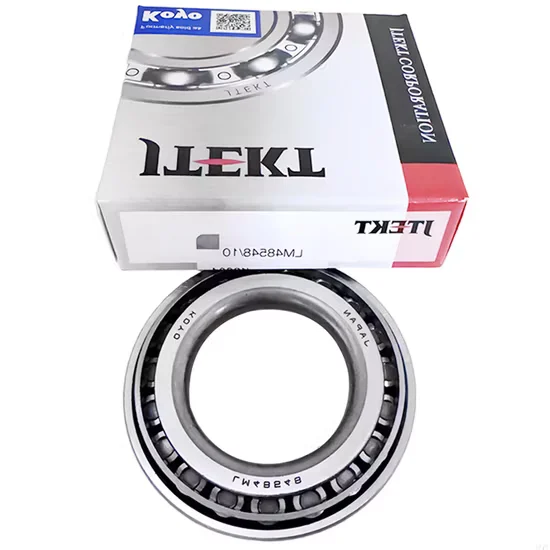
Tapered Roller Bearings
Genuine KOYO 32007 Tapered Roller Bearing Wholesale Supplier
View Product
Tapered Roller Bearings
Genuine KOYO 32006 Taper Roller Bearing Wholesale Supplier
View Product
Cylindrical Roller Bearings
Koyo NSK N408e Cylindrical Roller Bearing Genuine Wholesale Supplier
View Product
Cylindrical Roller Bearings
Koyo N2305e Cylindrical Roller Bearing Genuine Wholesale Supplier
View ProductKeep reading
More bearing selection guides for repair shops
Practical guides from KOYO Bearing Supplier on identifying Koyo / JTEKT bearings for farm machinery, construction equipment and power transmission repairs.
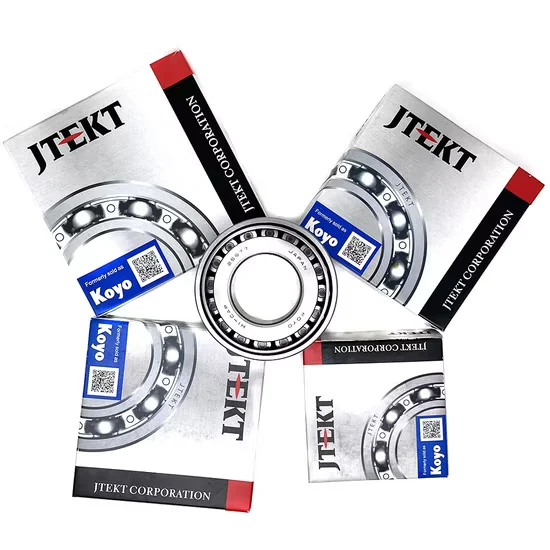 Buying Guide
· 8 min read
Koyo Auto Bearings Wholesale Supplier & Bulk Quote
Request a Quote for Koyo Auto Bearings that accounts for total landed cost, not just FOB price. Optimize margins through mixed-container consolidation and ensure…
Read the Guide Buying Guide · 7 min read
Koyo Auto Bearings Wholesale Supplier for Parts Stores
Stocking Koyo auto bearings requires strict verification of suffix codes and traceability to prevent costly assembly failures. Learn essential packaging checks and cross-brand alternatives…
Read the Guide Buying Guide
· 7 min read
Fake Auto Bearings: Neutral Buyer Checks Wholesale Supplier
Master Fake Auto Bearings Neutral Buyer Checks by shifting focus from packaging to internal physical inspections and traceability. Detect counterfeits through acidic rust oil…
Read the Guide
Bearing enquiry
Send your machine details. Get a written Koyo / JTEKT quote.
KOYO Bearing Supplier quotes a single bearing position or every bearing in an assembly on one enquiry, matched to your machine model and application, with model, quantity, price, lead time and quote validity in writing.
- WhatsApp+1 (702) 981-5880
- Emailinfo@koyoome.com
- Address8 Research Drive, Greenville, SC 20627, USA
"When a Koyo bearing failed on a harvest machine during the season, we needed a replacement urgently. The supplier identified the correct Koyo reference, shipped same-day, and the machine was back in the field within the day."

Request a Bearing Quote
Tell us the machine and the bearing position. Photos of the markings can follow on WhatsApp.