
Koyo Needle Cages for Gearboxes Wholesale Supplier
Most gearbox failures are not caused by the rollers, but by the cage.
Selecting genuine Koyo needle cages for gearboxes requires strict verification of cage wall thickness and pocket clearances to prevent catastrophic gearbox failures under high-load conditions. Authentic units maintain micron-level tolerances in pocket geometry, ensuring uniform load distribution and preventing the thermal runaway that destroys counterfeit or sub-spec alternatives.
I learned this the hard way in a humid workshop in Dongguan, assembling reducers for export. A client from South America needed an urgent repair for a mining gearbox. They specifically asked for Koyo components. I treated the bearing as just another iron lump, matching the roller dimensions but ignoring the specific cage wall thickness requirements. The machine ran for less than five hundred hours before the cage fractured under high temperature. The needles scattered, grinding the gears into dust. That failure was not due to bad luck; it was due to neglecting the microscopic details of the cage design. Since then, I have inspected every batch of Koyo needle cages for gearboxes wholesale supplier stock against original factory drawings, focusing on stamping textures and pocket clearances.
Why Do Koyo Needle Cages Fail Prematurely in Gearboxes?
High-temperature fractures stem from incorrect pocket clearances and wall thickness, not just excessive load.
Many engineers assume that if the needle rollers are intact, the bearing is safe. This is a dangerous misconception. The cage is the structural heart of the assembly. It maintains the spacing between rollers, prevents skewing, and guides the lubricant flow. When the pocket clearance is too tight, thermal expansion causes the rollers to bind. When it is too loose, impact loads during startup or reversal cause the cage to hammer against the rollers, leading to fatigue cracks.
In a recent case involving a European wind farm operator, the maintenance team replaced worn needles but reused the existing cages to save costs. The new needles had slightly different tolerances, altering the dynamic balance. Within months, the cages showed signs of blueing—a clear indicator of overheating. The root cause was not the load capacity of the steel, but the mismatch in pocket clearance that restricted oil film formation. Genuine KOYO designs account for these thermal dynamics with precise wall thickness tolerances. Counterfeit cages often use softer materials or inconsistent stamping processes, leading to premature deformation.
The material quality also plays a critical role. Authentic cages undergo specific heat treatments to balance hardness and toughness. Substandard copies may appear identical to the naked eye but lack the necessary fatigue resistance. Under cyclic loading, these weak points develop micro-cracks that propagate rapidly. For distributors sourcing Koyo needle cages for gearboxes wholesale supplier inventory, understanding this failure mechanism is crucial. It shifts the focus from simple part replacement to systemic verification of component integrity.
How to Verify Genuine Koyo Cages: Stamping Textures & Dimensions
Microscopic stamping textures and dimensional tolerances reveal authenticity where visual inspection fails.
Counterfeit bearings have become sophisticated, often replicating logos and packaging. However, the manufacturing process leaves unique fingerprints on the metal itself. Genuine Koyo cages exhibit consistent, sharp stamping textures with no burrs or irregularities. The pocket edges are smooth and precisely formed, ensuring minimal friction. Fake cages often show rough edges, uneven stamping depth, or slight variations in pocket shape due to inferior tooling.
To verify authenticity, I use a comparative matrix approach when inspecting incoming stock. This method highlights the subtle differences that determine performance longevity.
| Feature | Genuine Koyo Cage | Counterfeit/Substandard Cage |
|---|---|---|
| Stamping Texture | Sharp, consistent, no burrs | Rough, uneven depth, visible tool marks |
| Pocket Clearance | Uniform, within micron tolerances | Irregular, varying widths across pockets |
| Wall Thickness | Consistent, matches OEM specs | Variable, often thinner in stressed areas |
| Material Finish | Smooth, uniform heat treatment color | Patchy, inconsistent surface hardness |
| Traceability | Clear batch codes, verifiable docs | Missing or illegible markings |
A Middle East steel mill once received a mixed batch of bearings. The packaging looked correct, but the cages felt lighter. Upon measurement, the wall thickness varied by significant margins across different pockets. This inconsistency meant that under load, some rollers would carry more weight than others, leading to rapid failure. By cross-checking these physical attributes against original drawings, we identified the counterfeit units before they entered production. This diligence is essential for any Koyo needle cages for gearboxes wholesale supplier aiming to protect their clients from downtime.
Verification is not just about avoiding fakes; it is about ensuring performance. The precise geometry of genuine cages allows for optimal lubricant retention. In high-speed applications, this reduces churning losses and heat generation. For MRO operators, having a reliable verification process means fewer emergency repairs and longer intervals between maintenance cycles.
Selection Guide: Matching Cage Specs to Gearbox Operating Conditions
Selecting the right cage type depends on speed, temperature, and load ratios, not just shaft diameter.
Not all needle cages are created equal. Different gearbox applications impose unique stresses on the cage structure. High-speed reducers require cages with low mass and high stability to minimize centrifugal forces. Heavy-load mining equipment needs robust cages with thicker walls to withstand impact shocks. Choosing the wrong specification can lead to premature failure even if the bearing is genuine.
For instance, in automotive transmission assemblies, the cages must handle frequent start-stop cycles and rapid direction changes. Here, pocket clearance is critical to prevent roller skewing during acceleration. In contrast, industrial cement mill gearboxes operate at lower speeds but under extreme continuous loads. The primary concern here is material fatigue and wear resistance. Selecting a cage designed for high speed but used in a high-load environment may result in structural deformation over time.
When advising clients, I look at the operating parameters first. If the gearbox runs at high temperatures, the cage material must retain its strength without softening. If the environment is contaminated, the cage design should facilitate effective sealing and lubricant retention. Generic replacements often ignore these nuances, offering a one-size-fits-all solution that fits nowhere well.
Our technical support team helps customers match these specs accurately. We do not just sell parts; we provide engineering guidance to ensure the selected Koyo needle cages for gearboxes wholesale supplier products align with the specific demands of the application. This proactive approach prevents mismatches that could lead to costly failures down the line.
Procurement Strategy: Sourcing Authentic KOYO Cages Globally
Ensuring traceability and avoiding mixed-batch counterfeits requires direct supply chain visibility.
Sourcing genuine bearings in the global market is fraught with risk. Mixed batches, where authentic and counterfeit parts are blended, are common in unauthorized channels. These mixtures are difficult to detect until failure occurs. To mitigate this risk, buyers must prioritize suppliers who offer complete traceability documentation. This includes original mill certificates, batch numbers, and proof of authorized distribution.
A Latin American distributor recently faced issues with a supplier who offered significantly lower prices. The bearings looked real, but the performance was inconsistent. Some units failed within weeks, while others lasted. Investigation revealed that the supplier was mixing old stock with new counterfeits. By switching to a partner with transparent supply chains, the distributor eliminated these inconsistencies. The key was verifying the source of every batch, ensuring it came directly from the manufacturer’s production facilities or authorized warehouses.
For industrial distributors and MRO operators, reliability is more valuable than marginal cost savings. Downtime costs far exceed the price difference between genuine and fake parts. Therefore, establishing a relationship with a trusted Koyo needle cages for gearboxes wholesale supplier who prioritizes authenticity is a strategic investment. We maintain massive spot inventory with full documentation, allowing clients to verify the origin of every unit. This transparency builds trust and ensures that every bearing installed performs as expected.
Conclusion
Authenticity and precision define the lifespan of your gearbox.
Premature failures in gearboxes are often traced back to overlooked details in cage specifications. By verifying stamping textures, pocket clearances, and wall thickness, you can distinguish genuine Koyo components from inferior alternatives. Sourcing from a reputable Koyo needle cages for gearboxes wholesale supplier with complete traceability ensures that your equipment operates reliably under demanding conditions. Prioritize quality and verification to avoid the high costs of unexpected downtime.
Mentioned in this article
Koyo / JTEKT bearings from this guide
These are the Koyo / JTEKT bearing types discussed above. Open any product to check its details, or quote it together with the rest of your repair.
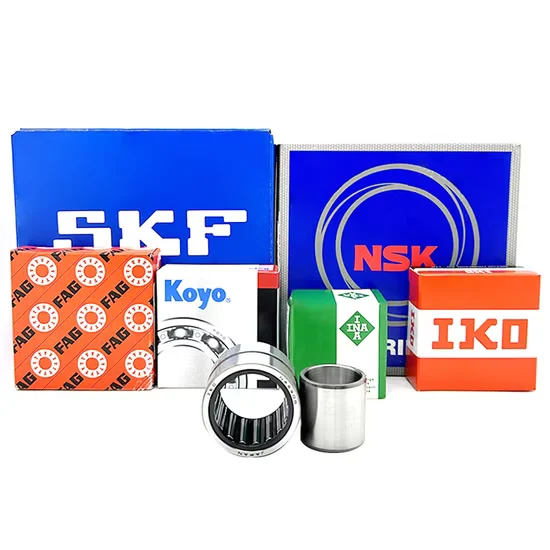
Needle Roller Bearings
Koyo RNAV4903 RNAV4904 RNAV4905 RNAV4906 RNAV4907 Needle Roller Bearings
View Product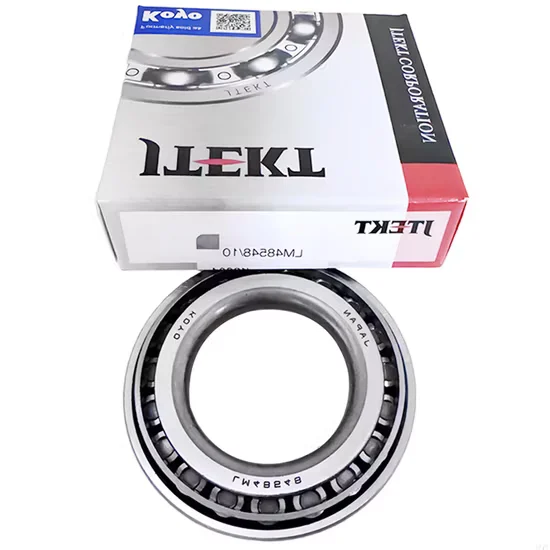
Tapered Roller Bearings
Genuine KOYO 32007 Tapered Roller Bearing Wholesale Supplier
View Product
Tapered Roller Bearings
Genuine KOYO 32006 Taper Roller Bearing Wholesale Supplier
View Product
Cylindrical Roller Bearings
Koyo NSK N408e Cylindrical Roller Bearing Genuine Wholesale Supplier
View ProductKeep reading
More bearing selection guides for repair shops
Practical guides from KOYO Bearing Supplier on identifying Koyo / JTEKT bearings for farm machinery, construction equipment and power transmission repairs.
 Buying Guide
· 8 min read
Koyo Auto Bearings Wholesale Supplier & Bulk Quote
Request a Quote for Koyo Auto Bearings that accounts for total landed cost, not just FOB price. Optimize margins through mixed-container consolidation and ensure…
Read the Guide Buying Guide · 7 min read
Koyo Auto Bearings Wholesale Supplier for Parts Stores
Stocking Koyo auto bearings requires strict verification of suffix codes and traceability to prevent costly assembly failures. Learn essential packaging checks and cross-brand alternatives…
Read the Guide Buying Guide
· 7 min read
Fake Auto Bearings: Neutral Buyer Checks Wholesale Supplier
Master Fake Auto Bearings Neutral Buyer Checks by shifting focus from packaging to internal physical inspections and traceability. Detect counterfeits through acidic rust oil…
Read the Guide
Bearing enquiry
Send your machine details. Get a written Koyo / JTEKT quote.
KOYO Bearing Supplier quotes a single bearing position or every bearing in an assembly on one enquiry, matched to your machine model and application, with model, quantity, price, lead time and quote validity in writing.
- WhatsApp+1 (702) 981-5880
- Emailinfo@koyoome.com
- Address8 Research Drive, Greenville, SC 20627, USA
"When a Koyo bearing failed on a harvest machine during the season, we needed a replacement urgently. The supplier identified the correct Koyo reference, shipped same-day, and the machine was back in the field within the day."

Request a Bearing Quote
Tell us the machine and the bearing position. Photos of the markings can follow on WhatsApp.