
Koyo Differential Bearings for Rebuilders Wholesale Supplier
Matching the part number is not enough to guarantee a successful rebuild.
For automotive aftermarket rebuilders, selecting genuine Koyo differential bearings requires verifying internal clearance specifications and cage material compatibility against specific wear conditions, rather than relying solely on model numbers. Sourcing must prioritize traceability documentation and mixed-batch consolidation capabilities to ensure authenticity and logistical efficiency.
I still remember the silence in my workshop in Dongguan before the storm hit. It was not the quiet of precision engineering, but the calm before a catastrophic failure. I had shipped a container of what I believed were perfect replacements to a gearbox rebuilder in South America. The part numbers matched. The packaging looked authentic. But when they assembled the units and ran the test cycle, the differential scattered. The noise was deafening, and the financial loss was mid-six-figure. The issue was not the brand, but the internal clearance. I had supplied standard clearance bearings for an application that required adjusted clearance to compensate for worn housing bores. That incident shifted my entire approach from simple order fulfillment to technical consultation. Now, every inquiry starts with a question about operating temperature and existing wear patterns, not just a part number.
This shift in perspective is critical for anyone acting as a Koyo differential bearings for rebuilders wholesale supplier. The market is flooded with components that look identical but perform drastically differently under load. Understanding the technical nuances is the only way to protect your reputation and your clients’ operations.
Why Exact Model Matching Fails in Differential Rebuilds?
A part number identifies the geometry, but it does not account for the dynamic environment of a rebuilt differential.
Many rebuilders assume that ordering the exact OEM-specified part number ensures a perfect fit. This is a dangerous oversimplification. In a rebuild scenario, the housing and shafts often have minor wear or machining variations that deviate from original factory tolerances. If you install a bearing with standard internal clearance into a slightly worn housing, the resulting preload can be excessive. This leads to rapid heat generation, lubricant breakdown, and premature failure.
Consider the thermal expansion factor. Differentials operate under varying loads and temperatures. A bearing that fits perfectly at room temperature during assembly may seize up once the gear oil reaches operating temperature if the clearance is too tight. Conversely, excessive clearance causes vibration and noise, leading to customer complaints and returns. The solution lies in selecting the appropriate clearance class, such as C3 or C0, based on the specific condition of the host components.
| Clearance Class | Typical Application Scenario | Thermal Compensation Capability | Risk if Mismatched |
|---|---|---|---|
| Standard (C0) | New assemblies with pristine housings | Low | Seizure in worn housings |
| Increased (C3) | Rebuilds with minor housing wear | High | Excessive vibration if housing is new |
| Special Adjusted | High-performance or heavy-load mods | Custom | Catastrophic failure if unverified |
I once worked with a European repair group that was experiencing a high rate of warranty claims on truck differentials. They were using standard clearance bearings for all rebuilds. After analyzing their failed units, we identified that the housing bores had expanded slightly due to years of thermal cycling. By switching to bearings with increased internal clearance for these specific cases, their failure rate dropped noticeably. This was not a change in brand, but a change in specification selection.
As a Koyo differential bearings for rebuilders wholesale supplier, providing this level of technical insight is what separates a parts vendor from a trusted partner. It requires access to detailed technical catalogs and the willingness to ask difficult questions before shipping.
How to Choose the Right Cage and Clearance for Koyo Bearings?
The cage material determines the bearing’s ability to withstand shock loads and high speeds, not just the rollers.
While clearance addresses fit, the cage design addresses durability under stress. In heavy-duty differentials, especially those used in mining or off-road vehicles, the choice between brass and steel cages is critical. Brass cages offer good self-lubricating properties and are suitable for moderate speeds and loads. However, under extreme shock loads or high temperatures, brass can deform or fracture. Steel cages, particularly those made from hardened carbon steel, provide superior strength and resistance to deformation.
Selecting the wrong cage type is a common error in rebuilds. A rebuilder might choose a bearing with a brass cage because it is more readily available or slightly cheaper, only to have it fail in a high-torque application. The cage disintegrates, sending debris through the gear set and causing extensive damage. This is not a manufacturing defect; it is an application error.
| Cage Material | Load Capacity | Temperature Resistance | Suitability for Heavy-Duty Rebuilds |
|---|---|---|---|
| Brass | Moderate | Moderate | Low to Medium |
| Steel | High | High | High |
| Polymer | Low | Low | Not Recommended |
I recall a project involving a fleet of agricultural harvesters. The operator was facing repeated differential failures during peak season. The root cause was traced to the use of standard brass-caged bearings in high-load pinion positions. Switching to steel-caged variants resolved the issue, extending the service life meaningfully. The key was matching the cage material to the specific load profile of the differential position.
When sourcing from a Koyo differential bearings for rebuilders wholesale supplier, ensure that the cage type is explicitly specified in the order. Do not assume that all bearings of the same model number have the same cage construction. Variations exist, and using the wrong one can compromise the entire rebuild.
Technical selection support is essential here. A reliable supplier will provide data sheets that detail the cage material and its limitations, allowing you to make informed decisions based on the end-user’s operating conditions.
What Are the Red Flags of Fake Koyo Differential Bearings?
Authenticity cannot be verified by packaging alone; traceability documentation is the only reliable proof.
The aftermarket is rife with counterfeit bearings that mimic the appearance of genuine products. These fakes often use inferior steel, poor heat treatment, and inaccurate machining. They may look correct in the box, but they fail under load. For a rebuilder, using a fake bearing is a business-ending risk. One failure can destroy trust with a major client.
Identifying fakes requires more than a visual inspection. Counterfeiters have become sophisticated, replicating logos and packaging with high accuracy. The true differentiator is the traceability documentation. Genuine Koyo bearings come with batch-specific certificates that link the product to the manufacturing facility and quality control records. If a supplier cannot provide these documents, the risk of receiving counterfeit goods is high.
| Verification Method | Reliability Level | Ease of Implementation | Common Pitfalls |
|---|---|---|---|
| Visual Inspection | Low | High | Sophisticated fakes mimic visuals |
| Packaging Check | Low to Medium | High | Repackaged fakes use genuine boxes |
| Traceability Docs | High | Medium | Requires supplier cooperation |
| Hardness Testing | Medium | Low | Destructive, requires equipment |
I encountered a batch of bearings that looked perfect but failed hardness testing. The steel was too soft, indicating improper heat treatment. The supplier could not provide traceability documents, claiming they were “lost in transit.” This was a clear red flag. We rejected the entire shipment, avoiding a potential disaster for our clients.
As a Koyo differential bearings for rebuilders wholesale supplier, we insist on full traceability for every batch. This protects both us and our customers. When evaluating suppliers, ask for sample documentation before placing large orders. Verify that the batch numbers on the certificates match those on the bearing packaging.
Do not compromise on this. The cost of verification is negligible compared to the cost of a field failure. Ensure your supply chain is transparent and documented.
How to Source Genuine Koyo Bearings for Rebuilders Efficiently?
Efficient sourcing balances inventory availability with technical accuracy and logistical flexibility.
Rebuilders often need small quantities of various part numbers to complete specific jobs. Ordering full containers of single SKUs is impractical and ties up capital. The solution is mixed-batch consolidation. This allows you to combine different bearing types and brands into a single shipment, reducing freight costs and lead times.
However, mixed batching introduces complexity. Ensuring that each item in the mix is genuine and correctly specified requires rigorous quality control. A reliable supplier must have the infrastructure to manage this complexity without compromising accuracy. This includes proper storage, handling, and documentation for each SKU in the mix.
| Sourcing Strategy | Cost Efficiency | Lead Time | Technical Support Requirement |
|---|---|---|---|
| Single Brand Bulk | High | Long | Low |
| Mixed-Batch Consolidation | Medium | Short | High |
| Local Stock Purchase | Low | Immediate | Variable |
I work with clients who need urgent replacements for mining equipment. They cannot wait weeks for a single bearing. By maintaining a large spot inventory and offering mixed-container consolidation, we can ship a diverse range of genuine bearings quickly. This flexibility minimizes downtime for our clients, which is their primary concern.
When choosing a Koyo differential bearings for rebuilders wholesale supplier, look for one that offers pre-shipment technical consultation. This ensures that the parts you receive are not only genuine but also suitable for your specific application. Ask about their process for verifying clearance and cage specifications before shipping.
Efficiency is not just about speed; it is about accuracy. A supplier that combines logistical flexibility with technical expertise provides the best value for rebuilders.
Conclusion
Precision in selection prevents failure in operation.
Sourcing Koyo differential bearings for rebuilders requires a focus on technical specifications like clearance and cage material, not just part numbers. Authenticity must be verified through traceability documentation, and efficiency is achieved through mixed-batch consolidation. Partnering with a supplier who offers technical support ensures that every rebuild is built on a foundation of reliability.
Mentioned in this article
Koyo / JTEKT bearings from this guide
These are the Koyo / JTEKT bearing types discussed above. Open any product to check its details, or quote it together with the rest of your repair.
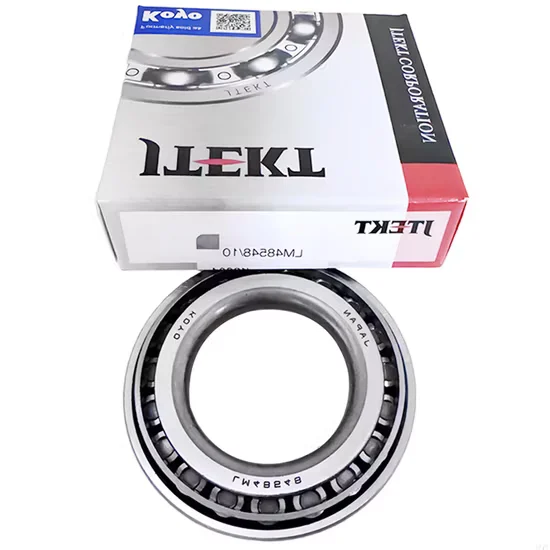
Tapered Roller Bearings
Genuine KOYO 32007 Tapered Roller Bearing Wholesale Supplier
View Product
Tapered Roller Bearings
Genuine KOYO 32006 Taper Roller Bearing Wholesale Supplier
View Product
Cylindrical Roller Bearings
Koyo NSK N408e Cylindrical Roller Bearing Genuine Wholesale Supplier
View Product
Cylindrical Roller Bearings
Koyo N2305e Cylindrical Roller Bearing Genuine Wholesale Supplier
View ProductKeep reading
More bearing selection guides for repair shops
Practical guides from KOYO Bearing Supplier on identifying Koyo / JTEKT bearings for farm machinery, construction equipment and power transmission repairs.
 Buying Guide
· 8 min read
Koyo Auto Bearings Wholesale Supplier & Bulk Quote
Request a Quote for Koyo Auto Bearings that accounts for total landed cost, not just FOB price. Optimize margins through mixed-container consolidation and ensure…
Read the Guide Buying Guide · 7 min read
Koyo Auto Bearings Wholesale Supplier for Parts Stores
Stocking Koyo auto bearings requires strict verification of suffix codes and traceability to prevent costly assembly failures. Learn essential packaging checks and cross-brand alternatives…
Read the Guide Buying Guide
· 7 min read
Fake Auto Bearings: Neutral Buyer Checks Wholesale Supplier
Master Fake Auto Bearings Neutral Buyer Checks by shifting focus from packaging to internal physical inspections and traceability. Detect counterfeits through acidic rust oil…
Read the Guide
Bearing enquiry
Send your machine details. Get a written Koyo / JTEKT quote.
KOYO Bearing Supplier quotes a single bearing position or every bearing in an assembly on one enquiry, matched to your machine model and application, with model, quantity, price, lead time and quote validity in writing.
- WhatsApp+1 (702) 981-5880
- Emailinfo@koyoome.com
- Address8 Research Drive, Greenville, SC 20627, USA
"When a Koyo bearing failed on a harvest machine during the season, we needed a replacement urgently. The supplier identified the correct Koyo reference, shipped same-day, and the machine was back in the field within the day."

Request a Bearing Quote
Tell us the machine and the bearing position. Photos of the markings can follow on WhatsApp.