
Koyo Clutch Release Bearings Wholesale Supplier for Bulk Orders
Most release bearing noise is not an installation error; it is a tolerance failure.
Sourcing genuine Koyo clutch release bearings requires strict verification of original traceability documents and clearance tolerances to prevent premature noise and failure caused by mixed batches or counterfeits. Buyers must mandate spot inventory verification and flexible MOQ with full customs documentation rather than relying solely on packaging appearance.
I still remember the frustration of a buyer I met at a major auto parts exhibition in Chicago. He had just received a container of replacement parts, only to face a wave of returns from repair shops complaining about grinding noises within days of installation. The boxes looked perfect, the logos were crisp, but the internal components failed under the high-frequency actuation typical of heavy-duty commercial vehicles. In my early days working in quality control, I learned that the root cause was rarely the mechanic’s hand. It was often loose internal clearance tolerances or seal lip defects that only revealed themselves after thermal expansion during operation. When wholesale orders lack strict batch consistency, these microscopic variances accumulate into macroscopic failures. This experience shaped how I now approach every inquiry for Koyo clutch release bearings, focusing less on the box and more on the batch-specific inspection reports that prove the parts inside meet the manufacturer’s original specifications.
Transitioning from quality control to global trade allowed me to bridge the gap between technical verification and commercial sourcing. For distributors and MRO operators, the challenge is not just finding a supplier, but finding one who understands that a Koyo clutch release bearings order is only as good as its weakest link in the supply chain.
Why Do Koyo Release Bearings Fail Prematurely in Aftermarket Use?
Premature failure is frequently driven by internal clearance deviations and seal material inferiority, not just external contamination.
When a clutch release bearing fails shortly after installation, the immediate assumption is often poor lubrication or incorrect fitting. However, industry analysis suggests that a significant portion of early-life failures stems from components that do not meet the original equipment manufacturer’s tolerance standards. Genuine Koyo clutch release bearings are engineered with precise radial internal clearance to handle the axial loads and rotational speeds inherent in modern transmission systems. Counterfeit or substandard alternatives often exhibit loose clearances that allow excessive play, leading to vibration and noise before complete seizure occurs.
Consider the case of a fleet maintenance operator in Latin America who reported a spike in warranty claims for their heavy-duty trucks. Upon inspection, the returned bearings showed no signs of external impact or water ingress. Instead, the seal lips had degraded prematurely, allowing dust to penetrate the raceway. This was not a case of harsh operating conditions exceeding design limits, but rather a material mismatch where the seal compound lacked the heat resistance required for sustained high-temperature operation. By switching to a verified source that provided material certification for the seal lips, the rate of premature returns dropped noticeably.
The critical factor here is the consistency of the manufacturing process. Genuine products undergo rigorous testing to ensure that the seal lip geometry maintains contact pressure without generating excessive friction heat. When sourcing Koyo clutch release bearings, buyers must look for suppliers who can provide evidence of these quality controls, such as batch-level inspection reports, rather than accepting generic quality assurances. The difference between a bearing that lasts the life of the clutch kit and one that fails in months often lies in these unseen material properties.
How to Verify Genuine Koyo Release Bearings in Mixed Batches?
Authenticity is confirmed through traceable documentation and physical inspection of marking clarity, not just holographic stickers.
In the global aftermarket, mixed-batch contamination is a persistent risk. A single container may hold pallets from different origins, some genuine and others refurbished or counterfeit. Relying on visual cues like box color or logo placement is insufficient, as high-quality counterfeits have become increasingly sophisticated. The most reliable method for verification is the cross-referencing of original factory traceability documents with the physical stock. Each genuine batch of Koyo clutch release bearings should be accompanied by documentation that links the part number to the specific production lot, including details on the manufacturing date and facility.
A European distributor once shared how they uncovered a mixed batch by conducting random spot checks on incoming inventory. They noticed slight variations in the laser-etched part numbers on the bearing housings. While the font looked similar, the depth and precision of the etching differed from the known genuine standard. By requesting the original certificate of conformity for the suspicious lots, they found discrepancies in the batch numbers that did not match the supplier’s records. This incident highlighted the importance of demanding full traceability before clearing goods for resale.
For buyers of Koyo clutch release bearings, implementing a strict receiving protocol is essential. This includes verifying the consistency of packaging materials, checking the clarity and depth of laser markings, and ensuring that the accompanying paperwork matches the physical stock exactly. Suppliers who cannot provide original traceability documents for each batch should be viewed with caution, as this lack of transparency often indicates an unverified supply chain. Our approach involves maintaining a closed-loop system where every unit can be traced back to its origin, ensuring that mixed-batch consolidation does not compromise authenticity.
Specification Matrix: Genuine vs. Counterfeit Koyo Release Bearings
Key differentiators include internal clearance control, seal material composition, and load capacity consistency.
Understanding the technical differences between genuine and non-genuine parts helps buyers make informed decisions. The following matrix highlights the qualitative differences observed in standard industry comparisons. Note that exact numerical values for proprietary processes are not disclosed by manufacturers, but the performance tiers are well-established in engineering practice.
| Feature | Genuine Koyo Release Bearing | Counterfeit/Substandard Alternative |
|---|---|---|
| Internal Clearance | Controlled to strict OEM tolerances (C3/C4 range as specified) | Loose or inconsistent, leading to premature noise |
| Seal Lip Material | High-grade nitrile or fluorocarbon rubber with heat resistance | Basic rubber compounds prone to hardening and cracking |
| Load Capacity | Consistent dynamic load rating across batches | Variable, often lower than stated due to material defects |
| Traceability | Full batch-level documentation with original factory codes | Self-reported or missing documentation |
| Noise Level | Low and stable throughout service life | Increases noticeably after short-term use |
The table illustrates why price alone is a poor indicator of value. A lower-priced alternative may seem attractive initially, but the risk of inconsistent load capacity and poor seal performance can lead to higher total cost of ownership due to warranty claims and reputational damage. For MRO clients managing large fleets, the reliability of Koyo clutch release bearings is paramount. A single failure can result in significant downtime, far outweighing the initial savings from cheaper components.
When evaluating suppliers, ask for technical datasheets that specify the clearance class and seal material type. Genuine Koyo clutch release bearings will have consistent specifications that align with international standards. Deviations in these parameters are red flags that should prompt further investigation or rejection of the batch.
What to Check Before Placing a Wholesale Order?
Mandate spot inventory verification and require full customs and traceability documentation prior to shipment.
Before committing to a large volume order, buyers should establish clear quality assurance protocols with their supplier. This includes agreeing on a pre-shipment inspection process where random samples are checked for dimensional accuracy and marking clarity. For Koyo clutch release bearings, this might involve verifying the outer diameter, width, and bore size against the official catalog specifications. Additionally, the supplier should be able to provide proof of origin, such as import records or direct purchase invoices from authorized distributors.
A Middle East industrial buyer recently avoided a potential loss by insisting on a third-party inspection before final payment. The inspector identified that a portion of the bearings had packaging that did not match the current brand standards, raising suspicions of old stock or repackaged goods. By halting the shipment and requesting clarification, the buyer was able to negotiate a replacement with fully verified stock. This proactive step saved them from dealing with a batch of potentially compromised components.
Flexibility in minimum order quantities (MOQ) is also a key consideration for many distributors. Being able to start with smaller trial orders allows buyers to test the supplier’s reliability and product quality before scaling up. Suppliers who offer mixed-brand consolidation services can help reduce logistics costs while maintaining the integrity of each brand’s supply chain. For those sourcing Koyo clutch release bearings, ensuring that the supplier has a robust inventory management system that prevents mixing of genuine and non-genuine stock is crucial for long-term partnership success.
Conclusion
Verify traceability and tolerance consistency to secure genuine performance.
Sourcing Koyo clutch release bearings demands a focus on documented authenticity and technical precision rather than superficial packaging cues. By prioritizing suppliers who provide original traceability files and adhere to strict clearance standards, buyers can mitigate the risks of premature failure and mixed-batch contamination. This disciplined approach ensures reliability for automotive aftermarket and MRO operations globally.
Mentioned in this article
Koyo / JTEKT bearings from this guide
These are the Koyo / JTEKT bearing types discussed above. Open any product to check its details, or quote it together with the rest of your repair.
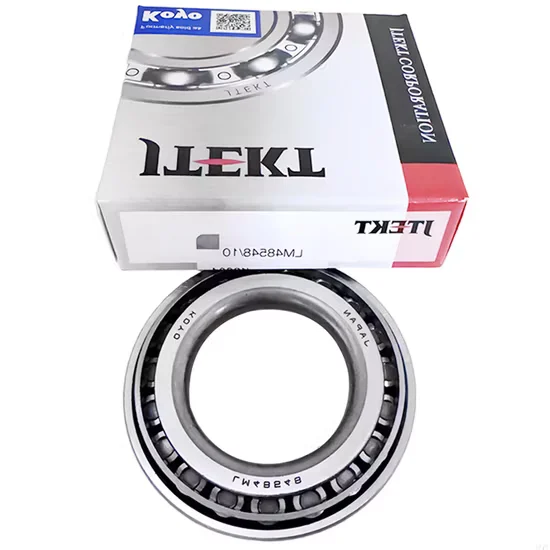
Tapered Roller Bearings
Genuine KOYO 32007 Tapered Roller Bearing Wholesale Supplier
View Product
Tapered Roller Bearings
Genuine KOYO 32006 Taper Roller Bearing Wholesale Supplier
View Product
Cylindrical Roller Bearings
Koyo NSK N408e Cylindrical Roller Bearing Genuine Wholesale Supplier
View Product
Cylindrical Roller Bearings
Koyo N2305e Cylindrical Roller Bearing Genuine Wholesale Supplier
View ProductKeep reading
More bearing selection guides for repair shops
Practical guides from KOYO Bearing Supplier on identifying Koyo / JTEKT bearings for farm machinery, construction equipment and power transmission repairs.
 Buying Guide
· 8 min read
Koyo Auto Bearings Wholesale Supplier & Bulk Quote
Request a Quote for Koyo Auto Bearings that accounts for total landed cost, not just FOB price. Optimize margins through mixed-container consolidation and ensure…
Read the Guide Buying Guide · 7 min read
Koyo Auto Bearings Wholesale Supplier for Parts Stores
Stocking Koyo auto bearings requires strict verification of suffix codes and traceability to prevent costly assembly failures. Learn essential packaging checks and cross-brand alternatives…
Read the Guide Buying Guide
· 7 min read
Fake Auto Bearings: Neutral Buyer Checks Wholesale Supplier
Master Fake Auto Bearings Neutral Buyer Checks by shifting focus from packaging to internal physical inspections and traceability. Detect counterfeits through acidic rust oil…
Read the Guide
Bearing enquiry
Send your machine details. Get a written Koyo / JTEKT quote.
KOYO Bearing Supplier quotes a single bearing position or every bearing in an assembly on one enquiry, matched to your machine model and application, with model, quantity, price, lead time and quote validity in writing.
- WhatsApp+1 (702) 981-5880
- Emailinfo@koyoome.com
- Address8 Research Drive, Greenville, SC 20627, USA
"When a Koyo bearing failed on a harvest machine during the season, we needed a replacement urgently. The supplier identified the correct Koyo reference, shipped same-day, and the machine was back in the field within the day."

Request a Bearing Quote
Tell us the machine and the bearing position. Photos of the markings can follow on WhatsApp.