
Koyo ATV UTV Bearings Wholesale Supplier Bulk OEM
Premium Koyo bearings fail instantly in off-road applications if the seal grade does not match the environmental exposure.
Selecting the correct Koyo ATV UTV bearings requires matching specific seal ratings and load capacities to distinct off-road applications, such as suspension pivots versus drivetrain components. Standard dust covers are insufficient for deep mud or water immersion, leading to rapid contamination and seizure. Distributors must verify internal clearance specifications and contact seal types to prevent premature field failures and warranty claims.
I still remember the silence in the warehouse when the claim photos arrived from a tropical mining site in South America. A full container of wheel hub bearings had seized after less than five hundred kilometers of operation. The parts were genuine, sourced from reputable channels, but they featured standard non-contact shields. In that environment, thick mud and standing water penetrated the bearing housing within hours. The grease washed out, contaminants entered the raceway, and the bearings locked up. That incident shifted my focus entirely to the technical nuances of off-road selection. It is not enough to supply a brand name; one must understand the mechanical demands of the application.
This guide breaks down the critical selection criteria for distributors and OEMs. By understanding the difference between radial and axial load requirements, and decoding seal suffixes, you can avoid costly returns and build trust with your local repair markets.
Why Do Premium Koyo Bearings Fail in UTVs?
Contamination ingress due to mismatched seal types is the primary cause of off-road bearing failure, not material defects.
Many buyers assume that a premium brand like Koyo guarantees durability in any condition. This is a dangerous misconception. A high-quality bearing steel will still fail if water and abrasive particles enter the internal geometry. The failure mode is rarely fatigue; it is almost always contamination-induced wear.
In off-road vehicles, the operating environment is hostile. Dust, mud, sand, and water are constant threats. Standard industrial bearings often use Z or ZZ shields, which are non-contact metal plates. These provide minimal protection against fine dust and no protection against liquid water. For ATV and UTV applications, especially those used in agriculture, mining, or recreational trail riding, these shields are inadequate.
Consider the case of a distributor in Southeast Asia who supplied standard shielded bearings for rice paddy transport vehicles. The units failed within weeks. The issue was not the load capacity but the lack of a sealing barrier. Water splashed from the paddies entered the hub assembly, emulsified the grease, and caused rust on the raceways. Switching to bearings with rubber contact seals resolved the issue immediately.
The key takeaway is that the brand provides the baseline quality, but the seal type determines the service life in harsh conditions. Distributors must educate their customers on this distinction. Selling a cheaper, shielded bearing for a wet application results in higher long-term costs due to frequent replacements and labor.
Suspension vs. Drivetrain: How to Match Koyo Specs?
A-arm pivots require high radial load capacity and impact resistance, while drivetrain components demand high axial load handling and specific internal clearances.
One size does not fit all in UTV construction. The forces acting on a suspension component differ fundamentally from those acting on a drivetrain component. Misapplying a bearing designed for one system to the other leads to premature failure.
Suspension systems, such as A-arms and control arms, experience high radial loads and significant shock impacts from uneven terrain. The bearings here must withstand sudden vertical forces without deforming. They also operate at relatively low speeds but high oscillation angles. Using a bearing with insufficient radial clearance or poor shock resistance can lead to brinelling of the raceways.
In contrast, drivetrain components, such as CV joints and wheel hubs, handle high axial loads generated by acceleration and braking. They also rotate at higher speeds and generate more heat. If a bearing with tight internal clearance is used in a high-heat drivetrain application, thermal expansion can cause the inner ring to expand against the balls or rollers, leading to seizure. Conversely, excessive clearance in a suspension pivot can cause play and handling instability.
| Application Area | Primary Load Type | Operating Condition | Recommended Feature |
|---|---|---|---|
| Suspension Pivots | Radial & Impact | Low Speed, High Oscillation | High Radial Capacity, Robust Cage |
| Drivetrain/CV Joints | Axial & Thrust | High Speed, High Heat | Specific Internal Clearance, Heat Resistant Grease |
| Wheel Hubs | Combined Radial/Axial | Variable Speed, Contamination Risk | Multi-lip Contact Seals, Wide Inner Ring |
A European aftermarket supplier once reported a spike in returns for wheel hub assemblies. Upon inspection, the bearings used had standard C3 clearance, which was suitable for general automotive use but insufficient for the high-torque electric UTVs they were servicing. The increased heat generation caused the grease to break down faster. Switching to bearings with optimized clearance and high-temperature grease extended the service life significantly.
Understanding these mechanical differences allows distributors to recommend the correct Koyo ATV UTV bearings for each specific position on the vehicle.
Decoding Koyo Seal Suffixes for Off-Road Use
The suffix code on a bearing indicates its sealing technology, which directly correlates to its protection level against water and mud.
Koyo uses specific suffixes to denote seal types. For off-road applications, knowing these codes is essential for accurate ordering. Using the wrong seal type is the most common error in aftermarket sourcing.
Open bearings have no seals and are only suitable for clean, enclosed environments with forced lubrication. Shielded bearings (Z/ZZ) have metal plates that do not touch the inner ring. They offer limited protection against large particles but allow fine dust and water to enter. Contact seals (RS/RU) feature rubber lips that press against the inner ring, providing a barrier against contaminants and retaining grease.
For severe off-road conditions, multi-lip contact seals are preferred. These designs incorporate multiple rubbing surfaces to block water and mud effectively. Some specialized off-road bearings also feature flanged outer rings or wide inner rings to simplify mounting and improve sealing against the housing.
| Seal Type | Suffix | Contact Level | Water Protection | Dust Protection | Suitability for Off-Road |
|---|---|---|---|---|---|
| Open | None | None | None | None | Not Suitable |
| Shielded | Z / ZZ | Non-Contact | Poor | Moderate | Dry Conditions Only |
| Single Lip | RS / R | Light Contact | Good | Good | Light Trail Use |
| Multi-Lip | RU / 2RU | Heavy Contact | Excellent | Excellent | Mud/Water/Severe |
A distributor in Africa noted that switching from ZZ shielded bearings to RU sealed bearings for mining UTVs reduced warranty claims by a noticeable margin. The initial cost was slightly higher, but the reduction in return logistics and replacement parts saved significant resources.
When sourcing Koyo ATV UTV bearings, always specify the required seal suffix based on the expected operating environment. Do not assume standard shields are adequate for muddy or wet terrain.
Procurement Checklist for Distributors
Verifying authenticity and ensuring traceability are critical steps to avoid counterfeit parts and ensure consistent quality.
Sourcing genuine bearings from reliable channels is vital for maintaining reputation. Counterfeit bearings often look identical to genuine products but use inferior steel and poor manufacturing processes. They fail quickly under load, damaging the distributor’s credibility.
To ensure authenticity, request traceability documentation from your supplier. Genuine Koyo products come with batch numbers that can be verified. Check the packaging for proper branding, holographic labels, and correct part number formatting. Inspect the bearings themselves for smooth rotation, precise machining, and high-quality sealing materials.
Consolidating mixed orders is another key consideration. Many distributors need various sizes and seal types for different UTV models. Working with a supplier who offers flexible minimum order quantities and mixed-container consolidation allows for efficient inventory management. This approach reduces shipping costs and ensures a comprehensive stock range for local customers.
Technical support is also valuable. A supplier who understands off-road applications can help select the right bearings for specific models. They can provide datasheets, load ratings, and installation guidelines. This support helps distributors educate their own customers and reduce misapplication errors.
By focusing on traceability, mixed-order flexibility, and technical expertise, distributors can build a robust supply chain for Koyo ATV UTV bearings. This approach minimizes risk and maximizes customer satisfaction in the demanding off-road market.
Conclusion
Correct seal selection and load matching are more critical than brand name alone for off-road bearing longevity.
Premium Koyo ATV UTV bearings deliver exceptional performance only when specified correctly for the application. Understanding the difference between suspension and drivetrain loads, and choosing the appropriate seal type for the environment, prevents premature failures. Distributors who prioritize technical accuracy and authentic sourcing build lasting trust with their customers.
Mentioned in this article
Koyo / JTEKT bearings from this guide
These are the Koyo / JTEKT bearing types discussed above. Open any product to check its details, or quote it together with the rest of your repair.

Tapered Roller Bearings
OEM 30204 30205 30206 30207 30208 32008X 32010X Tapered Roller Bearing
View Product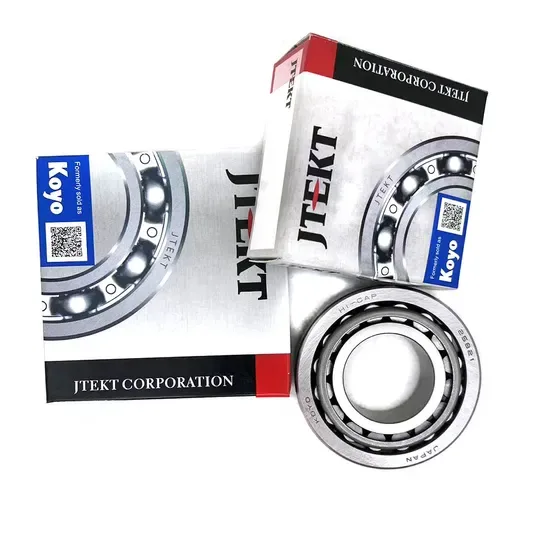
Tapered Roller Bearings
X&S 33209 Tapered Roller Bearing for Industrial Mining Gearbox
View Product Tapered Roller Bearings
Koyo 30213 30221 30228 Tapered Roller Bearing Single Row for Machinery Part
View Product
Marine Bearings
Koyo 32212 Tapered Roller Bearing for Marine Engines
View ProductKeep reading
More bearing selection guides for repair shops
Practical guides from KOYO Bearing Supplier on identifying Koyo / JTEKT bearings for farm machinery, construction equipment and power transmission repairs.
 Buying Guide
· 8 min read
Koyo Auto Bearings Wholesale Supplier & Bulk Quote
Request a Quote for Koyo Auto Bearings that accounts for total landed cost, not just FOB price. Optimize margins through mixed-container consolidation and ensure…
Read the Guide Buying Guide · 7 min read
Koyo Auto Bearings Wholesale Supplier for Parts Stores
Stocking Koyo auto bearings requires strict verification of suffix codes and traceability to prevent costly assembly failures. Learn essential packaging checks and cross-brand alternatives…
Read the Guide Buying Guide
· 7 min read
Fake Auto Bearings: Neutral Buyer Checks Wholesale Supplier
Master Fake Auto Bearings Neutral Buyer Checks by shifting focus from packaging to internal physical inspections and traceability. Detect counterfeits through acidic rust oil…
Read the Guide
Bearing enquiry
Send your machine details. Get a written Koyo / JTEKT quote.
KOYO Bearing Supplier quotes a single bearing position or every bearing in an assembly on one enquiry, matched to your machine model and application, with model, quantity, price, lead time and quote validity in writing.
- WhatsApp+1 (702) 981-5880
- Emailinfo@koyoome.com
- Address8 Research Drive, Greenville, SC 20627, USA
"When a Koyo bearing failed on a harvest machine during the season, we needed a replacement urgently. The supplier identified the correct Koyo reference, shipped same-day, and the machine was back in the field within the day."

Request a Bearing Quote
Tell us the machine and the bearing position. Photos of the markings can follow on WhatsApp.