
Koyo Alternator Bearing Equivalents Wholesale Supplier
Matching outer and inner diameters is not enough to guarantee a functional alternator bearing replacement.
True Koyo alternator bearing equivalents require exact matching of internal clearance codes and thermal limits, not just basic dimensions, to prevent catastrophic failures under high loads. A verified cross-reference must align C3 or C4 clearance specifications with the specific operating temperature range of the generator.
I still remember the silence in the warehouse after the return shipment arrived from a mining site in West Africa. It was not the quiet of efficiency, but the heavy silence of a mid-six-figure loss. I had sourced what looked like perfect Koyo alternator bearing equivalents for a batch of industrial generators. The dimensions were identical. The price was attractive. But under sustained high-temperature and high-load conditions, the non-OEM substitute failed. The cage fragmented, leading to rotor scan and total generator seizure. The entire batch was rejected. That failure taught me that in the world of heavy-duty power generation, a bearing is not just a metal ring; it is a precision component where thermal expansion and internal clearance dictate survival.
This experience shifted my focus from simple part-number matching to rigorous parameter verification. When distributors or MRO operators ask for Koyo generator bearing cross reference data today, I do not just look at the bore size. I look at the environment. I look at the load. And I look at the traceability.
Why Basic Dimensions Aren’t Enough for Alternator Bearing Equivalents?
Internal clearance and thermal limits dictate real interchangeability, not just outer and inner diameters.
Most buyers assume that if a bearing fits the shaft and the housing, it will work. This is a dangerous misconception in alternator applications. Alternators generate significant heat, and the rotor spins at high speeds. As the bearing heats up, the inner race expands faster than the outer race because it is mounted on the rotating shaft, which often runs hotter. If the internal clearance is too tight, this thermal expansion eliminates the running gap, causing the balls to bind against the races. The result is rapid temperature rise, lubricant breakdown, and eventual seizure.
For Koyo deep groove ball bearing alternative selections, the clearance class is critical. Standard clearance (C0) is rarely suitable for alternators. Most applications require C3 or even C4 clearance to accommodate thermal growth. A bearing that measures correctly at room temperature may be effectively pre-loaded to destruction at operating temperature if the clearance class is wrong.
Furthermore, the cage material plays a vital role. In high-speed alternator applications, steel cages are common, but resin or brass cages may be specified for certain high-temperature or high-vibration environments. Using a substitute with a different cage material can lead to premature fatigue or deformation. I have seen cases where a cheaper alternative used a standard steel cage in an application that required a reinforced design, leading to cage fragmentation within months.
When evaluating a Koyo alternator bearing replacement, always verify the clearance code stamped on the bearing or provided in the certification. Do not rely on visual inspection. The difference between C0 and C3 is microscopic but mechanically monumental.
How to Cross-Reference KOYO Alternator Bearings Accurately?
A strict matrix comparing KOYO with SKF, FAG, and NSK reveals critical parameter alignments.
Creating a reliable cross-reference requires more than a simple lookup table. It demands a side-by-side comparison of technical specifications across major brands. Below is a qualitative comparison framework used to validate equivalents. Note that exact numerical values for proprietary materials are omitted to respect commercial confidentiality, focusing instead on verifiable standards.
| Parameter | KOYO Specification | SKF Equivalent | FAG Equivalent | NSK Equivalent |
|---|---|---|---|---|
| Dimensional Standard | ISO 15 / ISO 355 | ISO 15 / ISO 355 | ISO 15 / ISO 355 | ISO 15 / ISO 355 |
| Internal Clearance | C3 / C4 (Typical) | C3 / C4 (Typical) | C3 / C4 (Typical) | C3 / C4 (Typical) |
| Cage Material Options | Steel / Resin / Brass | Steel / Polyamide / Brass | Steel / Polyamide / Brass | Steel / Resin / Brass |
| Temperature Limit | High (Specific to grease) | High (Specific to grease) | High (Specific to grease) | High (Specific to grease) |
| Traceability | Full Batch Certification | Full Batch Certification | Full Batch Certification | Full Batch Certification |
This matrix shows that while dimensions are standardized, the operational parameters must be checked individually. For instance, when sourcing a KOYO 6860 equivalent, one must ensure the alternative brand offers the same C3 clearance and compatible grease filling. A mismatch in grease compatibility can lead to chemical degradation of the lubricant, causing increased friction and wear.
I once assisted a European wind farm operator who was struggling with frequent alternator failures. They were using a mix of brands without a consistent cross-reference strategy. By implementing a strict parameter-matching process, we identified that their previous supplier was providing bearings with standard clearance instead of the required C3. Switching to a verified equivalent brand that matched the exact clearance specs reduced their unplanned downtime noticeably.
Our consultation service focuses on this exact type of parameter matching. We do not just swap part numbers; we verify that the physical and thermal characteristics align. This ensures that the Koyo generator bearing cross reference you receive is not just a theoretical match, but a functional one.
What Are the Hidden Risks of Using Unverified “Cheap” Substitutes?
Cage fragmentation and rotor scans occur when load capacity and temperature limits are compromised.
The term “equivalent” is often misinterpreted as “cheaper.” In reality, a proper equivalent prevents the hidden costs of generator teardown and secondary damage. Unverified substitutes often cut corners on material purity or heat treatment processes. While they may look identical, their microstructure may lack the necessary hardness or toughness to withstand alternating loads.
One of the most common failures I see is cage fragmentation. In high-speed alternators, the cage holds the rolling elements in place. If the cage material is inferior or the design is not optimized for the specific speed and load, it can crack. Once the cage fails, the balls scatter, causing immediate and catastrophic damage to the rotor and stator. This is not a simple bearing replacement; it is a full generator rebuild.
Another risk is false brinelling. During transport or standby periods, vibrations can cause small dents in the raceways if the bearing is not properly designed or lubricated. Unverified substitutes may use lower-quality grease that does not provide adequate protection during these static periods. When the generator starts, these dents become initiation points for fatigue cracks.
A Middle East steel mill once faced a series of unexpected alternator failures. Investigation revealed that the “budget” bearings they had purchased lacked the necessary corrosion resistance in their grease formulation, leading to early-stage rust and subsequent fatigue. The cost of replacing the generators far exceeded the savings from the cheaper bearings.
When you choose a Koyo alternator bearing replacement, you are buying insurance against these hidden risks. Verify the source. Check the certifications. Do not let a small upfront saving lead to a massive operational loss.
How to Verify the Authenticity and Quality of Equivalent Bearings?
Demand full traceability, material certs, and ISO compliance from your supplier before installation.
In a market flooded with counterfeits, verification is not optional; it is essential. Fake bearings often mimic the packaging and markings of genuine products but fail in performance. To protect your equipment, you must demand documentation that proves the origin and quality of the bearings.
First, request full traceability. A reputable supplier should be able to provide batch numbers that link back to the manufacturer’s production records. This allows you to verify the heat treatment lot and material source. If a supplier cannot provide this, walk away.
Second, check for material certificates. These documents confirm that the steel used meets the required standards for purity and hardness. Look for references to ISO standards or specific grade certifications.
Third, inspect the physical product. Genuine bearings have precise machining marks, consistent branding, and high-quality packaging. Counterfeits often have rough edges, inconsistent font sizes, or poor-quality printing. However, visual inspection alone is not enough. Always combine it with documentary evidence.
I recently helped a distributor in Southeast Asia avoid a massive field failure by requesting full traceability for a suspiciously cheap batch of bearings. The documentation was missing, and further investigation revealed they were counterfeit. By catching this before installation, we saved the client from potential reputational damage and financial loss.
Our inventory includes genuine products from SKF, FAG, NSK, KOYO, and other premium brands, all with complete traceability. We understand that for MRO operators and distributors, reliability is paramount. We do not just sell bearings; we provide peace of mind through rigorous verification processes.
Conclusion
Precision matching of clearance and thermal limits defines a true bearing equivalent.
Selecting the right Koyo alternator bearing equivalents requires looking beyond dimensions to internal clearance, cage material, and traceability. Avoid the hidden costs of failure by verifying every parameter and demanding full documentation from your supplier. Reliable replacements protect your equipment and your bottom line.
Mentioned in this article
Koyo / JTEKT bearings from this guide
These are the Koyo / JTEKT bearing types discussed above. Open any product to check its details, or quote it together with the rest of your repair.
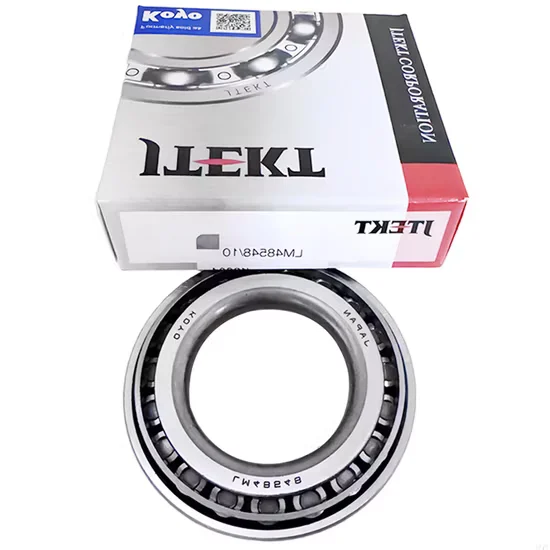
Tapered Roller Bearings
Genuine KOYO 32007 Tapered Roller Bearing Wholesale Supplier
View Product
Tapered Roller Bearings
Genuine KOYO 32006 Taper Roller Bearing Wholesale Supplier
View Product
Cylindrical Roller Bearings
Koyo NSK N408e Cylindrical Roller Bearing Genuine Wholesale Supplier
View Product
Cylindrical Roller Bearings
Koyo N2305e Cylindrical Roller Bearing Genuine Wholesale Supplier
View ProductKeep reading
More bearing selection guides for repair shops
Practical guides from KOYO Bearing Supplier on identifying Koyo / JTEKT bearings for farm machinery, construction equipment and power transmission repairs.
 Brands & Alternatives
· 7 min read
Koyo Automotive Bearings Wholesale Supplier for Global Bulk Orders
Master global sourcing of Koyo automotive bearings by solving mixed-brand customs risks and verifying authenticity beyond packaging. Learn to validate technical specs, select reliable…
Read the Guide Brands & Alternatives
· 6 min read
Premium vs Economy Motorcycle Bearings: Wholesale Supplier for Bulk Orders
Choosing between premium vs economy motorcycle bearings requires analyzing total cost of ownership rather than just upfront price. Economy options often fail under heavy…
Read the Guide Brands & Alternatives
· 8 min read
OE Koyo vs Aftermarket Box: Differences for Wholesale Buyers
Understand the critical OE Koyo vs Aftermarket Box differences to avoid severe customs delays and terminal rejections in strict markets. Original packaging features holographic…
Read the Guide
Bearing enquiry
Send your machine details. Get a written Koyo / JTEKT quote.
KOYO Bearing Supplier quotes a single bearing position or every bearing in an assembly on one enquiry, matched to your machine model and application, with model, quantity, price, lead time and quote validity in writing.
- WhatsApp+1 (702) 981-5880
- Emailinfo@koyoome.com
- Address8 Research Drive, Greenville, SC 20627, USA
"When a Koyo bearing failed on a harvest machine during the season, we needed a replacement urgently. The supplier identified the correct Koyo reference, shipped same-day, and the machine was back in the field within the day."

Request a Bearing Quote
Tell us the machine and the bearing position. Photos of the markings can follow on WhatsApp.