
Koyo 6203-2RS Auto Bearing Wholesale Supplier for Bulk Orders
The rubber seal is not always the hero. In high-temperature or high-speed automotive applications, the very feature designed to keep contaminants out can become the primary source of premature failure.
For bulk automotive procurement, the Koyo 6203-2RS is a standard deep-groove ball bearing with double contact NBR rubber seals, sized 17mm x 40mm x 12mm, suitable for moderate-speed alternators and accessory drives where dust exclusion is prioritized over extreme thermal resistance. However, its suitability depends entirely on the operating environment. While it offers robust protection against moisture and particulate ingress in standard passenger vehicle conditions, it is not the universal solution for every under-hood application. Misapplication in high-heat zones without adequate ventilation leads to seal degradation and lubricant breakdown. Understanding this distinction is critical for wholesalers managing inventory for diverse aftermarket needs.
Having spent years on the factory floor in Dongguan before moving into international trade, I learned that part numbers are merely starting points, not final answers. I once managed a full container shipment of these bearings to a major auto parts distributor in Dubai. The initial order went smoothly, but months later, we received a serious complaint regarding generator bearings failing with unusual noise after only a few months of service. The technical team traced the issue back to the environmental mismatch. The Gulf region’s ambient temperatures, combined with the intense heat generated by modern compact alternators, exceeded the thermal limits of the standard Nitrile Butadiene Rubber (NBR) seals used in the 2RS suffix. The rubber hardened, lost its sealing elasticity, and eventually allowed lubricant to escape while letting fine desert dust infiltrate the raceway. We absorbed the cost of the replacement batch, but the lesson was invaluable. Now, when clients inquire about this specific model, my first question is never about price or lead time. It is always about the installation position and the expected operating temperature range. This shift in dialogue prevents costly returns and builds long-term trust with buyers who value technical accuracy over simple transaction speed.
Decoding the Suffix: Why 2RS Matters for Automotive Applications
The suffix defines the boundary between protection and friction. In the bearing world, letters are not arbitrary; they dictate the physical interface between the rotating inner ring and the stationary outer ring.
The “2RS” designation in the Koyo 6203-2RS indicates that the bearing is equipped with contact-type seals on both sides. These seals are typically made from NBR, a material chosen for its excellent resistance to oils, greases, and general wear.. For automotive wholesalers, this distinction is vital because it differentiates the product from open bearings or those with metal shields (ZZ). Open bearings require constant maintenance and are rarely used in sealed automotive units today. Metal shields offer minimal protection against liquids but generate less friction, making them suitable for very high-speed applications where heat buildup from seal contact is a concern.
Consider a typical automotive water pump or a mid-range alternator. These components operate at speeds where the slight drag from a rubber seal is acceptable, but the risk of water splash or road debris is significant. Here, the 2RS design shines. It creates a physical barrier that retains the pre-packed grease and blocks external contaminants. However, this comes at a cost: increased torque required to start rotation and higher operating temperatures due to friction.. If a buyer stocks these for use in high-performance racing alternators or heavy-duty truck generators that run continuously at high RPMs, the heat generated by the seal contact can cook the grease, leading to early failure.
| Feature | Koyo 6203-2RS (Rubber Seal) | Koyo 6203-ZZ (Metal Shield) |
|---|---|---|
| Contaminant Protection | High (Dust and Water) | Low (Large Particles Only) |
| Friction/Torque | Moderate | Low |
| Max Operating Temp | Standard Range | Higher Range |
| Ideal Application | Wheel Hubs, Water Pumps | High-Speed Spindles, Clean Environments |
A European workshop chain once switched their entire stock of generator bearings from rubber-sealed to metal-shielded variants after experiencing repeated failures in summer months. They reported a noticeable drop in warranty claims, attributing it to reduced internal heat generation. This case highlights that while the Koyo 6203-2RS auto bearing wholesale supplier for bulk orders must provide the correct part, they must also educate the buyer on its limitations. The rubber seal is a compromise, not an upgrade in every scenario.
Dimensional Precision and Interchangeability Standards
Interchangeability relies on strict adherence to ISO standards, not just matching numbers. A bearing that fits physically may still fail if its internal clearances or precision grades do not match the original equipment manufacturer’s specifications.
The basic dimensions of the 6203 series are standardized globally: an inner diameter of 17 mm, an outer diameter of 40 mm, and a width of 12 mm.. These measurements are non-negotiable for fitment. However, the “auto” application often demands more than just dimensional accuracy. It requires specific radial internal clearances. Standard bearings usually come with C0 (normal) clearance. In automotive applications, especially those subject to thermal expansion, a C3 clearance is often preferred. C3 provides a larger internal gap between the balls and raceways, allowing for expansion without inducing excessive preload, which can cause overheating and premature fatigue..
When sourcing as a Koyo 6203-2RS auto bearing wholesale supplier for bulk orders, verifying the clearance code is essential. Many generic listings omit this detail, assuming C0 is sufficient. For a wholesaler supplying to repair shops dealing with older vehicles or high-mileage engines, providing C3 variants can significantly reduce return rates. The difference is microscopic, invisible to the naked eye, but critical to the engineer.
I recall a project involving a fleet of delivery vans in Southeast Asia. The local mechanic kept replacing front wheel bearings every few thousand kilometers. Upon inspection, we found that the replacements were standard C0 clearance bearings. The tropical heat, combined with the heavy loads, caused the inner ring to expand more than the outer ring, eliminating the internal clearance and locking the bearing up. Switching to C3 clearance variants resolved the issue entirely. This experience underscores that dimensional fit is only half the battle; thermal management through proper clearance selection is the other half.
Navigating Bulk Procurement Risks and Authenticity
Counterfeit bearings look identical until they fail. The automotive aftermarket is rife with repackaged low-quality products sold under premium brand names. For wholesalers, the risk is not just financial loss from returns, but reputational damage that can take years to repair.
Authentic Koyo bearings undergo rigorous quality control, including precise heat treatment of the GCr15 steel and consistent grease packing. Counterfeit versions often use inferior steel with inconsistent hardness, leading to rapid spalling of the raceways.. They may also use low-grade grease that oxidizes quickly, losing its lubricating properties. Visually, the packaging might look convincing, but the laser etching on the bearing ring is often shallower or misaligned. The seal material in fakes may feel harder or smell differently due to cheaper polymer blends.
To mitigate these risks, a reliable Koyo 6203-2RS auto bearing wholesale supplier for bulk orders must provide traceability. This means offering batch numbers that can be verified against the manufacturer’s records. It also involves inspecting goods upon arrival for consistent packaging quality and correct labeling. A US-based distributor once shared how they implemented a random sampling protocol, testing the hardness of the steel and the viscosity of the grease in every tenth container. This proactive approach saved them from a massive recall when a supplier inadvertently mixed a batch of substandard units.
Furthermore, storage conditions play a crucial role in maintaining bearing integrity before sale. Bearings should be stored in a dry, temperature-controlled environment, away from direct sunlight and vibrations. Humidity levels below 65% are ideal to prevent surface corrosion on the polished raceways.. Even genuine products can degrade if left in damp warehouses for extended periods, leading to customer complaints about “rusty” new parts.
Strategic Inventory Management for Aftermarket Demand
Stocking the right variant is better than stocking the most volume. Automotive demand is seasonal and region-specific. A one-size-fits-all inventory strategy leads to dead stock in some regions and shortages in others.
In colder climates, the stiffness of NBR seals at low temperatures can be a concern, although standard NBR performs adequately down to moderate sub-zero levels. In hotter regions, as discussed, thermal stability is key. Wholesalers serving mixed markets should consider segmenting their inventory. For general repair shops, the standard 2RS version is the workhorse. For performance shops or heavy-duty applications, offering alternatives like ceramic hybrid bearings or high-temperature sealed variants can capture higher-margin segments..
Additionally, understanding the vehicle parc in your target region helps refine purchasing. Older vehicles with simpler electrical systems may tolerate standard bearings well. Newer vehicles with start-stop technology and higher electrical loads place greater stress on alternator bearings, demanding higher quality and potentially different specifications. A Koyo 6203-2RS auto bearing wholesale supplier for bulk orders who understands these nuances can advise clients on optimal stock mixes, reducing their holding costs and improving their sell-through rates.
Collaboration with technical teams is also beneficial. Providing datasheets that clearly outline load ratings, speed limits, and temperature ranges empowers buyers to make informed decisions. This transparency builds credibility and positions the supplier as a partner rather than just a vendor. When a client knows you understand the engineering behind the part, they are more likely to trust your recommendations for other components in their supply chain.
Conclusion
Precision prevents profit loss. Selecting the correct bearing involves more than matching a part number; it requires understanding the interplay between seal material, operating temperature, and internal clearance.
The Koyo 6203-2RS remains a staple in the automotive aftermarket, but its success depends on appropriate application. By prioritizing technical verification, ensuring authenticity through traceable supply chains, and aligning inventory with regional climatic and mechanical demands, wholesalers can minimize returns and maximize customer satisfaction. True value lies not just in the product, but in the expertise that ensures it performs as intended.
Mentioned in this article
Koyo / JTEKT bearings from this guide
These are the Koyo / JTEKT bearing types discussed above. Open any product to check its details, or quote it together with the rest of your repair.

Deep Groove Ball Bearings
Genuine NTN 6203-2RS Deep Groove Ball Bearing Low Vibration Auto Parts
View Product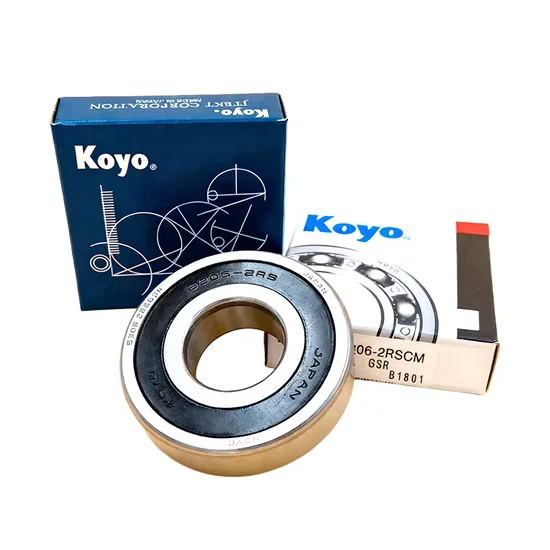
Deep Groove Ball Bearings
6203/6204/6205 Deep Groove Ball Bearing for Generator Equipment
View Product
Deep Groove Ball Bearings
KOYO 6203 6202 6204 Deep Groove Ball Bearing for Electric Fan Genuine Supplier
View Product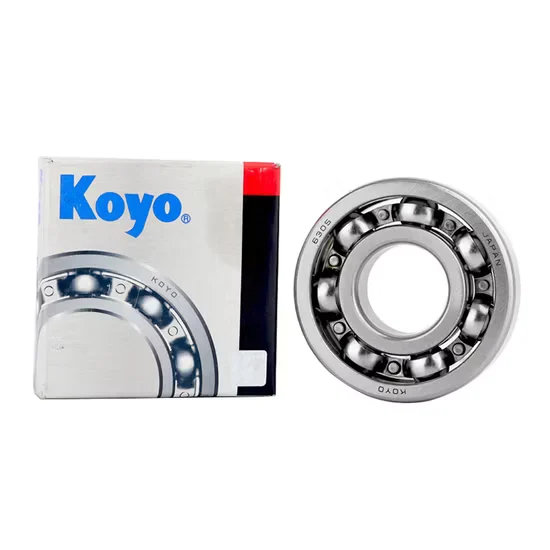
Deep Groove Ball Bearings
KOYO Deep Groove Ball Bearings 6201 6202 6203 6204 6205 Zz 2RS C3
View ProductKeep reading
More bearing selection guides for repair shops
Practical guides from KOYO Bearing Supplier on identifying Koyo / JTEKT bearings for farm machinery, construction equipment and power transmission repairs.
 Product & Series Guides
· 8 min read
Koyo 6005-2RS Moto Bearing Specs: Wholesale Supplier for Sale
Verify Koyo 6005-2RS specs beyond basic 25x47x12mm dimensions to prevent motor failures caused by seal friction and humidity. Learn how rubber 2RS limits compare…
Read the Guide Product & Series Guides
· 11 min read
Koyo NUP307 Cylindrical Roller Bearing Wholesale Supplier for Sale
Master Koyo NUP307 specs by prioritizing internal clearance and axial positioning over cosmetic perfection. This guide details 35x80x21mm dimensions, C3 clearance for thermal expansion,…
Read the Guide Product & Series Guides · 7 min read
Koyo 40TM18 Transmission Bearing Wholesale Supplier
Accurate Koyo 40TM18 transmission specs prevent costly gearbox failures caused by generic substitutes with incorrect tolerances. Verify exact dimensions, load ratings, and batch traceability…
Read the Guide
Bearing enquiry
Send your machine details. Get a written Koyo / JTEKT quote.
KOYO Bearing Supplier quotes a single bearing position or every bearing in an assembly on one enquiry, matched to your machine model and application, with model, quantity, price, lead time and quote validity in writing.
- WhatsApp+1 (702) 981-5880
- Emailinfo@koyoome.com
- Address8 Research Drive, Greenville, SC 20627, USA
"When a Koyo bearing failed on a harvest machine during the season, we needed a replacement urgently. The supplier identified the correct Koyo reference, shipped same-day, and the machine was back in the field within the day."

Request a Bearing Quote
Tell us the machine and the bearing position. Photos of the markings can follow on WhatsApp.