
Koyo 40TM18 Transmission Bearing Wholesale Supplier
Tighter clearance is not always better for heavy-duty gearboxes.
The Koyo 40TM18 transmission bearing requires specific internal clearance classes to accommodate thermal expansion under high load. Using a generic substitute with incorrect tolerances leads to immediate seizing or premature spalling. Verify the exact inner diameter, outer diameter, and width against the original equipment manufacturer specifications before installation. Ensure the bearing carries full traceability documentation to confirm it is genuine JTEKT/KOYO production rather than an unauthorized repack.
I still remember the sound of a gearbox screaming in a Ningbo workshop. It was not a gradual wear noise but a sudden, metallic screech that signaled catastrophic failure. The culprit was a batch of bearings stamped with a familiar brand name but sourced from an unauthorized distributor. They looked identical to the eye, yet the steel quality was inferior. Within months, the rollers had spalled, causing severe scuffing on the transmission shafts. The downtime cost far exceeded the savings from buying cheaper parts. That incident shaped my approach to sourcing. I no longer trust stamps alone. I verify dimensions, check batch traceability, and understand why the Koyo 40TM18 transmission specs matter more than the price tag.
What Are the Core Dimensions of Koyo 40TM18?
Exact dimensional fitment is non-negotiable for transmission integrity.
The Koyo 40TM18 is a specialized deep groove ball bearing designed for automotive and heavy-equipment transmissions. Its performance relies on micron-level precision in its inner diameter, outer diameter, and width. Deviations in these measurements, even within standard commercial tolerances, can cause misalignment in the gearbox housing. This misalignment generates excessive heat and vibration, leading to early failure.
When evaluating a Koyo 40TM18 transmission bearing wholesale supplier, request the official dimensional data sheet. Do not rely on generic catalogs that may list approximate values. The bearing must match the original design intent for shaft fit and housing bore. A mismatch in the inner diameter can lead to creep or tight fits that distort the raceways. Similarly, an incorrect width affects the axial positioning of gears, altering mesh patterns and increasing noise.
| Dimension Parameter | Genuine KOYO Specification | Common Aftermarket Deviation | Impact on Gearbox |
|---|---|---|---|
| Inner Diameter (ID) | Exact metric tolerance per ISO | Slightly oversized or undersized | Shaft creep or difficult installation |
| Outer Diameter (OD) | Precise h6/h7 tolerance | Inconsistent roundness | Housing stress and distortion |
| Width | Strict nominal value | Variable thickness | Axial gear misalignment |
| Internal Clearance | Specific class for thermal expansion | Generic C3 or unclassified | Seizing under heat or excessive play |
A European machinery importer once received a container of bearings that appeared correct on paper. However, during assembly, technicians noticed that every tenth bearing required excessive force to press onto the shaft. Upon measurement, the inner diameters varied beyond acceptable limits. The entire batch was rejected, causing weeks of delay. This highlights why verifying the physical dimensions of the Koyo 40TM18 is critical before bulk acceptance.
How Do Load Ratings and Speed Limits Affect Gearbox Life?
Dynamic load capacity determines survival under shock loads.
The Koyo 40TM18 operates in environments subject to variable speeds and heavy radial loads. Its dynamic load rating defines the theoretical life expectancy under constant conditions. However, real-world applications involve shock loads from gear engagement and torque fluctuations. If the bearing’s actual load capacity is lower than specified due to inferior material or heat treatment, fatigue cracks initiate rapidly.
Limiting speed is another crucial factor. The Koyo 40TM18 transmission specs include maximum rotational speeds for both grease and oil lubrication. Exceeding these limits generates heat that degrades the lubricant and softens the steel. A genuine KOYO bearing uses high-purity steel and advanced heat treatment to maintain hardness at elevated temperatures. Counterfeit or low-quality alternatives often fail to meet these thermal requirements, leading to rapid degradation.
Consider a mining operation where excavator transmissions failed repeatedly. The root cause was traced to bearings that could not handle the peak dynamic loads during digging cycles. The rollers flattened, and the cages distorted. Replacing them with verified Koyo 40TM18 units resolved the issue, as the genuine components met the required dynamic load ratings.
It is a common misconception that any bearing with the same dimensions will perform similarly. In reality, the metallurgical quality dictates how well the bearing handles stress concentrations. Genuine KOYO products undergo rigorous testing to ensure consistent load-carrying capacity across batches. This consistency is vital for OEMs and MRO operators who require predictable maintenance intervals.
Why Do Aftermarket 40TM18 Bearings Fail Prematurely?
Material purity and heat treatment define resistance to spalling.
Premature failure of the Koyo 40TM18 is often linked to substandard steel quality. Genuine KOYO bearings use vacuum-degassed steel with controlled inclusion levels. This purity reduces stress risers where fatigue cracks begin. Unauthorized repackers or counterfeit manufacturers often use lower-grade steel with higher impurity content. These impurities act as initiation points for spalling, especially under the high contact stresses found in transmissions.
Heat treatment is another differentiator. The raceways and rolling elements must achieve a specific hardness profile to resist wear and deformation. Genuine products follow strict protocols to ensure uniform hardness. Inferior copies may have soft spots or brittle zones, leading to chipping or cracking. In a case involving a Southeast Asian automotive repair chain, a batch of supposedly branded bearings failed within months. Microscopic analysis revealed inconsistent hardness and large non-metallic inclusions, confirming they were not genuine KOYO products.
| Failure Mode | Root Cause in Inferior Parts | Consequence in Transmission |
|---|---|---|
| Spalling | High inclusion density in steel | Noise and vibration increase |
| Smearing | Inadequate surface hardness | Loss of dimensional accuracy |
| Cage Fracture | Poor material toughness | Complete bearing seizure |
| Corrosion | Lack of proper sealing or coating | Rust-induced pitting |
The cost of failure extends beyond the bearing itself. A seized bearing can damage gears, shafts, and housings. The resulting downtime and repair costs are substantial. Therefore, sourcing from a reliable Koyo 40TM18 transmission bearing wholesale supplier who provides material certification is essential. It ensures that the steel quality and heat treatment meet the original design standards.
How to Verify Genuine Koyo 40TM18 Before Installation?
Traceability documentation is the only proof of authenticity.
Visual inspection alone is insufficient to distinguish genuine KOYO bearings from high-quality fakes. Counterfeiters have become adept at replicating packaging and laser etching. The most reliable method is to verify the batch traceability documents. Genuine products come with certificates that link the bearing to its production batch, including material heat numbers and quality control records.
Check the packaging for signs of tampering. Genuine KOYO boxes have specific printing quality and security features. However, packaging can be reused. Therefore, inspect the bearing itself for consistent laser etching. The font, depth, and position of the markings should be uniform. Irregularities suggest manual engraving or low-quality printing.
A Middle East distributor once faced a customs delay due to discrepancies in the paperwork for a shipment of bearings. The batch numbers on the boxes did not match the accompanying certificates. Upon investigation, it was found that the supplier had mixed genuine stock with unauthorized imports. This incident caused significant delays and financial loss. It underscores the importance of working with suppliers who maintain strict inventory control and provide verifiable documentation.
| Verification Step | Action Required | Indicator of Genuine Product |
|---|---|---|
| Packaging Check | Inspect box quality and seals | Crisp printing, intact security tape |
| Marking Inspection | Examine laser etching on ring | Uniform font, depth, and alignment |
| Document Review | Request batch traceability certs | Matching batch numbers and heat codes |
| Supplier Audit | Verify authorization status | Official distributor credentials |
When sourcing from a Koyo 40TM18 transmission bearing wholesale supplier, ask for their process for handling mixed-brand orders. A reputable supplier will have systems in place to prevent commingling of genuine and non-genuine stock. They should be able to provide technical support for model selection and failure analysis. This level of service indicates a commitment to quality and customer success.
Conclusion
Precision and authenticity prevent costly transmission failures.
The Koyo 40TM18 is a critical component where dimensional accuracy and material quality dictate performance. Relying on visual checks or low-cost substitutes invites risk. Verify dimensions, load ratings, and traceability documents to ensure genuine KOYO quality. Partner with suppliers who prioritize transparency and technical expertise to safeguard your operations.
Mentioned in this article
Koyo / JTEKT bearings from this guide
These are the Koyo / JTEKT bearing types discussed above. Open any product to check its details, or quote it together with the rest of your repair.

Tapered Roller Bearings
Genuine KOYO 32007 Tapered Roller Bearing Wholesale Supplier
View Product
Tapered Roller Bearings
Genuine KOYO 32006 Taper Roller Bearing Wholesale Supplier
View Product
Cylindrical Roller Bearings
Koyo NSK N408e Cylindrical Roller Bearing Genuine Wholesale Supplier
View Product
Cylindrical Roller Bearings
Koyo N2305e Cylindrical Roller Bearing Genuine Wholesale Supplier
View ProductKeep reading
More bearing selection guides for repair shops
Practical guides from KOYO Bearing Supplier on identifying Koyo / JTEKT bearings for farm machinery, construction equipment and power transmission repairs.
 Product & Series Guides
· 8 min read
Koyo 6005-2RS Moto Bearing Specs: Wholesale Supplier for Sale
Verify Koyo 6005-2RS specs beyond basic 25x47x12mm dimensions to prevent motor failures caused by seal friction and humidity. Learn how rubber 2RS limits compare…
Read the Guide Product & Series Guides · 10 min read
Koyo NUP307 Cylindrical Roller Bearing Wholesale Supplier for Sale
Master Koyo NUP307 specs by prioritizing internal clearance and axial positioning over cosmetic perfection. This guide details 35x80x21mm dimensions, C3 clearance for thermal expansion,…
Read the Guide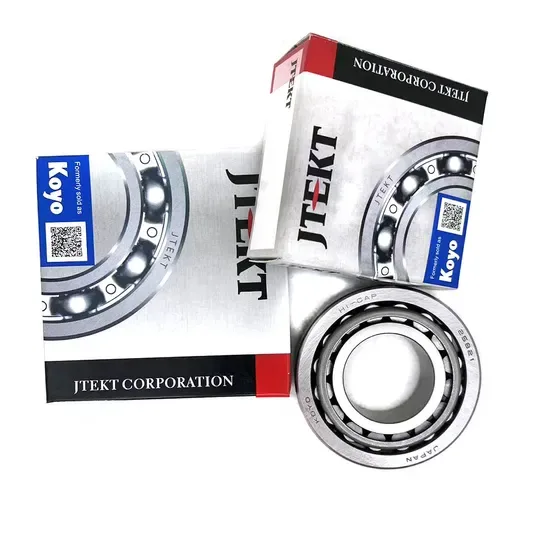 Product & Series Guides
· 7 min read
Koyo ST3062 Steering Bearing Supplier: Genuine Stock & Bulk Wholesale
Verify Koyo ST3062 steering bearing specs to prevent premature failure caused by substandard inner ring hardness. Learn precise dimensional tolerances, load ratings, and authenticity…
Read the Guide
Bearing enquiry
Send your machine details. Get a written Koyo / JTEKT quote.
KOYO Bearing Supplier quotes a single bearing position or every bearing in an assembly on one enquiry, matched to your machine model and application, with model, quantity, price, lead time and quote validity in writing.
- WhatsApp+1 (702) 981-5880
- Emailinfo@koyoome.com
- Address8 Research Drive, Greenville, SC 20627, USA
"When a Koyo bearing failed on a harvest machine during the season, we needed a replacement urgently. The supplier identified the correct Koyo reference, shipped same-day, and the machine was back in the field within the day."

Request a Bearing Quote
Tell us the machine and the bearing position. Photos of the markings can follow on WhatsApp.