
Koyo 6005-2RS Moto Bearing Specs: Wholesale Supplier for Sale
Matching the 25x47x12mm envelope is not enough to guarantee motor reliability.
The Koyo 6005-2RS features a 25 mm bore, 47 mm outer diameter, and 12 mm width, with rubber seals on both sides designed for grease retention and contaminant exclusion. However, its suitability for motor applications depends less on these static dimensions and more on the interaction between the seal lip material, operating temperature, and ambient humidity. For high-speed or high-temperature environments, the friction generated by the 2RS rubber seals may exceed safe thermal limits, necessitating a switch to metal-shielded variants or specialized high-temperature greases.
I still remember the silence in the warehouse after that shipment to Vietnam returned. It was a standard order of deep groove ball bearings for a local motor assembly plant. On paper, the Koyo 6005-2RS specs were perfect. The dimensions matched the housing drawings down to the micron. But within weeks, the motors started screaming. The issue wasn’t the steel or the geometry. It was the humidity. The tropical moisture penetrated the standard rubber seal interface, emulsifying the grease and causing rapid degradation. That loss taught me that a bearing is not just a mechanical component; it is a system interacting with its environment. When you look at a spec sheet, you are seeing a snapshot, not the movie of how that part lives in your machine.
Understanding the gap between nominal specifications and real-world performance is critical for distributors and OEMs who need to avoid field failures. This guide breaks down the actual operational limits of this specific bearing model, moving beyond basic catalog data to address the practical challenges of sourcing and application.
What Are the Core Dimensions and Load Specs of Koyo 6005-2RS?
The dimensional stability of the 6005 series is governed by international tolerance standards, but load capacity is strictly limited by the sealing configuration.
When procurement teams request the Koyo 6005-2RS, they are typically looking for a direct replacement in standard electric motor frames. The basic dimensions are standardized across the industry: a 25 mm inner diameter, 47 mm outer diameter, and 12 mm width. These measurements adhere to ISO 492 standards for radial bearings, ensuring interchangeability with other major brands that follow the same dimensional series.
However, the load ratings tell a different story. The basic dynamic load rating is approximately 10.1 kN, and the static load rating is around 5.85 kN. While these numbers suggest robustness, they assume ideal lubrication conditions. In a sealed unit like the 2RS variant, the grease volume is fixed at the factory. If the motor operates near its maximum load capacity, the heat generated can thin the grease, reducing the effective film thickness between the balls and raceways. This leads to premature fatigue, regardless of the steel quality.
| Parameter | Specification Value | Application Note |
|---|---|---|
| Bore Diameter | 25 mm | Standard shaft fit for small to medium motors |
| Outer Diameter | 47 mm | Fits standard housing bores |
| Width | 12 mm | Compact design for space-constrained assemblies |
| Dynamic Load Rating | ~10.1 kN | Limit continuous operation to below this threshold |
| Static Load Rating | ~5.85 kN | Ensure no shock loads exceed this limit during installation |
| Seal Type | 2RS (Rubber) | Provides superior dust protection but increases friction |
For buyers sourcing these units, it is vital to verify that the supplied bearings meet the P0 normal tolerance class unless a higher precision grade is explicitly required for high-speed spindle applications. Most general-purpose industrial motors do not require P5 or P4 precision, and paying for such grades without a technical justification is an unnecessary cost.
How Does the 2RS Rubber Seal Perform in Motor Environments?
Rubber seals offer excellent contamination protection but become a liability in high-temperature or high-speed scenarios due to frictional heat generation.
The “2RS” designation indicates that the bearing is equipped with non-contact or light-contact rubber seals on both sides. These seals are typically made from nitrile rubber (NBR), which provides good resistance to oils and greases. In a clean, moderate-temperature environment, this configuration is ideal. It keeps the lubricant inside and dirt outside, extending the service life significantly compared to open bearings.
However, the performance of the seal is highly dependent on the operating environment. In the case of the Vietnamese motor assembly, the ambient humidity was consistently high. Standard NBR seals can harden or crack over time when exposed to certain atmospheric conditions or if the motor runs hot. Once the seal lip loses its elasticity, it no longer maintains a tight barrier. Moisture enters, mixes with the grease, and creates an abrasive slurry that destroys the raceway surface.
Furthermore, the friction torque generated by the rubber seal lip rubbing against the inner ring is not negligible. At higher rotational speeds, this friction generates heat. If the motor already runs hot due to heavy loading or poor ventilation, the additional heat from the seals can push the internal temperature beyond the grease’s dropping point. This causes the lubricant to bleed out or oxidize rapidly, leading to catastrophic failure.
For applications where temperatures regularly exceed 80°C or speeds approach the bearing’s limiting value, a metal-shielded (ZZ) variant might be preferable despite its lower contamination protection. Alternatively, using bearings with high-temperature fluorocarbon seals can mitigate these risks, though at a higher cost.
Koyo 6005-2RS vs Alternatives: 2RS vs ZZ vs Open
Choosing the right sealing option requires balancing contamination protection against friction and speed limitations.
Distributors often face requests for the Koyo 6005-2RS when the customer actually needs a different configuration. Understanding the trade-offs between the three main sealing options—Open, ZZ (Metal Shield), and 2RS (Rubber Seal)—is essential for providing the correct solution.
The Open bearing has no seals or shields. It offers the lowest friction and highest speed capability but requires constant maintenance and a clean environment. It is rarely used in sealed motor housings unless the motor itself is pressurized or oil-bathed.
The ZZ bearing uses thin metal shields pressed into the outer ring. These shields do not touch the inner ring, resulting in minimal friction and heat generation. They provide decent protection against large particles but allow fine dust and moisture to enter. This makes them suitable for high-speed applications where heat buildup is a concern, provided the environment is relatively clean.
The 2RS bearing, as discussed, uses rubber seals. These provide the best protection against contaminants and retain grease effectively. However, they introduce friction and have lower speed limits. The choice between ZZ and 2RS often comes down to the specific motor application. For a fan motor running at moderate speeds in a dusty workshop, the 2RS is the clear winner. For a high-speed spindle motor in a climate-controlled room, the ZZ might offer better longevity due to lower operating temperatures.
| Feature | Open Bearing | ZZ (Metal Shield) | 2RS (Rubber Seal) |
|---|---|---|---|
| Contamination Protection | None | Moderate (Large particles) | High (Dust and Moisture) |
| Friction Torque | Lowest | Low | Higher |
| Speed Limit | Highest | High | Moderate |
| Grease Retention | Poor | Good | Excellent |
| Ideal Application | Oil-bathed systems | High-speed, clean environments | General purpose, dusty/humid environments |
Sourcing the wrong type can lead to premature returns. A buyer once ordered ZZ bearings for a agricultural pump motor, expecting them to handle field dust. The fine particulate matter entered the bearing, mixed with the grease, and caused abrasion within months. Switching to the Koyo 6005-2RS solved the issue, as the rubber seals effectively blocked the ingress of fine soil.
How to Verify Genuine Koyo 6005-2RS and Avoid Field Failures
Authenticity verification goes beyond checking the box; it requires inspecting the physical characteristics of the seal and the consistency of the packaging.
The market for popular bearings like the Koyo 6005-2RS is flooded with counterfeits. These fake bearings often use inferior steel and low-quality seals that fail prematurely. For distributors and OEMs, receiving a batch of counterfeit goods can damage reputation and incur significant warranty costs.
Verifying genuineness starts with the packaging. Authentic Koyo products come in boxes with specific printing quality, barcodes, and lot numbers that can be traced back to the manufacturer. However, packaging can be faked. Therefore, physical inspection is crucial.
First, examine the rubber seal. Genuine Koyo 2RS seals have a consistent color and texture. The rubber should feel resilient, not brittle or overly soft. The seal lip should be uniform around the circumference, with no visible flashes or irregularities. Counterfeit seals often have rough edges or inconsistent thickness, which leads to uneven friction and early failure.
Second, check the marking on the bearing itself. The laser etching or stamping should be clear, deep, and evenly spaced. Blurry or shallow markings are a red flag. Additionally, the surface finish of the outer ring should be smooth and free from machining marks.
Finally, request traceability documentation. Reputable suppliers provide certificates of origin and material test reports that link the batch number on the box to the production records. Without this paper trail, the risk of receiving counterfeit goods increases significantly.
A European distributor recently encountered a batch of bearings that looked correct externally but failed under load. Upon closer inspection, the steel quality was substandard, and the seals degraded quickly. The lack of proper traceability documents from the supplier meant they had no recourse. Ensuring your supply chain provides full documentation is not just a bureaucratic step; it is a quality assurance measure.
Conclusion
Selecting the Koyo 6005-2RS requires looking beyond the 25x47x12mm dimensions to understand the thermal and environmental limits of its rubber seals.
While this bearing is a versatile choice for many motor applications, its performance is dictated by the interplay of seal friction, grease stability, and ambient conditions. Distributors and engineers must evaluate whether the 2RS configuration suits the specific speed and temperature profile of their equipment, or if a metal-shielded alternative is more appropriate. Verifying authenticity through physical inspection and traceability documentation remains the most effective defense against field failures caused by counterfeit components.
Mentioned in this article
Koyo / JTEKT bearings from this guide
These are the Koyo / JTEKT bearing types discussed above. Open any product to check its details, or quote it together with the rest of your repair.

Deep Groove Ball Bearings
Koyo 6003/6004/6005 Deep Groove Ball Bearing for Industrial Auto Equipment
View Product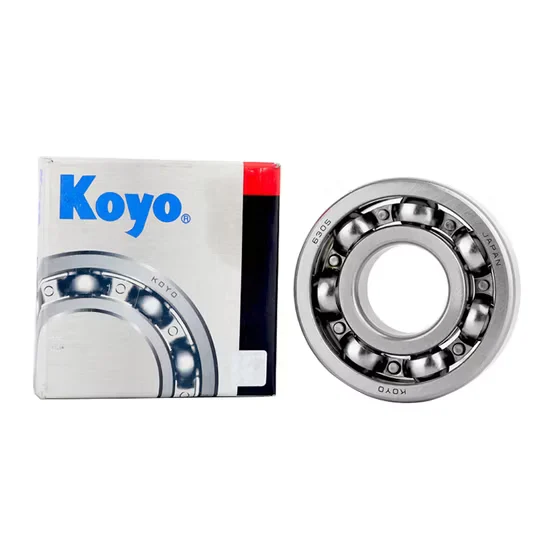
Deep Groove Ball Bearings
KOYO Bearing 6005 6006 6300-6309 Motorcycle Deep Groove Ball Bearings Japan
View Product
Tapered Roller Bearings
Genuine KOYO 32007 Tapered Roller Bearing Wholesale Supplier
View Product
Tapered Roller Bearings
Genuine KOYO 32006 Taper Roller Bearing Wholesale Supplier
View ProductKeep reading
More bearing selection guides for repair shops
Practical guides from KOYO Bearing Supplier on identifying Koyo / JTEKT bearings for farm machinery, construction equipment and power transmission repairs.
Product & Series Guides · 10 min read
Koyo NUP307 Cylindrical Roller Bearing Wholesale Supplier for Sale
Master Koyo NUP307 specs by prioritizing internal clearance and axial positioning over cosmetic perfection. This guide details 35x80x21mm dimensions, C3 clearance for thermal expansion,…
Read the Guide Product & Series Guides · 6 min read
Koyo 40TM18 Transmission Bearing Wholesale Supplier
Accurate Koyo 40TM18 transmission specs prevent costly gearbox failures caused by generic substitutes with incorrect tolerances. Verify exact dimensions, load ratings, and batch traceability…
Read the Guide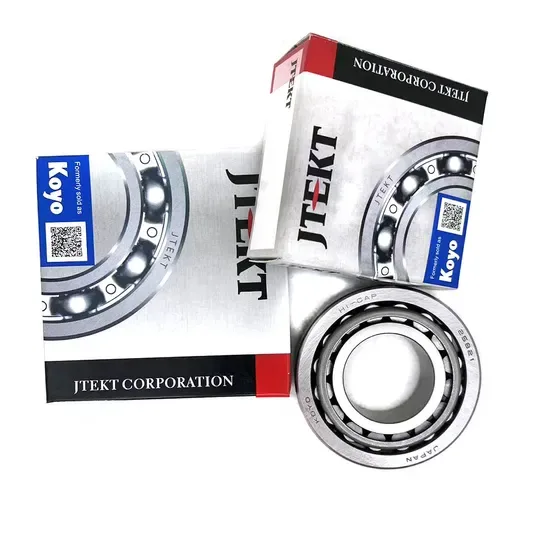 Product & Series Guides
· 7 min read
Koyo ST3062 Steering Bearing Supplier: Genuine Stock & Bulk Wholesale
Verify Koyo ST3062 steering bearing specs to prevent premature failure caused by substandard inner ring hardness. Learn precise dimensional tolerances, load ratings, and authenticity…
Read the Guide
Bearing enquiry
Send your machine details. Get a written Koyo / JTEKT quote.
KOYO Bearing Supplier quotes a single bearing position or every bearing in an assembly on one enquiry, matched to your machine model and application, with model, quantity, price, lead time and quote validity in writing.
- WhatsApp+1 (702) 981-5880
- Emailinfo@koyoome.com
- Address8 Research Drive, Greenville, SC 20627, USA
"When a Koyo bearing failed on a harvest machine during the season, we needed a replacement urgently. The supplier identified the correct Koyo reference, shipped same-day, and the machine was back in the field within the day."

Request a Bearing Quote
Tell us the machine and the bearing position. Photos of the markings can follow on WhatsApp.