
Genuine Koyo Motorcycle Wheel Bearings Wholesale Supplier
The cheapest bearing on the invoice is often the most expensive component in your workshop.
Sourcing authentic genuine Koyo wheel bearings supplier stock requires strict verification of packaging integrity, laser marking depth, and radial clearance parameters to prevent catastrophic wet-weather failures. Visual similarity in outer boxes does not guarantee internal seal quality or grease retention capabilities. Distributors must prioritize traceability documentation and batch consistency over unit price discounts to avoid warranty claims that far exceed initial savings.
I still remember the humidity in Ho Chi Minh City during the monsoon season. The air was thick enough to drink, and so was the water entering our assembly line’s hub units. We had sourced a batch of bearings that looked perfect on paper and even better in the box. The packaging was crisp, the logos were sharp, and the price was significantly lower than our usual channel. But within weeks of the bikes hitting the streets, the returns started pouring in. Seized hubs. Washed-out grease. Complete mechanical failure. It wasn’t just a bad batch; it was a fundamental mismatch between the seal design and the operating environment. That incident shifted my entire approach to procurement. I stopped looking at the box and started looking at the steel, the seal material, and the supply chain trail. Now, when I evaluate Koyo motorcycle bearing buying guide criteria for clients, I focus on what happens after the sale, not just during the transaction.
Why Do Counterfeit Koyo Bearings Fail in Wet Conditions?
Poor seal design causes rapid grease washout and hub seizure, leading to immediate safety hazards.
Counterfeit bearings often mimic the external dimensions of authentic products but fail in critical internal specifications. The primary point of failure in motorcycle applications, especially in tropical or rainy climates, is the seal. Authentic Koyo bearings utilize specific rubber compounds designed to withstand friction heat while maintaining flexibility against water intrusion. Counterfeit versions frequently use recycled or lower-grade rubber that hardens prematurely or lacks the precise lip geometry required to keep contaminants out.
When water enters the bearing race, it emulsifies the grease. This mixture loses its lubricating properties almost immediately, turning into an abrasive paste. The result is accelerated wear on the balls and races, generating heat that further degrades the seal. This cycle leads to hub seizure, which can lock the wheel entirely.
| Feature | Authentic Koyo Specification | Common Counterfeit Trait |
|---|---|---|
| Seal Material | High-grade NBR or specialized compound | Recycled rubber or generic NBR |
| Grease Quality | Premium lithium-based, water-resistant | Low-cost industrial grease |
| Seal Lip Geometry | Precision-molded for optimal contact | Irregular or loose fit |
| Water Resistance | Robust protection against washout | Vulnerable to moisture ingress |
A distributor in Southeast Asia once shared how their return rate spiked during the rainy season. They had switched to a cheaper source to improve margins. The bearings worked fine in dry storage, but once installed on bikes used for daily commuting in heavy rain, the failure rate became unsustainable. The cost of replacing the hubs, labor, and handling customer complaints dwarfed the initial savings. This is why understanding how to identify fake Koyo bearings is not just a technical skill but a financial necessity for any serious aftermarket business.
How to Verify Genuine Koyo Bearings via Packaging & Marks?
Check laser etching depth, font clarity, and traceability codes to confirm authenticity before installation.
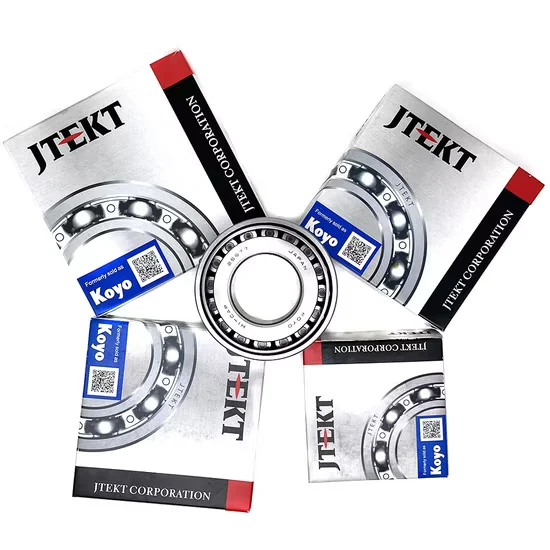
Visual inspection is the first line of defense, but it requires knowing what to look for. Authentic Koyo bearings feature laser-etched markings that are clean, precise, and deeply integrated into the metal surface. Counterfeiters often use ink printing or shallow etching that can fade or rub off easily. The font style and spacing are also consistent in genuine products, whereas fakes may show irregularities in character width or alignment.
Packaging is another critical indicator. Genuine Koyo boxes have high-quality printing with sharp edges and correct color saturation. The inner wrapping is typically clean and free of excess oil or debris. However, sophisticated counterfeiters have improved their packaging, making visual checks alone insufficient. This is where traceability codes come into play. Each genuine bearing should have a unique code that can be traced back to the manufacturing batch.
| Verification Point | Authentic Indicator | Red Flag |
|---|---|---|
| Laser Marking | Deep, clear, permanent etching | Shallow, faint, or ink-printed |
| Font Consistency | Uniform spacing and style | Irregular characters or spacing |
| Packaging Quality | Sharp print, clean interior | Blurry text, oily residue inside |
| Traceability Code | Verifiable batch number | Missing or non-verifiable code |
A regional wholesaler I work with implemented a strict incoming inspection protocol. They now use magnifying lenses to check the laser marks on every batch. If the etching feels smooth to the touch or looks pixelated under magnification, the entire batch is quarantined. This simple step has eliminated nearly all counterfeit incidents in their supply chain. For distributors, establishing such protocols is essential when sourcing from a genuine Koyo wheel bearings supplier.
What Clearance Parameters Matter for Motorcycle Hubs?
Match specific radial clearance to prevent premature wear or overheating in high-speed applications.
Radial clearance is the space between the rolling elements and the raceways. In motorcycle applications, this parameter is critical because it affects how the bearing handles thermal expansion and load distribution. Too little clearance can lead to overheating and seizure as the bearing expands during operation. Too much clearance can cause vibration, noise, and premature fatigue.
Authentic Koyo bearings are manufactured to precise tolerance classes, ensuring consistent radial clearance across batches. Counterfeit bearings often lack this precision, leading to unpredictable performance. For motorcycle hubs, which operate at high speeds and under varying loads, using bearings with incorrect clearance can significantly reduce service life.
| Parameter | Impact on Performance | Risk of Incorrect Value |
|---|---|---|
| Radial Clearance | Determines thermal expansion allowance | Overheating or excessive play |
| Tolerance Class | Ensures dimensional consistency | Vibration and noise |
| Load Rating | Defines maximum operational load | Premature fatigue failure |
A repair workshop in Latin America faced recurring issues with seized front hubs. After analyzing the failed parts, they discovered that the replacement bearings had inconsistent radial clearance. Some were too tight, causing heat buildup, while others were too loose, leading to wobble. Switching to verified authentic bearings with documented clearance parameters resolved the issue. This highlights the importance of technical data when selecting Koyo motorcycle bearing buying guide compliant products.
How to Source Authentic Koyo Bearings Reliably?
Require full traceability docs and flexible mixed-batch consolidation to ensure supply chain integrity.
Reliable sourcing goes beyond finding a low price. It involves building a relationship with suppliers who prioritize transparency and quality. A trustworthy genuine Koyo wheel bearings supplier will provide complete documentation, including certificates of origin and batch test reports. They should also offer flexible ordering options, allowing distributors to consolidate mixed batches in a single container. This reduces inventory risk and ensures a steady supply of various part numbers.
Traceability is key. Every bearing should be linked to its production batch, allowing for quick identification in case of quality issues. Suppliers who cannot provide this level of detail should be avoided. Additionally, look for suppliers who offer technical support and failure analysis services. This helps in diagnosing issues and preventing future occurrences.
| Sourcing Criterion | Benefit | Risk of Neglect |
|---|---|---|
| Full Traceability | Quick issue resolution | Inability to track defective batches |
| Mixed-Batch Consolidation | Reduced inventory cost | Overstocking or stockouts |
| Technical Support | Better application guidance | Misapplication and failure |
| Documentation | Proof of authenticity | Legal and warranty disputes |
We maintain a massive spot inventory of genuine Koyo bearings, covering thousands of standard and special part numbers. Our system allows for mixed-container consolidation, enabling distributors to order exactly what they need without committing to large single-SKU volumes. This flexibility, combined with full traceability documentation, ensures that our clients receive authentic products that meet their specific requirements. By focusing on these aspects, you can secure a reliable supply of genuine Koyo wheel bearings supplier verified stock.
Conclusion
Authenticity prevents costly failures and protects your brand reputation.
Sourcing genuine Koyo motorcycle wheel bearings requires diligence in verification, understanding of technical parameters, and partnership with transparent suppliers. By focusing on seal quality, laser marking, and radial clearance, distributors can avoid the pitfalls of counterfeit products. Reliable sourcing partners offer traceability and flexibility, ensuring consistent quality and supply. Prioritize these factors to maintain customer trust and operational efficiency.
Mentioned in this article
Koyo / JTEKT bearings from this guide
These are the Koyo / JTEKT bearing types discussed above. Open any product to check its details, or quote it together with the rest of your repair.

Railway Bearings
Genuine Koyo 32011 32209 32212 Tapered Roller Bearing for Railway Locomotive Axle Boxes
View Product
Railway Bearings
Genuine Koyo Tapered Roller Bearings 32019 32020 32021 32022 32024 for Railway Machinery
View Product
Tapered Roller Bearings
Genuine Koyo Tapered Roller Bearing 32212 32213 32214 32215 32216 for Fan Spare Parts
View Product
Tapered Roller Bearings
Genuine Koyo 30305D 30306D 30307D 30308d Tapered Roller Bearing Low Friction
View ProductKeep reading
More bearing selection guides for repair shops
Practical guides from KOYO Bearing Supplier on identifying Koyo / JTEKT bearings for farm machinery, construction equipment and power transmission repairs.
 Buying Guide
· 8 min read
Koyo Auto Bearings Wholesale Supplier & Bulk Quote
Request a Quote for Koyo Auto Bearings that accounts for total landed cost, not just FOB price. Optimize margins through mixed-container consolidation and ensure…
Read the Guide Buying Guide · 7 min read
Koyo Auto Bearings Wholesale Supplier for Parts Stores
Stocking Koyo auto bearings requires strict verification of suffix codes and traceability to prevent costly assembly failures. Learn essential packaging checks and cross-brand alternatives…
Read the Guide Buying Guide
· 7 min read
Fake Auto Bearings: Neutral Buyer Checks Wholesale Supplier
Master Fake Auto Bearings Neutral Buyer Checks by shifting focus from packaging to internal physical inspections and traceability. Detect counterfeits through acidic rust oil…
Read the Guide
Bearing enquiry
Send your machine details. Get a written Koyo / JTEKT quote.
KOYO Bearing Supplier quotes a single bearing position or every bearing in an assembly on one enquiry, matched to your machine model and application, with model, quantity, price, lead time and quote validity in writing.
- WhatsApp+1 (702) 981-5880
- Emailinfo@koyoome.com
- Address8 Research Drive, Greenville, SC 20627, USA
"When a Koyo bearing failed on a harvest machine during the season, we needed a replacement urgently. The supplier identified the correct Koyo reference, shipped same-day, and the machine was back in the field within the day."

Request a Bearing Quote
Tell us the machine and the bearing position. Photos of the markings can follow on WhatsApp.