
Genuine Koyo Motorcycle Steering Head Bearings Wholesale Supplier
Most counterfeit bearings do not fail because the steel is soft; they fail because the seals let dust in.
Sourcing genuine Koyo motorcycle steering head bearings requires verifying traceability documents and understanding original internal clearance specs to prevent premature steering failure in heavy-load or long-distance applications. Without certified mill certificates and correct C3/C4 clearance selection, even a visually perfect bearing will succumb to rapid grease degradation and inner ring creep under mountainous riding conditions.
I still remember the silence in the workshop after we opened the container from Chile. The boxes looked right. The part numbers matched. But when my mechanic pressed the outer race, it felt gritty. We had mixed a batch of high-quality counterfeits with authentic stock for a fleet upgrade. Months later, the call came: riders on the Andes routes reported heavy steering and abnormal noise. The teardown revealed iron filings suspended in blackened grease. That loss was not just financial; it was a blow to credibility that took years to rebuild. Since then, I have learned that the difference between a reliable supply chain and a customs rejection notice lies in the details of documentation and material verification.
Understanding why these components fail is the first step in securing your inventory. The market is flooded with parts that look identical but lack the metallurgical integrity required for dynamic steering loads.
Why Do Counterfeit Koyo Steering Bearings Fail Prematurely?
Cheap bearings do not just wear faster; they actively destroy the steering assembly through seal failure and material instability.
The primary misconception in the aftermarket is that a fake bearing simply has a shorter lifespan. In reality, the failure mode is aggressive. Counterfeit manufacturers often cut costs on the rubber compound used for seals. These inferior seals harden quickly under friction heat, allowing road dust and moisture to penetrate the raceway. Once contaminants enter, the grease turns into an abrasive paste. This leads to rapid pitting on the rollers and races, generating the iron filings I found in those Chilean returns.
Furthermore, unauthorized batches frequently skip the precise heat treatment cycles required for bearing steel. Without proper carburizing and tempering, the inner ring lacks the necessary surface hardness. Under the heavy lateral loads of steering, especially in loaded touring motorcycles, the inner ring can creep on the shaft. This micro-movement generates fretting corrosion, leading to sudden locking or excessive play.
| Failure Indicator | Genuine Koyo Specification | Common Counterfeit Trait |
|---|---|---|
| Seal Material | Heat-resistant, flexible rubber | Hardens quickly, prone to cracking |
| Internal Cleanliness | Controlled assembly environment | Visible dust or debris inside |
| Raceway Surface | Mirror-like finish, no tool marks | Rough grinding marks visible |
| Grease Quality | High-temperature stable lithium complex | Basic mineral oil, separates easily |
A workshop in Southeast Asia recently reported a spike in warranty claims. Mechanics noted that during teardown, the fake bearings produced a distinct grinding noise even before removal. The decibel trend during rotation tests showed a sharp increase compared to OEM parts. This auditory cue is often the first sign of surface distress caused by poor material quality.
Verifying the physical part is only half the battle. The paperwork tells the true story of origin.
How to Verify Genuine Koyo Bearings Before Shipment?
A missing mill certificate is a red flag that often leads to customs detention or total batch rejection.
Verification starts before the box is opened. Genuine Koyo motorcycle steering head bearings come with a trail of documentation that counterfeits cannot replicate. The most critical document is the original mill certificate, which traces the steel batch back to the production facility. Without this, customs authorities in strict jurisdictions may block the entire container, leading to significant detention days and claim ratios that erode profit margins.
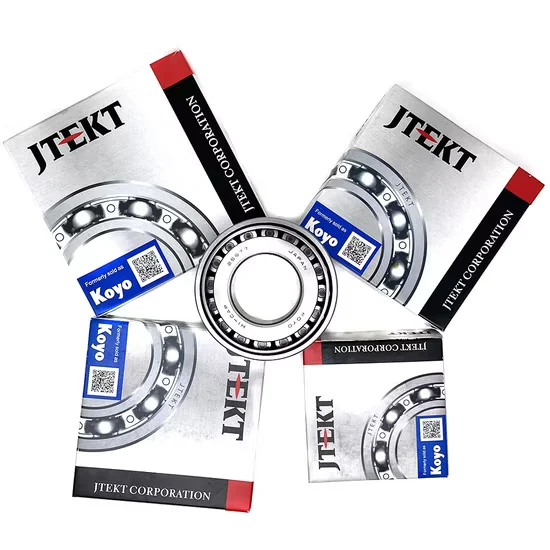
Physical inspection should focus on three areas: packaging, markings, and construction. Original packaging uses high-quality cardboard with precise printing. The barcode should scan correctly and link to the manufacturer’s database. On the bearing itself, the laser etching should be crisp and shallow. Deep, rough engraving is a sign of manual marking on fake parts.
| Verification Point | Authentic Characteristics | Suspicious Indicators |
|---|---|---|
| Packaging Box | Sturdy, precise print, scannable barcode | Flimsy cardboard, blurry text, unscannable code |
| Part Marking | Laser-etched, crisp, shallow depth | Deep stamped, rough edges, misaligned font |
| Cage Construction | Smooth, uniform rivets, no burrs | Rough edges, uneven spacing, visible welds |
| Traceability Docs | Original mill certificate, batch number match | Photocopies only, missing batch links |
I once handled a shipment where the supplier provided only photocopies of the certificates. When we requested the original digital files with verifiable batch numbers, they stalled. We declined the order. Two weeks later, news broke that a competitor’s container was held at port for lacking these exact documents. The cost of verifying paperwork is negligible compared to the cost of a rejected shipment.
Even with genuine parts, incorrect specification selection can lead to failure. Understanding the technical parameters is essential.
What Are the Critical Spec Parameters for Motorcycle Steering Heads?
Using standard clearance in high-shock applications causes premature fatigue; specialized clearance settings are required.
Not all Koyo motorcycle steering head bearings are created equal for every riding condition. The internal clearance, often denoted as C3 or C4, is a critical parameter. Standard clearance may suffice for city commuting, but for long-distance touring or off-road use, the shock loads are significantly higher. A tighter clearance can lead to overheating as the rollers expand, while too much clearance causes impact damage.
Tapered roller bearings, commonly used in steering heads, require precise preload adjustment. Incorrect preload leads to either excessive friction or loose steering. Genuine Koyo bearings are manufactured to tight tolerances that allow for consistent preload setting. Unauthorized batches often have inconsistent dimensions, making it impossible to achieve the correct setup. This results in the “notchy” feeling riders describe when turning the handlebars at low speeds.
Material hardness is another key factor. Bearing steel must reach a specific HRC range to resist deformation. While exact proprietary values are confidential, industry standards dictate a high level of surface hardness for rolling elements. Counterfeit parts often fall short, leading to brinelling under heavy loads. This is why verifying the source is as important as checking the spec sheet.
| Parameter | City Commuting Application | Heavy Load/Off-Road Application |
|---|---|---|
| Internal Clearance | Standard (C2/C3) | Increased (C3/C4) for thermal expansion |
| Preload Setting | Light to Medium | Precise medium to prevent play under shock |
| Grease Type | Standard Lithium | High-temperature, water-resistant complex |
| Inspection Frequency | Routine Maintenance | Pre-ride check for play and noise |
A fleet operator in South America noticed that their bikes used for mountain deliveries required bearing replacements twice as often as their city counterparts. After switching to bearings with appropriate C4 clearance and high-grade grease, the failure rate dropped noticeably. The key was matching the component spec to the operational reality.
Securing the right parts requires a supplier who understands these nuances and can provide consistent stock.
How to Source Genuine Koyo Bearings for Wholesale Reliability?
Reliable sourcing is not about the lowest price per unit; it is about the consistency of traceability and inventory depth.
Finding a trustworthy Koyo motorcycle steering head bearings supplier involves evaluating their ability to provide complete traceability. A professional supplier maintains direct links to official channels, ensuring that every batch comes with the necessary documentation. This eliminates the risk of mixing counterfeit goods into your inventory. For distributors, this means peace of mind when selling to end-users who demand authenticity.
Flexibility in minimum order quantities (MOQ) is also crucial. Large distributors may need full container loads, while smaller workshops require single-unit emergency spares. A robust supplier offers both, allowing you to consolidate mixed-brand orders. This reduces shipping costs and simplifies logistics. Instead of managing multiple shipments from different brands, you can receive a single consolidated container with SKF, FAG, NSK, and Koyo products, all with verified documentation.
Technical support is another differentiator. A good supplier does not just ship boxes; they provide cross-brand equivalent consultation. If a specific Koyo model is out of stock, they can recommend a verified equivalent from another premium brand like NTN or TIMKEN, ensuring your customers’ machines stay running. This level of service transforms a transactional relationship into a strategic partnership.
| Sourcing Factor | Basic Distributor | Professional Global Supplier |
|---|---|---|
| Traceability | Self-reported or none | Full mill certificates and batch tracking |
| MOQ Flexibility | High minimums only | Single units to full containers |
| Inventory Depth | Limited popular sizes | Thousands of standard and special parts |
| Technical Support | Order processing only | Cross-brand equivalence and failure analysis |
We have seen how a lack of proper sourcing strategy can lead to significant losses. By prioritizing traceability and technical accuracy, you protect your business from the risks associated with counterfeit parts. Our approach focuses on maintaining a massive spot inventory and providing the documentation needed for smooth customs clearance across multiple regions. This ensures that whether you need a single bearing for an urgent repair or a full container for your warehouse, you receive genuine products that meet the highest standards.
Conclusion
Authenticity in bearing sourcing is verified by documentation, not just appearance.
Sourcing genuine Koyo motorcycle steering head bearings demands a rigorous approach to traceability and specification matching. By understanding the failure modes of counterfeits and insisting on proper clearance specs, distributors and repair groups can ensure long-term reliability for their clients. The cost of verification is far less than the cost of failure.
Mentioned in this article
Koyo / JTEKT bearings from this guide
These are the Koyo / JTEKT bearing types discussed above. Open any product to check its details, or quote it together with the rest of your repair.

Railway Bearings
Genuine Koyo 32011 32209 32212 Tapered Roller Bearing for Railway Locomotive Axle Boxes
View Product
Railway Bearings
Genuine Koyo Tapered Roller Bearings 32019 32020 32021 32022 32024 for Railway Machinery
View Product
Tapered Roller Bearings
Genuine Koyo Tapered Roller Bearing 32212 32213 32214 32215 32216 for Fan Spare Parts
View Product
Tapered Roller Bearings
Genuine Koyo 30305D 30306D 30307D 30308d Tapered Roller Bearing Low Friction
View ProductKeep reading
More bearing selection guides for repair shops
Practical guides from KOYO Bearing Supplier on identifying Koyo / JTEKT bearings for farm machinery, construction equipment and power transmission repairs.
 Buying Guide
· 8 min read
Koyo Auto Bearings Wholesale Supplier & Bulk Quote
Request a Quote for Koyo Auto Bearings that accounts for total landed cost, not just FOB price. Optimize margins through mixed-container consolidation and ensure…
Read the Guide Buying Guide · 7 min read
Koyo Auto Bearings Wholesale Supplier for Parts Stores
Stocking Koyo auto bearings requires strict verification of suffix codes and traceability to prevent costly assembly failures. Learn essential packaging checks and cross-brand alternatives…
Read the Guide Buying Guide
· 7 min read
Fake Auto Bearings: Neutral Buyer Checks Wholesale Supplier
Master Fake Auto Bearings Neutral Buyer Checks by shifting focus from packaging to internal physical inspections and traceability. Detect counterfeits through acidic rust oil…
Read the Guide
Bearing enquiry
Send your machine details. Get a written Koyo / JTEKT quote.
KOYO Bearing Supplier quotes a single bearing position or every bearing in an assembly on one enquiry, matched to your machine model and application, with model, quantity, price, lead time and quote validity in writing.
- WhatsApp+1 (702) 981-5880
- Emailinfo@koyoome.com
- Address8 Research Drive, Greenville, SC 20627, USA
"When a Koyo bearing failed on a harvest machine during the season, we needed a replacement urgently. The supplier identified the correct Koyo reference, shipped same-day, and the machine was back in the field within the day."

Request a Bearing Quote
Tell us the machine and the bearing position. Photos of the markings can follow on WhatsApp.